What is being built?
New possibilities in ancient building materials

There are many ways to approach green building. Even with traditional building materials such as reinforced concrete, prefabrication can significantly reduce the environmental impact of construction, and the options for detached houses are so wide that it is difficult to see the full spectrum. The use of natural materials is an important direction for sustainable construction, and methods that have been forgotten for hundreds of years, such as building with adobe, combined with modern technology, open up new possibilities for builders. This is also a trend that manufacturers should respond to, as organic masonry is becoming increasingly popular in construction.
Natural materials for sustainability
Recognising this, as Gábor Elsholtz, Regional Project Manager of the Cemix, has told us, the Cemix Hungary has also come up with one of its latest product lines.
"The manufacturer's natural plasters, including the clay plaster, were launched on the market after serious development," he stressed.
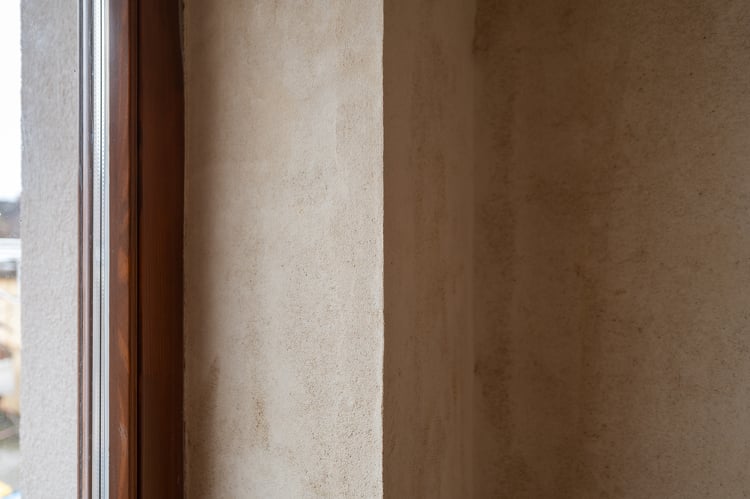
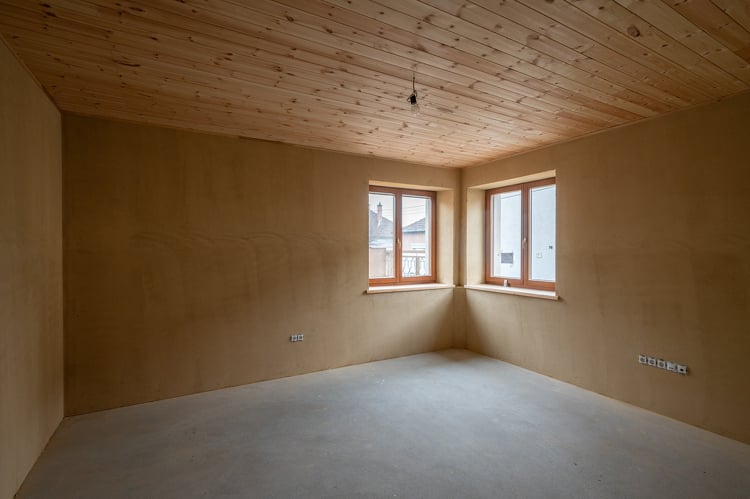
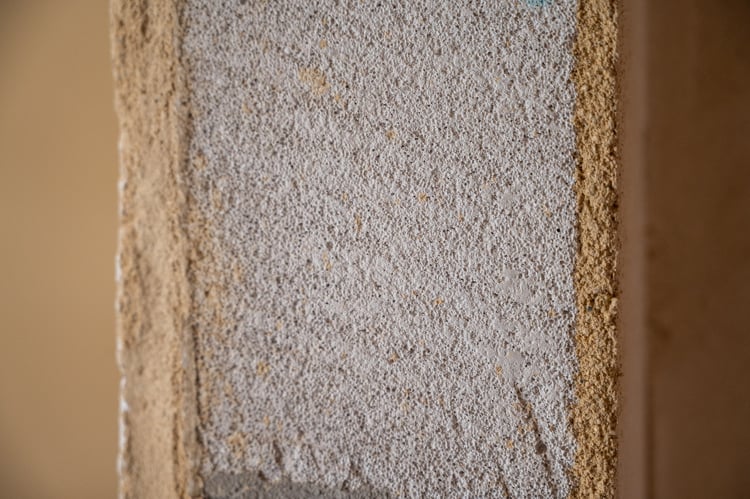
The primary application for Cemix clay plaster is in the wall cladding of natural adobe and organic buildings, where it creates an optimal indoor climate. It contains only natural materials, and the solidified material can be reused after wetting.
Of course, clay plaster does not only contain clay, but also many other additives and property enhancers - this is the added value of Cemix over plain clay, as it gives the user the same quality and composition in every bag. This also makes the plaster easy to handle and process, even with a plastering machine, with less cracking and a nicer finish. Of course, the added elements are all environmentally friendly materials.
It was these product features that guided the engineers of Naturarch, a design office that focuses specifically on environmentally conscious construction, and the contractor's Szalmaszár Bau Kft. staff towards Cemix products. Given the convergence between the organic architecture-focused construction companies and the manufacturer Cemix Hungary, an excellent professional collaboration was established during the construction process.
Reviving with respect for the past
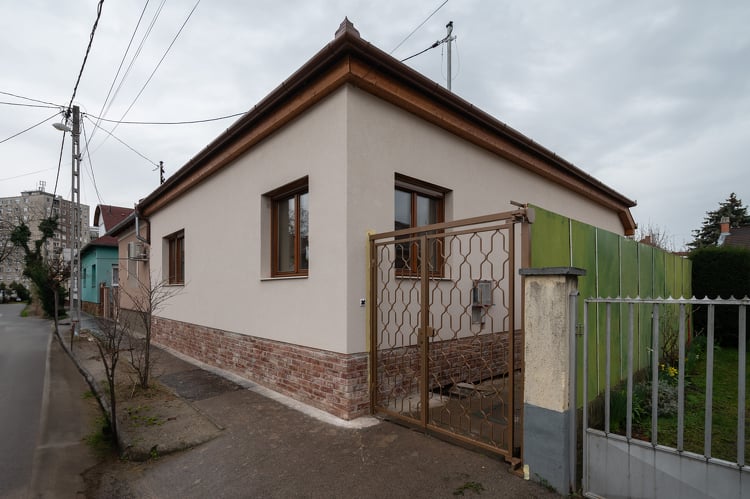
In a garden city setting, in the suburbs of Budapest, a modest family house was built on the street frontage, in scale and appearance in keeping with the neighbouring houses, by converting an old brick house. Not only did the conversion respect the cornice height and fenestration, but care was taken to maintain a hierarchy of interior spaces rather than excessive uniformity.
So, in addition to the organic construction, the client also required a modern, urban look for the house, where the excellent vapour permeability of the masonry was an important aspect. The Cemix Thermosystem mineral façade insulation system was therefore chosen to
How to achieve excellent vapour permeability of the whole wall structure and a healthy indoor climate.
The plinth zone is also finished in ventilated clinker brick, and the interior painting will be completed by the client using the recommended lime-based materials.
Healthy spaces
Ákos Straubinger, Managing Director of Szalmaszár Bau Kft., not only highlighted the value for money of the Cemix products used, but also emphasised that they were able to plaster many different surfaces with the same material, which has very beneficial properties for the health of the people living there due to its excellent vapour permeability. Plastering the different surfaces (reinforced concrete pillars and lintels, small brick walls built in the 1950s, and new ytong and new-build ceramic walls) with the same material was a real challenge.
"To be on the safe side, we did some test constructions, and as a result we decided on the prefabrications and foundations" - said the manager.
The results of their studies show the following use structure:
- for ytong: water spray only before plastering
- for skeleton ceramics: water spray only before plastering
- for small bricks: repeated spraying with water before plastering
- for reinforced concrete: greasy clay casting and water spraying
A number of other natural or recycled materials were used during the renovation, including
- glass foam to insulate the floor,
- a small straw bale for the attic insulation,
- waxed earthenware plaster for the wall cladding of the kitchen counter,
- pine flooring for the ceiling,
- small pieces of demolished burnt brick for the exterior plinth.
Source : Link




It’s time for a refurbishment: HEDO is carrying out work on one of Miskolc’s key transport routes

Four ‘1’s in a row: Esztergom’s transport headache has been resolved

The care home in Fertőd is to be refurbished

An innovative, distinctive PHOENIX Logistics Centre has been established in Győr: the Óbuda Group has reimagined the spaces for pharmaceutical logistics

Rain gardens are coming to Budafok, with over 3,000 square metres of green space set to be developed

Four new bridges to be built in the heart of the former industrial city

Contemporary art deco in Csopakon

Safer driving on the motorways: new digital signs for the MKIF
-

 Kirakat 2026. 10. 01.
A leading machinery distributor in the construction and haulage sectors is building a new service centre and extending its existing premises
-
Industry news 2026. 10. 02.
Hungary has joined the single electricity market
-
Railway development 2026. 09. 29.
The railway line leading to the Hungarian border is also set to be upgraded as part of Croatia’s large-scale development programme
-
Current at 2026. 09. 30.
It’s being built at full speed and could be the saviour of our domestic energy security – what is it?