Climate-X
Desert wind farms, alpine solar power stations – brilliant engineering and construction solutions for harnessing renewable energy

Over the past ten years, the world’s total energy supply has increased by nearly 14 per cent, according to Energy Institute data for 2014–2024. Meeting growing demand whilst reducing emissions is driving the development of energy generation, storage and supply networks.
According to the Eurostat report states that by 2024, renewables already accounted for more than a quarter – 25.2 per cent – of the European Union’s gross final energy consumption. This share is set to rise to 32.5 per cent by 2030. The utilisation of these sources presents new opportunities for designers and contractors: in addition to energy-generating facilities, networks, storage facilities and systems serving consumers must also be built.
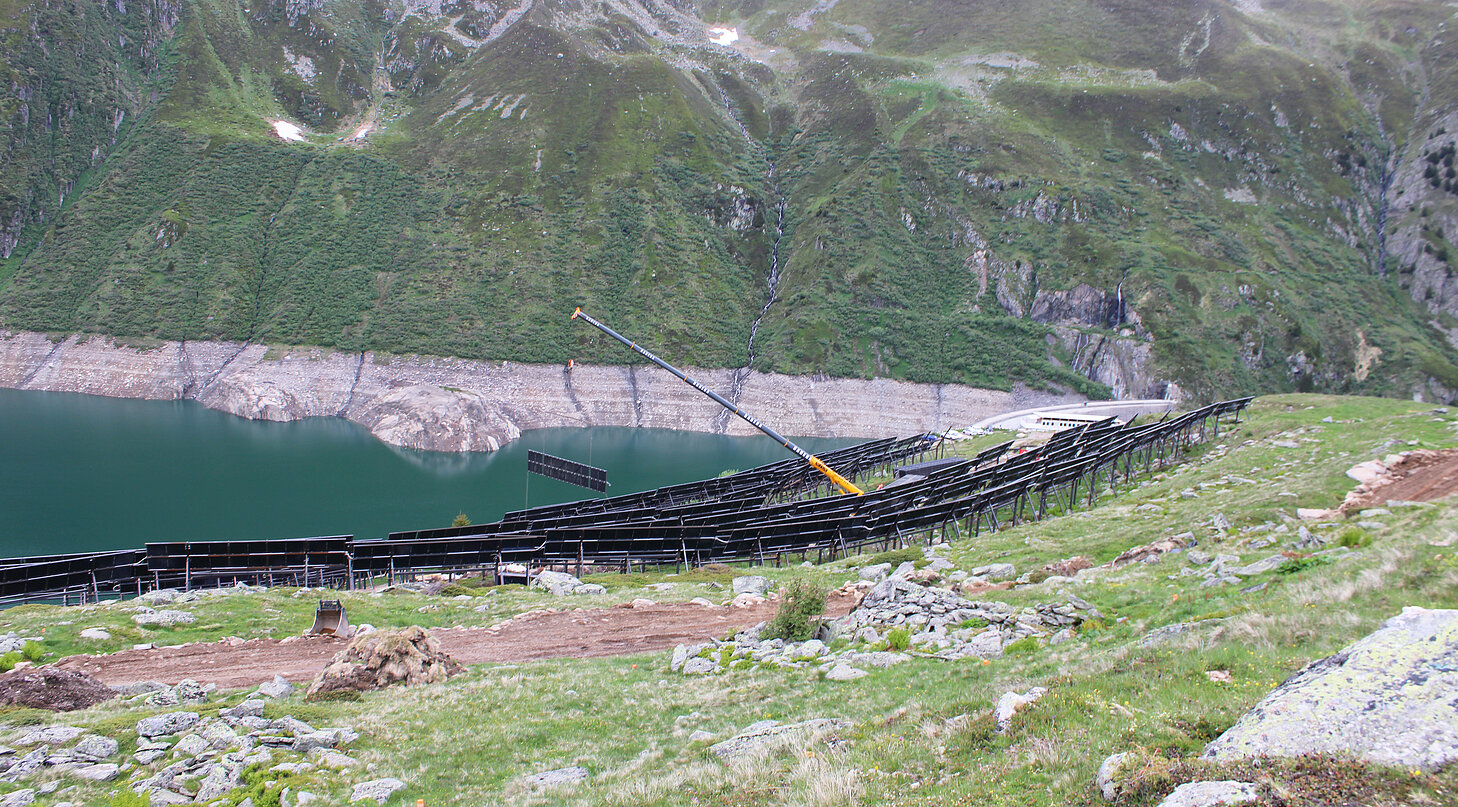
STRABAG has gained experience in this type of work across several continents. Its projects encompass high-altitude construction, the foundations for wind turbines, hydraulic engineering and the development of electricity networks.
Solar and wind energy on a shared grid
Solar power stations installed in areas of the Alps above the fog line can generate significant amounts of electricity even during the winter months, when fog in lower-lying areas often limits solar radiation. However, to make the most of these favourable conditions, construction solutions adapted to mountainous conditions are required.
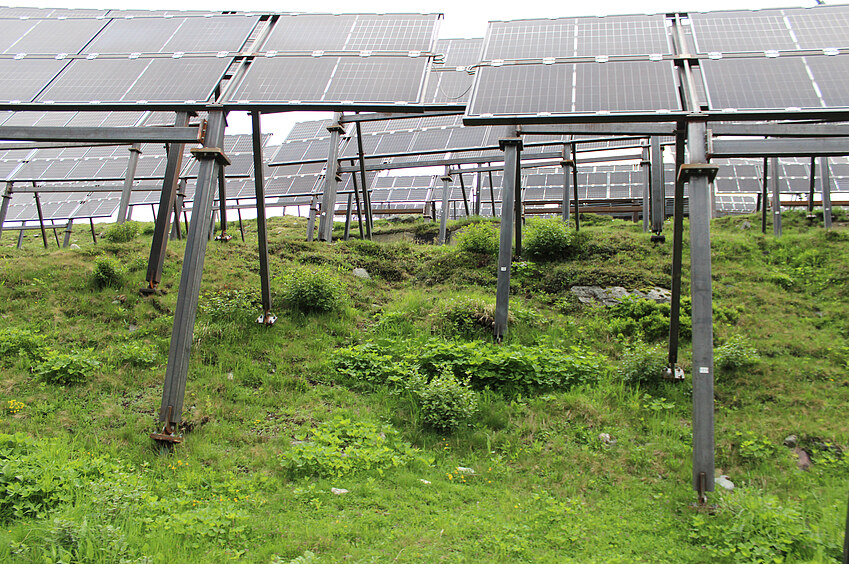
In Austria, STRABAG carried out the project for the Ratten solar power station, situated at an altitude of approximately 1,500 metres above sea level, from the design stage right through to handover. The nearly 26,500 solar modules were mounted on custom-made steel support structures.
Another distinctive feature of the facility is that, together with the nearby Steinriegel wind farm, it forms a hybrid power station. On the ridge, both solar and wind energy are harnessed, whilst the two facilities feed the electricity they generate into the public grid via a shared transmission line. By utilising the wind farm’s existing grid connection, resources were saved during the construction of the solar power station. The operation of the two systems is coordinated to make more efficient use of the energy from the different sources.
Construction at 2,000 metres, adapted to the snow conditions
The STRABAG team is facing yet another high-altitude challenge with the NalpSolar project, which is being built in Switzerland at an altitude of around 2,000 metres. Commissioned by Axpo, STRABAG is carrying out, amongst other things, structural works, constructing a technical building and utility lines, as well as laying the foundations for and installing the support structures for the solar panels.
One of the challenges of the project is that the high-altitude weather severely limits the construction season: even in early June 2026, the temperature at the site had barely risen above 5 degrees Celsius. To cope with winter snow conditions, the solar panels are being installed at a height of more than three metres so that they remain clear of snow even in heavy snowfall. Around 40 per cent of the facility’s expected annual output will be generated during the winter half-year. Full commissioning is scheduled for the end of 2028.
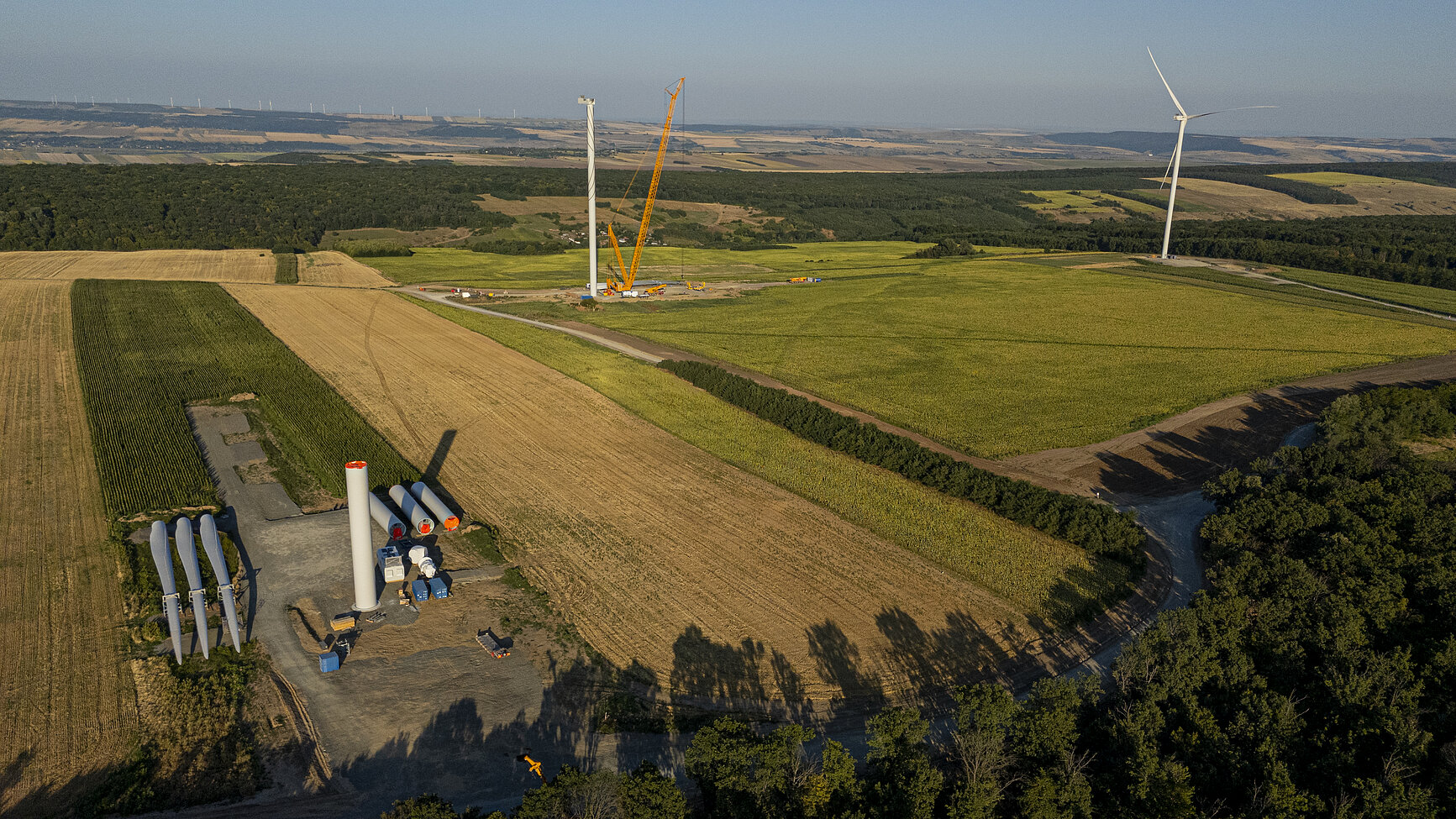
Twenty-three turbines, a 110-kilometre cable network, and more than 36 kilometres of road
Over the past ten years, the installed capacity of wind power plants has more than tripled worldwide and more than doubled in Europe, according to the Energy Institute data for 2014–2024.
Like many countries around the world, Romania is undertaking significant developments to harness wind energy. In the Moldavia region, the 140 MW Deleni wind farm is being built under the general contracting of STRABAG Románia. Once completed, it will supply 62,000 households annually with energy from renewable sources. Work began a year ago on the installation of the 23 turbines, each with a capacity of 6.1 MW. Prior to this, STRABAG carried out civil engineering, infrastructure and electrical works. Among other things, they constructed the foundations for the turbines and the wind farm’s drainage system. The wind farm’s electrical backbone was established by laying 110 kilometres of medium-voltage cable and constructing four transformer stations.
Wind turbine foundations in the desert
STRABAG was involved in the construction of three wind farms in northern Chile, in the Atacama Desert, over a period of four years. A total of 248 wind turbine foundations were completed; the combined installed capacity of the three farms is 1,501 megawatts.
The scale of the project is also illustrated by the materials used and the volume of earthworks carried out: 135,000 cubic metres of concrete were poured, 17,000 tonnes of steel were used, 240 kilometres of road were built, and 7.32 million cubic metres of earthworks were carried out.
In the desert environment, one of the greatest logistical challenges was securing the water required for the construction work: this had to be transported to the site from a distance of up to 180 kilometres.
Heat from the Rhine is used in district heating
A plant with a thermal output of 150 megawatts, described by RheinEnergie as Europe’s largest river-water heat pump, is being built in the Niehl district of Cologne. The plant, which utilises the heat from the River Rhine, is connected to the district heating network serving the city centre and the surrounding districts. According to the operator, it can cover up to 40 per cent of this network’s heat demand.
The heat pump extracts some of the heat from the water drawn from the river and then uses an electric compressor to raise the temperature to the level required for district heating. In this way, by utilising the heat from the river water, which is around 10 degrees Celsius, district heating water of up to 110 degrees Celsius can be produced. The system can deliver an average of around three kilowatt-hours of useful heat for every kilowatt-hour of electricity consumed; the cooled river water is returned to the Rhine.
The project also involves specialised hydraulic engineering tasks. MAN Energy Solutions was commissioned to supply the heat pump, whilst the construction of the water intake structure and the complex fish protection systems was entrusted to the consortium comprising ZÜBLIN and STRABAG Umwelttechnik. The foundation stone for the project was laid in July 2026. In this densely populated urban environment, noise protection is a key requirement, whilst the protection of wildlife along the river is also a crucial consideration. The project therefore requires the coordination of hydraulic engineering, specialised civil engineering and water technology.
Network development has become a key issue
The electricity generated must also be delivered to consumers. In Germany, this is the purpose of the SuedLink and SuedOstLink projects: these north–south interconnections will, amongst other things, play a role in transmitting wind energy generated in the north.
Experts from STRABAG have been commissioned to carry out six major construction sections across the two projects, totalling nearly 400 kilometres. The construction of the route for the largely underground direct-current cables requires significant civil engineering capacity and the coordinated work of several construction teams.
Hydrogen-powered machinery in the quarry
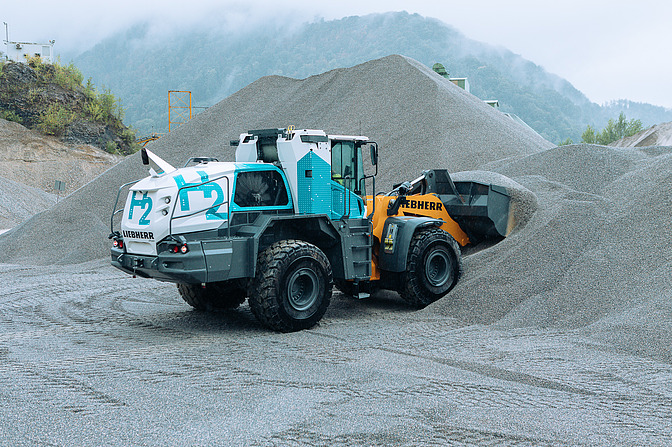
STRABAG is also playing a part in developments aimed at modernising the power supply for construction machinery. A two-year operational trial of a Liebherr hydrogen-powered front-end loader began in autumn 2025 at the Gratkorn Kanzelstein quarry in Austria. As part of this, STRABAG is testing the machine, which is used to serve the quarry and the site’s asphalt mixing plant, for at least fifty hours a week. A dedicated hydrogen refuelling station has been set up for the testing; with Energie Steiermark providing the green hydrogen supply.
As part of the collaboration, STRABAG is contributing its experience from day-to-day operations to the evaluation of the technology. According to their calculations, using the machine could replace around 37,500 litres of diesel fuel per year, which could reduce carbon dioxide emissions by approximately 100 tonnes.
It also reduces emissions in its own operations
STRABAG also places great emphasis on reducing emissions from its own operations. It has committed to reducing its greenhouse gas emissions associated with direct and purchased energy by 42 per cent by 2030, compared with the 2023 baseline. These climate targets for 2030 have also been approved by the Science Based Targets initiative, or SBTi, which assesses corporate emissions reduction targets.
The group follows a clear sustainability strategy in order to minimise its negative impact on the environment as much as possible. In addition to decarbonisation, STRABAG also places the circular economy, biodiversity and ecosystems.
Source: Link



Desert wind farms, alpine solar power stations – brilliant engineering and construction solutions for harnessing renewable energy

This lorry terminal will relieve pressure on Debrecen’s road network, and this is how the huge car park is being built

Rákospalota’s key transport corridor could be revitalised using the ‘Sponge City’ approach

The west wing of the Janus Pannonius Múzeum is being converted into an archaeological exhibition

Rain gardens are coming to Budafok, with over 3,000 square metres of green space set to be developed

Four new bridges to be built in the heart of the former industrial city

Contemporary art deco in Csopakon

Safer driving on the motorways: new digital signs for the MKIF
-

 Climate-X 2026. 09. 26.
The first municipal thermal power station in Transylvania is under construction
-
What is being built? 2026. 09. 28.
A hospital is being built in the heart of Budapest – it will be ready to admit patients in just under a year’s time
-
What is being built? 2026. 09. 28.
A project on a scale not seen for decades is set to begin on Verseny Street
-
Water management 2026. 10. 01.
A leading machinery distributor in the construction and haulage sectors is building a new service centre and extending its existing premises