What is being built?
They are radically reducing the environmental impact and noise levels at Liszt Ferenc Airport

There is no sign of a slowdown in the Budapest Liszt Ferenc Nemzetközi Repülőtér are continuing apace: whilst construction of Terminal 3 is progressing and pavement upgrades are ongoing; the focus is now on the Budapest Airport AIR-PRON project a contractor is being sought, where the successful bidder will carry out a comprehensive modernisation and environmentally friendly upgrade of the electrical systems in the terminal areas and aircraft stands.
Ground-based units are taking over the power supply to the aircraft on standby
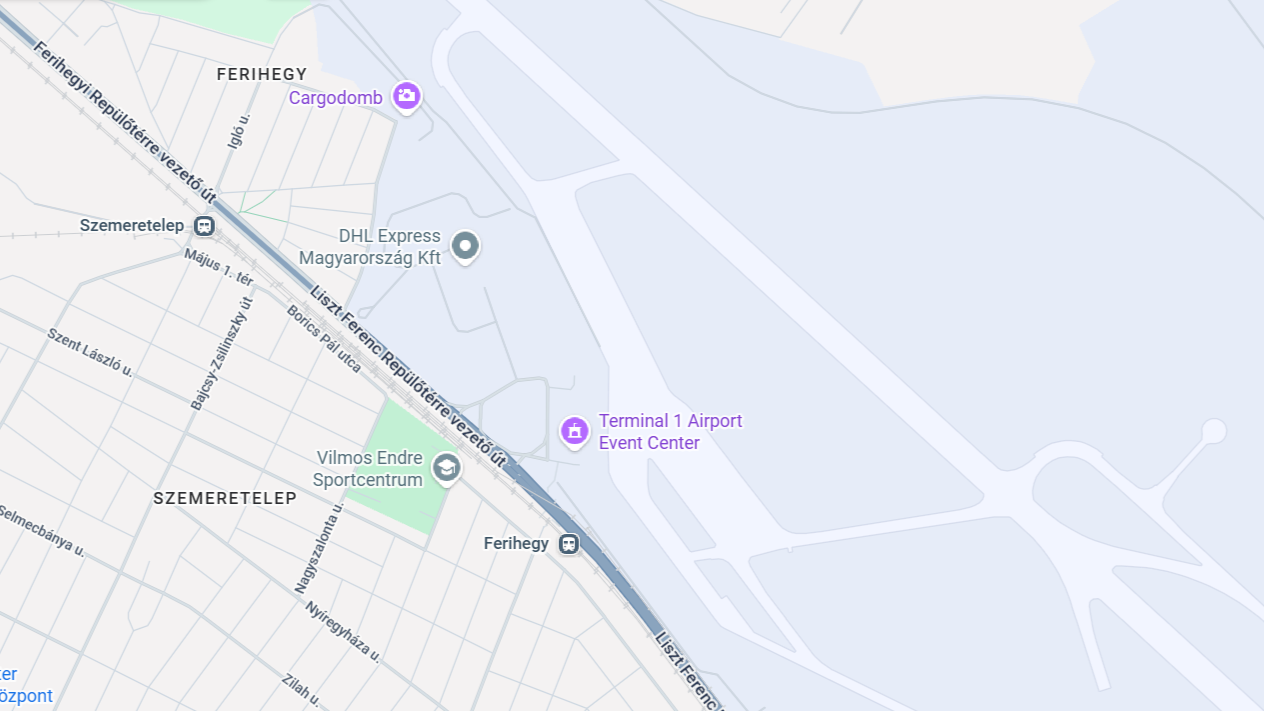
The specific scope of the public procurement contract, which is divided into three lots, involves, on the one hand, the expansion of the existing power supply infrastructure: in the PIER B area, it is necessary to construct a new 11/0.4 kV substation and switchgear, equipped with three new 2,000 kVA transformers, involving approximately 4 km of medium-voltage underground cable, 1,544 metres of directional drilling and the laying of nearly 600 m² of basalt concrete surfacing. Furthermore, the successful tenderer is tasked with the design and installation of pre-conditioned air (PCA) systems for passenger bridges facilitating direct boarding, as well as ground power unit (GPU) systems providing electrical power to remote stands. Thirdly, four 100 kW fast chargers will be installed in the Cargo Apron area for electric ground support vehicles.
The main benefit of the project is a radical reduction in the airport’s environmental impact and noise levels.
The PCA and GPU units take over the air conditioning and power supply for the passenger cabins of aircraft waiting on the ground, enabling the aircraft to switch off their auxiliary power units (APUs), which consume significant amounts of kerosene. In addition, the new transformer station provides the electrical power capacity essential for handling the growing volume of traffic.
Even heavy-duty machinery can be replaced with electric models
Although electric ground support vehicles are already in use at the airport, the majority of previous e-mobility developments have taken place in the vicinity of the passenger terminals. The Cargo Apron is a completely different kind of operation in terms of workload: vehicles moving much heavier cargo operate here, which until now could only run on diesel due to the lack of suitable charging infrastructure.
The technical innovation of the project now put out to tender can be seen in the background: until now, the airport apron’s electrical network would not have been able to cope with the fast chargers for heavy service vehicles and the aircraft ground power units (GPU/PCA) operating simultaneously. The new 11/0.4 kV transformer station (3 × 2000 kVA) featured in Part 1 of the tender creates a power supply infrastructure without which, in future, neither the ground handling fleet nor the aircraft themselves could be supplied with electricity alone.
Source: Link









A comprehensive environmental assessment is being carried out to lay the foundations for the modernisation of the Royal Palace in Gödöllő

Construction of the railway underpass on Tokaji út in Nyíregyháza may well be set to begin
Construction of the railway underpass on Tokaji út in Nyíregyháza can now begin

Introducing Hungary’s newest motorway section – photo gallery

Rain gardens are coming to Budafok, with over 3,000 square metres of green space set to be developed

Four new bridges to be built in the heart of the former industrial city

Contemporary art deco in Csopakon

Safer driving on the motorways: new digital signs for the MKIF
-

 Climate-X 2026. 09. 22.
From the heating plant to the library – solar panels are to be installed on eight local authority buildings in Kiskunfélegyháza
-
Climate-X 2026. 09. 26.
The first municipal thermal power station in Transylvania is under construction
-
Bound track 2026. 09. 24.
Major renovation work is set to begin on the Buda section of tram line 6
-
What is being built? 2026. 09. 22.
They would not only modernise the debreceni Nagyállomást, but also develop it into a modern transport hub