
Industry news
The SZABADICS and BME programmes have joined forces: together, they are strengthening the next generation of engineers

The partnership established on 7 October between SZABADICS Építőipari Zrt. and Budapesti Műszaki és Gazdaságtudományi Egyetem (BME), signed on 7 October.
As part of the partnership, students can gain practical experience, amongst other things, at the SZABADICS Academy and through work-integrated learning, whilst the company supports the university’s #epito250 excellence scholarship programme.
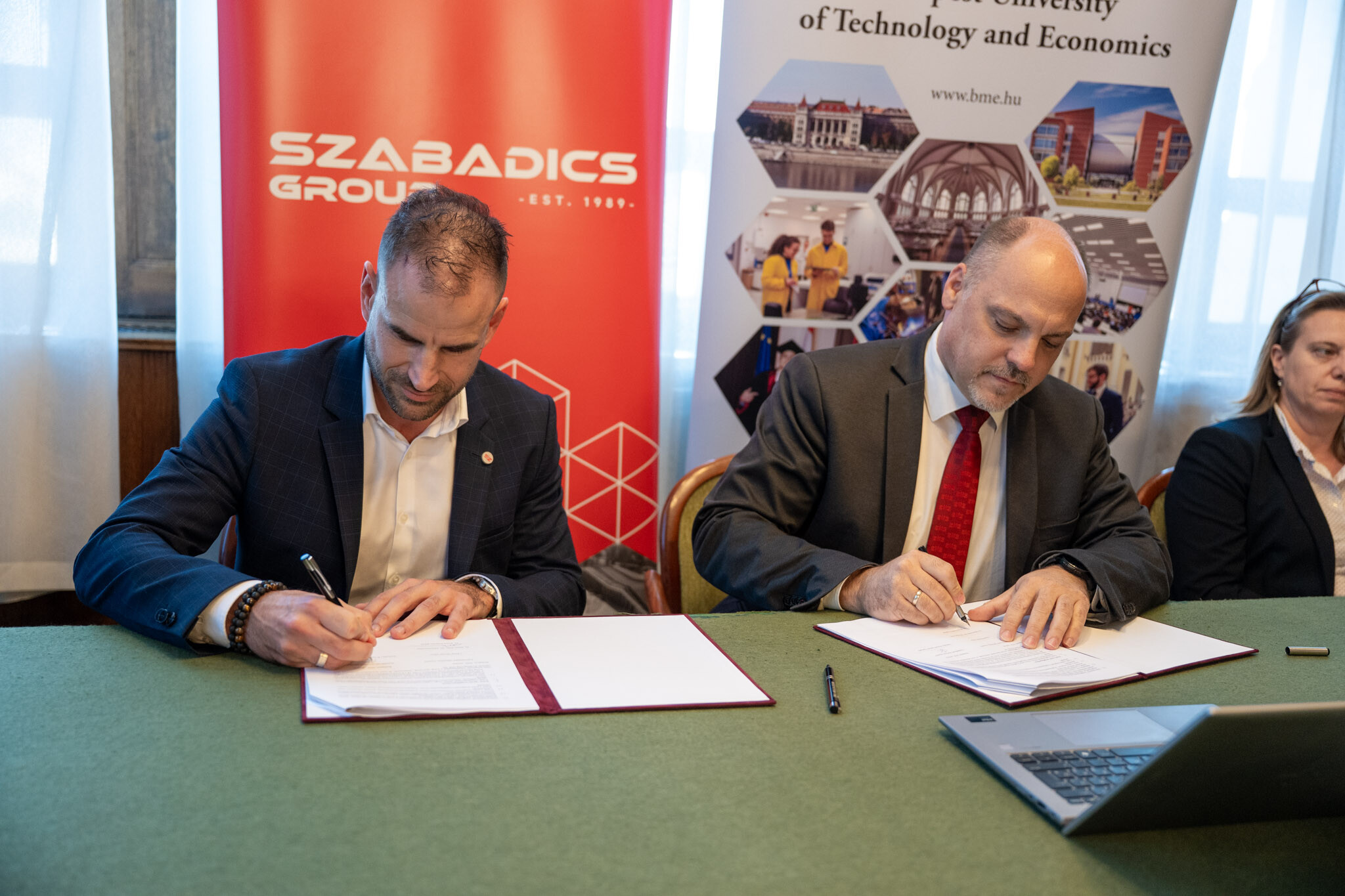
Previous professional relationships are moving to a new level
The current agreement has taken a professional relationship that already existed to a more organised level. A good example of this is that, in 2022, SZABADICS took part in the ArchitecTúra programme, and since 2024, Miklós Németh has been presenting the company’s BIM experiences as a guest lecturer on the Faculty of Civil Engineering’s BIM specialist engineering course. In addition to this, through the SZABADICS Academy, BME students have also had the opportunity to learn about the company’s experiences.
Szabadics Roland, the Chief Operating Officer of SZABADICS Group, attaches particular importance to this latest agreement, as he himself completed his undergraduate and master’s degrees at BME. As he put it, he acquired the foundations of his engineering mindset at the university, so it is a special feeling for him to return to the institution as a company executive.
The ceremonial signing took place as an item on the Faculty Council’s agenda, an event attended by several of his former lecturers. „For SZABADICS, it has long been a priority to nurture the next generation, support young engineers and bridge the gap between academic knowledge and real-world construction practice” – emphasised Szabadics Roland. He added that the partnership is also a way of giving back to the community from which he himself had gained knowledge and a professional perspective in his time.
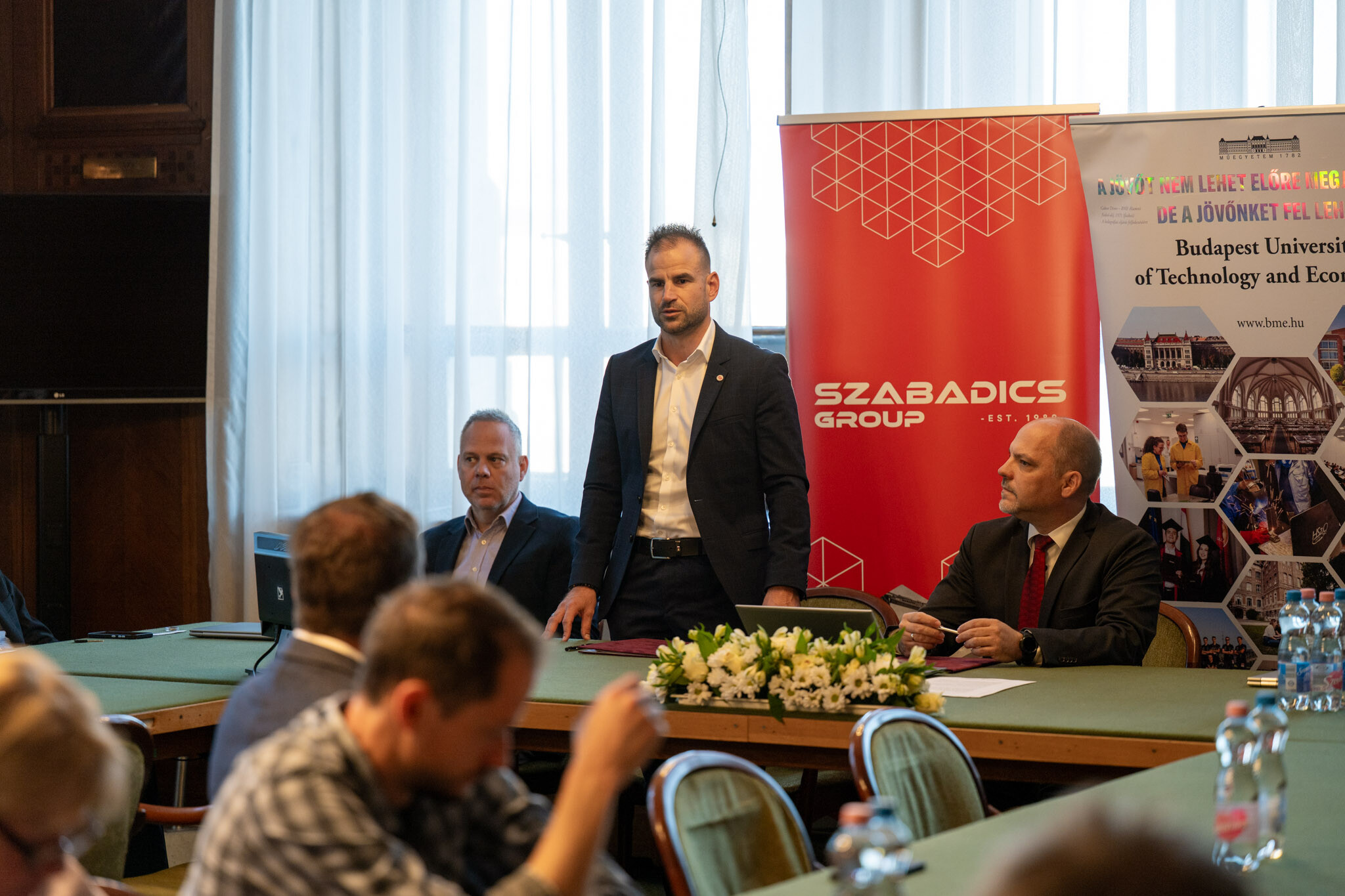
Where academic knowledge meets practical experience
One of the key aims of this collaboration is to enable students to gain an understanding of the practical aspects of engineering whilst still studying, and to apply the knowledge they have acquired in theory to real-world professional tasks.
Marianna Bazsó, née Harangozó, HR Manager at SZABADICS, says that the agreement represents a step forward compared to previous ad hoc collaborations because it provides a common framework for several areas. In addition to educational and career guidance programmes, it also regulates work-based learning, covering areas of responsibility, communication, and the principles governing students’ employment, professional supervision and assessment.
The construction company can share practical knowledge with university students, helping them to better understand how technical knowledge is transformed into a tangible structure. This is because, in a construction project, it is necessary to coordinate not only the technical solutions but also the sequence of work processes, deadlines, available resources and the roles of the various stakeholders.
The SZABADICS presentation on BIM, which took place within a university setting as mentioned earlier, also reinforces this kind of knowledge-sharing. In the company’s experience, these practical examples and gaining an insight into the personal experiences of professionals can significantly complement university education.
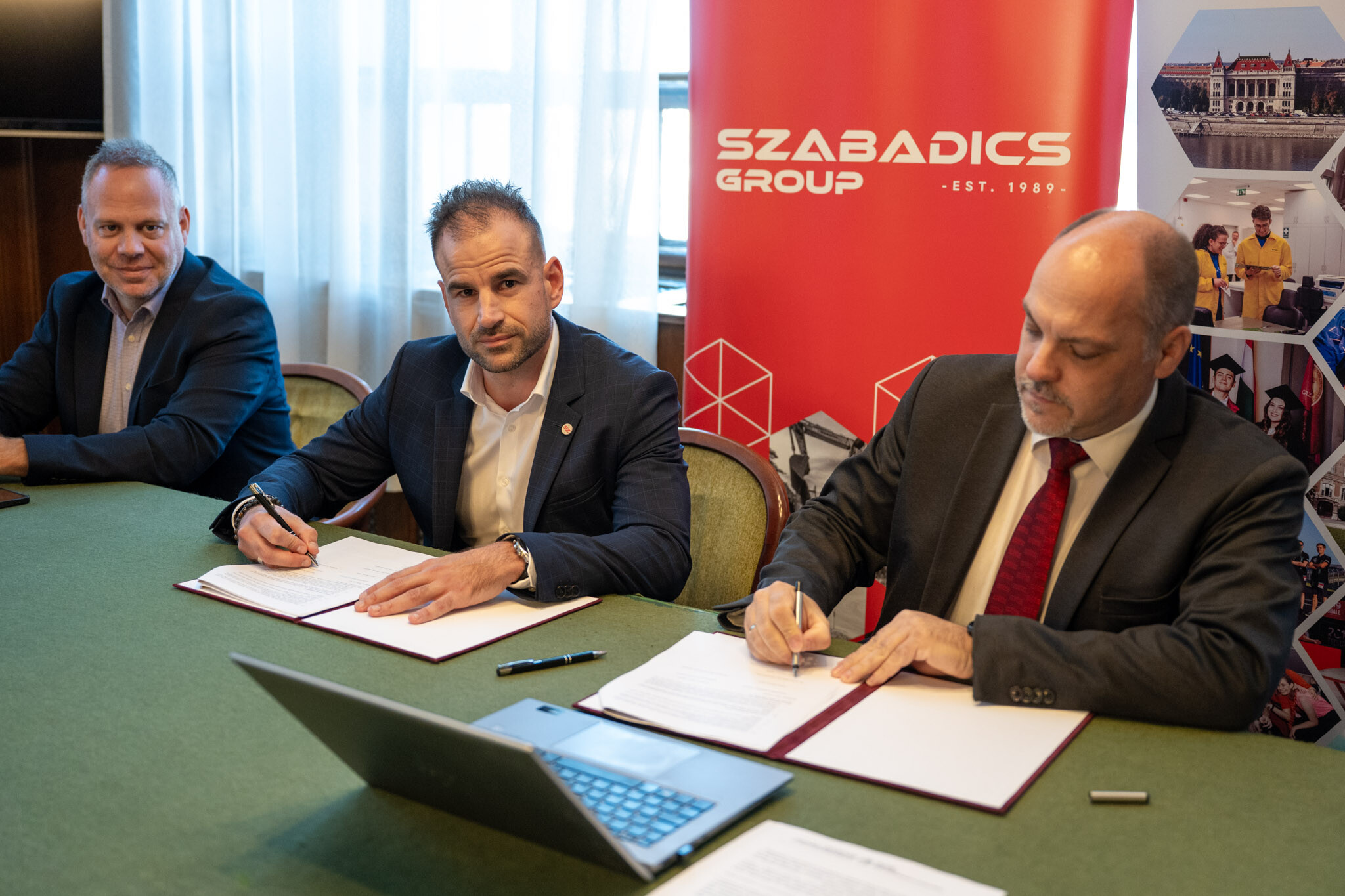
They are attracting students with scholarships and work-study schemes
Among the specific commitments set out in the agreement is that SZABADICS will contribute to the #epito250 Excellence Scholarship Programme run by the Faculty of Civil Engineering at BME. In addition to this support, the partnership also places emphasis on career guidance and the acquisition of practical experience.
Students enrolled on the faculty’s bachelor’s and master’s degree programmes can also join the SZABADICS Academy. The programme offers young people the opportunity to learn about how the construction industry works, try out state-of-the-art technologies, and talk to experienced professionals and managers about the day-to-day realities of engineering work.
Students taking part in the cooperative training programme can work at the company according to a schedule agreed with the university. As part of the programme, they can undertake paid professional work under an employment contract, alongside regular professional supervision and written assessments. The knowledge and skills acquired here may also be recognised as fulfilling academic requirements in accordance with university regulations.
Applications are made in response to a call for applications published on the company’s website, which is also made available by the university. Selection is based on a preliminary interview, and the number of students accepted is adjusted to the company’s current professional and operational capacities.
Educational collaboration also offers further opportunities. Subject to separate agreement, the company’s specialists may participate in university teaching as guest lecturers, or contribute to the development of course content and teaching materials. The exchange of knowledge is two-way, as the university’s lecturers can also contribute to SZABADICS’s in-house training programmes. In addition to the above, site visits and dissertations linked to real-world projects may also form part of this collaboration.
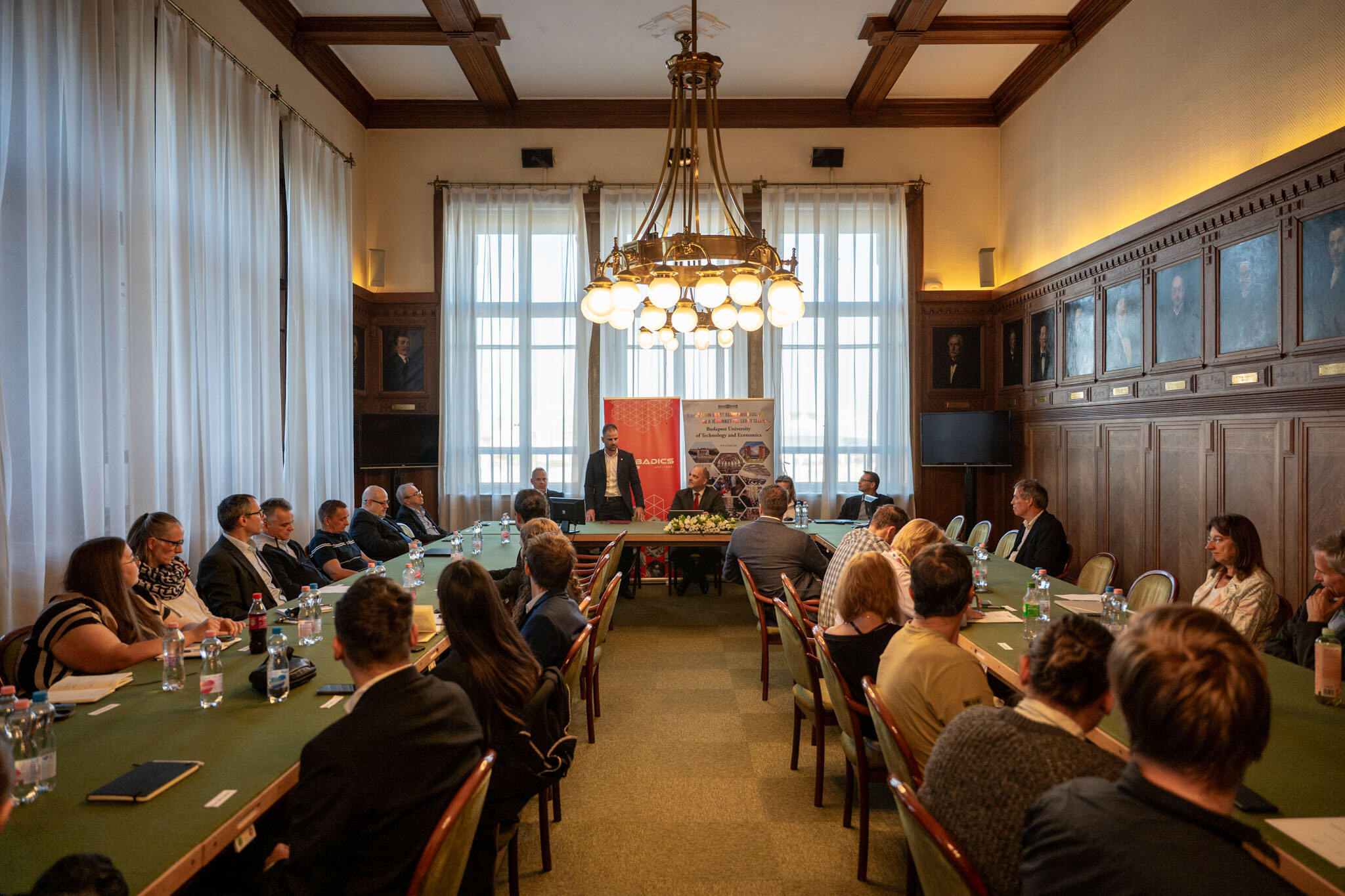
The development of young engineers is also in the company’s interests
For SZABADICS, university collaboration is also linked to ensuring a long-term supply of engineering talent. Students can get to know the company, the professional tasks involved and their future colleagues whilst still studying, whilst the employer can gain an insight into their interests and development.
According to Marianna Bazsó, née Harangozó,
One of the most important steps at the start of a career is for young engineers to be able to apply the knowledge they have gained at university to the running of a complex project.
Regular professional supervision, feedback and the opportunity for students to put their skills to the test in real-world tasks whilst still on their course can help with this.
In attracting and retaining young professionals, the company also relies on professional development and career opportunities, as well as mentoring to help them settle in.
The company’s onboarding programme uses mentoring to help new employees settle in, ensuring they receive support right from the start, have someone to turn to with their questions, and get to know how the company operates as well as their own responsibilities. Long-term commitment is further strengthened by career opportunities, training and support for continuous professional development.
The aim of the SZABADICS programme is to make it clear to young professionals what career progression opportunities lie ahead of them, and what knowledge and experience they can gain at the company to help them achieve these. All this is complemented by a comprehensive benefits package.
Personal experiences play a huge role in sparking young people’s interest. Izabella Varga, the marketing and communications specialist for SZABADICS, Summer BridgeCamp 2.0 summer camp, believes that students are primarily attracted by practical opportunities, the chance to try out new technologies and tools, and discussions with experienced colleagues. These enable them to gain a more realistic picture of the tasks involved in the day-to-day work of a civil engineer.
A bridge between the university and the construction industry
The significance of the agreement was also emphasised by Dr Szabolcs Rózsa, Dean of the Faculty of Civil Engineering (BME), at the signing ceremony. It is impossible to envisage state-of-the-art civil engineering education and the definition of research tasks without close ties with industry stakeholders.
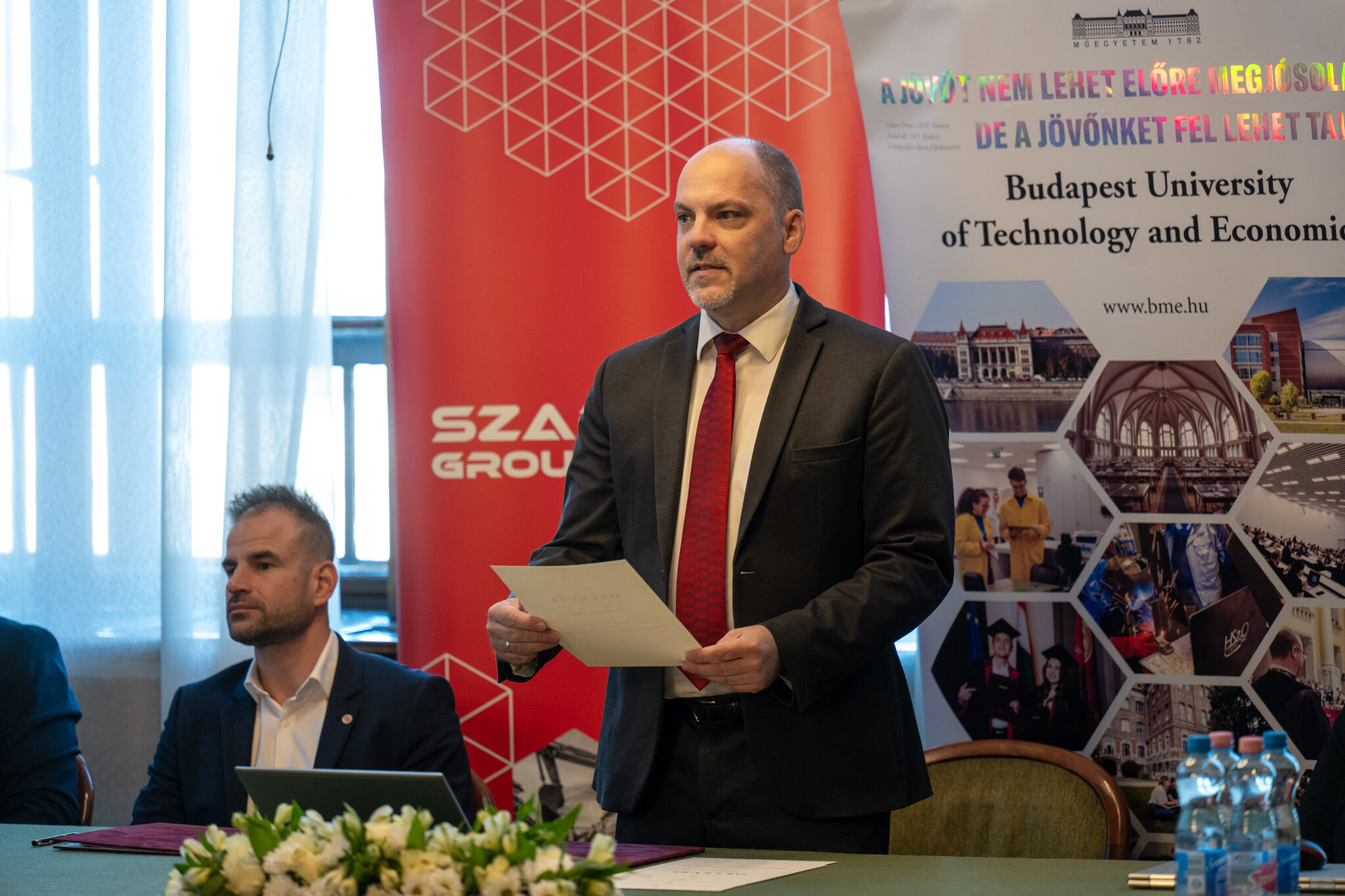
The university aims to ensure that students gain an understanding, right from the start of their studies, of the tasks that await them in the profession. Courses designed to provide career guidance, site visits and lectures by practising engineers can all help ensure that young people not only acquire theoretical knowledge but also experience the results of engineering work through completed projects.
Szabadics Roland also considers the building of relationships across different professional circles to be one of the greatest benefits of collaboration.
„As a construction company, we build infrastructure, buildings and bridges. But as a leader, I believe that the most important bridges are not always made of concrete and steel. For me, this collaboration is also such a bridge: between academia and industry, theory and practice, and the present and the future.”
– said the director of operations.
As he added, whilst at university, the family business gave him an insight into construction industry practice; at the same time, a structured university-industry partnership offering a broader professional perspective and new contacts would have meant a great deal to him.
Finally, Szabadics Roland was delighted to announce that the company will be organising its next summer academy next year with even greater enthusiasm, drawing on its experience to date; preparations for the event have already begun.
Source: Link



The SZABADICS and BME programmes have joined forces: together, they are strengthening the next generation of engineers

The border bridge on Main Road 6 is set to undergo a comprehensive refurbishment

The Buda interchange could also be extended northwards

A railway bridge will link the sections of the Tokaj-kör route: cycling infrastructure development in the wine region continues

Four new bridges to be built in the heart of the former industrial city

Rain gardens are coming to Budafok, with over 3,000 square metres of green space set to be developed

Contemporary art deco in Csopakon

Safer driving on the motorways: new digital signs for the MKIF
-
 Bound track 2026. 09. 15.
Nearly 50,000 people travel on it every day – the refurbishment of the Cegléd main line continues
-

 Bound track 2026. 09. 18.
Work has begun: the spur line will provide a direct rail link between Szombathely and Zalaegerszeg
-

 Industry news 2026. 09. 12.
The AKKO Invest may be expanded to include a designer of airport hotels
-

 Current at 2026. 09. 15.
An exemplary model from Borsod – the synergy between father and son is driving Mento Csoportot forward


