What is being built?
The expansion joints on the Buda side of the Erzsébet Bridge were installed overnight

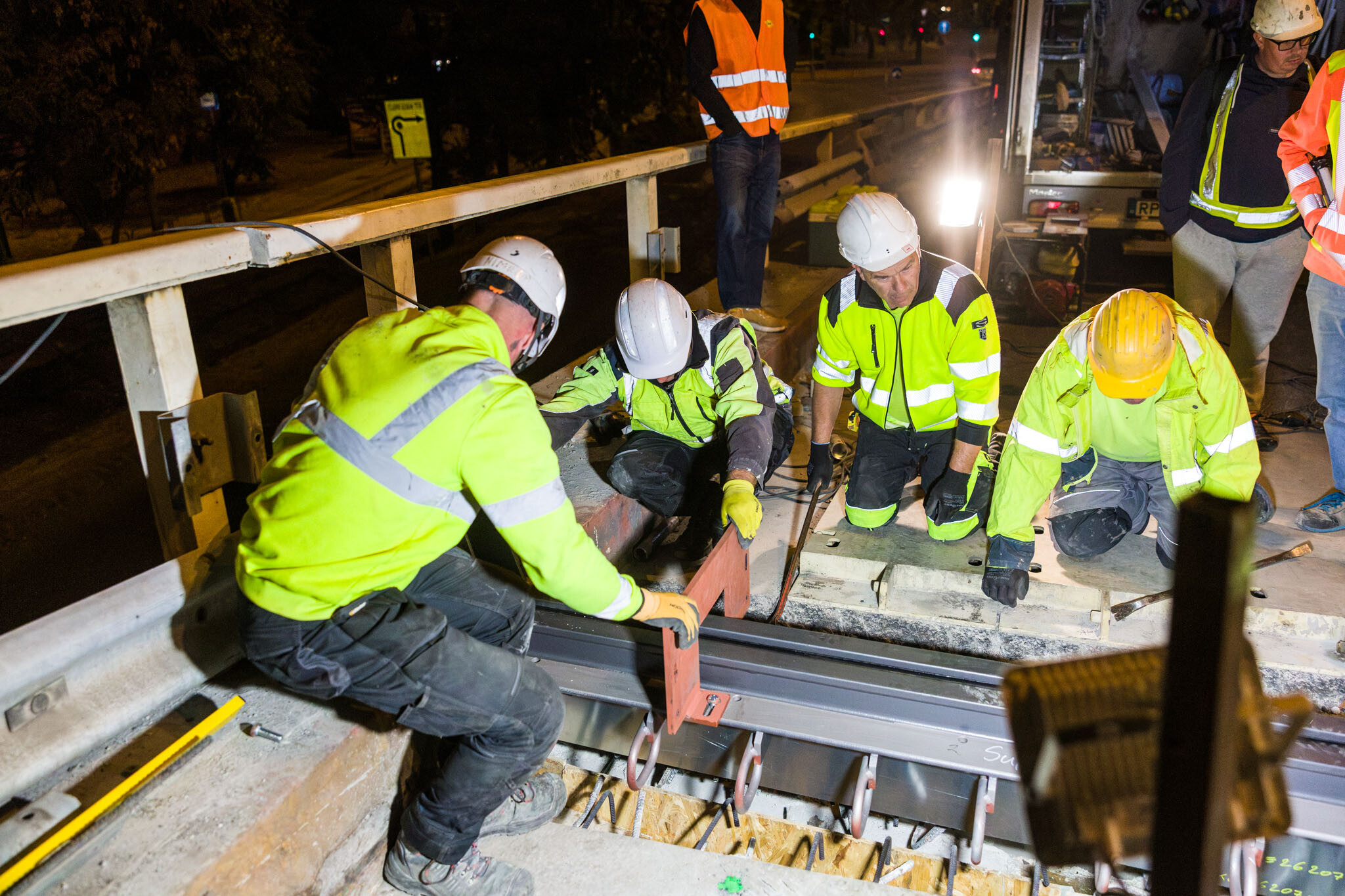
Whilst the city’s residents were resting, work was underway at the Buda end of the Erzsébet Bridge, timed to the minute. The experts from Colas carried out the replacement of the expansion joints on the branches of the Erzsébet Bridge leading towards the Rudas Baths and Attila út, commissioned by Budapest Közút Zrt.. One of the most critical tasks of the project, the hoisting of the new elements, was carried out on the evening of 6 October. Expansion joints are key components of bridge structures; they allow for movements in the bridge structure caused by temperature changes and traffic loads, ensure watertightness, and provide safe passage over the expansion joint.

Structures that were a quarter of a century old have been replaced
According to information provided by the contractor, the replacement of the bridge’s expansion joints was necessitated by wear and tear and the loss of their watertightness; the components that have now been replaced were originally installed during the 2001 refurbishment. It is not feasible to clean the synthetic rubber profiles that allow for movement on a continuous basis; consequently, they have torn in several places due to abrasion caused by ingress of dust and small pebbles. Water seeping through the gaps has also damaged the steel profiles and the structures. It is likely that the absence of transverse waterproofing also contributed to the deterioration of the asphalt surface in front of the expansion joints. Road users were already able to feel the potholes caused by the loss of surface material. Without replacing the structural elements, significantly more extensive works would have been required within a few years.
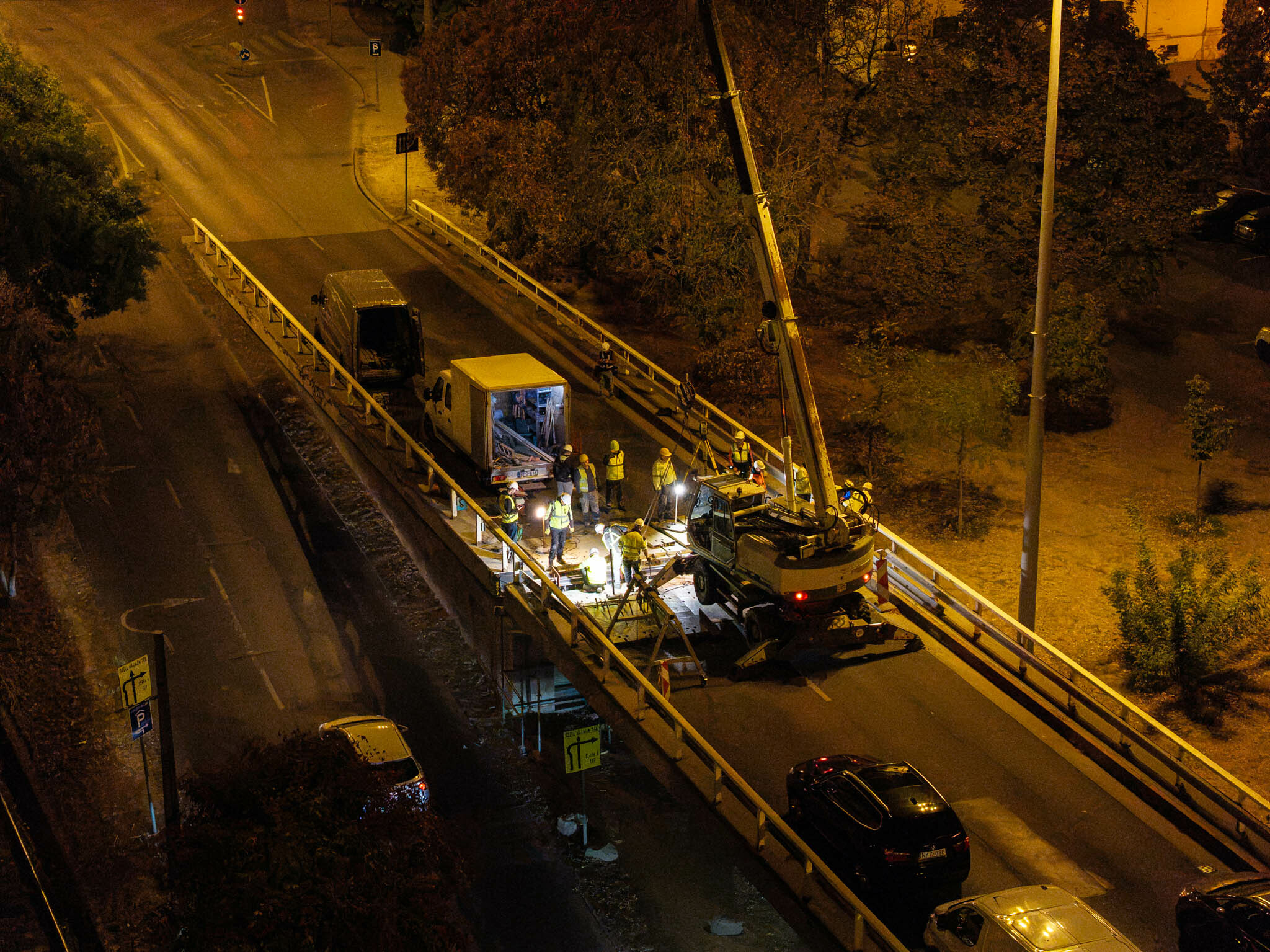
Traffic arrangements were also reorganised to facilitate the lifting operation
An important part of the preparatory work for the project was coordinating changes to public transport, as well as putting in place temporary traffic management measures and diversions. To minimise the risk of errors, the expansion joints were installed in a single operation.
During the works, the slip road leading to the Rudas Baths was closed, whilst passage was maintained on the Attila út section via a half-lane diversion. This traffic arrangement was also amended whilst the crane was in operation. The new expansion joints were hoisted into place during the night of 6 October; at that time, the Attila út branch was closed, and traffic was diverted via the branch leading to the Rudas Baths.
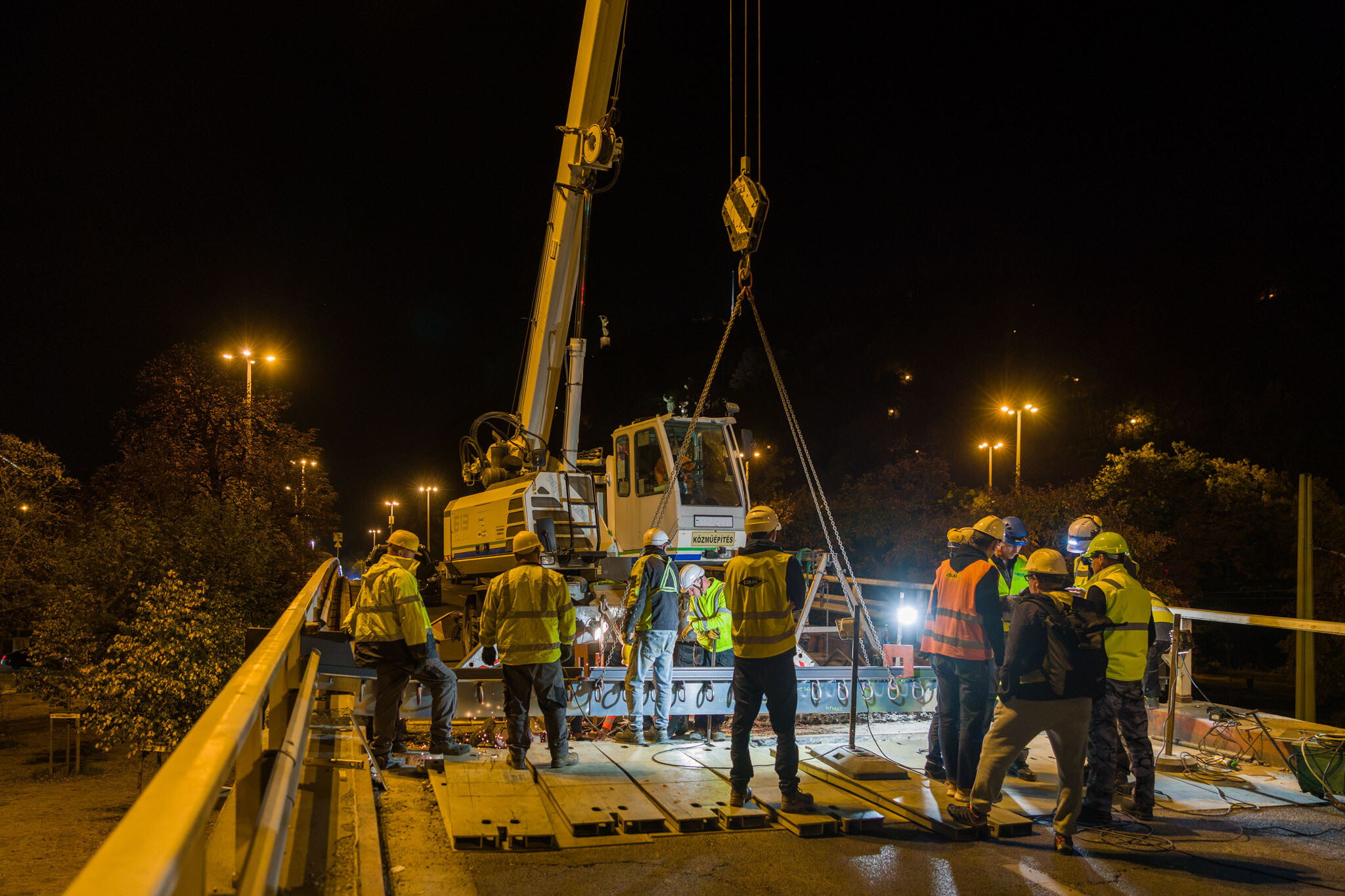
The demolition work also served as an excavation
Once the work area had been prepared, work could begin on removing the old expansion joints. The specialists created a working area in the strip alongside the structure, then cut out the worn-out components. All this had to be carried out whilst preserving as much of the old reinforcement as possible and ensuring the integrity of the reinforcing bars embedded in the deck slab and the bridge abutments.
One of the unique aspects of the project was that the demolition work also served as an excavation; it was at this stage that the experts – in addition to the existing plans – gained a comprehensive understanding of the actual geometry of the supporting structure and the reinforcement within it. One of the most delicate aspects of the construction work was the precise positioning of the new elements, followed by the restoration of the insulation and the asphalt layers. The work process was aided by surveyors’ measurements. The expansion joint must not rise above the level of the road surface, nor may it fall below it by more than 3 millimetres.
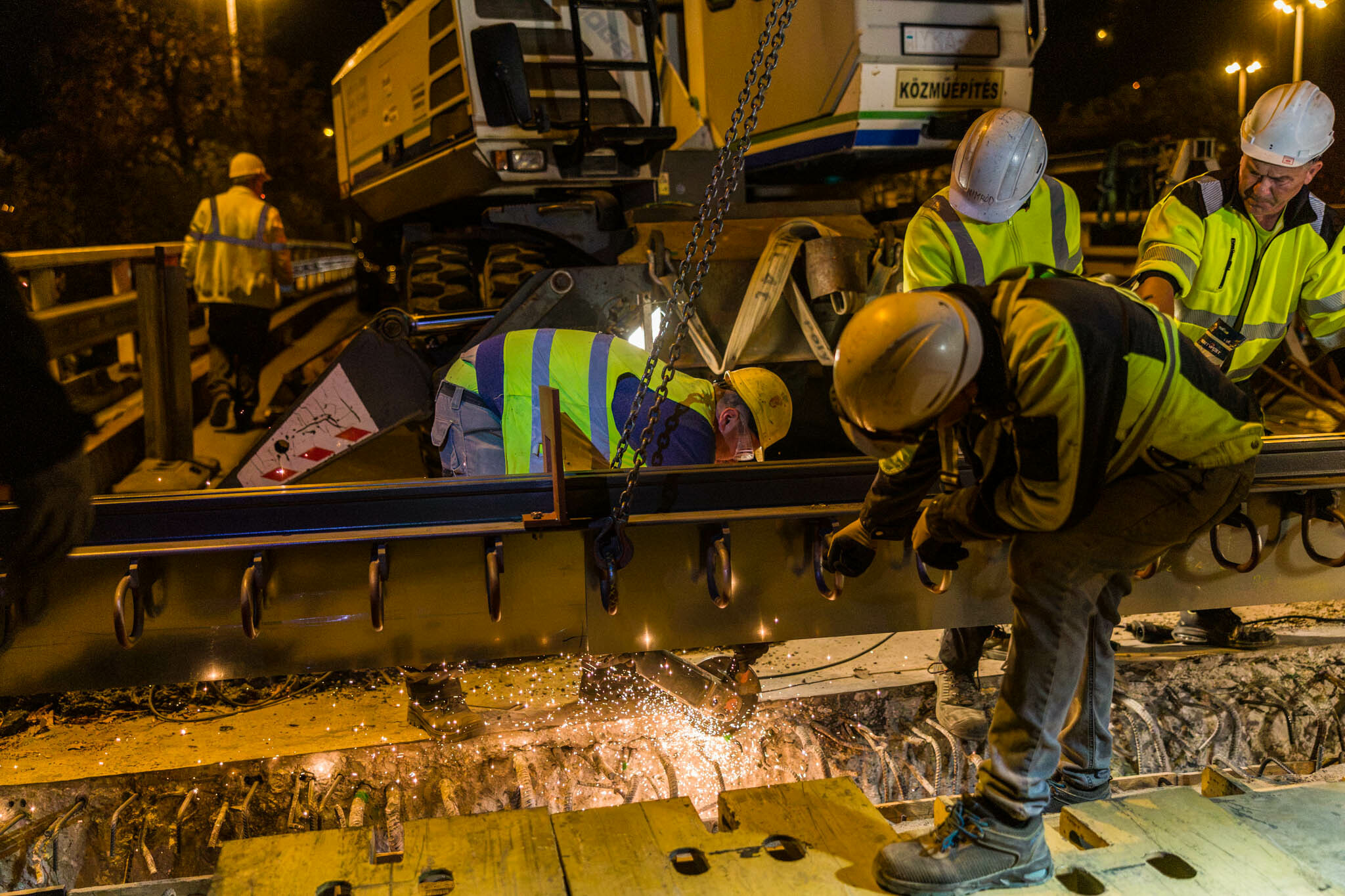
The new structures have been adapted to the temperature
The existing PD85-type expansion joints have been replaced with Mageba Tensa Grip RS-A80 expansion joints. The new structures are also of a single-lamella design, with a total movement capacity of 80 millimetres – 40 millimetres in each direction relative to the centre position. This therefore provides a margin of safety compared with the ±25 millimetres required by the structural analysis.
For reinforced concrete bridges, expansion joints must be designed for a temperature range of between −25 and +45 degrees Celsius. Upon installation, the width of the joint is adjusted to the actual measured temperature; the neutral setting temperature is approximately +10 degrees Celsius.
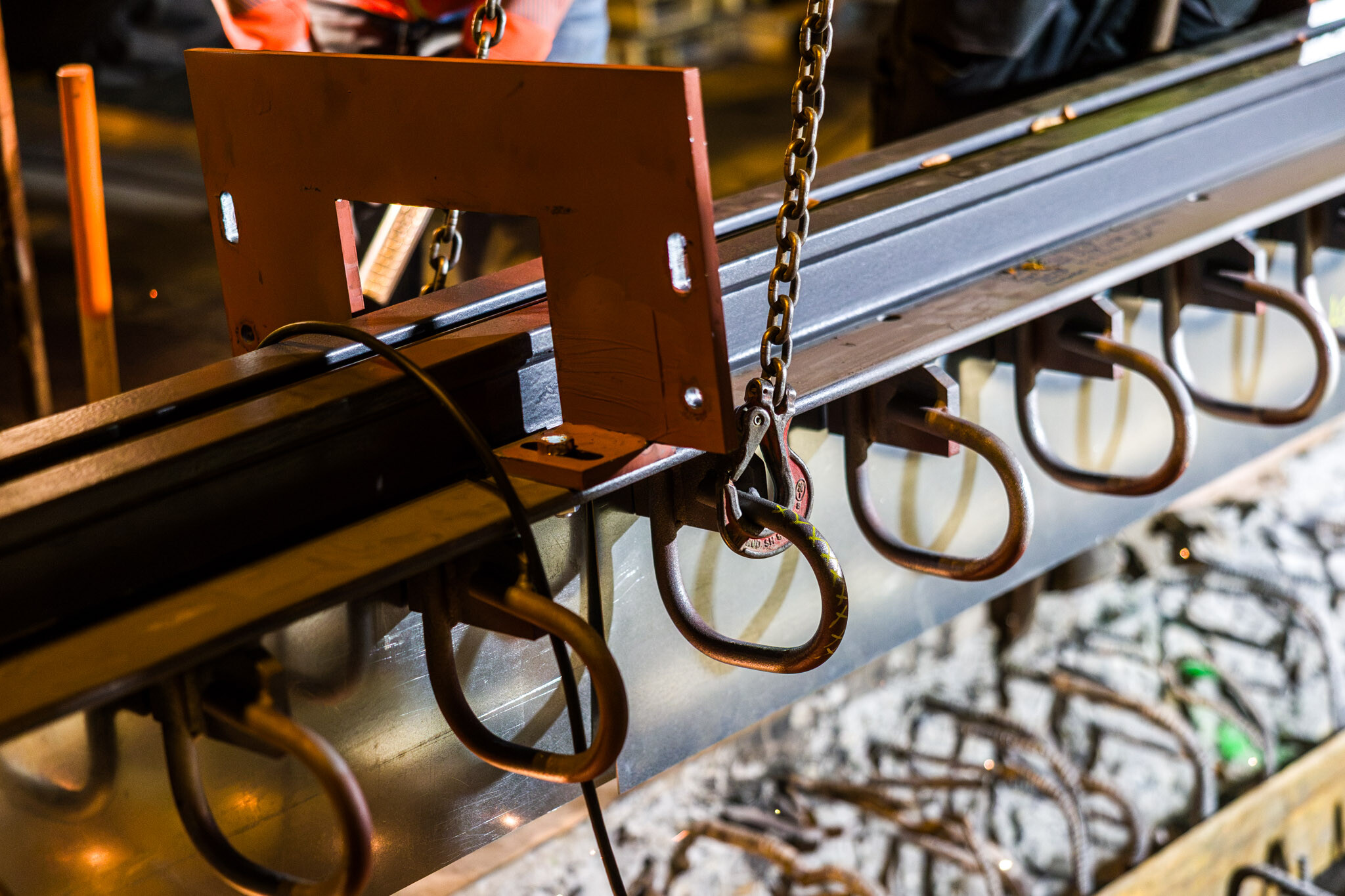
They also provided a route for water to enter the cladding
In addition to the expansion joints, transverse drainage channels have also been installed. These collect water that penetrates the asphalt and then flows along the length of the track slab’s insulation, channelling it to the drains. The aim of this solution is to prevent water from accumulating in the pavement layers and the track slab insulation upstream of the expansion joint, thereby preventing localised pavement defects and potholes from forming there.
The new expansion joint structures have an expected service life of fifty years; however, this requires regular maintenance.

The bridge was a world record holder
The Erzsébet Bridge, opened in 1903, had a span of 290 metres and was the world’s longest-span chain bridge until 1926, and the longest-span chain bridge over the Danube until January 1945. In 1964, a slender cable-stayed bridge featuring a new structural design was opened on the site of the crossing destroyed during the Second World War; it was designed under the supervision of Pál Sávoly (UVATERV). In the main span, a bundle of 61 cables on each side bears the load of the deck structure via the suspension cables; 6,300 tonnes of steel were used in the construction of the new superstructure.
Source: Link








Reconstruction of the M1 motorway’s carriageway towards Győr can begin under the new traffic arrangements

Alpine engineering techniques are also being used to protect the railway in the Danube Bend

Instead of patchwork repairs – large-scale refurbishment work is under way on the dilapidated main roads in the Transdanubia region

The expansion joints on the Buda side of the Erzsébet Bridge were installed overnight

Four new bridges to be built in the heart of the former industrial city

Rain gardens are coming to Budafok, with over 3,000 square metres of green space set to be developed

Contemporary art deco in Csopakon

Safer driving on the motorways: new digital signs for the MKIF
-

 Current at 2026. 09. 09.
A first-hand look at a career in engineering – Duna Group Szabadegyetem is back
-
Climate-X 2026. 09. 09.
Nyíregyháza Spartacus FC goes green – four hundred solar panels to be installed on the stadium roof
-
Bound track 2026. 09. 15.
Nearly 50,000 people travel on it every day – the refurbishment of the Cegléd main line continues
-
Current at 2026. 09. 09.
Rental flats, Rákosrendező, decentralisation – important ideas were put forward on the Real Estate Beach Conference stage