Industry news
The refurbishment of Citadella has won an international award – 14,000 square metres of historic stonework have been restored

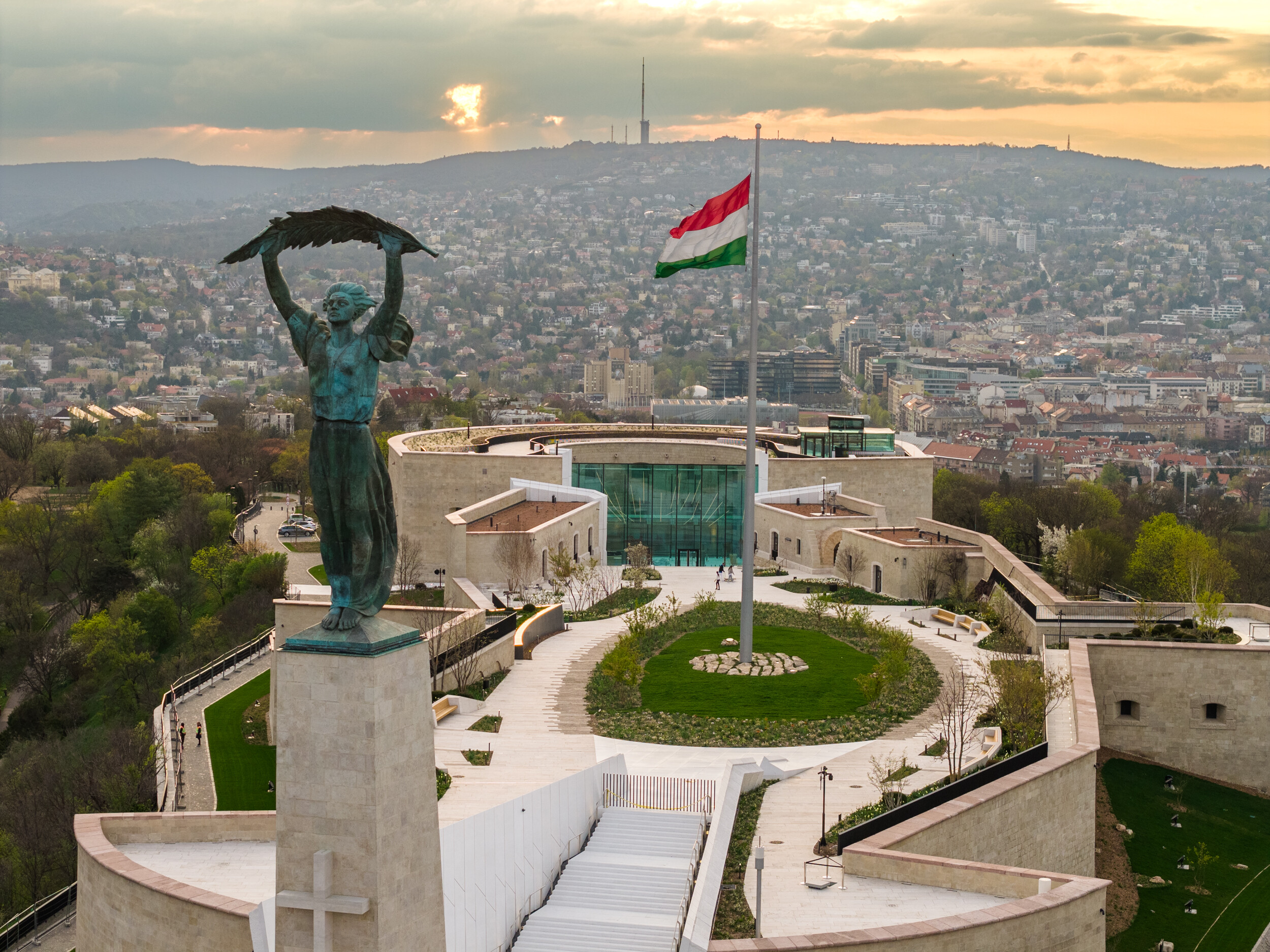
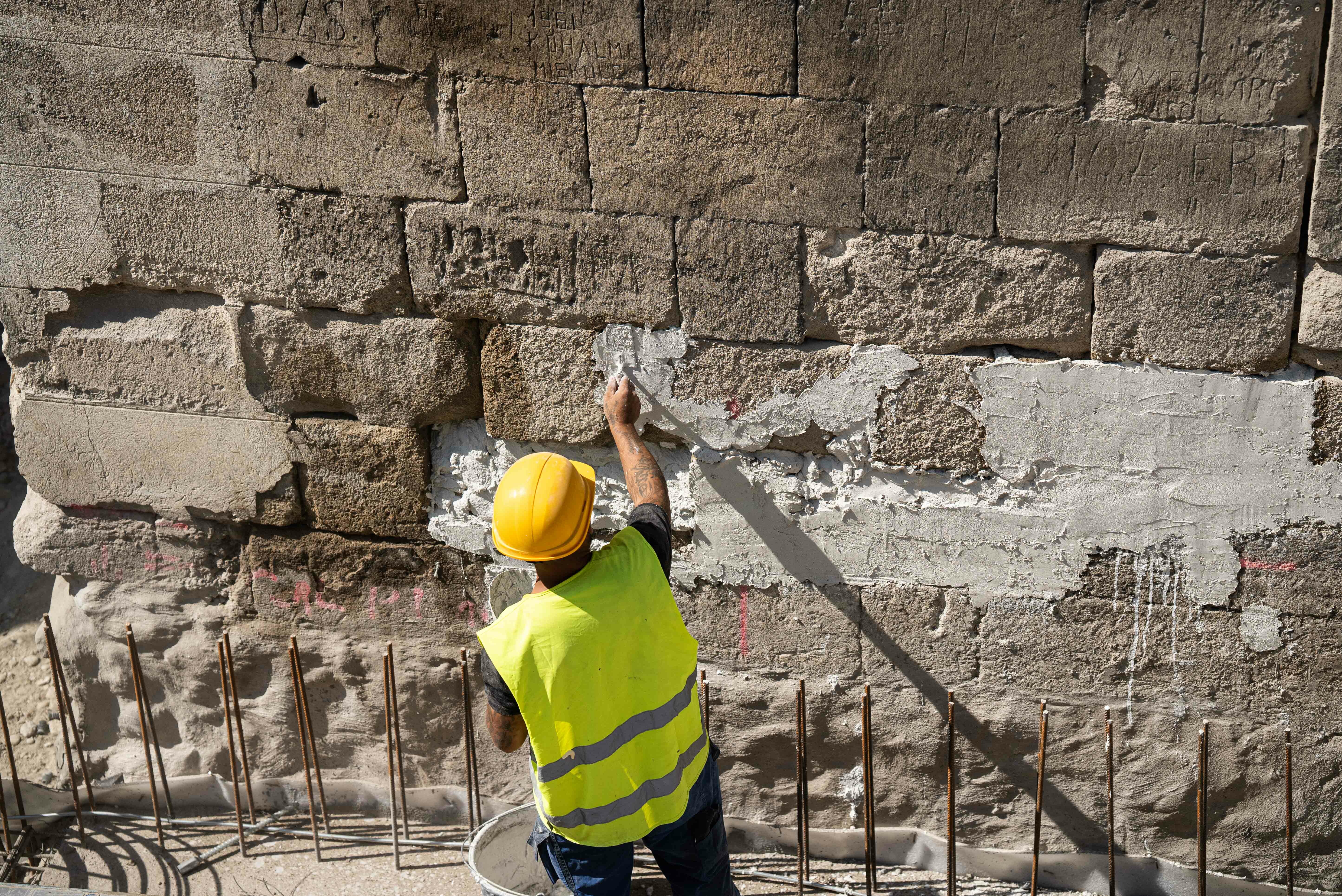
The restoration of Citadella presented a unique challenge in terms of both conservation and engineering. In the case of historic stone masonry, it was not simply a matter of repairing visible damage: first, it was necessary to understand the causes of the problems, the moisture load on the masonry, the movement of salts, and how to harmonise the newly applied materials with a structure that is more than one and a half centuries old.
We discussed this with Gábor Ludányi, a qualified stone sculptor and restorer, who, as a stone restoration expert, was involved in the preparatory work for the renovation of Citadella. His task was to determine how the historic stone walls could be treated in a manner that was responsible from a heritage conservation perspective.

What does a stone restoration expert’s role involve when working on a historic building of this scale?
The restoration of a listed building always begins at the drawing board. The restorer’s expert opinion forms part of the design process. When we were first approached regarding project Citadella as part of the preparations for the public procurement process, the task was to assess the condition of the building, understand its problems, and set out the principles that would later guide the execution of the work. Many people don’t even realise how much work this involves. Research, diagnostics, countless on-site inspections and many decisions for which there is no ready-made solution. With a listed building, the first step is always to understand what we are seeing.
What was the biggest problem with the Citadella?
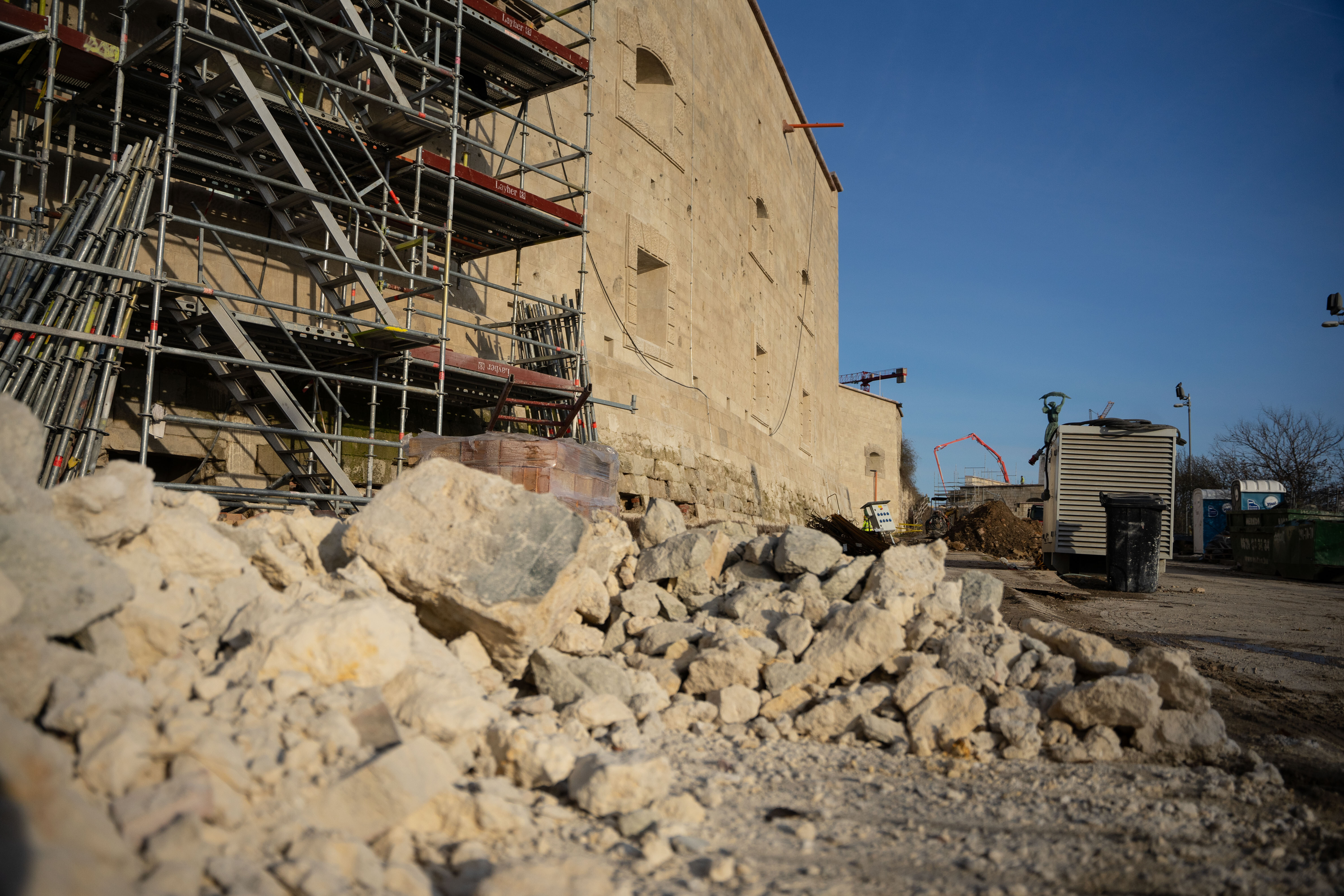
Most people focus solely on the condition of the stone itself, yet the root of the real problem stems from a much more complex environmental system; the biggest problem, of course, was the water. The walls of Citadella are in a particularly unfavourable position. There is a difference of four to five metres between the internal and external ground levels, whilst the original drainage system has practically ceased to function over the decades. During the wars, the area was dug up on several occasions and bunkers were built, causing the rainwater drainage system to be damaged or disappear.
The walls were constantly absorbing moisture from the surrounding earth. The water, in turn, carried salts into the stone. These salts pose the greatest threat: they crystallise, expand the pores and slowly cause the stone to crumble. This is a process that is barely visible from the outside for a long time, but which is constantly at work on the inside.
Is it possible to completely remove all salt from a wall like this?
No. That would be an illusion. With masonry of this size and extreme thickness, complete desalinisation is out of the question. Only a dynamic state of equilibrium can be achieved, as the walls, which widen towards the bottom, are also exposed to a significant amount of precipitation from the outside, resulting in dynamic wetting and drying close to the surface. This cannot be ruled out either, as, due to the structural characteristics, there is no cornice above the wall to protect it from direct precipitation. The aim was to ensure that the precipitation entering from the outside and the internal water mass remained as far apart as possible, so that the salt flow would not be directed back towards the surface. To achieve this, the path of the water first had to be blocked.
Is that why drainage was so important?
Yes. One of the most important aspects of the restoration was not actually the stone, but the water. A new rainwater drainage system was built, along with a drainage system to divert seepage away from the walls. Of course, with a fortress built on a hill, one can never say for certain that water will never enter the structure again. However, it is possible to ensure that it does not operate under constant water pressure. In addition, the external stone surfaces have been treated with a water-repellent coating to prevent torrential rain from causing further damage.
How does the choice of materials relate to this?
When dealing with a listed building that is more than one and a half centuries old, the selection of new materials is a huge responsibility. It is not enough for a mortar to perform well today. The question is how it will interact with the original stone and, above all, with the other materials originally incorporated into the building’s structure and the harmful compounds and salts that have formed since then, twenty, fifty or even a hundred years from now. This is why it was necessary to define precisely the entire process of cleaning, desalination, bricklaying and restoration. Modern materials do not, in themselves, provide a solution. Choosing the right system is crucial.
How did the materials for the Mapei come into the picture?
During the design phase, I met Károly Habling and had the opportunity to try out the Mapei restoration materials. I’m always interested in the technical specifications. I’m not looking for a particular brand, but for a solution that works. The materials included in the technical specifications were those that met the requirements demanded by a heritage restoration project of this kind. The MAPE-ANTIQUE ALLETTAMENTO and the associated restoration system were just that. We also used the ANTIPLUVIOL S and ANTIPLUVIOL W materials. Both are water-repellent, suitable for preventing the absorption of rainwater, and have a proven track record.
You’re a sculptor as well. What does that mean in terms of your work as a restorer?
I always say that being a restorer is more a mindset than a profession. Some people design bridges; others design churches. I work with historic buildings and works of art. Restoration brings together art, architecture, knowledge of materials and engineering thinking. Ultimately, however, all this work is about the same thing: ensuring that what has been entrusted to us is passed on in such a way that the next generation can experience it authentically.
The restoration of Citadella has received international recognition
The professional significance of this work has now been confirmed by international recognition: the refurbishment of Citadella won the Best Project award in the reference category of the Grand Prix 2026 international competition organised amongst the member companies of Mapei.
However, this recognition is not based on any single material or technology. The example of Citadella demonstrates that preserving a historic building requires a coordinated effort involving the identification of the causes of damage, expertise in restoration and engineering, the selection of suitable materials, and professional execution.
Watch the video filmed on location!
Source: Link









A new Youth Cultural Centre is being built in the city centre of Nyíregyháza

Speed restrictions are being imposed on the Hatvan–Szolnok railway line

The refurbishment of Citadella has won an international award – 14,000 square metres of historic stonework have been restored

Sofitel Hotel is the only Hungarian project in the running for the Dalux Award 2026 award – Watch the video too!

Rain gardens are coming to Budafok, with over 3,000 square metres of green space set to be developed

Four new bridges to be built in the heart of the former industrial city

Contemporary art deco in Csopakon

Safer driving on the motorways: new digital signs for the MKIF
-

 Current at 2026. 08. 25.
Apples and pears: according to MKIF, no valid conclusions can be drawn about the operation of the M6 from technical parameters that are not comparable
-
Current at 2026. 08. 26.
Grab your tools – The large-scale workshow for builders and gardeners is about to begin
-
What is being built? 2026. 08. 25.
They haven’t skimped on the technical specifications: this is what the Insula Residential Park in Komárom will look like, featuring the Leier solutions
-
Industry news 2026. 08. 25.
The Duna Aszfalt redeems the bonds issued under the GED Africa project