What is being built?
It has long gazed down from Kő-hegy; at last, the Hungarians’ totem animal can be restored

The mythological bird of the Hungarian people, frozen in stone, awaits the moment when expert hands will give it new wings. Vérteserdő Zrt. has launched a conditional public procurement tender for the restoration of the nearly 120-year-old Turul monument and the redevelopment of its surroundings.
Restoration of the Turul Monument in Tatabánya began as early as August 2025; the work carried out at that time was aimed at excavation and condition assessment, whilst the current public procurement procedure relates to the selection of a contractor. The deadline for submitting tenders is 30 November 2026.
The restoration will not alter the original appearance of the artwork; its aim is to repair the damage that has occurred since the last restoration in 1992.
The entire support structure is being replaced
The Turul bird is one of the millennium monuments erected to mark the thousandth anniversary of the Hungarian conquest. The bronze statue, known as one of the largest depictions of a bird in Europe, Gyula Donáth’s monumental work, was unveiled in 1907 to mark the thousandth anniversary of the Battle of Bánhida, which is dated to 907 in the chronicles.
One of the most complex tasks involved in the restoration is the renewal of the statue’s support structure . The Turul’s copper-sheet cladding is mounted on a steel supporting frame, and investigations have revealed that certain elements of the structure no longer adequately secure the cladding.
The technical documentation therefore provides for the complete replacement of the secondary supporting framework. The existing components will be replaced by a new structural system made of stainless steel. The primary steel framework will also be reinforced, as deformation has been identified in the neck of the statue. To address this, a three-belt truss support will be installed.
The scale of the restoration work is well illustrated by the fact that the total surface area of the statue’s cladding is 158 square metres, of which the left wing covers 45.6 square metres and the right wing 49.6 square metres. Twenty-four sections of the wings’ internal arched supports are also being replaced with stainless steel components.
Scaffolding is being erected to support the enormous wings
Thirteen access hatches, each measuring 600 × 1000 millimetres, will be cut into the cladding to allow access to the sculpture’s internal structure. A missing detail will also be replaced during the restoration. One of the claws on the right leg will be crafted using the chiselling technique, modelled on the existing claw.
The entire statue and the pedestal are surrounded by scaffolding. However, it is not enough simply to set up a conventional work area; the scaffolding must also provide support for the outstretched wings and be able to support the roof structure designed to protect against the rain.
According to the plans, a protective canopy covering 196 square metres is to be erected, the framework of which will be covered with decking. 1,800 square metres of plastic safety netting will be used for the scaffolding. The working platform of the heavy-duty scaffolding ensures safe working conditions even at a height of 20 metres, and the structure will also be fitted with lightning protection, water supply and electrical connections.
The copper cladding is cleaned using a specialised technology
In addition to the restoration of the supporting structure, the cleaning of the statue’s external and internal metal surfaces deserves special attention. On the external surfaces, the so-called JOS technology is used, which is a closed-system, wet micro-abrasion process. The internal surfaces are cleaned using a different method: laser technology.
The renovation will not leave the stone plinth untouched either. Existing stone will be used to repair the natural stone cladding, and repairs will be carried out using hard limestone on a total of 30 square metres of damaged wall sections.
As regards lightning protection measures, the plan is for the copper sheet cladding – at least 1 millimetre thick – to act as a natural lightning conductor. To this end, the existing frame earthing will be exposed and so-called potential control rings will be installed to reduce step voltage.
They are also tidying up the surrounding area
Another part of the project involves the refurbishment of the area surrounding the monument , as structural and condition surveys identified a number of issues not only with the statue itself but also within the visitor area.
Three of the pillars in the balustrade system, which consists of stone pillars and iron chains, have been damaged. The top 20–30 centimetres of the masonry has crumbled due to frost, and the chains are also missing in the affected areas. In addition to restoring the damaged stone elements, the missing sections of chain will also be replaced.
The gravel surface has eroded in several places, so plans are in place to add a layer of 5–10 centimetres across a significant portion of the area, and approximately 20 centimetres in the immediate vicinity of the statue. The works will also cover the damaged wooden structures of the information boards, the lampposts and the freestanding wooden furniture. In addition, the renovation of the playground’s railing has also been planned.
Source: Link









The River Charles posed no obstacle either – the M1 bridge is being rebuilt 1 metre higher

It has long gazed down from Kő-hegy; at last, the Hungarians’ totem animal can be restored

A new binder and wearing course is to be laid on a 1.3-kilometre stretch of Road 67

Preparations for the refurbishment of the main railway line in Pécs are set to begin

Rain gardens are coming to Budafok, with over 3,000 square metres of green space set to be developed

Four new bridges to be built in the heart of the former industrial city

Contemporary art deco in Csopakon

Safer driving on the motorways: new digital signs for the MKIF
-

 Bound track 2026. 10. 07.
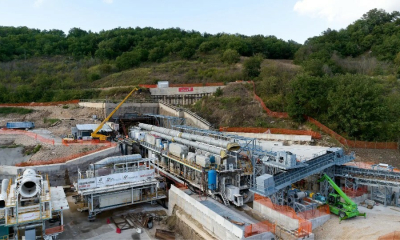
Aurora beneath the Apennines – Another tunnel is being built on the Naples–Bari railway line
-
Road building 2026. 10. 13.
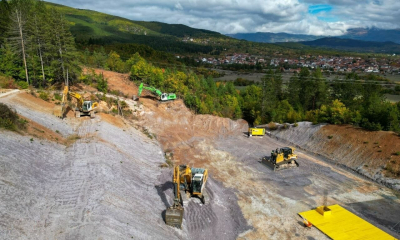
A consortium comprising STRABAG and Duna Aszfalt has been awarded the contract to build the North Macedonian motorway
-
What is being built? 2026. 10. 09.
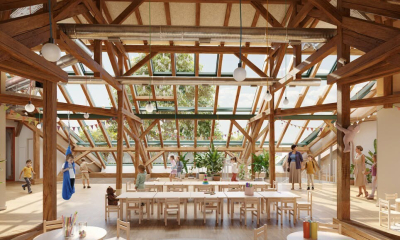
One of Budapest’s oldest nurseries is being renovated whilst preserving its timber roof structure
-
Industry news 2026. 10. 06.
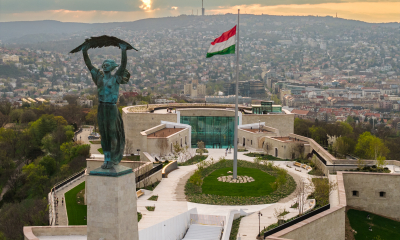
The refurbishment of Citadella has won an international award – 14,000 square metres of historic stonework have been restored