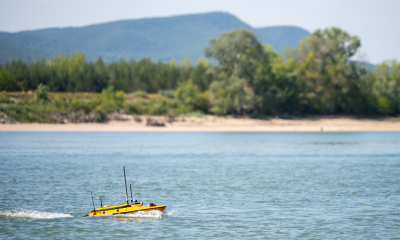
Water management
Three lakes in north-eastern Hungary will be protected by this development

A large-scale development programme worth HUF 415 million to conserve and restore wetlands in the Tarna-Lázbérc region is being launched with EU support.
The initiative will not only focus on improving the ecological condition of existing lakes and wetlands, but will also include the creation of new artificial water bodies and the construction of diversion systems for the safety of amphibians
- said András Rácz, State Secretary of the Ministry of Agriculture (AM), at a press event in Banapati, according to a press release issued by the Ministry on 14 May.

Under the KEHOP Plus programme, the Bükk National Park Directorate is launching nine major projects for a total of HUF 3.3 billion. The largest part of the funding will be dedicated to the rehabilitation of degraded natural habitats and targeted interventions for the conservation of endangered species.

The response to climate change
The current development will be located in the Tarnavic Landscape Protection Area and the Lázbérc Landscape Protection Area, directly affecting protected areas of national importance and Natura 2000. In recent years, climate change and changes in the water regime have led to the loss or premature drying up of many valuable habitats in the region, posing a serious threat to amphibians, reptiles, dragonflies and bird species, among others.

Fighting the filling of three lakes
The long-term survival of the three largest lakes - Lakes Bodó, Kéri and Verőlápai - will be ensured by dredging and upgrading sluice gates to slow their filling. In addition, ponds of 100-300 square metres will be created at fourteen sites in the Tarnavík Landscape Protection Area and four sites in the Lázbérc Landscape Protection Area, supplemented by smaller water bodies of 2-50 square metres at a further 183 sites.
The construction of landscaping on the upper reaches of the Szentgyörgyi stream and log dams on the Mocsolyás stream will help to retain floodwater and supply water to dead pools and depressions, the statement said.

The developments will directly support the survival and reproduction of the Danube ringed plover, the grassland frog, the red-bellied nightjar and many species of birds and bats. One of the main objectives of the project is to address the degradation of small wetlands caused by climate change and hydrological anomalies, contributing to the long-term conservation of diverse communities," the State Secretary said. Particular attention will be paid to improving the conservation status of amphibians, expanding their breeding opportunities and mitigating the effects of disease and human disturbance, he added.
Source : Link








The first municipal thermal power station in Transylvania is under construction

A huge brush was driven through the Sopron tunnel on the M85 – with video

The town centre on the banks of the Tisza is being regenerated

The Market has fulfilled its promise: it has delivered the 10,000 tonnes of natural stone offered for the raising of the bottom sill at Paks

Rain gardens are coming to Budafok, with over 3,000 square metres of green space set to be developed

Contemporary art deco in Csopakon

Four new bridges to be built in the heart of the former industrial city

Safer driving on the motorways: new digital signs for the MKIF
-

 Industry news 2026. 08. 18.
Students were introduced to the high-tech construction industry at BME’s field camp in Göd
-
Bound track 2026. 08. 17.
New pedestrian crossings and a junction with traffic lights are being built in Angyalföld
-
What is being built? 2026. 08. 18.
Hungary’s new McDonald’s restaurant has moved into a modernist listed building in the centre of Budapest
-
What is being built? 2026. 08. 18.
New paving, a playground and visitor facilities are being planned for the Várkör area in Pannonhalma