Current at
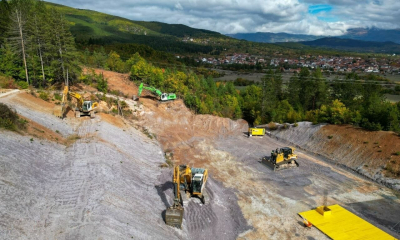
A spectacular result of the giant machines at work on the Hungaroring

We regularly report on the Hungaroring, a comprehensive, multi-year development project in which Market Építő Zrt. and Bayer Construct Zrt. are also working on. We recently reported on the laying of a time capsule as part of this large-scale development. In recent days, the developer Facebook page photo round-up of the construction work carried out over the past six months, which was also shared by the Market Csoport has also shared on Facebook page.

The Hungaroring is undergoing an amazing transformation - as stated in the Hungaroring's brochure. They stressed that the renovation work will continue after the 2024 Hungarian Grand Prix and highlighted:
At present, 620 people are working every day to ensure that the Hungarian circuit will host the F1 field at the August 2025 race at the usual high standard.

Subsequently, the contractor consortium provided a summary of the six-month period since then in figures representing very significant volumes. In the rebuilding and conversion of Hungaroring
- 23 785 m3 of concrete were processed,
- 7 604 tonnes of reinforcing steel installed,
- and backfilled the soil around the paddock building, completing the large-scale earthworks here.

Meanwhile, the construction of the 2nd floor vertical structure is underway in some areas of the paddock building, 100 % of the precast reinforced concrete bleacher beams and nearly 50% of the bleacher elements have been placed on the main platform and the stair elements are being installed.
Returning to the numbers, they summarise:
- 759 m2 of masonry structure built,
- 22 km of protective tubes and 80 km of liner tubes (including 20 km of power cables) were installed in the area surrounding the track strip,
- and the depot's high-current system is completed, while the low-current systems are 90%.

Source: Link






Major Hungarian construction project in the Serbian capital – a specialised world exhibition is on the way

Roadworks are taking place at 15 locations in Balatonfüred

SWIETELSKY is inspecting and repairing the surface defects on Main Road 25

Pécs, Gödöllő and Budapest: four SPAR stores have been refurbished – here’s which ones

Rain gardens are coming to Budafok, with over 3,000 square metres of green space set to be developed

Four new bridges to be built in the heart of the former industrial city

Contemporary art deco in Csopakon

Safer driving on the motorways: new digital signs for the MKIF
-

 Road building 2026. 10. 13.
A consortium comprising STRABAG and Duna Aszfalt has been awarded the contract to build the North Macedonian motorway
-
What is being built? 2026. 10. 09.
One of Budapest’s oldest nurseries is being renovated whilst preserving its timber roof structure
-
Current at 2026. 10. 10.
„The focus will not be on Lean’s equipment, but on how we operate” – the ‘Lean in the Construction Industry’ conference in November
-
Bound track 2026. 10. 08.
Déli railway station is set to undergo a major refurbishment, paving the way for double-decker trains