Industry news
Clean air workplaces are no longer just a health issue, but an economic one

Climate change, changes in our lifestyle and habits, and changes in the human body all have an impact on the development of the ventilation industry. Zoltán Csipszer discusses the interrelationships between these factors, the impact of the demand for clean air workplaces on the economy and the property market, demand-controlled ventilation systems, and how the industry is approaching sustainability. head of the ventilation technology division at Lindab Kft..

We have enclosed our lives within walls
"Our lifestyles have changed, but especially those of generations Y and Z, and we spend a significant part of our time indoors rather than outdoors. We play sports in gyms, between walls, most of our workplaces are also indoors. When we go out for entertainment, we can also enjoy cinema and theatre programmes, mostly enclosed by walls. Thus, the focus is increasingly on the quality of the air around us, in our workplaces and homes, although there is still a gap compared to the need for healthy water and food," said Zoltán Csipszer, summing up the main features of the transformation of our lifestyle.
The sick building syndrome takes its toll
The human body is particularly sensitive to even the smallest changes in the atmosphere. The need for a cleaner working environment has not only come into focus because of the epidemic situation, research has long shown that it is not only a health issue, but also has a number of economic implications.
Poor air quality in enclosed spaces is causing more and more people to suffer from frequent headaches, fatigue, eye or skin irritation, which is described in the literature as "sick building syndrome" (SBS). In addition, poor air quality can cause drowsiness, concentration loss and fatigue.

A pilot project* has been carried out on the Lindab, the air technology specialist explained. The ventilation of one of their renovated office buildings in Germany was designed with demand-controlled equipment. As a result, in addition to energy savings, which led to significant cost reductions, employees also reported improved well-being.
Indoor air quality is linked to our health and performance. An office with good indoor comfort means that colleagues are less tired, can perform better, and sick leave can be reduced by minimising health risks.
This is not only good for the company, but also good news for the economy of the country concerned, as fewer illnesses reduce the burden on the care system. What changes in a working environment with demand controlled ventilation?

More modern systems respond immediately to changes in air quality
Currently, the air handling unit in most office building air handling systems operates at a constant flow rate. With such air handling solutions, it does not matter how many people are in each room or what their function is. For the sake of clarity, the Lindab specialist gave an example of a system that can deliver 80,000 cubic metres of air per hour into a building. That's about 100 tonnes of air moving, which they try to distribute evenly between the floors.
In demand-controlled systems, however, sensors control the operation. In most offices, because of the home office, attendance varies hectically, and the occupancy of a room, such as a meeting room, can vary at different times of the day.
The demand-controlled ventilation systems detect the presence of people in rooms and changes in carbon dioxide levels. They increase or decrease the amount of fresh air supplied accordingly.
Zoltán Csipszer added that the installation of demand-controlled ventilation solutions is more expensive, but the payback period is significantly shortened, among other things, by the energy savings achieved during operation. This type of system always delivers only as much air as is needed to the rooms in the building.
The Lindab pilot project in Germany* has achieved energy savings of 68% and cost reductions of 73% thanks to the demand-controlled ventilation solution.
Cleaner working environments are also a good opportunity for real estate operators
Investors who have invested in clean air office buildings in their developments have reported being able to sell and rent them at higher prices. This expectation of buildings will, in time, become as important as that of sustainability. A shift in investor attitudes is outlined here, according to the expert. Zoltán Csipszer added,
Recently, a process has started in which not only buildings are rated according to specific criteria, but also the indoor environment of people is examined.

Since 2014, buildings can obtain the so-called WELL certification. Following the COVID outbreak, this initiative grew into the WELL Health and Safety Rating, which monitors, among other things, the disinfection and cleaning facilities, air and water quality, acoustics and other indoor spaces. The rating is reviewed annually, so that a purchaser or tenant who sees a sign on the building will receive feedback that the basic conditions for a healthy working environment are provided in that building.
"Research by the International WELL Building Institute suggests that improving the quality of the indoor environment increases people's cognitive performance by between 61% and 101%, depending on the level of improvement. In WELL rated buildings, users' overall satisfaction increased by nearly 30% , their perceived wellbeing by 26% and their productivity by 10 median points. Thus, companies that invest in a healthy indoor environment can gain a competitive advantage. Such companies already exist in Hungary."
- highlighted Regina Kurucz, WELL Certification Consultant and leader of the HuGBC WELL & Environment Working Group.
Step requirement: clean air in urban environments can only be ensured by mechanical ventilation
With today's architectural requirements and energy prices spiralling out of control, buildings are becoming more and more insulated, with the disappearance of opening windows in office and public buildings, increasing the energy efficiency of properties and reducing their maintenance costs. At the same time, Zoltán Csipszer pointed out, in terms of air quality, we are trapping condensation and the air we use between the walls.
Humans are one of the biggest consumers of air, with an average person consuming around 20 kilograms of air a day.
Clean air in buildings using conventional methods, especially in large urban areas, can almost only be ensured by mechanical ventilation.
Open windows allow heated or cooled air to escape and uncontrolled air quality, i.e. particulate matter, is drawn into the premises from outside. The industry has also made great advances in filter systems and energy use.
Sustainability is reshaping air technology and the real estate market
Just as all industries are expected to strive for sustainability, the same is true for aviation. The Swedish company is at the forefront of this.
An important objective of the Lindab is to use greener materials. The company is at the forefront of air technology companies in this. Already available in our range of air duct elements made from 75 per cent recycled steel, and testing fossil-free steel as a raw material for air technology products.

Zoltán Csipszer said that sustainability can also transform the approach of real estate investors. It would not necessarily be necessary to build new buildings, but to rethink the use of existing stock.
In Hungary, reinforced concrete office buildings started to be built in masses 30 years ago, and their life cycle can be extended to 100-150 years, so it may be a good solution to make them sustainable by keeping the building structure and renovating the heating, cooling and ventilation systems. Another way forward would be to examine the need to change the function of these buildings. With the rise of the home office, the demand for office space is decreasing, while the demand for conference and community space has increased. The adaptability of the buildings should be adapted to this with interior design and mechanical engineering solutions.
*Lindab Demand Controlled Ventilation (DCV) and case study: https://www.lindab.hu/inspiracio/legtechnika/igenyvezerelt-szellztetes/
Source : Link
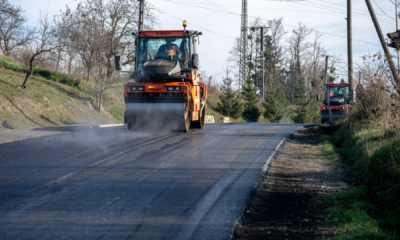




Roadworks are taking place at 15 locations in Balatonfüred

SWIETELSKY is inspecting and repairing the surface defects on Main Road 25

Pécs, Gödöllő and Budapest: four SPAR stores have been refurbished – here’s which ones

They could reshape the historic city centre, transport in the suburbs and even a unique public park in Székesfehérvár

Rain gardens are coming to Budafok, with over 3,000 square metres of green space set to be developed

Four new bridges to be built in the heart of the former industrial city

Contemporary art deco in Csopakon

Safer driving on the motorways: new digital signs for the MKIF
-

 Bound track 2026. 10. 07.
Aurora beneath the Apennines – Another tunnel is being built on the Naples–Bari railway line
-
Road building 2026. 10. 13.
A consortium comprising STRABAG and Duna Aszfalt has been awarded the contract to build the North Macedonian motorway
-
What is being built? 2026. 10. 09.
One of Budapest’s oldest nurseries is being renovated whilst preserving its timber roof structure
-
Current at 2026. 10. 10.
„The focus will not be on Lean’s equipment, but on how we operate” – the ‘Lean in the Construction Industry’ conference in November