Road building
Road network extension to accompany the construction of an office district in the heart of Budapest

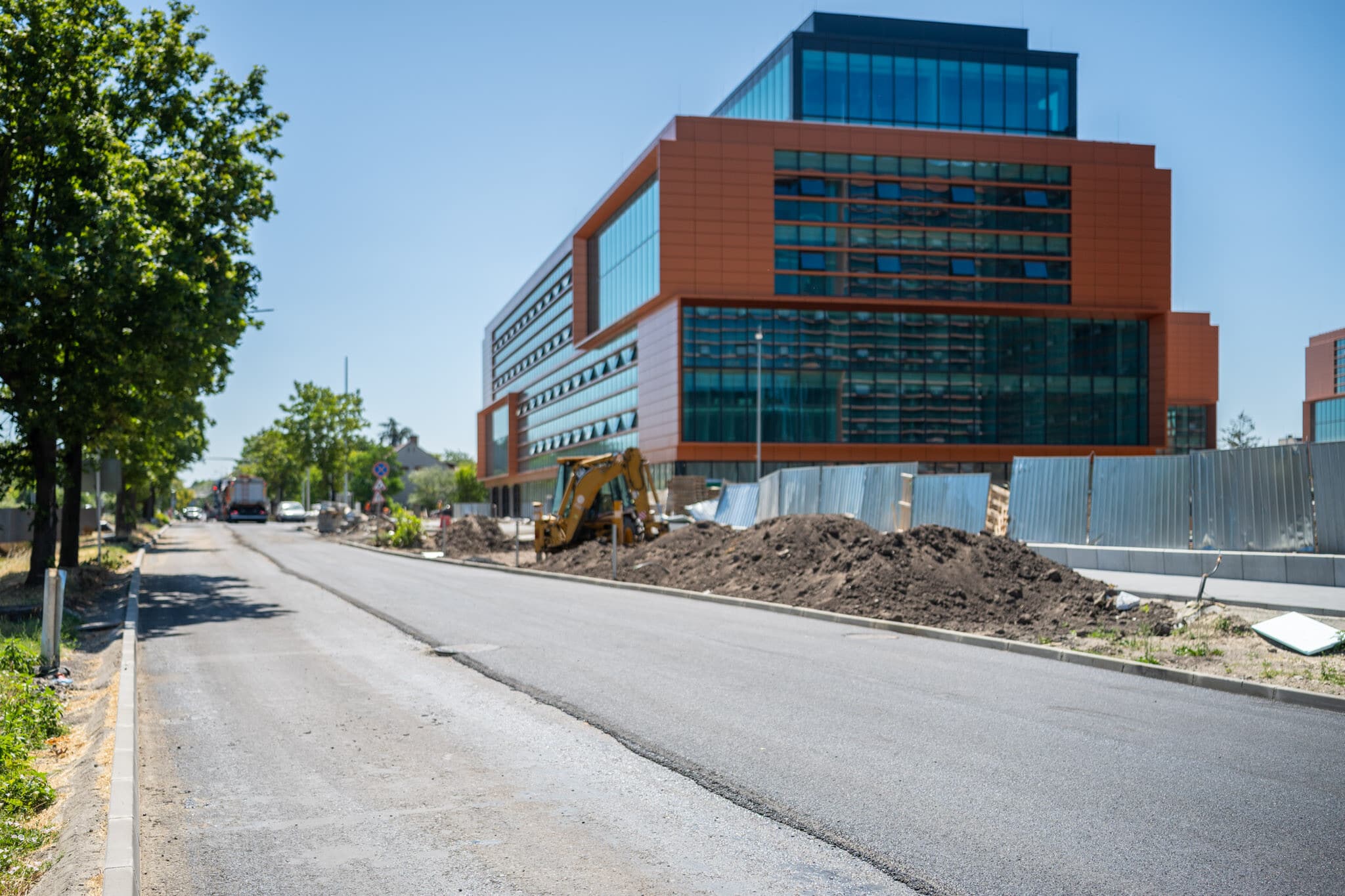
One of Budapest's most complex urban development projects is underway in the construction of Bayer Construct Zrt.. The Zenit by Bayer project involves the construction of a new office district, shopping centre, pedestrian zone and park in Zugló. In addition to expanding public utilities, the creation of the new city centre also involves the comprehensive development of the area's transport infrastructure, which is being worked on by the experts of Colas Út Zrt..
From wearing course replacement to structural reconstruction - More than ten different layering systems for roads
In addition to upgrading existing roads, new ones will be built and public transport conditions will be significantly improved. On behalf of Bayer Construct Zrt., Colas Út's experts will carry out a comprehensive improvement of the road network in the area, using more than ten different layering techniques, from the replacement of the wearing course to the complete reconstruction of the road structure, depending on the condition of the road structures.

New bridge to help transport
A 914-metre stretch of Csömöri road between King Louis the Great Road and Rákospatak Street will be reconstructed. In addition to the existing roadway, a completely new roadway will be built with a bridge over the Rákos stream for 400 metres. A bus corridor will support public transport.

In the case of Rákospatak Street, 410 metres of new track structure and reinforcement of the existing road section were built on the even side and 270 metres on the odd side. A new bus terminus has been built on this road.
On Vezér Street, the construction of a new lane is underway in the 210-metre long work area, the existing road is being demolished and rebuilt from the foundations.
Almost half a kilometre of Bosnyak Street will be resurfaced and the 160-metre-long asphalt strip of Bosnyak Street will be renewed.
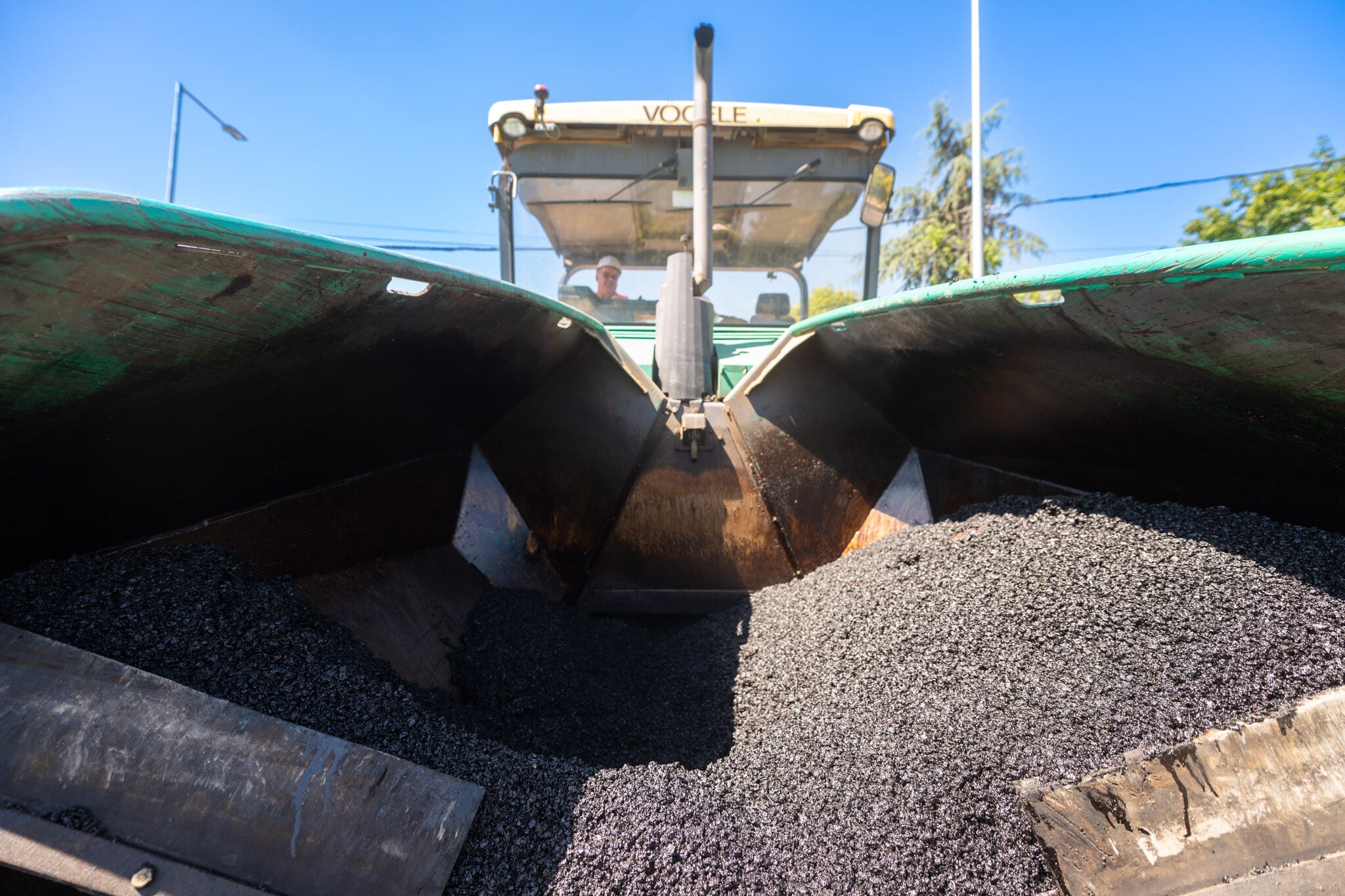
Advanced asphalt paving technology
The road network will be upgraded in line with changing road conditions and traffic demands, using more than 10 different layering schemes.
The pavement layers are laid using conventional hot mix asphalt paving machines, starting from CKT base course. Adhesion between the layers, and thus a longer service life, is ensured by Colas's proprietary bitumen emulsion. The pavement is typically composed of a modified bituminous base and binder course and SMA11 wearing course. The road construction was supplied with approximately 12,000 tonnes of asphalt, mostly by the Dunaharaszti mixing plant. In addition, 6,100 m³ of CKT and 450 tonnes of poured asphalt were also used in the road construction. In order to reduce the environmental impact, the asphalt mix was recycled in the base and binding layers. The project also includes the paving of 16,000 square metres of paving stones.

Community transport options are also expanding
Among the public transport improvements, new bus stop pairs with barrier-free access were built behind the Bosnyák Square church, at Sawmill Street and at the Lantos Mihály Sports Centre.
A new bus terminus and a BKV bus stop were built on the odd-numbered side of Rákospatak street.
The trolleybus stops on Vezér Street were relocated and rebuilt. In addition, stops for cars were constructed on Csömöri Street.

Ensure access to the surrounding workplaces during the work period
The organisation of transport in the areas affected by the works requires a great deal of care and a great deal of constant consultation. One of the important requirements is to ensure the construction traffic of the real estate development.
Bayer Construct Zrt. was responsible for coordinating and coordinating traffic schedules during
construction with stakeholders (Budapest Közút, BKK, BKV, District 14, etc.), designers and the contractor. The client determined the sequence of work based on the available data and coordinated with the work of the other subcontractors to have the temporary traffic engineering plans prepared and approved by the designer. Since the start of the project, negotiations have been ongoing.

The work area is located in the immediate vicinity of busy transport hubs and the Bosnyák Square market, so the continuous provision of pedestrian traffic and public transport is a priority. In particular, the road works are located in the immediate vicinity of a building of a company employing people with reduced working capacity, which has a high pedestrian traffic volume. The contractor has paid particular attention to safe access to the workplace.
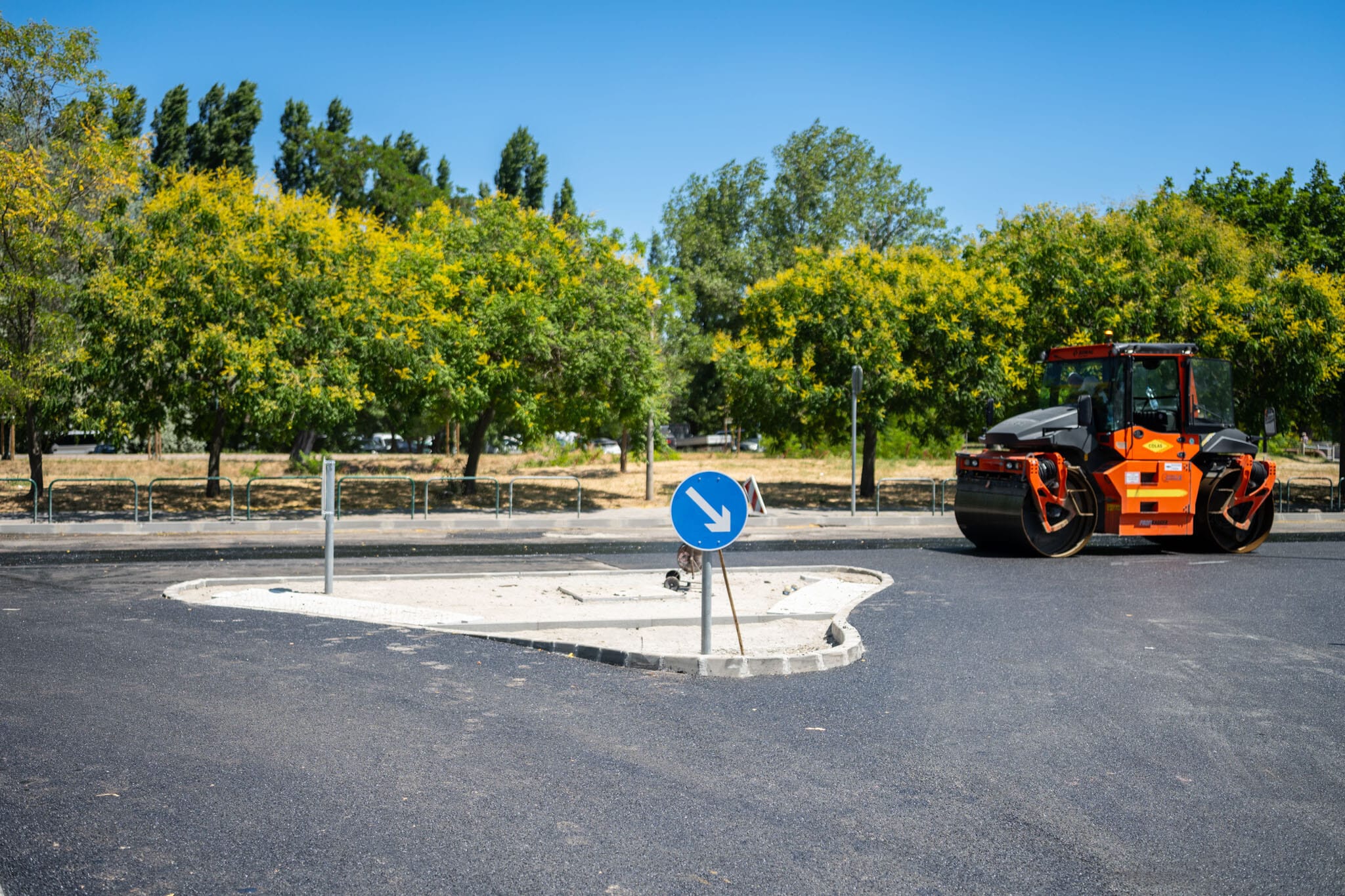
Workflows adapted to market days
The Bosnyak Square market was a constraint in the implementation of the project, with many types of work not or only limited during opening days.
The situation was further complicated by the construction of the new Rákos Stream Bridge, which was a major factor in traffic planning. At the junction at Bosnyak Square, a tram siding also crosses the work area next to the track of tram 3, which made work at the junction of King George Nagy and Csömöri út difficult.
This development is a good example of how infrastructure for a real estate development can be delivered on time and to a high quality in a densely built-up urban environment, despite complex traffic management and technical challenges.

Source : Link





Plans are already underway for the next phase of the Buda interlinking line, extending it as far as Albertfalva

This is a first: green energy is being generated from a depleted hydrocarbon well in Kiskunhalas

Demolition work is in full swing on the side of the M1 motorway heading towards Győr

A college of circus arts is being built in Pesterzsébet

Rain gardens are coming to Budafok, with over 3,000 square metres of green space set to be developed

Four new bridges to be built in the heart of the former industrial city

Contemporary art deco in Csopakon

Safer driving on the motorways: new digital signs for the MKIF
-

 Bound track 2026. 10. 07.
Aurora beneath the Apennines – Another tunnel is being built on the Naples–Bari railway line
-
Road building 2026. 10. 13.
A consortium comprising STRABAG and Duna Aszfalt has been awarded the contract to build the North Macedonian motorway
-
Current at 2026. 10. 05.
Sofitel Hotel is the only Hungarian project in the running for the Dalux Award 2026 award – Watch the video too!
-
What is being built? 2026. 10. 09.
One of Budapest’s oldest nurseries is being renovated whilst preserving its timber roof structure