Road building
The main street of the Lakatos út housing estate is being renovated along almost its entire length

The Lakatos út housing estate is one of the first socialist housing estates in the 18th district of Budapest, specifically in the Pestszentlőrinc neighbourhood. The Budapest City Council decided to build the estate in 1962, and construction took place in two main phases (1963–1967, then 1975–1987).
Four- to five-storey brick and slip-form buildings, as well as ten-storey prefabricated blocks, alternate amongst spacious, landscaped public spaces in an exceptionally green setting. The airy space between the blocks and the logical layout of the facilities earned the designers (János Brenner and Mrs János Brenner) the Ybl Prize.
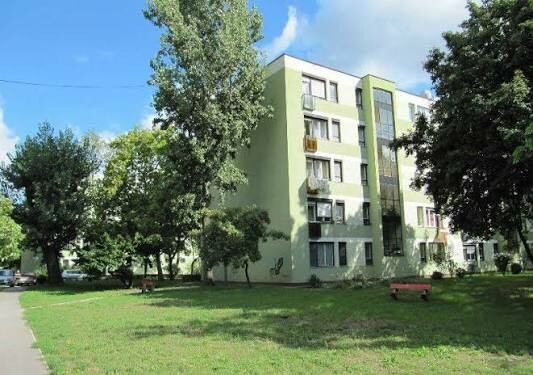
Winding high street to get new surfacing
Dolgozó út (commonly known as Dolgozó utca and also shown as such on some maps) is a quasi-main road providing access to the housing estate from the north; it is surrounded by peaceful, park-like surroundings, whilst at the same time providing access to most of the estate’s amenities and public facilities.
The Local Council of Pestszentlőrinc-Pestszentimre has issued tender for the comprehensive refurbishment of the paving at the housing estate on Lakatos Street, which was awarded to Profunda Bau Építőipari Kft. with a bid of nearly 300 million forints.
The planned works will affect the sections of road in front of Dolgozó utca 5, 7, 9, 11, 13 and 16, as well as those in front of Dolgozó utca 4, 6, 8 and 10, covering a total of approximately 4,736 m² of paved road surface.

In some places, the track structure also needs replacing
As part of the works, the asphalt surface will be milled to a depth of 5 cm, and where necessary, the road surface may be partially removed and the road structure replaced. The new road surface will be constructed with an AC11 asphalt wearing course, 4+4 cm thick, whilst the structural repairs will involve a 20 cm layer of compacted rolled gravel and a 15 cm Ckt-4 concrete base.
The renovation work includes the removal of raised kerbs and the construction of new raised kerbs, as well as the installation of garden kerbs and recessed kerbs. The pavement will be rebuilt in several places, with tactile paving elements incorporated to ensure accessibility.
Safety is being improved with traffic-calming islands
Where necessary, public utility fittings – such as manhole covers, water shut-off valves, drainage inlets and fire hydrants – will be raised to the correct level; whilst the works are in progress, new road markings, durable white road paint and traffic-calming islands will also be installed to improve road safety.
The landscaping will be complemented by the planting of perennials and shrubs, the laying of turf, and the installation of benches.
Source: Link








The first municipal thermal power station in Transylvania is under construction

A huge brush was driven through the Sopron tunnel on the M85 – with video

The town centre on the banks of the Tisza is being regenerated

The Market has fulfilled its promise: it has delivered the 10,000 tonnes of natural stone offered for the raising of the bottom sill at Paks

Rain gardens are coming to Budafok, with over 3,000 square metres of green space set to be developed

Contemporary art deco in Csopakon

Four new bridges to be built in the heart of the former industrial city

Safer driving on the motorways: new digital signs for the MKIF
-

 Industry news 2026. 08. 18.
Students were introduced to the high-tech construction industry at BME’s field camp in Göd
-
Bound track 2026. 08. 17.
New pedestrian crossings and a junction with traffic lights are being built in Angyalföld
-
What is being built? 2026. 08. 18.
Hungary’s new McDonald’s restaurant has moved into a modernist listed building in the centre of Budapest
-
What is being built? 2026. 08. 18.
New paving, a playground and visitor facilities are being planned for the Várkör area in Pannonhalma