Current at
Lechner heritage, contemporary solutions - how was the Drechsler Palace rebuilt?

Built between 1883-1885 on the basis of the designs of Ödön Lechner and Gyula Pártos, the former Pension Institute of MÁV is best known for its later function as the Ballet Institute. The plans for the reconstruction of the building, which was in a very dilapidated state, were drawn up by the Bánáti + Hartvig Architectural Office and the construction was undertaken by DVM Group .
The task was a major challenge, as the original plans for the badly damaged building were incomplete. The technical renovation, which allowed the palace to survive, has been carried out in the spirit of the original plans, with the exterior architecture and the remaining Lechner elements in the interior spaces, but of course with a number of contemporary elements, as the former palace was rebuilt as part of the W hotel chain. In connection with this, an additional floor was added in the attic and the mechanical space above it, giving the building its final six-storey form.
It is a tribute to the ingenuity of the designers and the skill of the builder that the openings for the natural lighting of the fifth-floor rooms were inspired by the roof design of Lechner's later buildings: a transparent band in the roof plane of the Drechsler Palace, following the form of the Zsolnay ceramics he later used, perfectly matches the neo-Renaissance construction.

In ÉVOSZ's latest podcast, host János Bene is joined by his interviewees:
- Péter Haberl, prime contractor for the construction of the Drechsler Palace, managing partner of DVM Group Kft.
- Marcell Lukátsi, the interior design project manager, the architect project manager for DVM Group Kft., the contact person for the British interior designer Bowler James Brindley Studio (BJB);
- László Czifrák, qualified silicate restorer, artist, expert in historic restoration, managing director of Consall Team restaurátor Kft.
The interesting conversation reveals, among other things, that
- the condition of the building before the renovation,
- what the client's expectations were for the conversion,
- why and how a four-storey house became a six-storey house,
- which were the rare engineering solutions or the fact that
- what were the most memorable difficulties,
- how heritage and modern luxury can work together and
- what participants are most proud of in their own work.
The podcast is available by clicking on the link below or on the image:
Source : Link

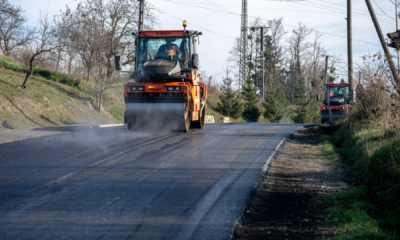




Roadworks are taking place at 15 locations in Balatonfüred

SWIETELSKY is inspecting and repairing the surface defects on Main Road 25

Pécs, Gödöllő and Budapest: four SPAR stores have been refurbished – here’s which ones

They could reshape the historic city centre, transport in the suburbs and even a unique public park in Székesfehérvár

Rain gardens are coming to Budafok, with over 3,000 square metres of green space set to be developed

Four new bridges to be built in the heart of the former industrial city

Contemporary art deco in Csopakon

Safer driving on the motorways: new digital signs for the MKIF
-

 Bound track 2026. 10. 07.
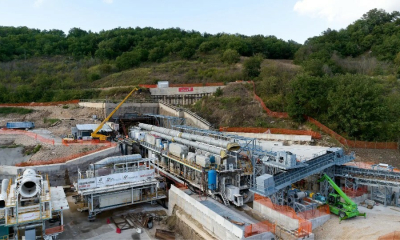
Aurora beneath the Apennines – Another tunnel is being built on the Naples–Bari railway line
-
Road building 2026. 10. 13.
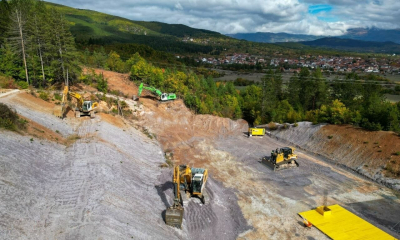
A consortium comprising STRABAG and Duna Aszfalt has been awarded the contract to build the North Macedonian motorway
-
What is being built? 2026. 10. 09.
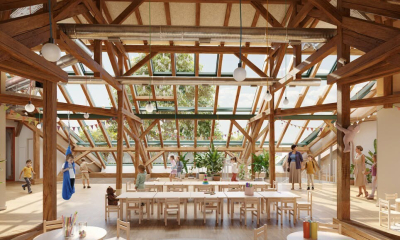
One of Budapest’s oldest nurseries is being renovated whilst preserving its timber roof structure
-
Current at 2026. 10. 10.
„The focus will not be on Lean’s equipment, but on how we operate” – the ‘Lean in the Construction Industry’ conference in November