Industry news
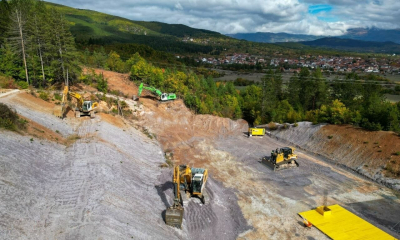
Nature can stop a construction project overnight

Every year the protection of barn swallows moving into construction sites becomes a problem, so the Hungarian Ornithological and Nature Conservation Society (MME) warns investors to be careful and take preventive measures.
Prevention is cheap and simple
The organisation said in a statement on Monday that a long-standing problem in bird conservation across the country is that the barn swallows, which return to Hungary in spring, are moving into building foundations and construction excavations. This means that work must be stopped for months, or else illegal work can kill the entire colony, eggs, hatchlings, feeding birds and chicks.
In addition to copper-pointing, the association recommends a cheap and simple prevention method that can be used everywhere: tarpaulin covering of potentially dangerous earth walls for construction companies and businesses, the public and municipalities.
The cases described above can easily occur from the second half of April until early summer. At this time
- in even a 0.5-2 metre vertical wall of a building foundation pit dug on a weekday,
- fresh, or in the loose, eroded sides of a pile of earth left over from previous years of construction, especially highway construction,
- in cable ducts and cable trenches
dozens or even hundreds of pairs of barn owls with their breeding cavities.
The national parks help to survey the area
The problem can be easily avoided if such potential nesting sites are made unattractive to the barn swallows by covering them with a tarpaulin or Raschel net, even after the day's work, but at least during a day's break. To assess the risk, it is advisable to seek the professional advice of the relevant National Park Authorities.
In addition to the two species of mud-nesting colonies, the kestrel and the martin, MME has also launched a campaign to help breeding shore swallows and wagtails with similar breeding behaviour.
By carving the one to two metre high eroded shorelines to vertical in March-April, anyone can provide nesting sites for colonies, and such shorelines can be built by hand or machine, even as a replacement for dangerous nesting sites that have been levelled.
In addition, data from swallow and grass nests can be continuously recorded in the Fecskeles smartphone app.
Source : Link







Major Hungarian construction project in the Serbian capital – a specialised world exhibition is on the way

Roadworks are taking place at 15 locations in Balatonfüred

SWIETELSKY is inspecting and repairing the surface defects on Main Road 25

Pécs, Gödöllő and Budapest: four SPAR stores have been refurbished – here’s which ones

Rain gardens are coming to Budafok, with over 3,000 square metres of green space set to be developed

Four new bridges to be built in the heart of the former industrial city

Contemporary art deco in Csopakon

Safer driving on the motorways: new digital signs for the MKIF
-

 Road building 2026. 10. 13.
A consortium comprising STRABAG and Duna Aszfalt has been awarded the contract to build the North Macedonian motorway
-
What is being built? 2026. 10. 09.
One of Budapest’s oldest nurseries is being renovated whilst preserving its timber roof structure
-
Current at 2026. 10. 10.
„The focus will not be on Lean’s equipment, but on how we operate” – the ‘Lean in the Construction Industry’ conference in November
-
Bound track 2026. 10. 08.
Déli railway station is set to undergo a major refurbishment, paving the way for double-decker trains