Industry news
Artificial ventilation - luxury investment or health investment?

Ranking based on the level of fine particulate pollution in the air quality of cities across our continent. Of the 372 cities surveyed, Uppsala in Sweden has the cleanest air. Five Hungarian cities are on the list, with Budapest, which is considered the best based on its values, ranked only 242nd. In addition to air quality, the survey highlights the link between polluted air and the development of numerous types of diseases.

Is it possible? Polluted outdoor air, healthy indoor environment
Air is our lifeblood, so its quality is key to our health, indoors and outdoors. How can we ensure clean air indoors, where we spend 90 percent of our time, if the quality of the air outside is also poor?
Without mechanical ventilation, indoor air quality can no longer be guaranteed in enclosed spaces, especially in urban environments.
Conventional ventilation can let a lot of dust into the interior and you should open windows at least 12 times a day to ensure sufficient air.
The lack of healthy air indoors can cause headaches and concentration problems in the short term, and after a longer period of time can be the cause of a number of illnesses, all of which have a negative impact on productivity.

Higher levels of indoor comfort with minimised energy consumption
The proven links between the effects of climate change, air quality and the development of certain diseases are slowly but almost forcing a change in the perception that mechanical ventilation is a luxury investment. Based on what is going on around us, it is becoming a health-saving investment that brings ventilation technology into the ranks of basic building infrastructure. The latter raises a number of questions...
How many years can it take to pay for the installation of a state-of-the-art ventilation system in residential buildings and offices? Can you ensure indoor comfort and a healthy environment at the same time? Are the most efficient technologies available not only for property developers but also for residential users?

The latest Demand Controlled Ventilation (DCV) systems can provide indoor comfort more economically than previous fixed-volume and then more modern variable-volume solutions, with significantly lower energy consumption than their predecessors. How?
DCV is an intelligent energy-optimised ventilation system that adjusts airflow and indoor comfort parameters according to the individual needs of each room in the building. It takes into account the number of occupants in the room and only delivers as much air to the room as needed, when it is needed. This results in significant energy savings.
Case study balance - Lower building management costs, fewer sick days
The single-storey building, constructed in Germany in 1989, was modernised with demand-controlled ventilation systems from Lindab demand-controlled ventilation systems were used to modernise a single-storey office building constructed in Germany in 1989 and the two-storey office building connected to it, which was handed over in 1995. The air conditioning system installed at the latter date was converted to a DCV system, where it was possible to retain the previously installed duct system.

Compared to the previous constant-flow ventilation system, the modern system has resulted in a 73 percent cost reduction. Improved indoor comfort has not only reduced building operating costs, but also cut down on sick leave time for employees. The pilot project was implemented with a 4.5-year payback.
The investment has demonstrated that significant changes in indoor comfort and energy-efficient operation can be achieved by upgrading previous systems to be demand-driven. So, even in the case of retrofit, let's feel free to reach for more modern and energy-efficient technologies!
Customizable ventilation per room
The demand-controlled mechanical ventilation system, which can be used in office buildings, institutions and homes, uses sensors to monitor in real time the carbon dioxide level, temperature and indoor presence in each room.
The control system operates the fans and extractors according to the number of occupants and oxygen consumption, and supplies the occupied rooms with the right amount of temperature-controlled, filtered, clean fresh air. This provides higher indoor comfort with less energy consumption than previous ventilation systems
Why are energy savings worthwhile?
Building services can account for up to half of a building's energy use, with fans being the largest consumers. Many office buildings are currently equipped with constant volume flow systems that constantly exchange a fixed volume of air, depending on the function of the rooms and the number of people currently occupying them.

Demand-controlled mechanical ventilation, on the other hand, can be adapted to the varying conditions in offices and homes, depending on the time of day and the room. For example, in workplaces, the number of people present increases during meetings and in meeting rooms, so more fresh air is needed there, while empty workstations need less. Older systems are unable to detect these changes, so ventilators operate even when there is no one in the room.
It is worth switching for both new build and retrofit
The Lindab offers demand-driven solutions for both new buildings and renovations. The installation of DCV mechanical ventilation systems and the upgrading of existing ventilation systems is an investment, one of the most important values in the preservation of human health, but also an added value to the property.
Source : Link

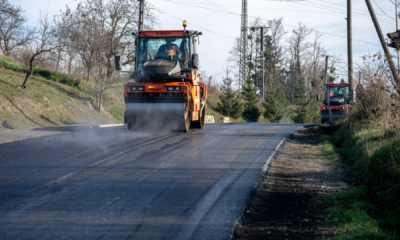

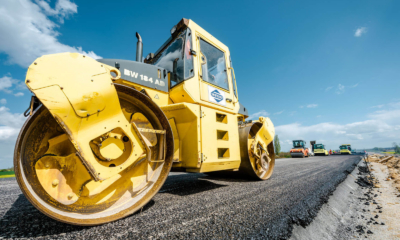


Roadworks are taking place at 15 locations in Balatonfüred

SWIETELSKY is inspecting and repairing the surface defects on Main Road 25

Pécs, Gödöllő and Budapest: four SPAR stores have been refurbished – here’s which ones

They could reshape the historic city centre, transport in the suburbs and even a unique public park in Székesfehérvár

Rain gardens are coming to Budafok, with over 3,000 square metres of green space set to be developed

Four new bridges to be built in the heart of the former industrial city

Contemporary art deco in Csopakon

Safer driving on the motorways: new digital signs for the MKIF
-

 Bound track 2026. 10. 07.
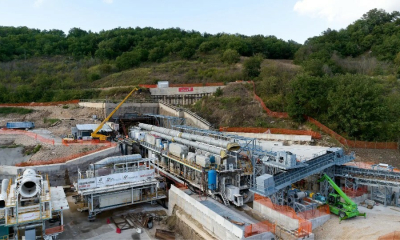
Aurora beneath the Apennines – Another tunnel is being built on the Naples–Bari railway line
-
Road building 2026. 10. 13.
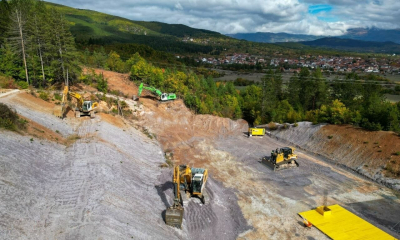
A consortium comprising STRABAG and Duna Aszfalt has been awarded the contract to build the North Macedonian motorway
-
What is being built? 2026. 10. 09.
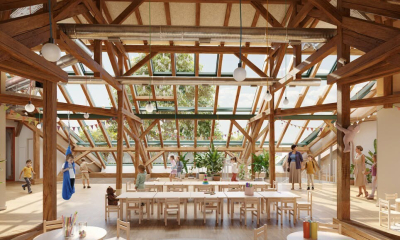
One of Budapest’s oldest nurseries is being renovated whilst preserving its timber roof structure
-
Current at 2026. 10. 10.
„The focus will not be on Lean’s equipment, but on how we operate” – the ‘Lean in the Construction Industry’ conference in November