Current at
From theory to practice: SWIETELSKY Vasúttechnika launches its scholarship programme again in autumn

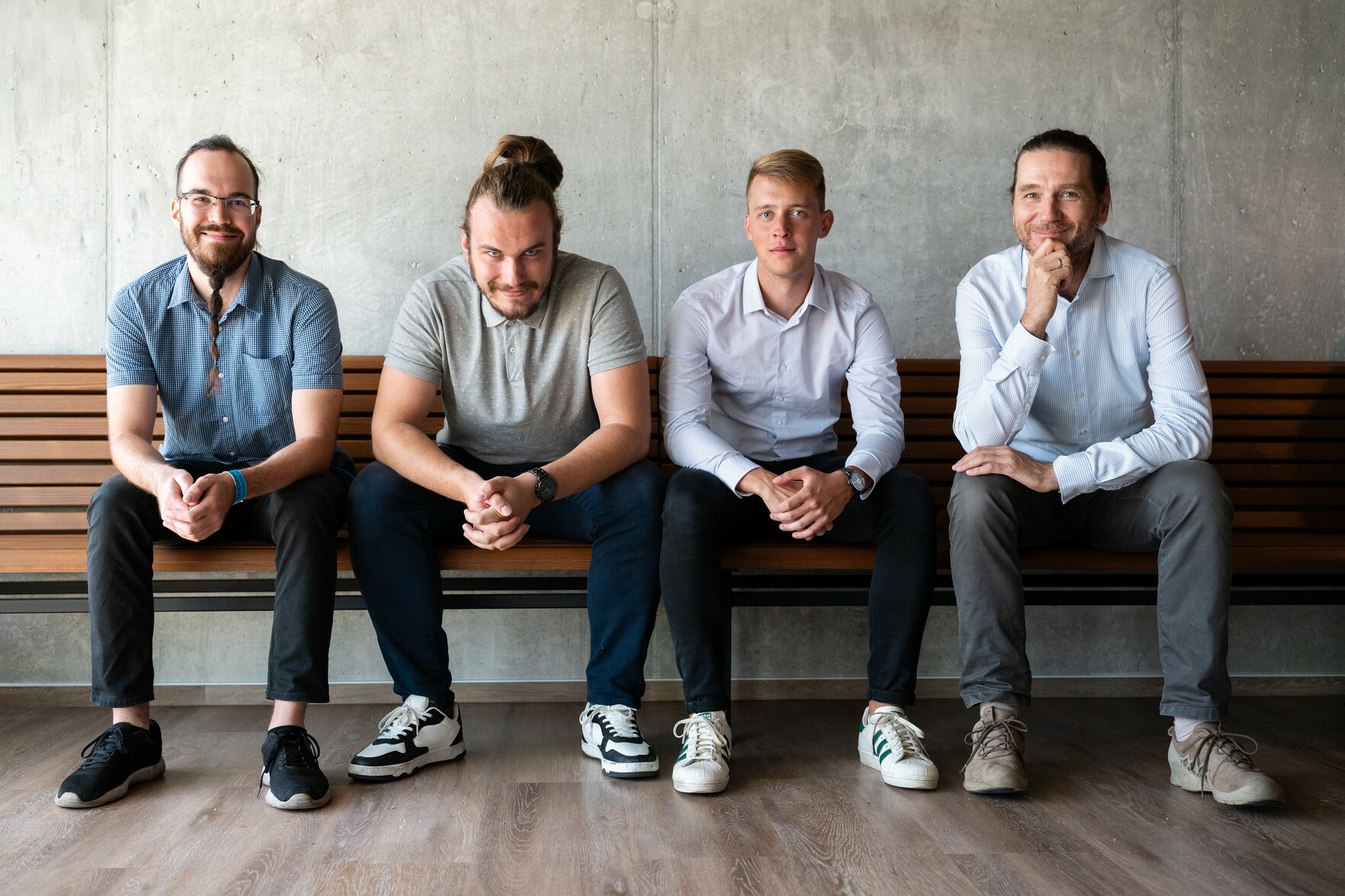
This year, the scholarship programme is being announced again by SWIETELSKY Vasúttechnika Kft. Last year, we talked to several young engineers who were participants in a previous year's scholarship programme and are now working as employees of the company. We visited them again to hear how Vasúttechnika helped them start their professional careers, and we also asked them how they are shaping their careers now that they are employees. Dávid Bódai, Márton Suga and Dávid Szabó all came to Railway Technology from the infrastructure department of the Faculty of Civil Engineering at the Budapest University of Technology and Economics. The discussion was also attended by István Dudás, the company's railway construction director, who is in daily contact with the young people and strives to support them. The expert explained in detail why it is important for the railway construction company to help young engineers and support young people starting their careers.
Photos by Mihály Erdei/magyarepitok.hu
"Despite the difficult economic situation in the sector, we believe it is important to pass on the knowledge we have in our company and to always have internal professional replacements. To do this, we need motivated students/fresh graduates who are interested in the field, love to learn and are not afraid of challenges. A few years ago, Vasúttechnika launched its scholarship programme, which will be re-launched this autumn.
As a change from previous years, this time we are expecting students from BME Transport Engineering, Mechanical Engineering and Electrical Engineering, as railways are a very diverse and complex field, where civil engineers and engineers from other disciplines work together. The traineeship programme gives students an insight into the world of railway construction, so that they can make a more responsible decision about whether to work in this field when they graduate with a BSc. Part-time employment alongside an MSc is also an advantage for students, because they can actually spend time on their studies, as opposed to a full-time job. And the learning doesn't end after the MSc degree: there is a lot of experience for young engineers to gain before they can become a responsible technical manager."
We also asked István Dudás whether young engineers can bring a new approach to the life of a long-established company.
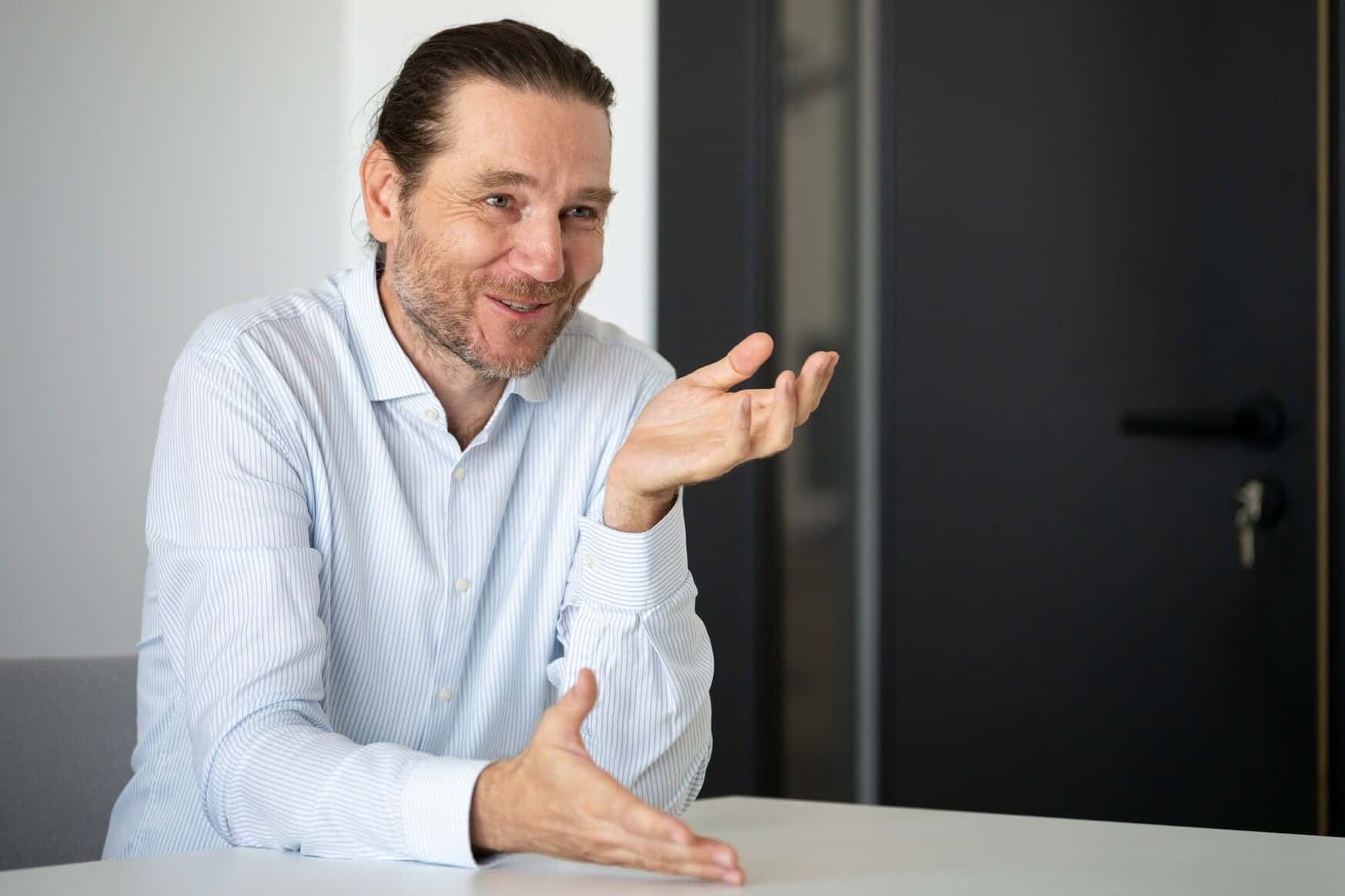
"I really like working with young people because they see many things in a completely different way than the older generation, and my experience is that the more different perspectives we bring together, the better the result. When asked why we do it this way in a work process, older people often say "because that's the way we do it". Younger people, on the other hand, dare to ask questions and can come up with alternative answers that can move the process forward."
The railway construction director also touched on the topic of digitalisation. As he says, this is a topic that is particularly relevant to young people, and it is mainly younger engineers who are involved in the company's research and development project. In fact, a foreign student has also joined the process this year. As we we wrote earlier, Matome C. Modiba, a master's student at BME from the South African province of Limpopo, and Márton Suga jointly investigated how camera-based track monitoring systems could be installed on machines in order to examine damage to concrete slabs.
"The biggest challenge for rail and construction projects will be the deployment of the BIM system. Previously, contractors worked only from site drawings and length sections. Now, however, 3D models must be implemented and every step of construction must be documented in 3D in order to produce accurate, up-to-date implementation plans. This requires a lot of administration, so a young workforce that is familiar with and good at using the new digital workflows is very much needed. At present, most projects do not yet start with a full 3D set, but the elements that are implemented need to be processed and fed back to the designers in 3D. Budgeting is already being done with BIM-compatible software, but full progress will be made when quantitative data can be directly derived from 3D models" - concluded István Dudás.
From scholarship to work experience: the role of Vasúttechnika in shaping career paths
After a chat with the Director of Railway Construction, we asked the young engineers about their professional development at Rail Technology over the past year.
Dávid Bódai: I participated in the scholarship programme three years ago, and since then - now as an employee - I have had a lot of varied tasks both in the office and in the field. I am currently working as a field engineer and in the last year I have had the opportunity to gain experience abroad in Sweden, Croatia and the Netherlands. In Sweden and Croatia, for example, we did track renewals with SMD80 machines, during which I took measurements, assisted the foreman and occasionally interpreted. I believe that you need to try out as many different tasks as possible to become a good technician. The biggest challenge for me so far is not the work here, but my MSc studies alongside it, because I am much more enthusiastic about the company tasks. I have not had a designated mentor within Rail Engineering, but I have had the opportunity to work with many helpful colleagues, engineers, foremen, machine operators and track workers alike.
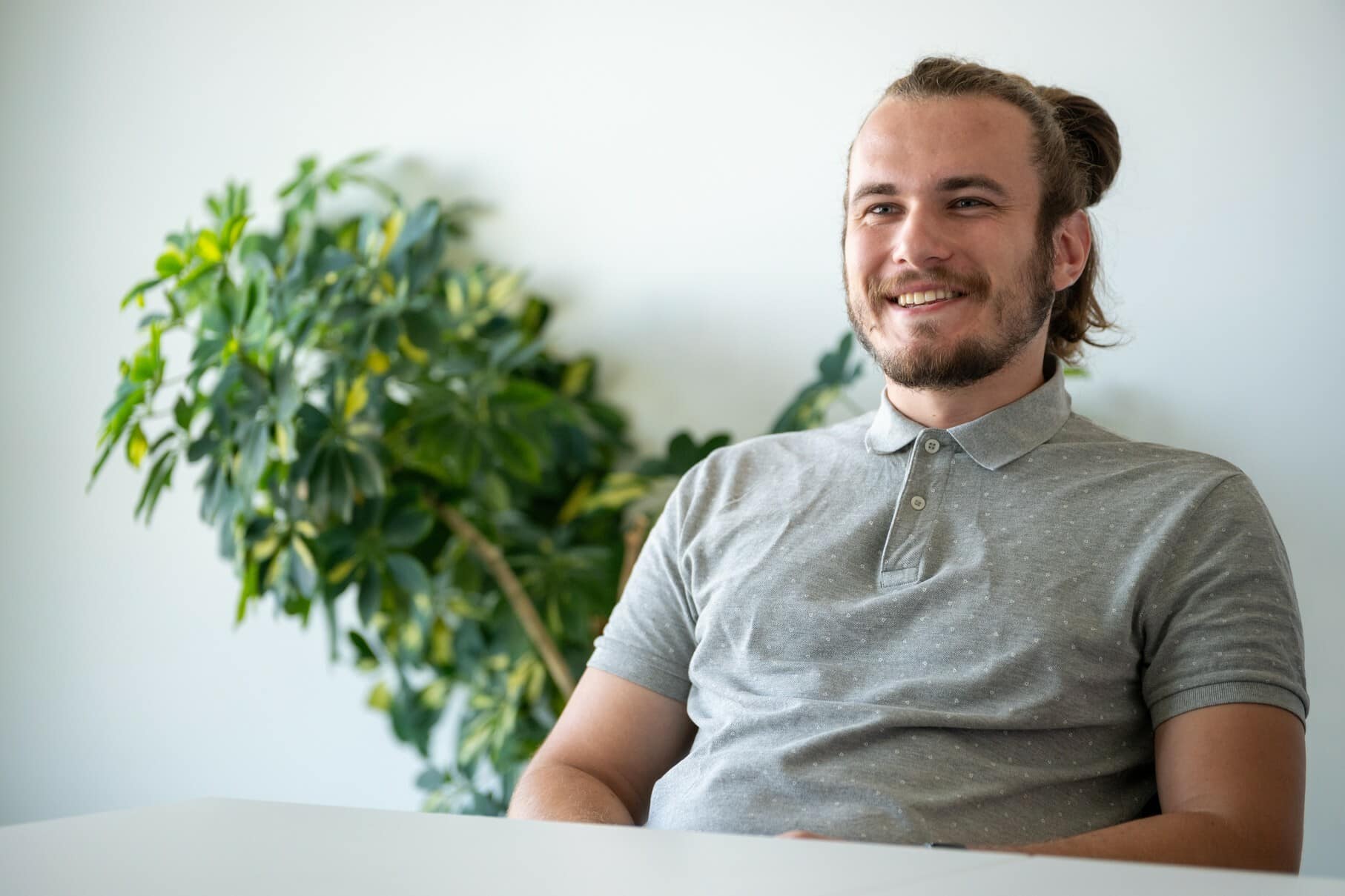
Márton Suga: Dávid and I arrived at the Railway Technology at the same time. He has been in the field more in the last year. I graduated in the spring, and since I wanted to get a job specifically related to BIM - my thesis was about that - I was more into that, so I was less in the field. It was a big advantage that I had my external consultants in the company, so I could consult with them on a daily basis, even on short questions. With Daniel Molnár we looked at quantity and resource estimation and 3D modelling of railways, while Gábor Stangl taught me mainly about overhead line experience. Last year I worked on rail projects in Germany and the Benelux countries, and this year for the first time in Sweden, where I was particularly impressed by the relaxed and organised way of working.
Dávid Szabó: Two months after joining the company, I worked as an interpreter on a sub-assembly line with Hungarian and Austrian machine operators – that's when I started to learn more about sub-assembly machines and also got to grips with German technical terms. Last summer, I worked alongside the foreman at SMD in Sweden: I learned his tasks and helped him, and occasionally I also interpreted. In the autumn, I worked with SMD in Croatia in the same way, where my tasks included preparing the machine for work, ensuring fuel and water supplies, and solving local language difficulties. This summer, I worked in Sweden again, and I will be going back there in the near future. In addition to office and field work, we also participated in several training courses, such as railway construction-related measuring instrument, track measurement and civil 3D training, railway traffic training, and GEDO measuring instrument data processing. During the spring, we had the opportunity to participate in a language course, which will continue in the autumn.
Beyond the university: new knowledge during your internship
One of the main aims of the Swietelsky Vasúttechnika scholarship programme is to give young people the opportunity to gain more practical experience to complement the theoretical knowledge they have acquired during their university studies.
The BIM was practically not included in the curriculum, at the university we only managed to prepare site plans, longitudinal and cross sections, and that was pretty much the end of the topic - confirmed Dávid Szabó. István Dudás said: railway geodesy is not part of the university curriculum at all, only general geodesy and its tools and methods are taught there.
This area, however, requires special knowledge, special tools and software that can be used to build and control tracks much faster and more efficiently than traditional methods. We therefore place great emphasis on training our colleagues in measurement methods, tools, data processing and field work, so that not only the construction but also the necessary data supply during railway construction is carried out to a high standard. The aim is to have professionals who are confident in using these systems and processing the data they receive, the railway construction director added.

Future vision and career plans at Railway Engineering
Of course, Vasúttechnika is not only interested in helping them to deepen their practical knowledge. The company is confident that the participants of the scholarship programme - like the three young engineers we have since interviewed - will continue their career paths with the company.
I'm currently studying for a master's degree, I'll start writing my thesis in the autumn and I'll graduate in January, so I have to be ready for university - explains Dávid Szabó. Vasúttechnika is also trying to help with the work-study balance.
The most important thing is to get their MSc degree as soon as possible, but also to gain practical knowledge and get to know our company culture. This way, we can count on them as almost full-fledged colleagues after graduation, which is very beneficial for both the young engineers and the company," added István Dudás.
Dávid Szabó:The last 1-2 years of university can be spent here part-time, and the working environment is a good complement to higher education. Now I want to really push my last semester, meet the deadlines and make progress with the thesis, and take the state exam in January. After that, I would like to work full-time at Rail Engineering. I've been involved in a lot of different tasks over the last year and a half, which is why I particularly enjoyed this period," the young engineer stressed.
Márton Suga: We came here as trainees during the BSc and then continued part-time, which was a good way to gain experience and money, and to build a solid base. I'm interested in the BIM digitization direction, especially related to the entrepreneurship department, and I'm enthusiastic about turning a project based on two-dimensional designs into three-dimensional material. Surveying and editing three-dimensional models, which is related to geodesy, is my main direction now- explained Márton.

Dávid Bódai says that fieldwork is close to him, he feels most comfortable there, but he is open to anything and is happy to learn anything.
If given a choice, I prefer to work outside, I like to have something going on all the time, I'm not the type to sit in an office. The young engineer also addressed the issue of responsibility.
Not having been in a directly responsible managerial position, we haven't experienced the full burden, but I feel it's part of the job. In the field you always have to be mindful of the rules, not just for yourself but for others. Railways are a dangerous business, as we all know! - Added David.
What's new and challenging on the track: machines, BIM and organisation
All professions are in a constant state of evolution, and this is no different in the field of railway construction. Even if the basics have not changed, there are many new developments to which the profession has to adapt.
I would say that nothing has really changed in the railway for 150 years: foundations, reinforcements, rails, crushed stone, and we build the track from these. The track-laying machines do nothing but lay the sleepers, put the rails on. All in all, there's really nothing new at first. But if you think about it, we are also interested in how the machines work, how we repair them when they break down, who handles them, how we get the tools and construction materials to the job site and how we can improve our processes, not to mention the specialities of the power, fuse, superstructure and structural engineering areas that are part of the system, explained Dudás István.
István Dudás also spoke about the timing of the work processes. Night-time cutting times are getting shorter and shorter, and deadlines are tighter, so more organisation is needed. Because of the labour shortage, we have to do the same work with fewer and fewer people, so we have to plan ahead when we do what and use the highest degree of automation to do it.
The role of the traineeship programme in professional insight
Although a scholarship programme can be challenging, as it often has to be balanced with school commitments, it gives you something extra that you can't get at the school desk.

Márton Suga: If you come here as part of a scholarship programme, you get a much broader view of railway construction and the profession. When I think back, I would not have thought before that certain university courses would be useful or worth taking. Now that I've had so much experience, I might go back and take them up because they are very specific and would be really useful now. However, I absolutely did not think about it at the time. It just goes to show how much can happen in railway construction and how much there is to learn and experience.
István Dudás: The scholarship programme is also very good because the student can see how life is in a workplace, what the company does, what railway construction is. As a university student, you don't necessarily get to see that, you only get the curriculum, which is only a small part of the practical training. The fellowship programme also gives you an idea of who is suited to fieldwork and who is not, before you invest years of time in it. The young people who participate in our programme gain enough experience to decide whether to continue in this direction or to go to work in a planning office, a municipality, or perhaps a ministry or education. It is actually a safe trial.
Applications for the Swietelsky Vasúttechnika Kft. talent management scholarship programme are open until 15 September 2025 for civil engineering, transport engineering, mechanical engineering and electrical engineering students at the Budapest University of Technology and Economics who are interested in the world of railway construction and the operation of railway construction machinery. mechanical engineers and electrical engineers who are interested in the world of railway construction and the operation of railway construction machinery. Further details about the programme and the application requirements can be found on the company's website at https://www.vasuttechnika.hu/hirek/oesztoendijprogram-a-fiatalok-tehetsegeknek.
Source : Link




It’s time for a refurbishment: HEDO is carrying out work on one of Miskolc’s key transport routes

Four ‘1’s in a row: Esztergom’s transport headache has been resolved

The care home in Fertőd is to be refurbished

An innovative, distinctive PHOENIX Logistics Centre has been established in Győr: the Óbuda Group has reimagined the spaces for pharmaceutical logistics

Rain gardens are coming to Budafok, with over 3,000 square metres of green space set to be developed

Four new bridges to be built in the heart of the former industrial city

Contemporary art deco in Csopakon

Safer driving on the motorways: new digital signs for the MKIF
-

 Kirakat 2026. 10. 01.
A leading machinery distributor in the construction and haulage sectors is building a new service centre and extending its existing premises
-
Industry news 2026. 10. 02.
Hungary has joined the single electricity market
-
Railway development 2026. 09. 29.
The railway line leading to the Hungarian border is also set to be upgraded as part of Croatia’s large-scale development programme
-
Bound track 2026. 10. 07.
Aurora beneath the Apennines – Another tunnel is being built on the Naples–Bari railway line