Industry news
When every second counts – that's why modern fire protection is crucial

In connection with the New Year's fire in Crans-Montana, Switzerland, László Koji, president of ÉVOSZ, drew attention to important dilemmas and tasks in fire prevention in Hungary. Fire prevention is a task involving many players. In Hungary, the relevant legislation places the fundamental responsibility on the construction industry – fire protection designers and contractors, as well as operators. The head of the professional body also drew attention to the following:
„(...) we must adhere to professional prevention measures even if they are costly and the temptation to cut corners is strong.”

Things to do for fire safety in community buildings
Koji László added that, based on the simplified regulatory procedures applied to new facilities, the safety level is determined not at inspection points, but at the design stage and during construction. According to ÉVOSZ:
It is realistic to assume that many domestic community buildings have shortcomings in terms of compliance with regulations, and that neither the experts nor the authorities have unlimited capacity to carry out the necessary comprehensive inspections.
The organisation emphasised the importance of responsible technical managers and technical inspectors and the expansion of fire safety training. The TSZVSZ (Hungarian Fire Safety Association) proposes changes and urges a review of the National Fire Safety Regulations, which have been rendered obsolete by technological developments, the widespread use of new construction products and materials, changes in building usage habits, the impact of digital culture on hazard perception, and the specific needs of an ageing society.Mária Lestyán, president of the professional organisation, is convinced that „fire prevention is not a closed state of compliance, but a continuous process of learning and adaptation”.
Fire protection has become an engineering task
The Hungarian regulatory environment – based on the National Fire Safety Regulations and Fire Safety Technical Guidelines – does not prescribe specific technical solutions, but rather defines the expected level of safety. Gábor Dávid, design consultant for Lindab, helped us navigate the maze of regulations.
Five EU and domestic fire safety principles must be followed:
- Stability in fire – The building's supporting structures must remain standing for as long as necessary to ensure that lives can be saved and intervention can take place.
- Keeping fire and smoke under control – The outbreak and spread of fire, as well as the spread of smoke and toxic gases, must be limited in order to facilitate escape and extinguishing.
- Prevention of fire spread – The spread of fire within buildings and to neighbouring buildings must be prevented by ensuring adequate distances and structural solutions.
- Safe evacuation – Everyone should be able to leave the building safely and in good time.
- Protection of interveners – Conditions must be ensured for firefighters and paramedics to work safely and effectively.
This approach makes fire protection an engineering task. Gábor Dávid added that it is the designer's responsibility to decide whether to apply a standard solution, follow the recommendations of the TvMI, or design a system that differs from it but certifies the same level of safety.

The importance of heat and smoke extraction
In the event of a fire, the spread of smoke is often a life-threatening problem. Keeping escape routes clear is therefore a priority, making heat and smoke extraction one of the most critical parts of a comprehensive fire protection concept for the entire building. It is not mandatory for all types of buildings, but the use of mechanical systems has become a common solution in office buildings, theatres, public institutions, hotels and large-capacity educational buildings. Retrofitting is less common in existing buildings, but in the event of a change of function or significant renovation, it is increasingly common for the fire protection level required for the new use to be ensured only by mechanical solutions.

Fire safety can be improved through systematic thinking
The expert at Lindab explained that effective heat and smoke extraction depends not only on the suitability of individual components, but also on how they work together.
The system must regulate the heat and smoke generated in or entering the protected room.
Heat and smoke extraction systems consist of more than just air ducts: they also include extraction and replacement fans, which ensure extraction up to a specified temperature and for a specified period of time, thereby providing the conditions necessary for escape and firefighting. Smoke dampers regulate the operation of heat and smoke extraction air ducts by opening and closing, while fire dampers prevent the spread of fire to adjacent fire compartments. Important links in the system are the automatic fire control system and the compensators that absorb thermal expansion, which ensure the stability of the expanding air ducts in the event of heat load. A complete solution may also include fire-rated sound attenuators, grilles and manual control shutters. Gábor Dávid said that a system-level approach is necessary.
Heat and smoke extraction or air replacement networks must be classified as a system, even if the individual components are classified separately.

A single weak link can be fatal
Lindab is one of the few players in the ventilation technology market that offers a complete, system-tested mechanical heat and smoke extraction solution with Lindab Protect. All product components are certified in accordance with the relevant European standards, thereby significantly reducing design and implementation risks, especially in the case of complex or large-scale facilities. Gábor Dávid cites the Alba Arena in Székesfehérvár as a good example, which was solved with Alba Arena in Székesfehérvár.

Photo by Illustration / magyarepitok.hu / Mihály Erdei
The large-capacity sports facility's heat and smoke extraction requirements were met by the domestic production capacity of Lindab. The Biatorbágy factory ensured the production of large, single-section subsystems. There is a fundamental difference between heat and smoke extraction air ducts running within a single fire compartment (single) and those passing through multiple fire compartments (multi). In the former, the main requirement is to maintain the stability and smoke tightness of the air duct for a specified period of time. The Lindab solutions are E600 certified, with stability at 600 degrees for 120 minutes. Multi systems also require thermal insulation, so these networks have EI fire resistance performance.

Safety with an environmentally conscious approach
Sustainability is also intrinsically linked to modernity. The EPDs (Environmental Product Declarations) available for certain heat and smoke extraction products from Lindab make it possible to quantify the environmental impact of fire protection solutions. This aspect is becoming increasingly important in investment decisions, especially in the case of community and publicly funded projects.

Photo by Illustration / magyarepitok.hu / Mihály Erdei
More than a supplier, a professional support partner
The state of fire prevention in Hungary clearly shows that, beyond the existence of modern regulations, the level of safety also depends on whether the profession is capable of thinking systematically and making responsible technical decisions.
Mechanical heat and smoke extraction plays a key role in this process, especially when it is based on well-designed, certified systems rather than individual components. In this sense, Lindab is not just a supplier, but a professional partner that contributes to a safer and more sustainable built environment with concrete solutions, advice and training.
Source: Link


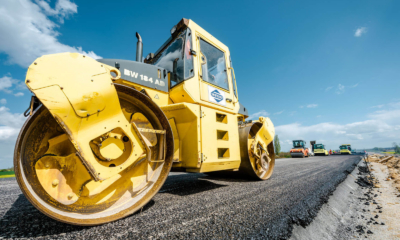


Roadworks are taking place at 15 locations in Balatonfüred

SWIETELSKY is inspecting and repairing the surface defects on Main Road 25

Pécs, Gödöllő and Budapest: four SPAR stores have been refurbished – here’s which ones

They could reshape the historic city centre, transport in the suburbs and even a unique public park in Székesfehérvár

Rain gardens are coming to Budafok, with over 3,000 square metres of green space set to be developed

Four new bridges to be built in the heart of the former industrial city

Contemporary art deco in Csopakon

Safer driving on the motorways: new digital signs for the MKIF
-

 Bound track 2026. 10. 07.
Aurora beneath the Apennines – Another tunnel is being built on the Naples–Bari railway line
-
Road building 2026. 10. 13.
A consortium comprising STRABAG and Duna Aszfalt has been awarded the contract to build the North Macedonian motorway
-
What is being built? 2026. 10. 09.
One of Budapest’s oldest nurseries is being renovated whilst preserving its timber roof structure
-
Current at 2026. 10. 10.
„The focus will not be on Lean’s equipment, but on how we operate” – the ‘Lean in the Construction Industry’ conference in November