What is being built?
The new hall of the Csepel free port was built using environmentally friendly technology

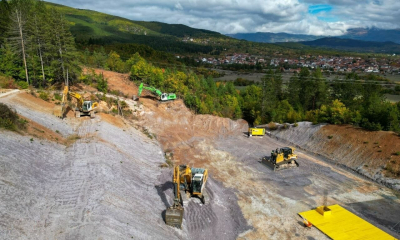
In the free port, the foundations of a logistics hall with an area of nearly 14,000 square metres are being laid for the construction of the INETON is being built in the free port, with a floor area of nearly 14,000 square metres, was laid by HBM using the so-called soil displacement Screwsol technology. This special method of pile foundation is an innovation of the French parent company of the civil engineering company, Soletanche Bachy, which proved to be a good choice from both a technical and economic point of view, even in the variable soil conditions typical of the Free Port area.

Considering that the process requires less material, is faster to construct and results in piles with higher load capacity compared to conventional pile foundation solutions, it has become the most efficient and economical foundation solution for low and medium load industrial, logistics halls and agricultural facilities in the last decade. During this time, the HBM has already produced more than 500 km of such piles, including in previous work for the INETON.
Since 2021, the HBM SMART team has had the opportunity to work with the contractor twice before. One of their joint projects was the D4 building, 200 metres from the hall currently under construction. The project teams worked together on this project and, building on their experience, were able to effectively represent an alternative technical solution for the D2 hall, which ultimately resulted in significant volume savings in pile foundations for the client.
In addition to the variable ground conditions, another special feature of the project is that INETON designed a hall with a pillar design, a pioneering achievement in the country. The civil engineer had to take this into account when designing the reinforcement. In addition, he had to pay particular attention to minimising the external accuracy of the piles.

The new hall building will not only be an environmentally friendly facility after its inauguration, as the contractors involved in its construction have already been working to minimise its environmental impact during the construction phase. In addition to the green roof that will eventually cover the new BSZL hall, the use of environmentally friendly solutions has already started at the foundation stage, building on the previous experience of HBM with low carbon footprint concrete.
The civil engineering contractor has reduced the carbon footprint of the concrete used in the piling of Hall D2 by around half compared to the environmental footprint of deep foundations using conventional civil engineering concrete recipes. The pile driving works have thus ultimately resulted in more than 60,000 kilograms less carbon dioxide emissions due to the use of very low carbon footprint concrete, a saving equivalent to the average CO2 emissions of approximately 650,000 km of passenger car journeys.
Source : Link






Major Hungarian construction project in the Serbian capital – a specialised world exhibition is on the way

Roadworks are taking place at 15 locations in Balatonfüred

SWIETELSKY is inspecting and repairing the surface defects on Main Road 25

Pécs, Gödöllő and Budapest: four SPAR stores have been refurbished – here’s which ones

Rain gardens are coming to Budafok, with over 3,000 square metres of green space set to be developed

Four new bridges to be built in the heart of the former industrial city

Contemporary art deco in Csopakon

Safer driving on the motorways: new digital signs for the MKIF
-

 Road building 2026. 10. 13.
A consortium comprising STRABAG and Duna Aszfalt has been awarded the contract to build the North Macedonian motorway
-
What is being built? 2026. 10. 09.
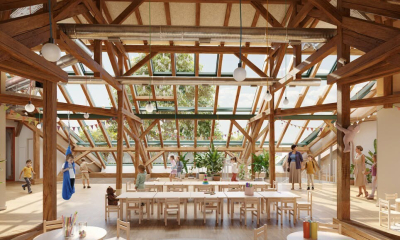
One of Budapest’s oldest nurseries is being renovated whilst preserving its timber roof structure
-
Current at 2026. 10. 10.
„The focus will not be on Lean’s equipment, but on how we operate” – the ‘Lean in the Construction Industry’ conference in November
-
Bound track 2026. 10. 08.
Déli railway station is set to undergo a major refurbishment, paving the way for double-decker trains