Road building
The HE-DO is involved in the reconstruction of the roads in the Mád vineyards

The Municipality of Mád, famous for its vineyards and wines, is using grant funding to renovate the agricultural roads on the outskirts of the village, which mainly serve the vineyards. In addition to improving the roads in the central Tokaj wine-growing region of the municipality, the aim is to improve drainage and prevent water damage.
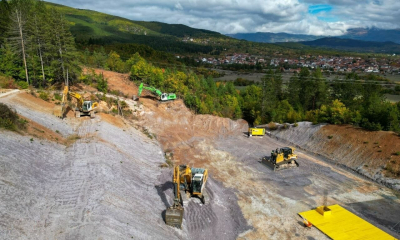
One of these is the road leading to Őszhegy-dűlő, which is being reconstructed by HE-DO. The company's work will also include the complete renovation of the sunken, potholed asphalt pavement and the outdated drainage system over a section of approximately 950 metres.
The need for the investment was justified by the fact that the existing asphalt pavement was fragmented, sinking in places, and rainstorms had undermined the roadside ditches and the roadside. The agricultural road provides access to 1450 hectares of vineyards and the reconstruction will allow agricultural machinery and transport vehicles to travel more safely on this stretch. The road is also important for wine tourism, hikers and tourists.

Source: Google Maps
The worksite was taken over by the HE-DO experts on 12 October 2023. "Following the tree felling and brush and shrub clearance works, we dismantled the elements of the old drainage system. After the trenches were constructed, we installed the prefabricated trench lining elements. We are currently reconstructing the embankment, after which we will lay a binding and wearing course on the existing asphalt surface" - Zoltán Vidó, chief architect of HE-DO, reported on the work progress.
The peculiarity of the project is that due to the harvest and the cultivation of the vineyards, a complete road closure is not feasible, despite the narrow working area, we have to maintain continuous agricultural traffic" - said Zoltán Vidó.
The project is funded by VP6-7.2.1.1-21 and is expected to be completed by the end of 2023.
Source : Link







Major Hungarian construction project in the Serbian capital – a specialised world exhibition is on the way

Roadworks are taking place at 15 locations in Balatonfüred

SWIETELSKY is inspecting and repairing the surface defects on Main Road 25

Pécs, Gödöllő and Budapest: four SPAR stores have been refurbished – here’s which ones

Rain gardens are coming to Budafok, with over 3,000 square metres of green space set to be developed

Four new bridges to be built in the heart of the former industrial city

Contemporary art deco in Csopakon

Safer driving on the motorways: new digital signs for the MKIF
-

 Road building 2026. 10. 13.
A consortium comprising STRABAG and Duna Aszfalt has been awarded the contract to build the North Macedonian motorway
-
What is being built? 2026. 10. 09.
One of Budapest’s oldest nurseries is being renovated whilst preserving its timber roof structure
-
Current at 2026. 10. 10.
„The focus will not be on Lean’s equipment, but on how we operate” – the ‘Lean in the Construction Industry’ conference in November
-
Bound track 2026. 10. 08.
Déli railway station is set to undergo a major refurbishment, paving the way for double-decker trains