Water management
55 kilometres of canals to be opened in Nógrád - significantly improving the quality of life of those affected

Nógrád County received comprehensive wastewater treatment infrastructure development: Penta Általános Építőipari Kft. carried out work worth a total of ~12 billion forints in seven municipalities. Approximately 55 km of sewage pipes were completed, a new sewage treatment plant was built in Kálló, and the plant in Pásztó was renovated. The project was implemented with EU and KEHOP+ support.
Construction to start in 2022
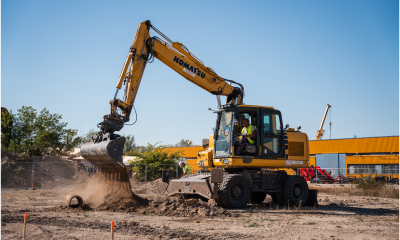
Penta Kft. won the public procurement procedure at the end of 2021, and work started in early 2022 with archaeological and de-ammunition works. Interestingly, the archaeologists also found prehistoric and Roman artefacts during the excavations. The company's staff informed us about the construction work.
The project is divided into three work packages, one for each treatment plant:
- Forest face,
- the agglomeration of Erdőkürt (Erdőkürt, Kálló and Vanyarc)
- and the Pásztó agglomeration (Pásztó, Tar and Mátraszőlős).
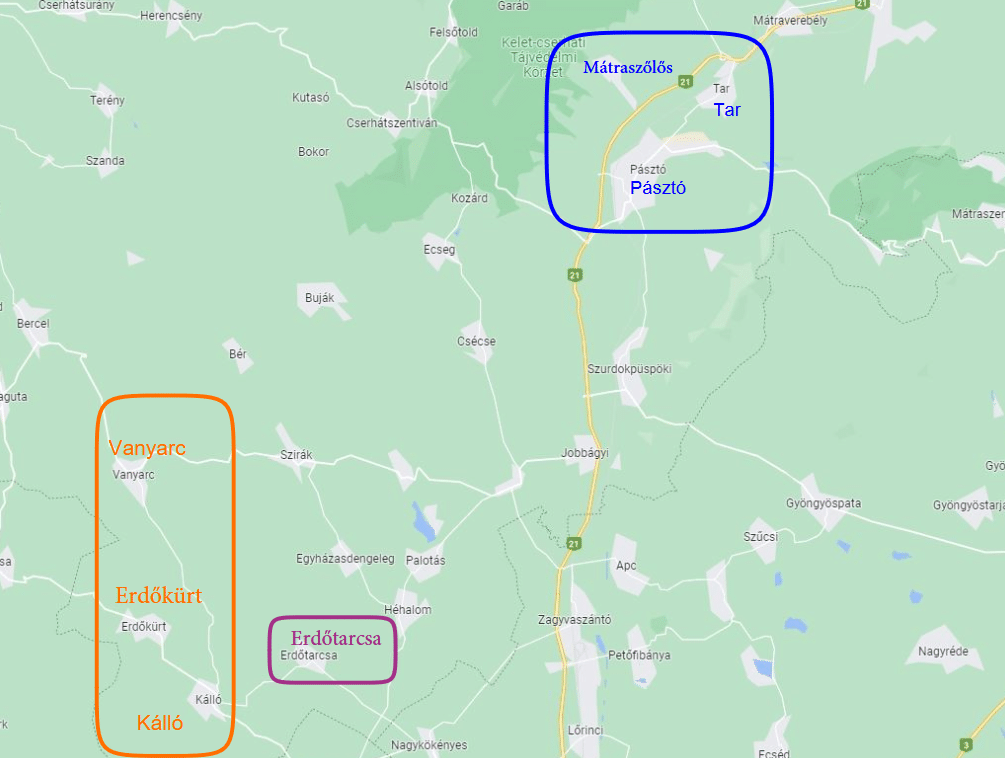
In May 2022, the construction of the sewerage network started, first in Erdőtarcsá. There was previously no public sewage disposal or treatment system at all, so the entire municipality was equipped with a sewer network.
Once completed, a total of 8 km of gravity and pressure pipelines will collect the wastewater, which will be conveyed to the Héhalom wastewater treatment plant, which is currently in operation, via D200 KG-PVC SN8 gravity pipelines and D110 PE100 PN10 pressure pipelines. A new interceptor has also been installed in the area.
Erdőkürt agglomeration served by new wastewater treatment plant
More than 60% of the sewer was built in the Earthquake agglomeration. The construction covered the entire area of all three municipalities (Erdőkürt, Kálló and Vanyarc) that make up the agglomeration. The wastewater will be conveyed to the newly built wastewater treatment plant in Kállon via PE100 PN10 pressure pipes with diameters D63-D140 and D200 KG-PVC SN8 gravity pipes. In addition, 9 new diversion structures have been built in the area for the same purpose.

The new plant has a hydraulic capacity of 295 m3/d and a bio-load capacity of 3158 LE.
Biological reactors and sedimentation
- with two parallel continuous flow systems,
- sludge treatment process,
- biological removal of excess phosphorus,
- by pre-denitrification,
- with optional pool,
- with additional chemical phosphorus removal,
- with post-screening,
- disinfection,
- and aerobic stabilisation and mechanical dewatering of the sludge.

How Pásztó and its surroundings were developed
In Pásztó and its region (which also includes Tart and Mátraszőlős), about 12,000 fm of D75 - D160 PE pressure lines and 400 fm of gravity lines were constructed. Local reconstructions were carried out, 4 new interceptors and 1 regional interceptor were constructed and 15 existing interceptors were upgraded.
In Taro, the existing near-natural wastewater treatment plant will be closed (as part of a separate project, not as part of the investment described here), so that the wastewater collected in Taro and Mátraszőlős will be treated at the existing wastewater treatment plant in Pásztó, which is currently in operation.

This plant was renovated and extended because it was outdated and prone to odours: the condition and efficiency of the purification plant was inadequate. The new hydraulic capacity of the plant was up to 1 296 m3/d and its biological load was 14 367 hp.
The changes and constructions at the Pásztó site:
- Construction of a new site final digester with engineering.
- Building a new pre-mechanics.
- A new biological basin (with anaerobic, anoxic and aerobic compartments) doubling the former volume and retention time of the effluent.
- Dismantling of one of the final rinsing pools, construction of a larger new pool in its place, replacement of all the mechanical equipment.
- Replacement of ventilation elements and nozzles, installation of a heat recovery nozzle.
- Construction of a sludge filtration basin, upgrading of the sludge line, construction of a new container storage.
- Design of a chemical phosphorus removal plant with new building and machinery.
- Construction of a new treatment building.
- Development of new electrical and control technology.
All project elements will be delivered soon
The test runs of the agglomeration of Erdőtarcsa and Pásztó were successfully completed on 21 August 2024, the test run of the third project element, the agglomeration of Erdőkürt, was completed on 8 November 2024, and the technical handover procedure was completed on 4 December 2024.
Source: Link





It’s time for a refurbishment: HEDO is carrying out work on one of Miskolc’s key transport routes

Four ‘1’s in a row: Esztergom’s transport headache has been resolved

The care home in Fertőd is to be refurbished

An innovative, distinctive PHOENIX Logistics Centre has been established in Győr: the Óbuda Group has reimagined the spaces for pharmaceutical logistics

Rain gardens are coming to Budafok, with over 3,000 square metres of green space set to be developed

Four new bridges to be built in the heart of the former industrial city

Contemporary art deco in Csopakon

Safer driving on the motorways: new digital signs for the MKIF
-

 Kirakat 2026. 10. 01.
A leading machinery distributor in the construction and haulage sectors is building a new service centre and extending its existing premises
-
Industry news 2026. 10. 02.
Hungary has joined the single electricity market
-
Railway development 2026. 09. 29.
The railway line leading to the Hungarian border is also set to be upgraded as part of Croatia’s large-scale development programme
-
Bound track 2026. 10. 07.
Aurora beneath the Apennines – Another tunnel is being built on the Naples–Bari railway line