Industry news
A chance for the construction industry: big public investments will pick up again next summer

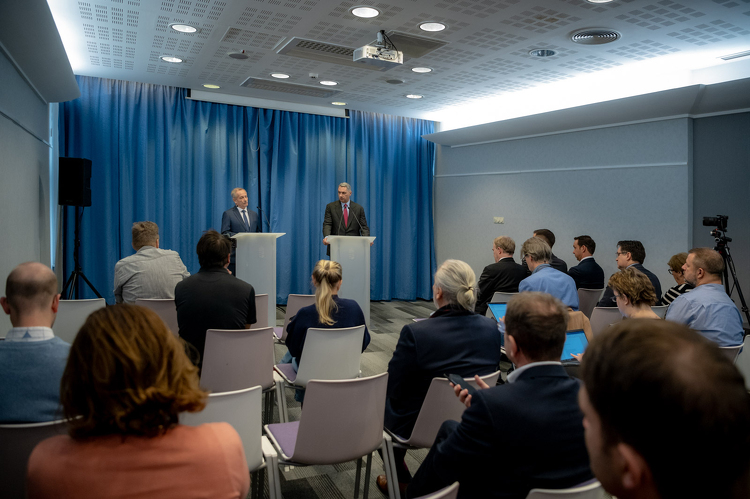
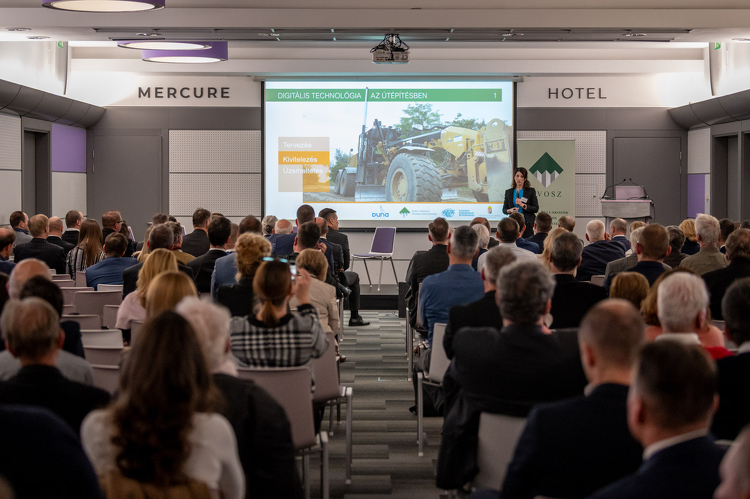
The Minister of Construction and Transport held a press conference in Budapest on 23 November together with the President of Építési Vállalkozók Országos Szakszövetsége the construction law that came into force in November and the architectural law currently before parliament. After the event, the ÉVOSZ annual national construction industry conference was also held at the Mercure Hotel next to Déli Railway Station.
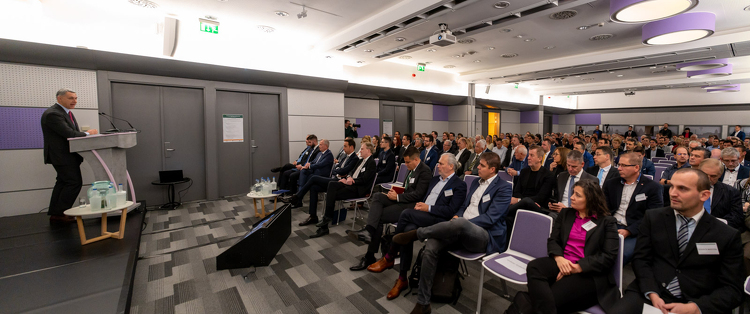
The needs of ÉVOSZ are reflected in the guidelines of the new law
"Without a demanding client, there is no demanding construction industry" - stressed László Koji at the press conference starting early Wednesday morning. He said that before the new construction regulation was drafted, the issue of estimated value in public procurement was seen as a crucial problem in the sector, as well as the lack of predictability, and that the sector wanted to achieve stronger competition in public procurement procedures and improve the cost information background of projects.
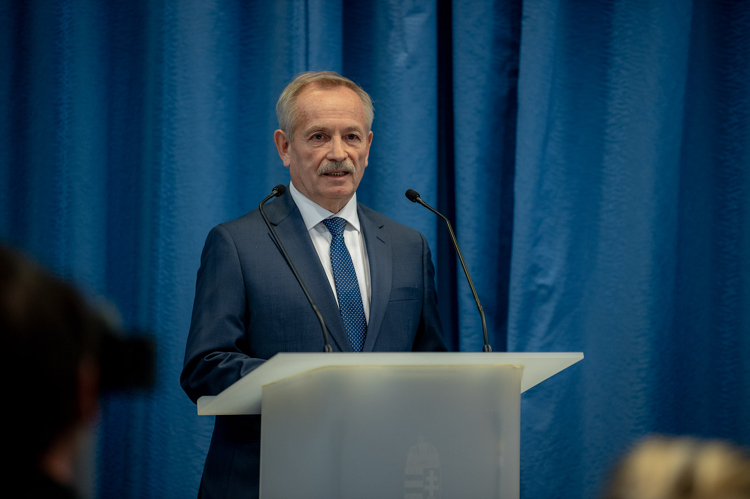
"It's good to see that these are the essential things that the new law addresses and that it requires the sector to operate in a sustainable, digital way," the President stressed. He also particularly welcomed the establishment of the State Investment Stakeholder Council, which will start its work on 4 December. He also spoke a few words on the objectives of the Architecture Law. In particular, he said that the law was very much expected to reduce the 48 percent import exposure of the Hungarian construction industry and called the protection of the domestic market another major challenge.
The construction sector has played a major role in improving two economic indicators
In the continuation, János Lázár thanked some 150 thousand contractors for the fact that the country's GDP reached HUF 66 thousand billion by 2023, which brought a significant improvement in per capita output compared to 2010. "On the other hand, there are 1 million more people working in Hungary than 13 years ago. The Hungarian construction industry has made a significant contribution to both processes: 150,000 new jobs have been created by contractors and 400,000 workers are now employed."
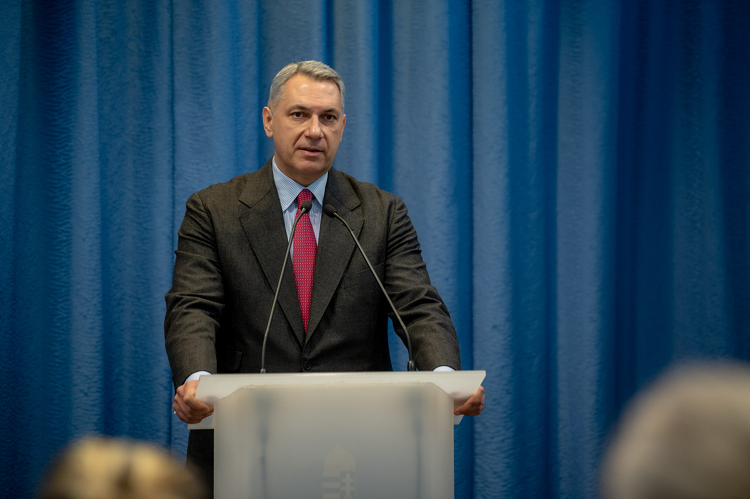
The Minister called ÉVOSZ a very good ally of the new Ministry of Construction, adding that the Hungarian construction industry is seen as one of the cornerstones of the Hungarian economy.
The clear aim is to ensure that the benefits of the domestic sector strengthen the domestic economy
The Minister also spoke at the national construction conference following the press event. In his speech, he pointed out that between 2010 and 2022, the state as a customer in Hungary contributed to economic growth with investments of around 28,000 billion forints, but that around 50 percent of this money was invested abroad. This phenomenon was illustrated by another figure:
"What we spend on construction in Hungary today, 80 percent of the foot of the construction material enriches foreigners. If the process is reversed and the big infrastructure investments are in the hands of Hungarian contractors, Hungarian contractors work in the Hungarian construction industry and Hungarian building materials are used, the country will be richer and much stronger."
said the Minister.
The Minister also wants the production of cement for the Paks expansion to be in Hungarian hands
János Lázár stressed that his most important principle in the field of the construction industry is that "foreign construction companies have no business in Hungary, and we must prevent the construction industry from working with high imports and foreign construction materials." He said that for him, foreign contractors and foreign manufacturers are "persona non grata" in the construction industry, but at the same time, they expect maximum efficiency, quality and sustainability in construction projects, and their aim is to maintain competition.
In particular, he mentioned the Paks expansion project, which will require huge quantities of concrete, the most important raw material of which is cement. He stressed that it is inconceivable that there is no Hungarian-owned cement producer in the country. "Therefore, cement companies in Hungary would do better to sell their factories in Hungary to Hungarian companies," he said. He added that the country cannot give up the idea that the Hungarian construction industry should not benefit from the €10 billion cost of the Paks nuclear power plant.
These are the areas that could provide a breakthrough in construction
Josán Lazár formulated the most important message at the very end of his speech at the conference, when he said that in 2024-2025 major public infrastructure investments will have to be restarted, especially in road and rail construction.
In addition to the public sector, it also identified the main areas of construction orders in the corporate and residential sectors. "Support for businesses in the area of rural development and economic development should also be launched to encourage more stimulus investment in the corporate sector. In the residential sector, housing construction needs to be restarted by increasing family home creation subsidies." In addition to this, he said that Hungarian construction companies should also be given room to build foreign factories in Hungary. "All these together can bring about a recovery in demand for the construction sector," he said.
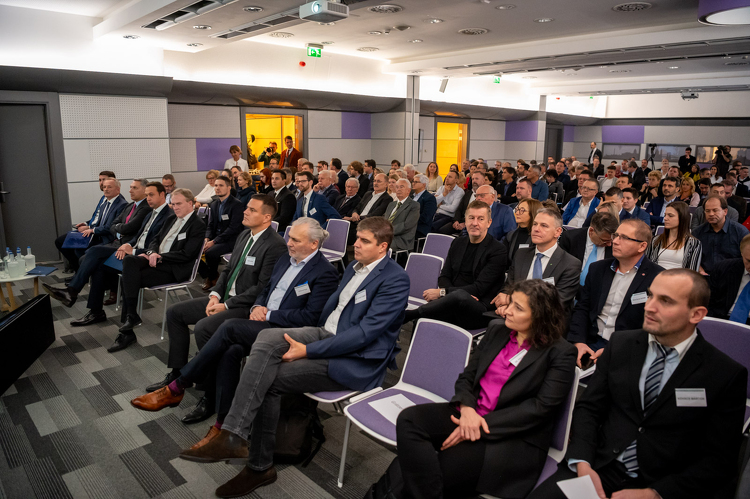
In line with the above, at his parliamentary hearing two days ago, the Minister of Construction also predicted the construction of the M100 road between Esztergom and the M1, as well as the completion of the M76 road and the tri-laning of the M1 motorway between the capital and Győr, according to press reports. At Monday's hearing, he also said that 4,500 billion forints would be spent on rail improvements over the next ten years. In a short interview after the conference on Wednesday (which will be published in a separate article - editor's note), the minister said that he believes that these investments can start in the second half of 2024 or in 2025.
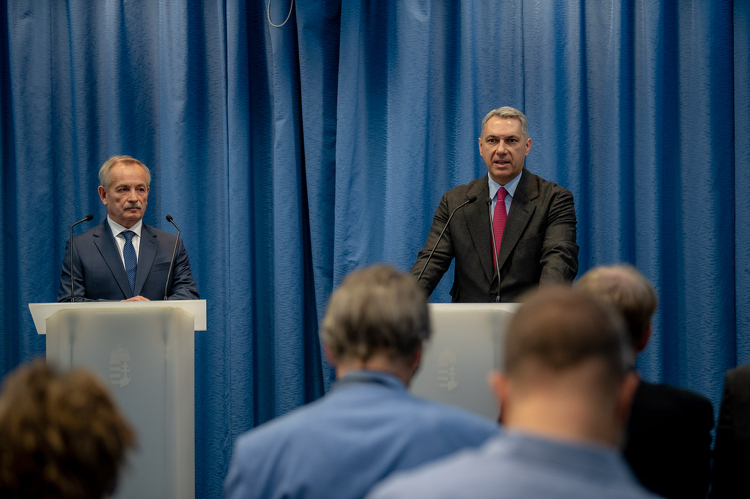
The focus remained on the future during the presentations and round tables
Following this, Attila Tóth, President of CÉH Zrt., gave a presentation on EU policy issues at the conference, followed by a panel discussion on strategies for the future with Tibor Keszthelyi, president and CEO of FŐMTERV Zrt., moderated by the vice-president of ÉVOSZ. Participants included László Koji, Dr. Tamás Lovas (head of department at the Faculty of Civil Engineering, Budapest University of Technology and Economics) and Regő Lánszki (State Secretary for Architecture, Építési és Közlekedési Minisztérium).
Avoid unnecessary work
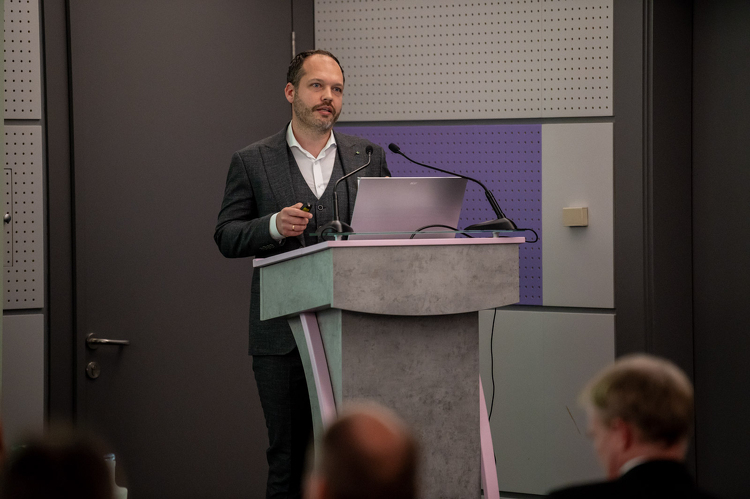
After the first coffee break, presentations were given by, among others, Szabolcs Grátzer, head of the Market Építő Zrt. design department head and BIM manager, gave a presentation entitled Loss reduction through digitalisation methods. Basing his presentation on the literature, he divided activities into value-creating, necessary and loss-making activities. He essentially identified loss-making activities as unnecessary work, then pointed out that certain forms of this can be remedied with the help of digitalisation.
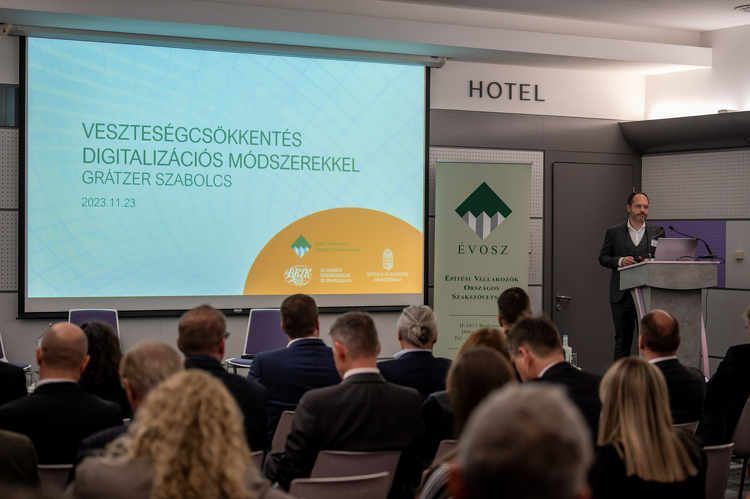
He explained that, as loss-making activities can account for more than half of all work done, there is huge potential for efficiency gains in this area. He pointed out, among other things, that digital tools such as drones, BIM or the Internet of Things alone are not enough. One of the keys to the solution is to measure and translate analogue reality into digital language, and the other is to put the right human resources in the right position," he said. He also highlighted the potential of government regulation, internal company digitalisation regulation and employee training.
Duna Aszfalt expert talks about the role of digitalisation in road construction
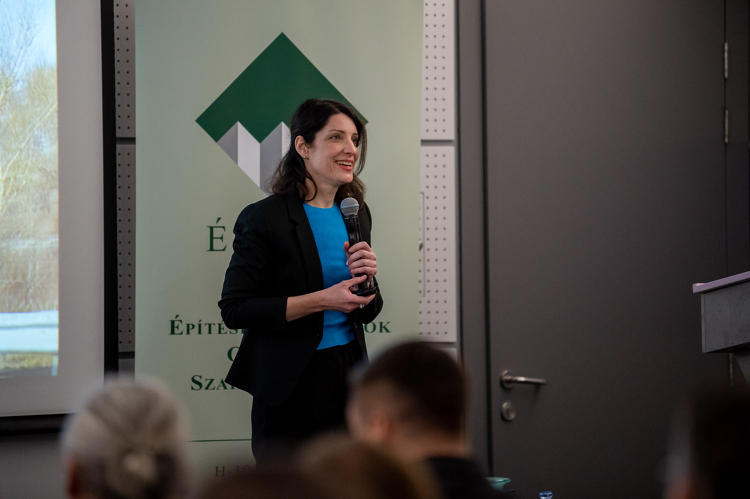
Also in the second section, Beatrix Szabó, division manager of Duna Aszfalt Zrt. BIM division manager, who gave a presentation entitled People and technology in road construction – Integrating new opportunities into everyday life. He reminded us that a motorway is a structure that can be hundreds of kilometres long and must be built with great precision: in some places, this means a tolerance of 1-2 centimetres. He pointed out that in such an environment, there is significant potential for the use of digital tools even at the design stage.
Among many other examples, he spoke about field data collection systems that rely on drones and scanners to provide the contractor with accurate information quickly over a large area, helping to monitor the progress of the work.
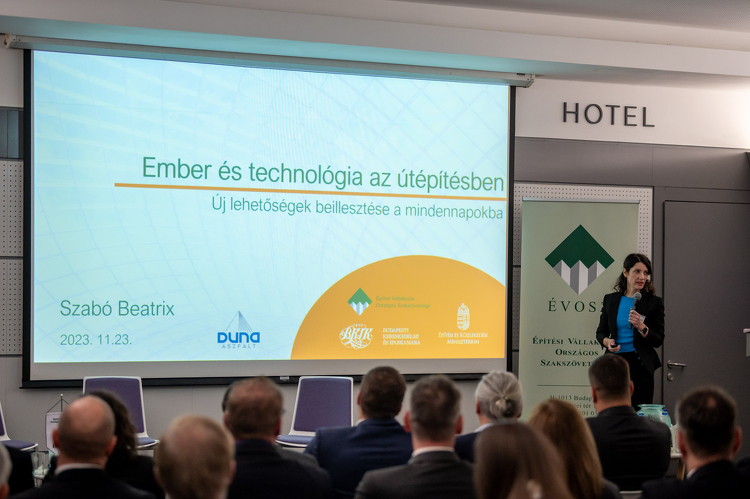
The event was followed by a panel discussion and speeches from key players in the sector, including
- Balázs Báthory, the Market Építő Zrt. Deputy CEO;
- Péter Acsai, the Market Építő Zrt. Head of Business Data Analytics;
- Zsuzsa Naderi, the Edupark Nonprofit Kft. Managing Director;
- Áron Tóth, the Knowledge-Building Team Non-profit Zrt. CEO;
- László Szalados, the KÉSZ Holding Zrt. Deputy CEO;
- Tibor Dávid, the Masterplast Nyrt. Chairman and CEO;
- Barnabás Herényi, the Óbuda-Újlak Zrt. Head of Sustainability Group
- Edit Csizmadia, the MileStone Gazdasági és Mérnöki Tanácsadó Kft. represented, and the KÉSZ Csoport sustainability expert;
- and Stella Végh, the Market Építő Zrt. sustainability officer.
The full programme for the event can be read here.










The town centre on the banks of the Tisza is being regenerated

The Market has fulfilled its promise: it has delivered the 10,000 tonnes of natural stone offered for the raising of the bottom sill at Paks

The construction industry is both vast and marvellous – the Duna Group Szabadegyetem has been launched

ESG is now a business issue for suppliers in the construction industry too

Rain gardens are coming to Budafok, with over 3,000 square metres of green space set to be developed

Contemporary art deco in Csopakon

Four new bridges to be built in the heart of the former industrial city

Safer driving on the motorways: new digital signs for the MKIF
-

 Industry news 2026. 08. 18.
Students were introduced to the high-tech construction industry at BME’s field camp in Göd
-
Bound track 2026. 08. 17.
New pedestrian crossings and a junction with traffic lights are being built in Angyalföld
-
What is being built? 2026. 08. 18.
Hungary’s new McDonald’s restaurant has moved into a modernist listed building in the centre of Budapest
-
What is being built? 2026. 08. 18.
New paving, a playground and visitor facilities are being planned for the Várkör area in Pannonhalma