Road building
The STRABAG project is constructing a road network designed to handle industrial freight traffic in Ajka
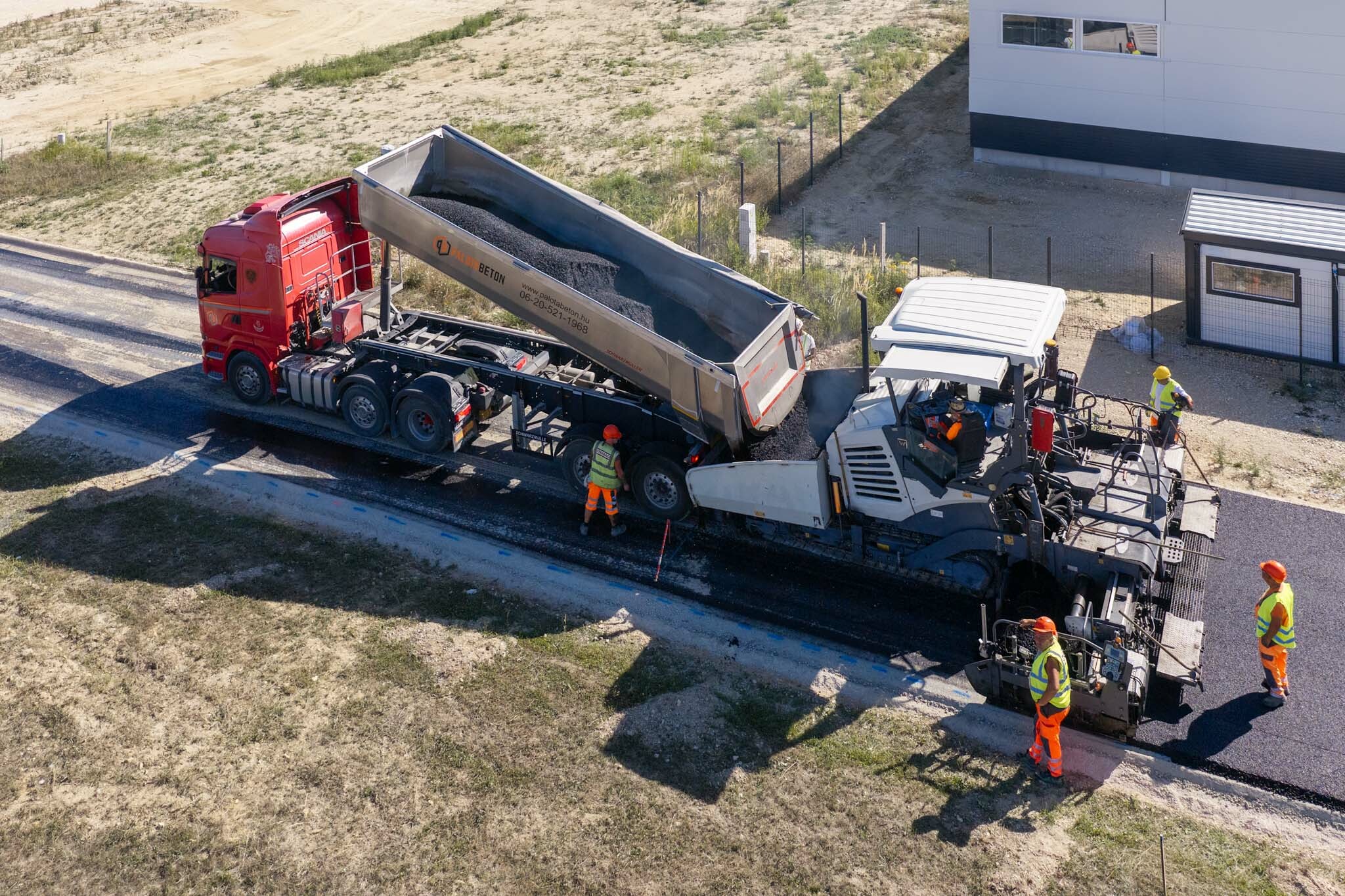
The construction of the Főnix Ipari Park infrastructure in Ajka has reached a new stage of development. The project serves both the needs of businesses already present in the industrial park and the further development of the area. The state-of-the-art transport and utility infrastructure creates suitable operating conditions for the plants, whilst also making the industrial park more attractive to prospective partners. The project is closely linked to the development of Main Road 8 and forms part of the comprehensive modernisation of the region’s transport and economic infrastructure.
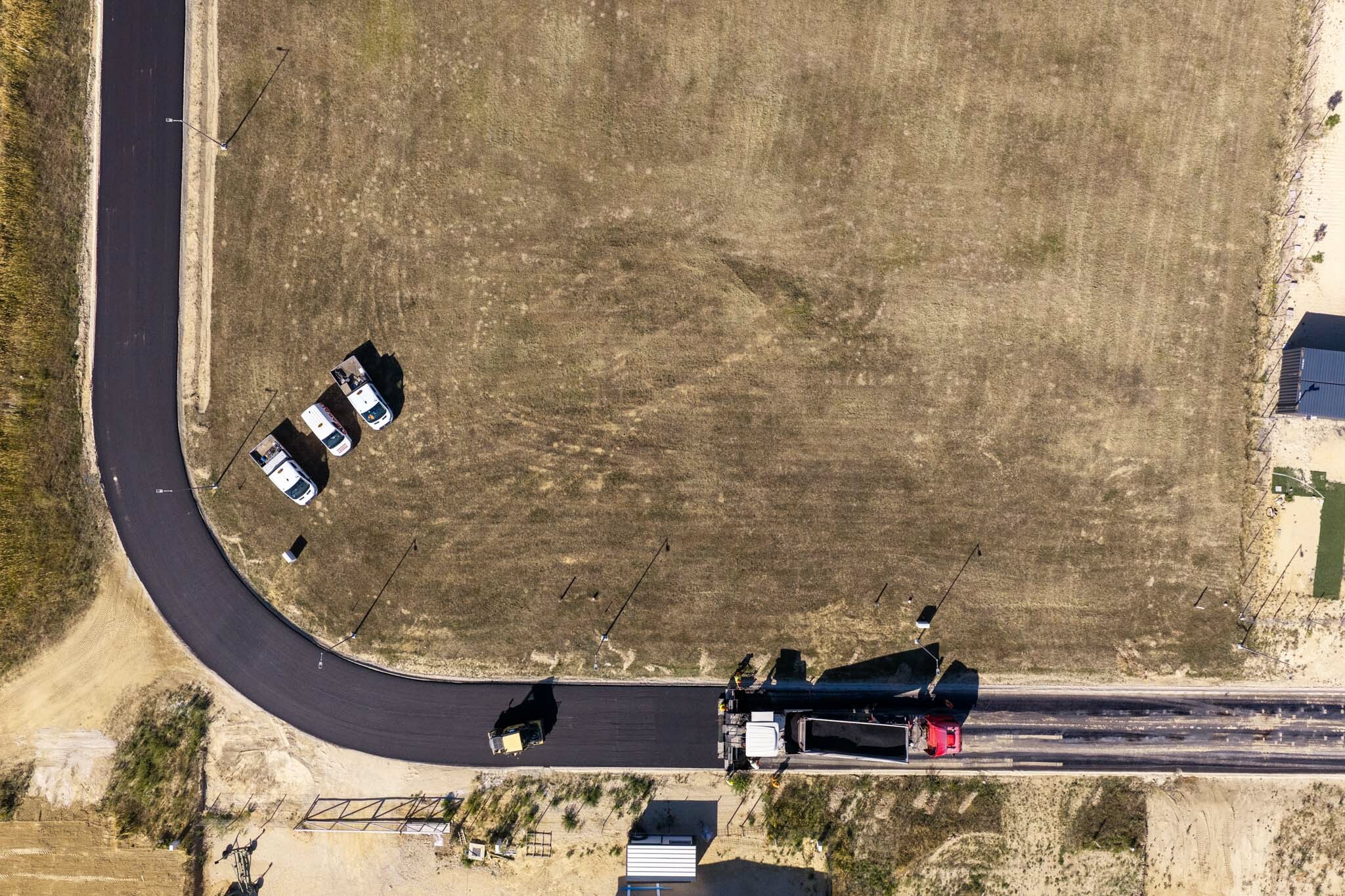
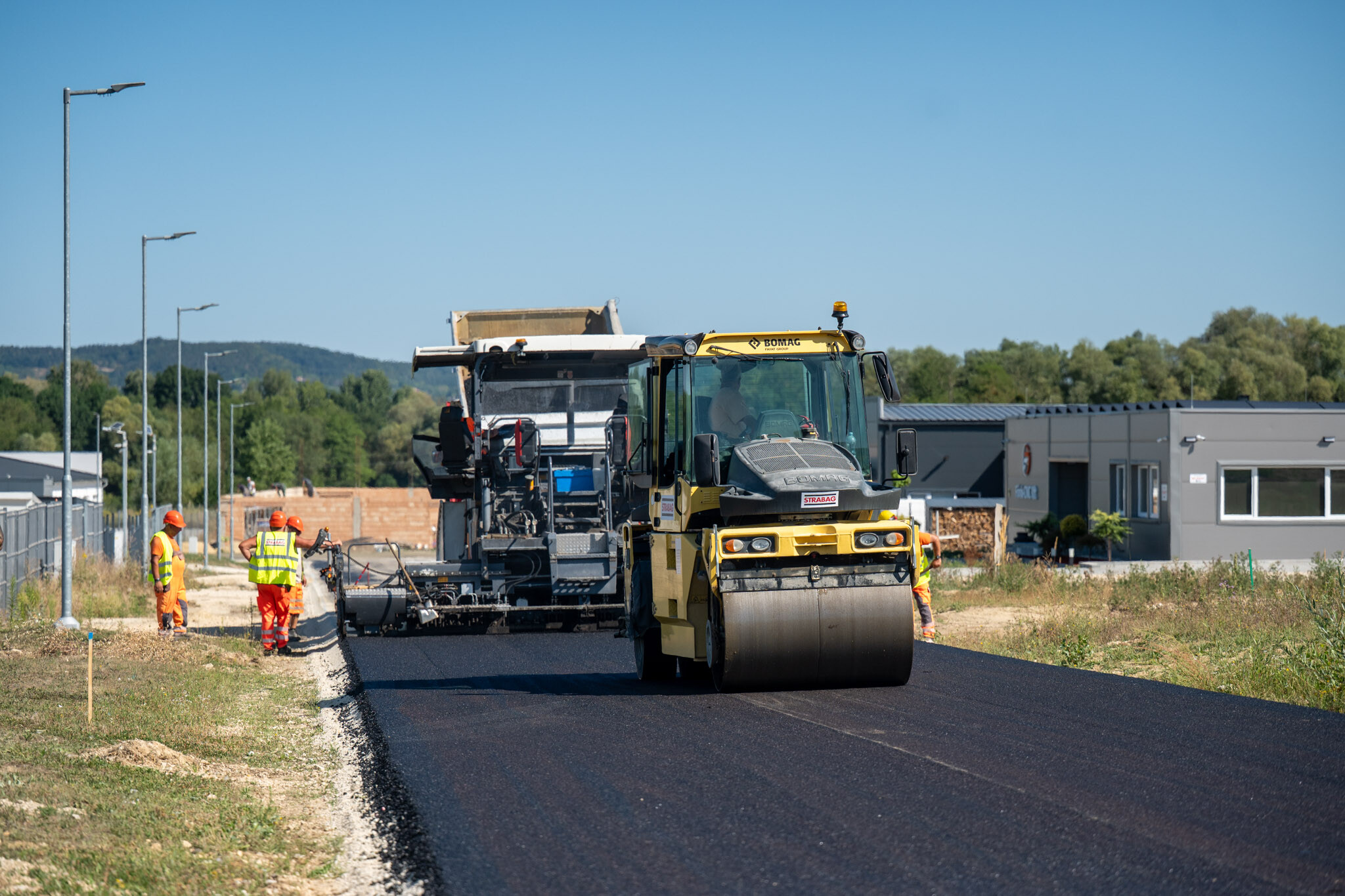
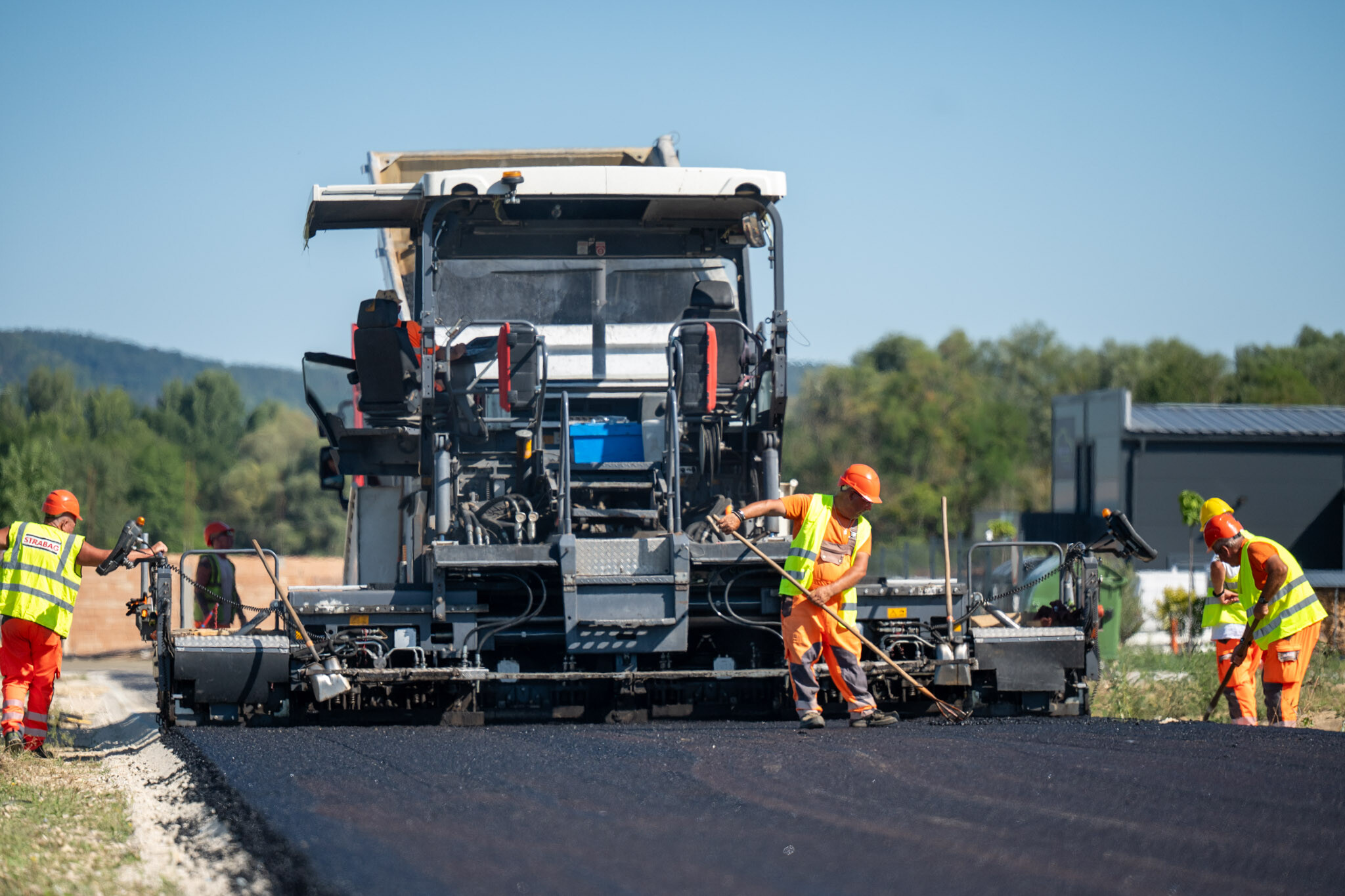
On the STRABAG section, in the western sector of the Főnix Ipari Park, a cement-stabilised base course and three layers of asphalt are being laid on the crushed stone road bases completed in previous development phases. However, before work can begin on the final road structure, drinking water and sewerage networks must be connected to the plots concerned, and the street lighting system must be installed.
Staff from the contractor have been working on site since the end of April, and the project is now 25 per cent complete. According to information received from STRABAG, construction work in the eastern sector is expected to be completed in October, whilst work in the western area is expected to be finished by the end of the year.
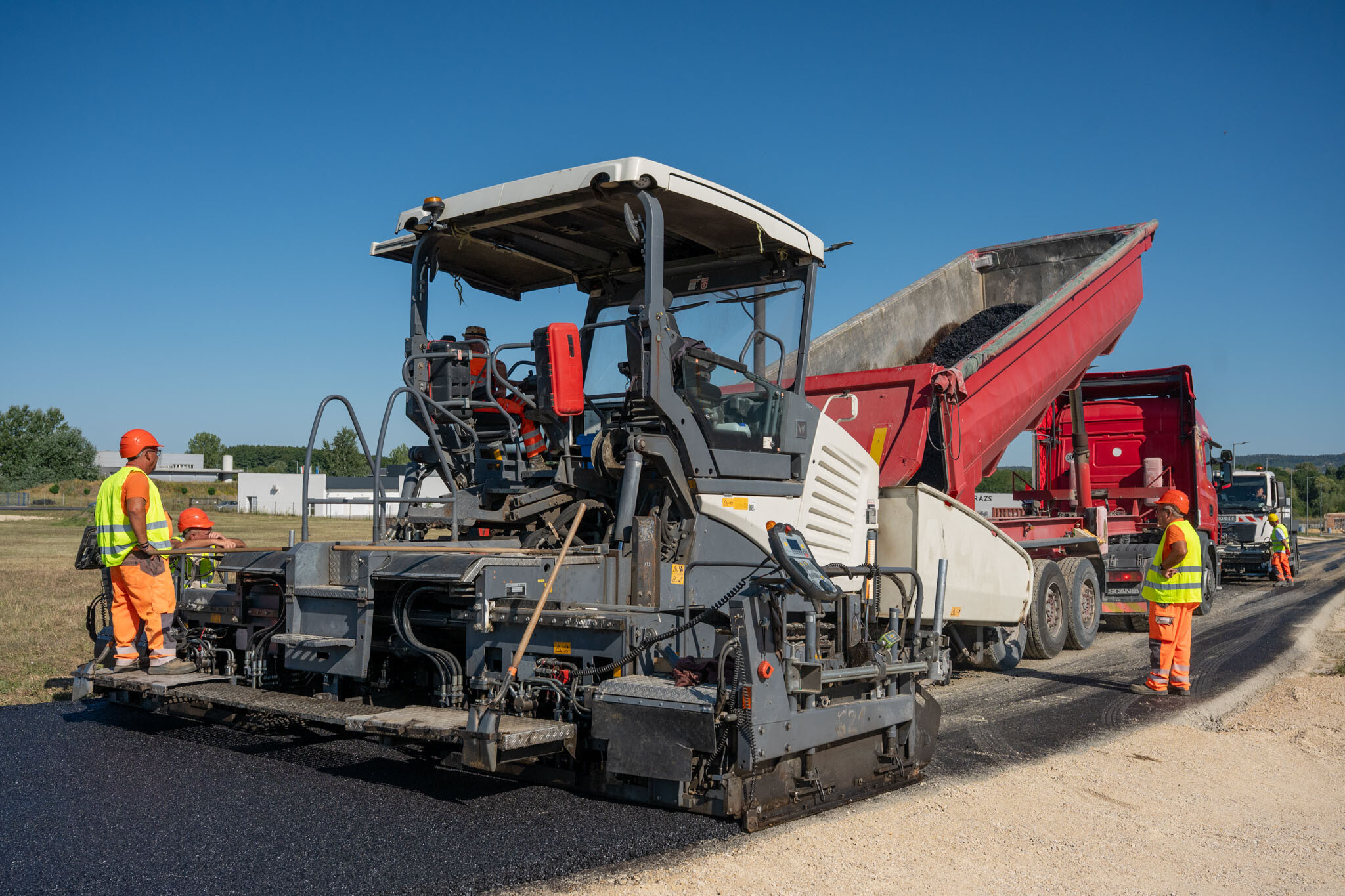
Around 5,800 tonnes of asphalt will be laid on the roads in the western sector
As part of the works, a 1.2-kilometre road network will be constructed in the western area, with approximately 12,000 square metres of asphalt surfacing. The client has also exercised the option for road construction in the eastern sector, meaning that a further 7,000 square metres of asphalt-surfaced road will be built there. In total, an area nearly the size of three football pitches will be asphalted. The new road structure is being adapted to withstand the loads associated with heavy goods traffic. For this reason, the sub-base constructed in earlier phases will be widened to allow for a carriageway width of two lanes, each 3.5 metres wide. To widen the road sub-base and create the new drainage ditches, around 5,000 cubic metres of earth will need to be moved on the western side alone.

The STRABAG’s own plants supply the building materials
During the construction of the road structure, three layers of asphalt will be laid onto a cement-bound gravel concrete sub-base. The former is delivered to the site from the STRABAG concrete plants in Veszprém and Pápa, whilst the asphalt is produced at the company’s own 1-litre mixing plant.
In the western sector, a total of approximately 5,800 tonnes of asphalt and 2,500 cubic metres of CK-t will be laid. Certified, recycled material is also being used in the road sub-base.
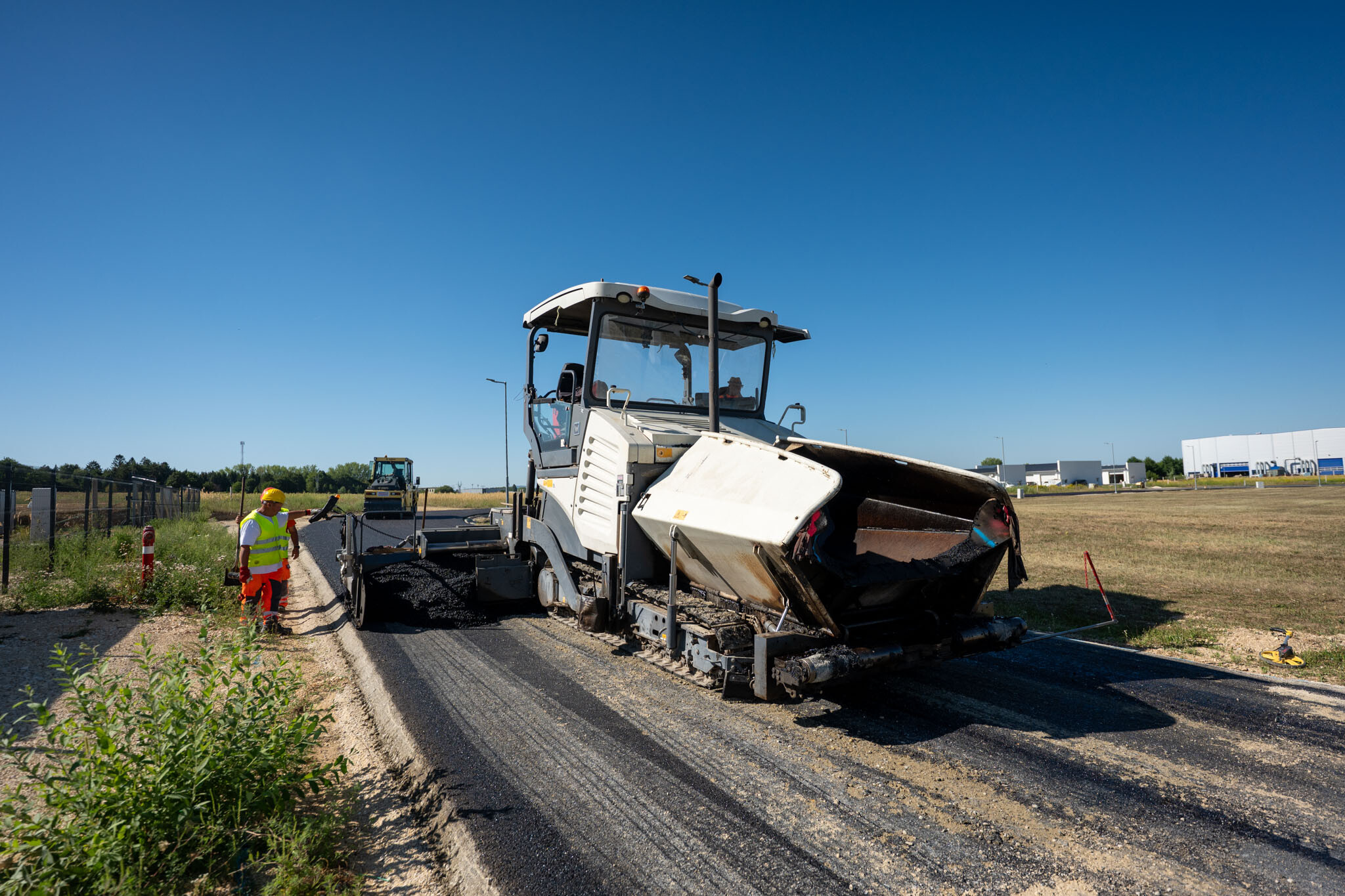
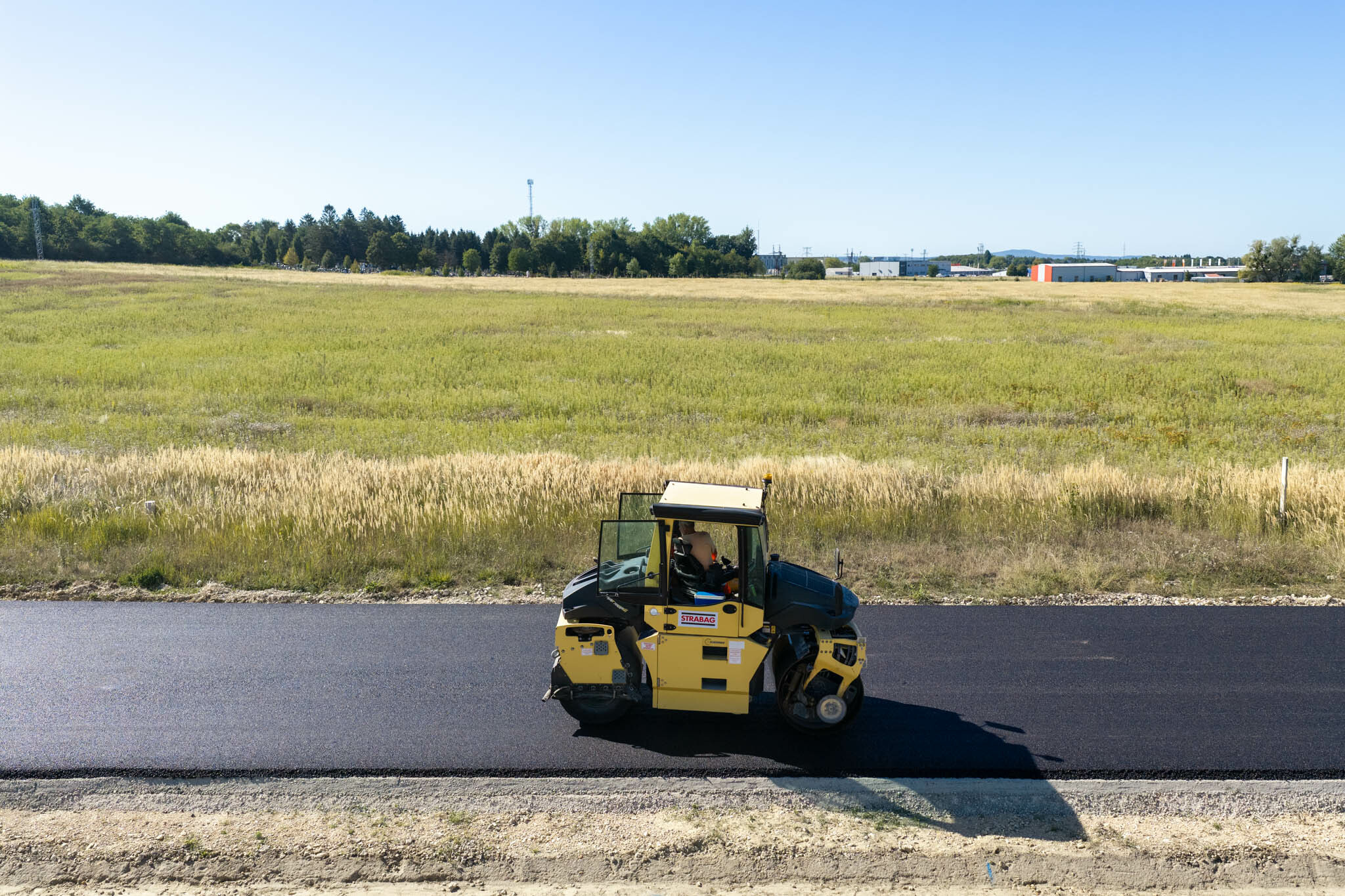
A state-of-the-art, level-controlled machine train is being used for the surfacing work. The asphalt is laid using a finisher fitted with a high-compaction screed, whilst the required compaction is ensured by combination and split-sheath steel rollers.
High groundwater levels are hampering the construction of public utilities
The site conditions pose the greatest challenge during construction. Whilst constructing the sewerage network, the specialists encountered high groundwater levels even during the dry, drought-stricken period. As a result, soil replacement is also expected to be necessary in the subsequent phases of the works. In the western sector, one kilometre of drinking water pipeline and a sewage pipeline of the same length are being laid. The network must meet the water demand – initially low but gradually increasing – of the plants already operating in the industrial park, those moving in, and those to be built in the future.
The drainage ditch is being rerouted
Widening the carriageway also requires adjustments to the existing drainage system. In the western sector, the drainage ditch will be constructed along a new route, with a total length of approximately 900 metres.
The installation of utility services – including water and sewerage pipes, drainage ditches and underground cables for street lighting – is being carried out under daily surveying supervision. Supervision is provided by STRABAG’s own surveyor, whilst specialists from the relevant service providers are also constantly present at the worksite.
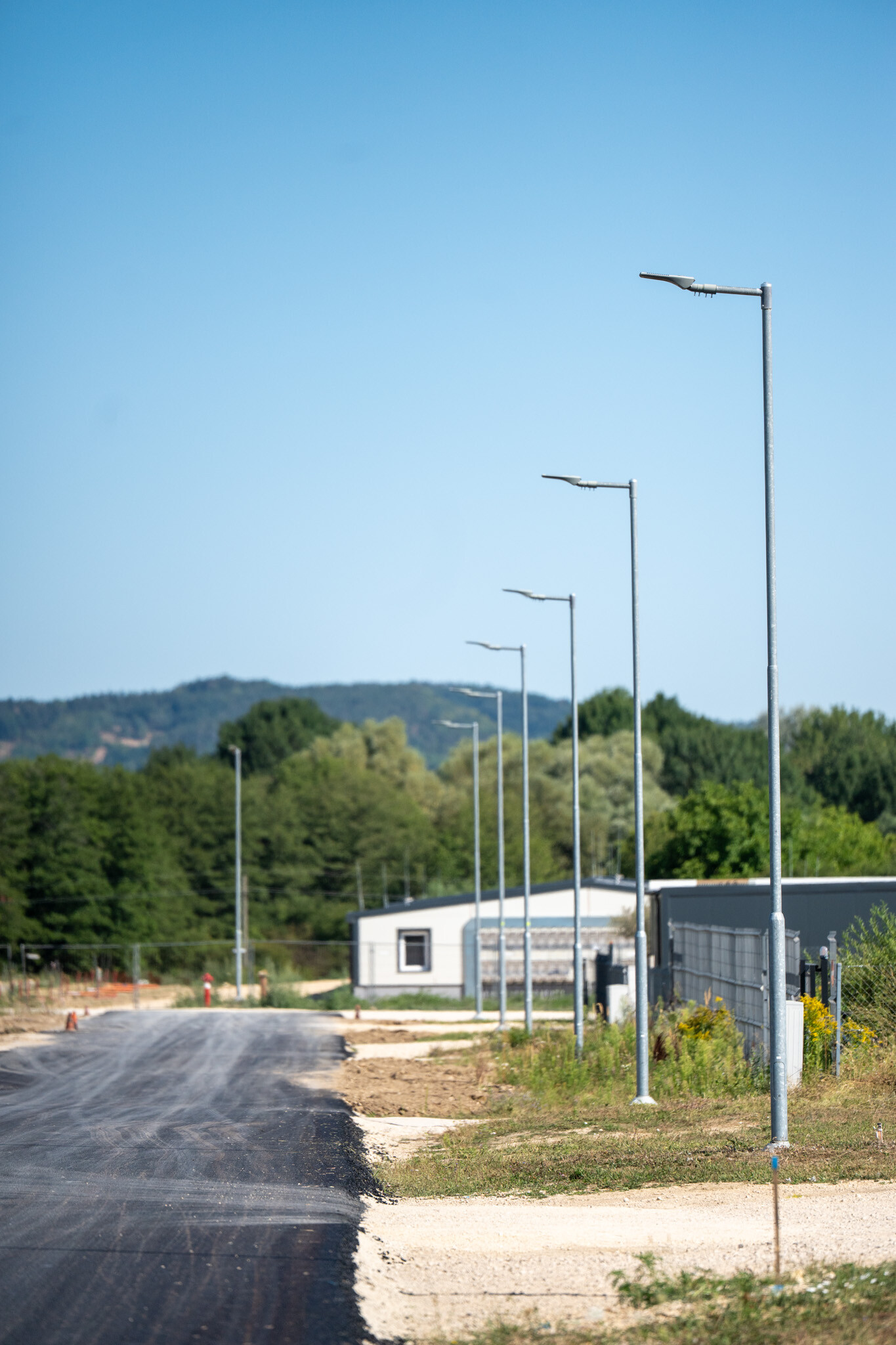
The installation of public lighting also requires coordinated work, which is likewise divided into several phases. The route for the underground cable, which is nearly 2.9 kilometres long, is being laid in conjunction with the utility infrastructure works, whilst the 92 lampposts will be erected once the road surfacing has been completed.
The developments also include the construction of an outdoor digital information kiosk to help visitors to the industrial park find their way around. The weatherproof unit will be fitted with a standalone communications module, and its power supply will be provided by the existing electricity network.
Traffic in the industrial estate must be kept flowing at all times
In addition to the technical challenges, the fact that the works are taking place within an operational industrial environment requires significant organisation. In the eastern sector, the delivery and collection of goods from the plants must be co-ordinated with the construction traffic, whilst the increased car traffic in the row of garages located there must also be maintained.
Those affected are kept informed on an ongoing basis by STRABAG and Főnix Lánya Ingatlanhasznosító Kft. about the current works and any temporary traffic diversions affecting daily travel. Those arriving in the area are assisted by on-site traffic management to ensure that the works cause as little disruption as possible to the operations of businesses in the industrial park.
Source: Link



The STRABAG project is constructing a road network designed to handle industrial freight traffic in Ajka

They would not only modernise the debreceni Nagyállomást, but also develop it into a modern transport hub

The Market Csoport brings together all its development expertise under one roof

From the heating plant to the library – solar panels are to be installed on eight local authority buildings in Kiskunfélegyháza

Rain gardens are coming to Budafok, with over 3,000 square metres of green space set to be developed

Contemporary art deco in Csopakon

Four new bridges to be built in the heart of the former industrial city

Safer driving on the motorways: new digital signs for the MKIF
-

 Bound track 2026. 08. 17.
New pedestrian crossings and a junction with traffic lights are being built in Angyalföld
-
Industry news 2026. 08. 18.
Students were introduced to the high-tech construction industry at BME’s field camp in Göd
-
What is being built? 2026. 08. 18.
Hungary’s new McDonald’s restaurant has moved into a modernist listed building in the centre of Budapest
-
What is being built? 2026. 08. 18.
New paving, a playground and visitor facilities are being planned for the Várkör area in Pannonhalma