
Current at
Changing the way we think by 2030 - Greentech 2025

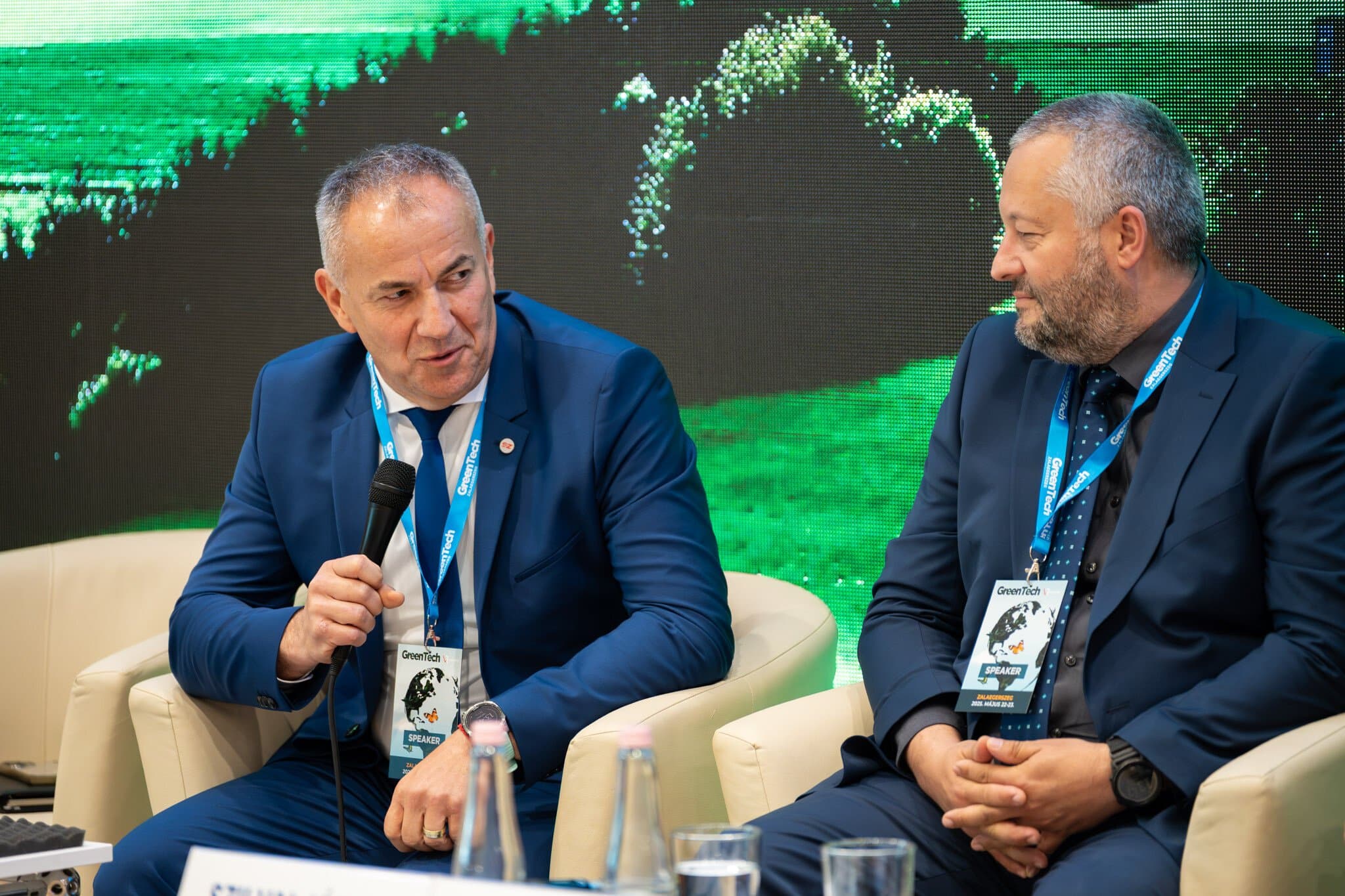
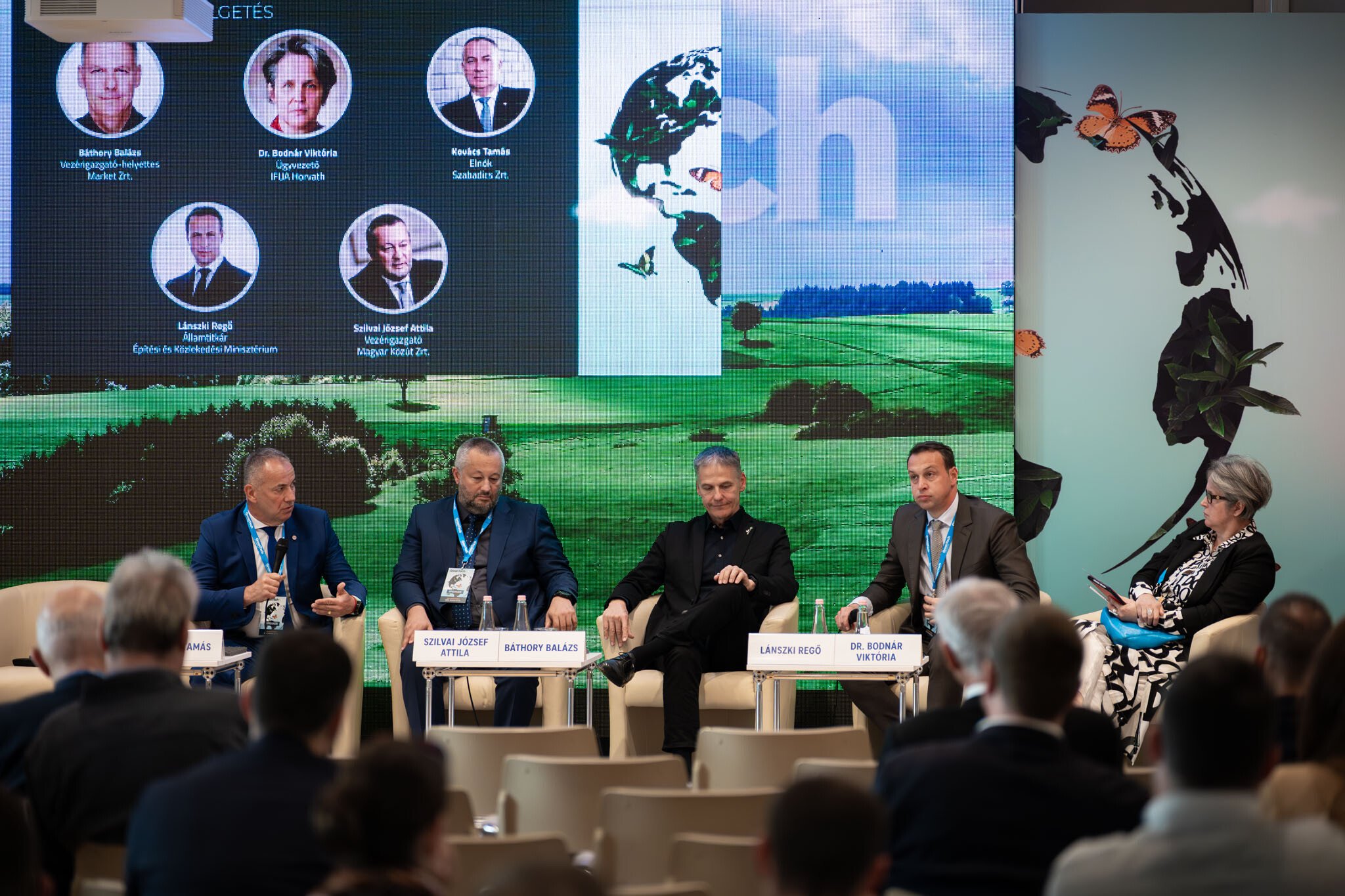
The Greentech VI Green Energy and Sustainability Exhibition and Conference was held on 22-23 May. One of the most exciting discussions at the event, held at ZalaZONE, centred on waste management in the construction industry. Balázs Báthory, Deputy CEO of Market Építő Zrt., Tamás Kovács, Chairman of Szabadics Zrt., and József Attila Szilvai, CEO of Magyar Közút Zrt., discussed the possibilities of circular waste management and the results they hope to achieve by 2030.
Tackling this climate change requires immediate action, which is the responsibility of all of us, from the individual level to businesses and institutions, local authorities and governments. It is a necessity, a responsibility, a duty and an opportunity.
These were the key themes of the conference, covering the opportunities and challenges of energy, raw materials, the circular economy, sustainability, urban/community transport, water and waste management.
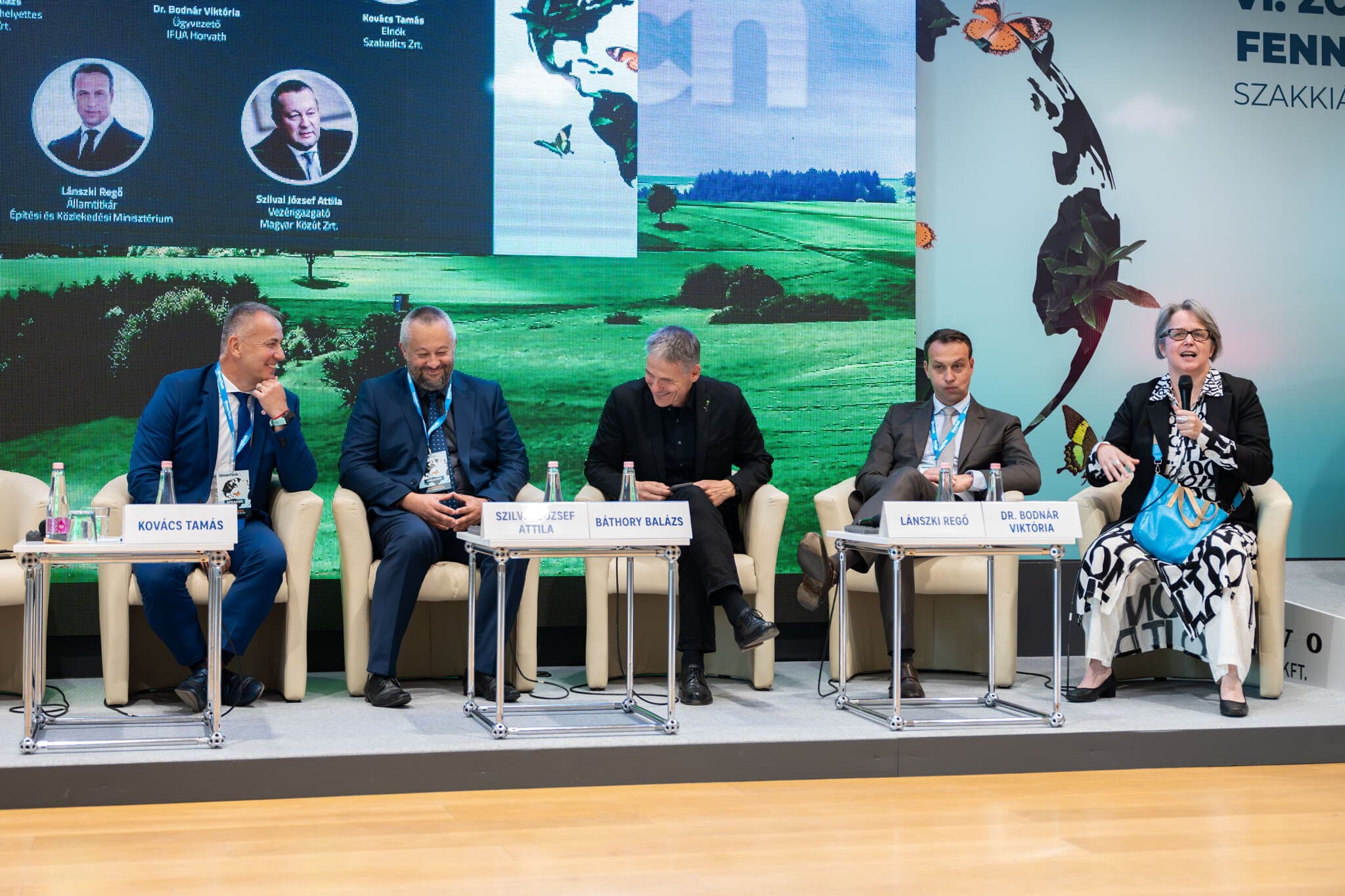
Roundtable on the future of the construction waste management sector
Dr. Viktória Bodnár, managing director of IFUA Horváth, moderated the discussion, which featured Regő Lánszki, Építési és Közlekedési Minisztérium, Tamás Kovács, President of Szabadics Zrt., József Attila Szilvai, CEO of Magyar Közút Zrt., and Balázs Báthory, Deputy CEO of Market Építő Zrt., discussed circular waste management, efficiency and the future of the industry.
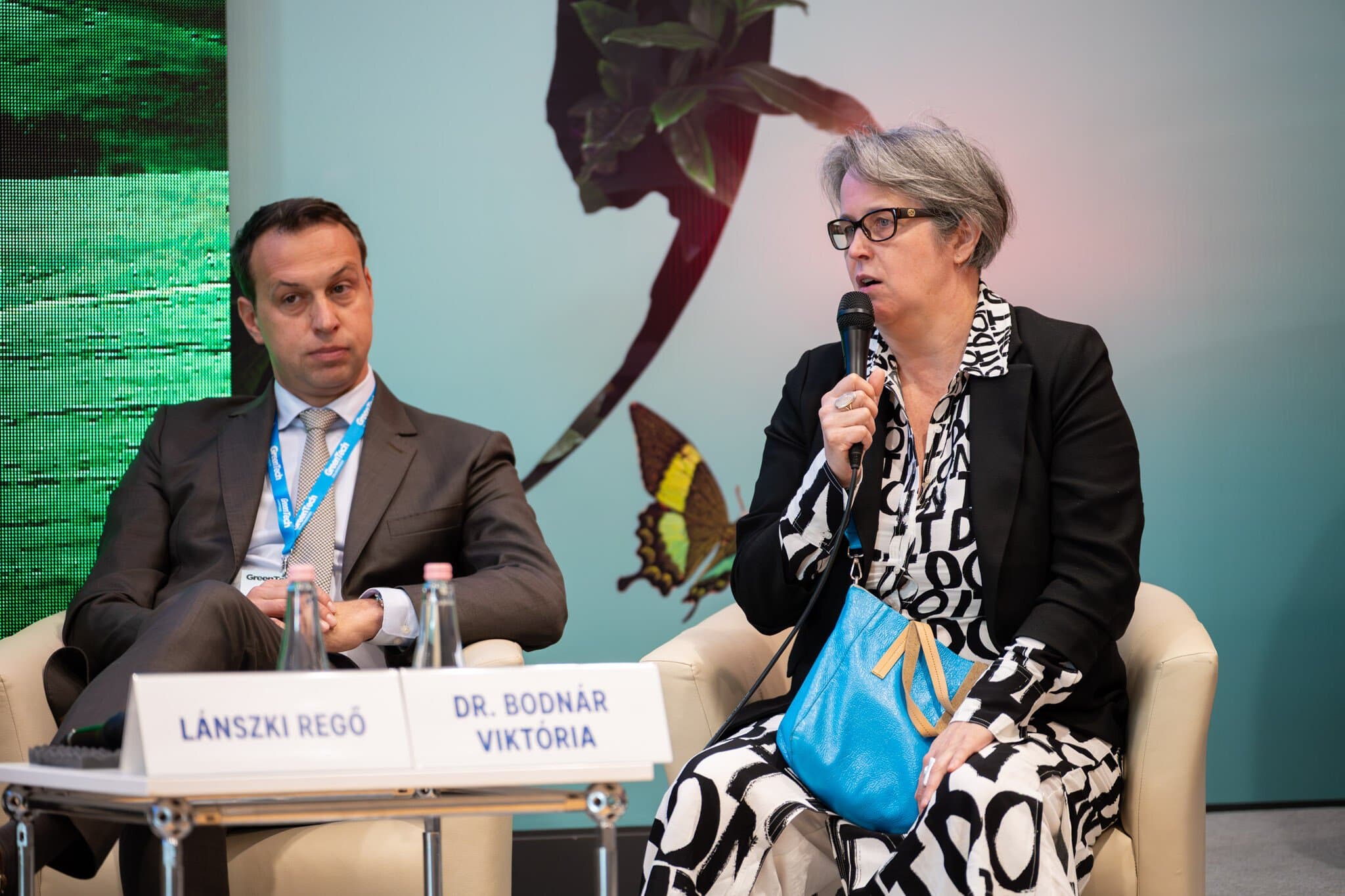
As Dr. Viktória Bodnár pointed out in her introduction:
"The construction industry is of major importance in the circular economy transition in Hungary, as 10 out of the roughly 20 million tonnes of waste generated in Hungary every year is related to the construction industry, while the biodegradable waste share is 2-31.343424T."
What could be the biggest challenge in the transition to a circular economy?
Regen Lánszki in response to the question stressed that he wants to move the industry towards longer planning and life-cycle thinking.
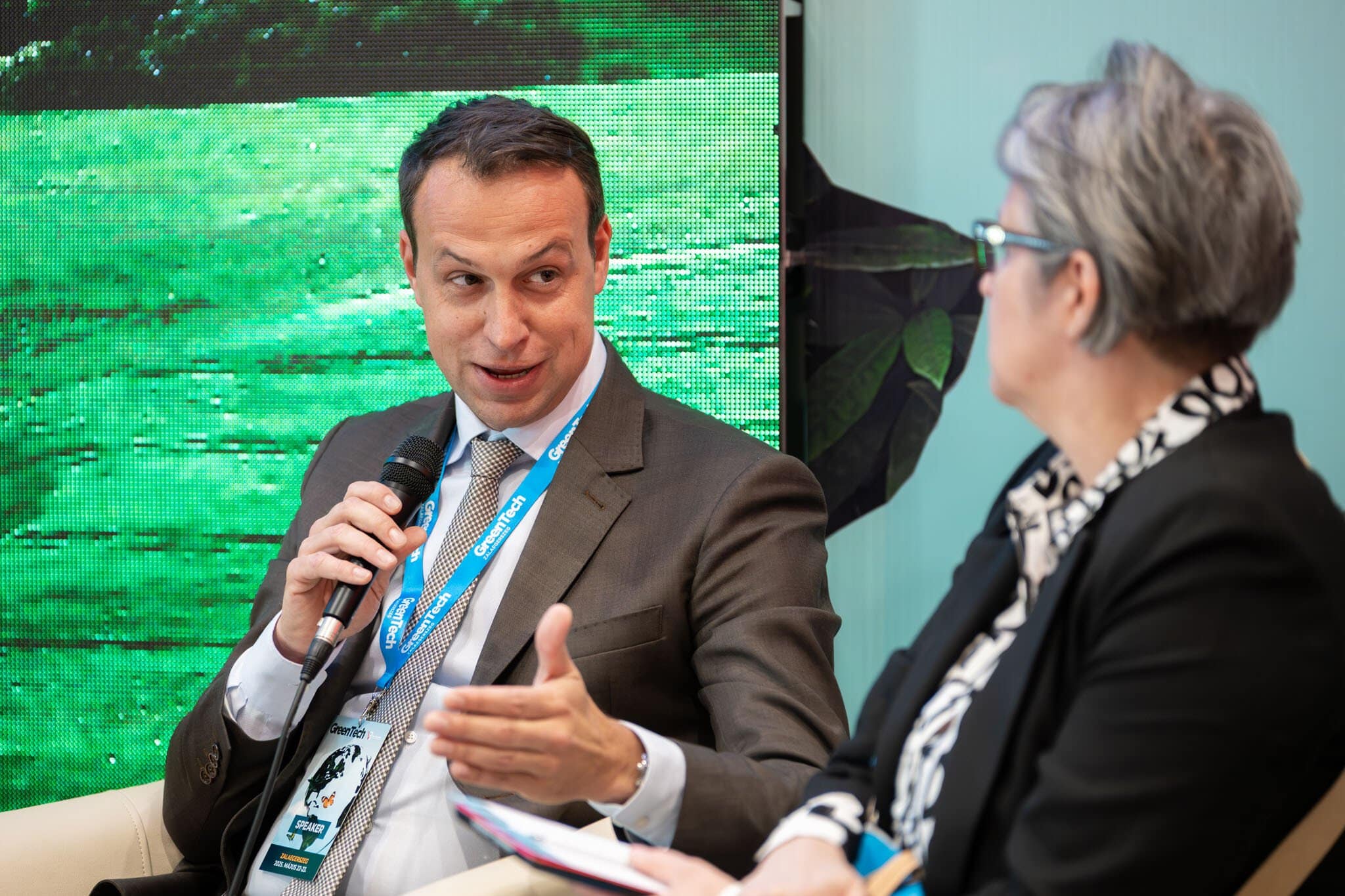
"Hungary has an import quota of 48% in construction materials. Almost half of the construction materials used therefore come from abroad. This carries many risks."
Báthory Balázs highlighted the low level of productivity as one of the biggest challenges of the circular economy.
"It's often said how inefficient we are, which is frustrating for a number of reasons. On the one hand, we have scarce resources, and it's a shame to use them badly; on the other hand, if we want to attract foreign investors to Hungary, we need to ensure that they get a competitive, high-quality product here. And there are scarce resources in terms of skilled workers and the knowledge of skilled workers to introduce new technologies."
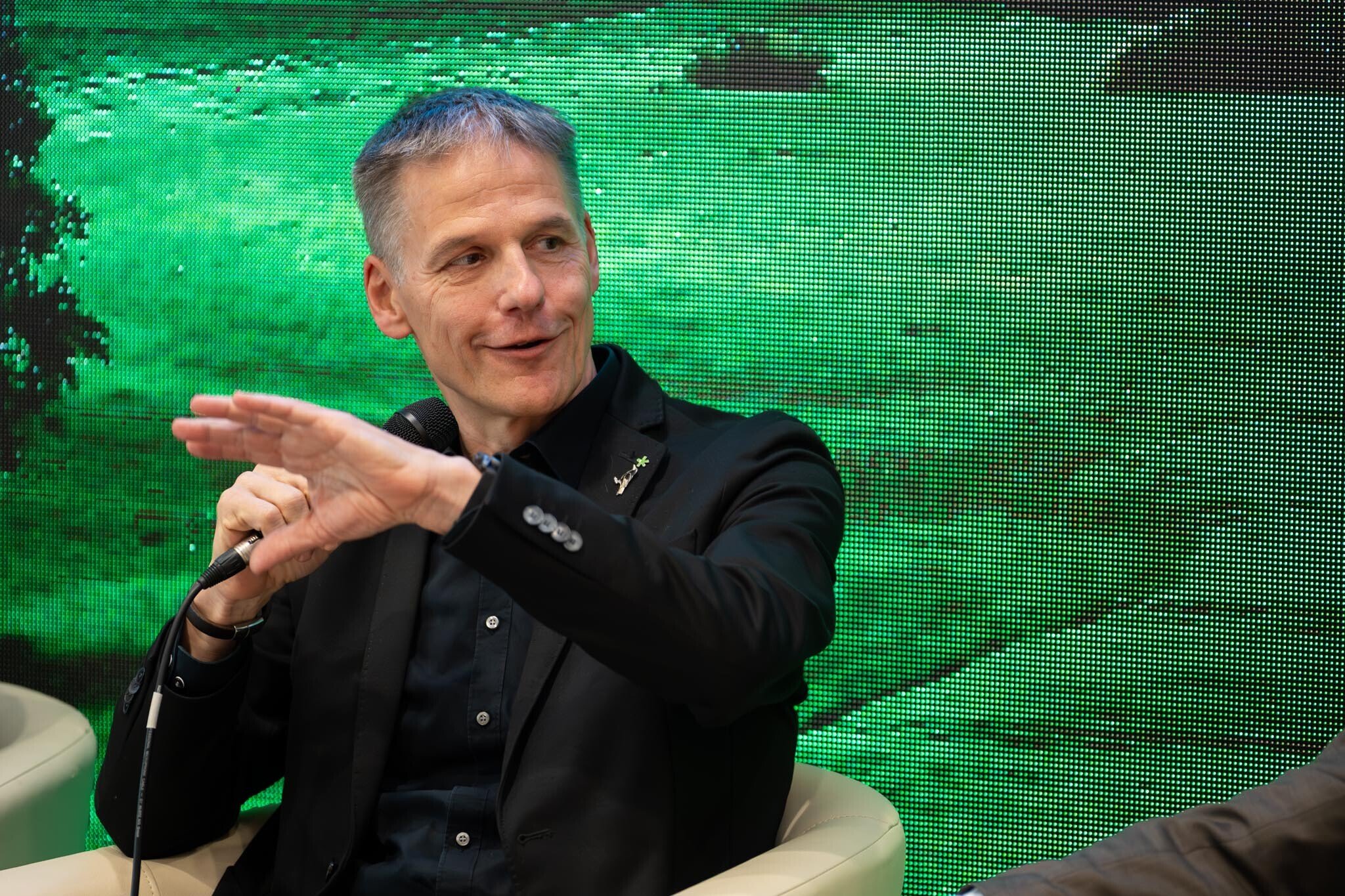
"Sustainability for us is also about long-term economic sustainability, yet," he concluded, "one of the biggest problems I see is the lack of data. A huge problem is that we do not have the right measurable data. Market started to look seriously at sustainability five years ago - this does not mean planting trees, it means looking at business, social and other aspects in a systemic way. At that time we made commitments for 2025 and 2030.
We had to withdraw 30% of the 2025 commitments because we didn't understand it and didn't have the data, so we didn't know what we were committing to. Fortunately, things are better today."
Attila József Szilvai detailed the difficulties of their work: "as a road manager, one of the biggest challenges is climate change. One of the biggest challenges we face is the fact that the roads are one of the most difficult to deal with. This brings great difficulties in road operations.
We also have to learn to respond to sudden rainfall run-off, otherwise we will waste a lot of resources, because we will have to rebuild what the water destroys. We need to change our planning approach and adapt to new challenges."

On the other hand, he pointed out, there is a need for continued public funding for infrastructure maintenance. If this is not steady, we cannot make efficient and good decisions. Everything that is not spent on in time costs much more later, leading to a waste of all resources - economic and natural. Thirdly, the shortage of professionals and expertise was highlighted. "It is possible to find specialists for one thing or another, but the preservation of knowledge at organisational level is threatened by the working habits of newer generations. People work for us for 3-4 years; they accumulate knowledge and then don't take it back to us, so they can't pass it on to less experienced people. We need to find a solution to this."
Tomás Kovács sees the lack of a unified management of the construction value chain as a primary problem:
"As contractors, we are like restaurateurs: if a customer asks for a fried chop with a Somló dumplings, we give them a fried chop. So you have to have sustainability requirements at the level of the client, because the contractors will deliver what you ask them to deliver.
A good example is that 3-4 years ago we started to work with BIM within the group. A big question for us at that time was which area to put more effort into. We surveyed the top players in the Hungarian construction network and said: we are trying to be the best in the country in utility construction. I think we have succeeded in this" - Tamás Kovács summarized the goals of Szabadics, underlining:
"We have been building utilities without BIM for 35 years and we could certainly do it for the next 35 years - the benefits of BIM are not lost on us. We went to the water company to see what the results would be for them in operating a water plant with BIM. I was talking to the director of one of the big regional water utilities about half an hour ago and he asked me: what is BIM? So there is a great need for education."
The President also sees a gloomy picture regarding the problem of construction debris: "a big question, for example, in a demolition project, is what to do with the debris? If there is no construction site in my area of interest where I can use it for something, it is a serious problem, because I cannot store it, because it will be very expensive to store, and it will also be expensive to transport it to the other side of the country. It's not an easy question."
What can help, what can Hungarian actors be proud of?
Dr Viktória Bodnár argued in favour of introducing financial incentives:
"There are many examples in the West where it is much cheaper to dispose of separately collected waste than to treat it in one piece, and there is a separate financial compensation for secondary use, which has encouraged greater corporate involvement in innovation in the West."
Regő Lánszki cautioned that "it takes many years to assess the impact of a regulation, it is very difficult to present. We can be proud of the fact that we now have real, reliable figures, so that we can make strategic decisions."
Not only construction waste can be used as construction products, but also municipal waste. "We need to move forward on this. We need to innovate and use domestic resources to reduce our import exposure, and waste management is part of that."
"I see great potential," he said, "in promoting natural building materials. We are also trying to encourage this through regulation: if you build with natural materials today, you can put 20% more buildings on a plot. I see this as a catalyst and it will have a long-term impact."
Balázs Báthory also clarified the issue on the financing side: "we at Market would like to build a sustainable house at all points, but the big question is whether the client will pay, whether the tenant will pay and how a bank will finance it."
"The state can help with this. If you give a discount for sustainable solutions in a way that benefits the investor, new solutions will spread. We pride ourselves on not just serving our customers. We try to advise them on how they can make their investment more sustainable for a similar amount of money."
"I'd really like to see," he said, "by 2030, our practices spread across the industry: we've introduced a lot of things that we do jointly with or share with competitors - such as using LEAN or our BIM4share site, where all our BIM-related forms are freely available. We have also set up a post-secondary training institute with our competitors to ensure that we have as many young professionals as possible with the right skills."
József Attila Szilvai showed the result of the environmental impact of road construction: "As far as hard asphalt is concerned, we are proud that with the latest legislative changes we have achieved that hard asphalt and soil will not enter the waste stream for three years. So for three years, mart asphalt is not waste, but a building material that can be used freely."
Regarding the commitments of Szabadics, Tamás Kovács drew attention to the fact that sustainability has been continuously embedded in the company's operations in the recent period. "We have now managed to prepare and publish our sustainability strategy, and last year we had an ESG self-report verification done, which allowed us to set our goals. It seems small, but, he says, a big step was, for example, to ban bottled water from our work areas. We gave everyone two canteens with their names on them. We estimated that by using them, we didn't throw away more than 45,000 bottles."
"Echoing Balázs' sentiments, I confirm that knowing the data is the key to being more sustainable. A good example of this is that in our country, we have inventoried: how much water we can use. The short answer was that we had no idea. Today we are able to do a GHG protocol SCOOP 1, 2, 3 classification. To incorporate these into our everyday thinking and strategy, we needed to institutionalise sustainability commitments."
What should 2030 look like?
Regő Lánszki responded to the question with a strategic point: "I would be most happy if we could stabilise the domestic construction economy and make it predictable - after all, it accounts for 61.3434.42 trillion of GDP. If we add the SME sector, there's another 71T3424T to that."
Balázs Báthory outlined a concise vision for the future: "I would be happy if transparent information on the entire material flow were available. It would be fantastic if I could see where, say, concrete is in the country. I'd be able to see if I could see concrete everywhere.
I would like to see us reach the level of efficiency in 2030 where Austria is now."
Attila József Szilvai called for a digital switchover:
"I would consider it a great success if we could get to 2030 in terms of digitalisation, which is what we are dreaming of now with the Magyar Közút."
Tamás Kovács concluded by stressing the need for a change of attitude: "sustainability must permeate people's everyday thinking. ESG could also be described as a summary of people's well-intentioned good deeds.
Only when there is a shared will to move forward can we achieve real results at individual, corporate and public level."
Source: Link







The STRABAG in Szombathely prevented the release of asbestos-containing dust using a special sealing layer

Stones of the past, solutions for the future – Saving the stone walls of the Citadel

The replacement of the expansion joints on the Erzsébet Bridge is continuing with the third phase

Up to 1,500 cubic metres of concrete are being poured in each phase of the Paks expansion

Hungary's biggest motorway upgrading programme is underway

Perhaps the world's most elegant McDonald's restaurant opens in Budapest

Szeged to become one of Europe's leading industrial centres with the construction of the BYD factory, the city strengthens its position with a worthy investment package

Viablokk porous concrete masonry element from a Hungarian factory, as a Hungarian product, is set to conquer the world
-

 Bound track 2026. 04. 10.
This is how they pulled out the ‘fang’ of the derailed railway section in Transdanubia – with photos
-
Bound track 2026. 04. 10.
Planning can begin – the M2 line could be extended to Cinkota, and the HÉV lines could be upgraded
-
Bound track 2026. 04. 10.
The largest domestic railway development project to date is set to begin
-
Industry news 2026. 04. 10.
Rubbish equivalent to the weight of nearly 2,000 cars has accumulated on the country’s motorways over the course of a year


