
Industry news
The STRABAG in Szombathely prevented the release of asbestos-containing dust using a special sealing layer

Experts from STRABAG, a subsidiary of the BITUNOVA Kft. in Szombathely, the Oladi Platón. This time, they are not carrying out a traditional road construction or maintenance task: the primary aim is to prevent asbestos-containing dust from entering the air by creating a surface sealing layer on roads constructed using asbestos-containing rock. The effectiveness of the work carried out on Síp Street will be verified through measurements, after which a decision can be made on whether to apply the special surface coating to further sections of road.
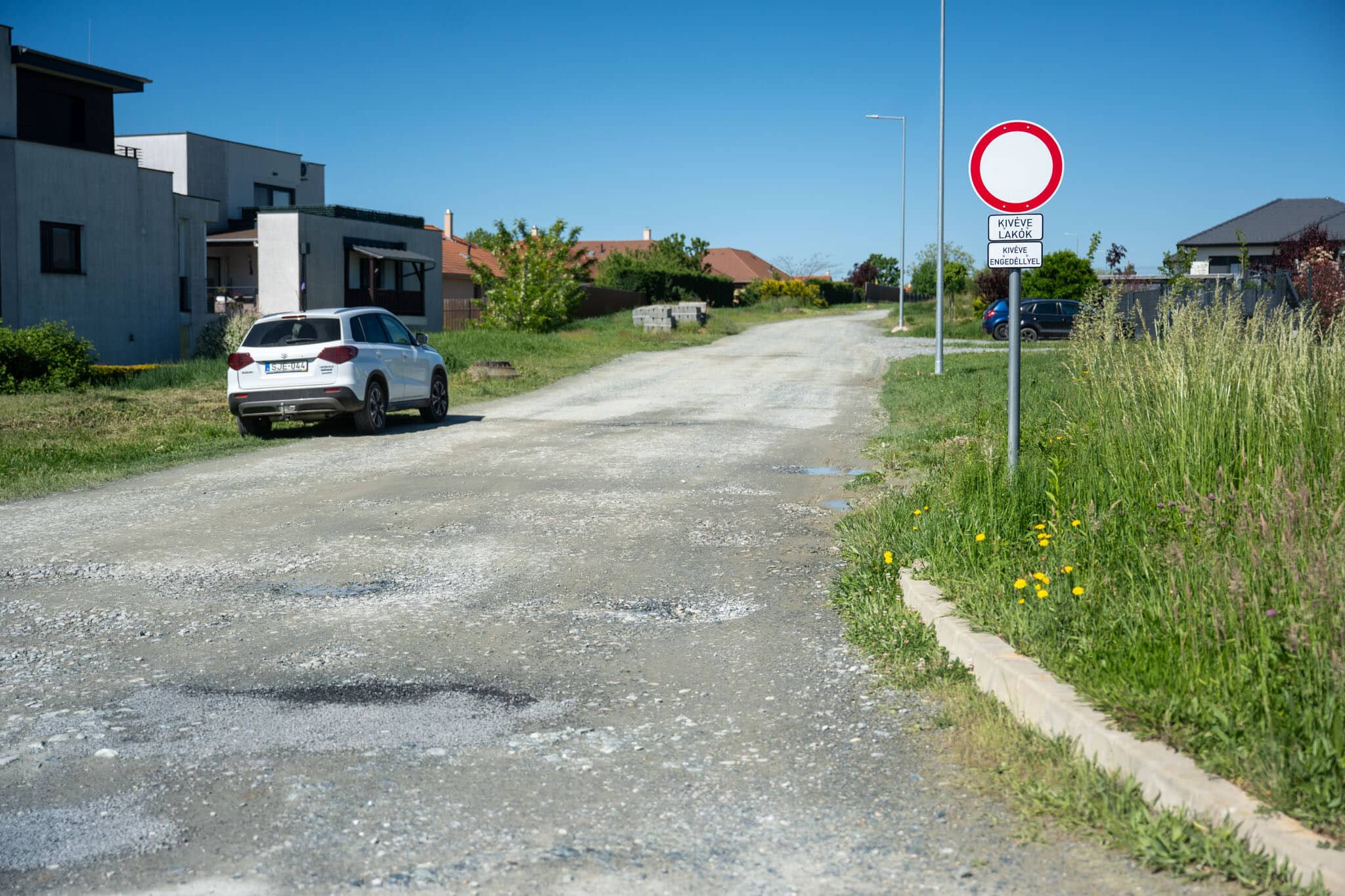
Almost every street is polluted in this neighbourhood of a thousand residents
The Vas County Government Office has ordered an official investigation into the approximately 12-kilometre-long road network (reference number Oladi Platón) managed by the Szombathely-Olad Plató Waterworks Association. At the same time, safety measures have been introduced on the affected streets. The rock and air tests were carried out after traffic and speed restrictions had been imposed and watering measures implemented, but the presence of asbestos was still detected.
According to information from the authority
After 20 April, 70 rock samples were analysed along the 12-kilometre road network. Of these, 54 samples were found to contain asbestos, and the contamination is present on almost all the affected streets.

Airborne asbestos fibre concentrations were measured at several monitoring points. On Síp Street, the measured values exceeded the prescribed limit of 1,000 fibres/m³. On Márton Áron Street, 1,500 fibres were measured, whilst at one measuring point on Sáfrány Street, the result remained below the health limit.
The primary aim was to prevent dust from being released from roads made of asbestos-containing paving stones as quickly as possible. If inhaled, this carcinogenic substance poses a threat not only to the health of the more than a thousand people living in Oladi Platón, but also carries a risk to the residents of the county town.
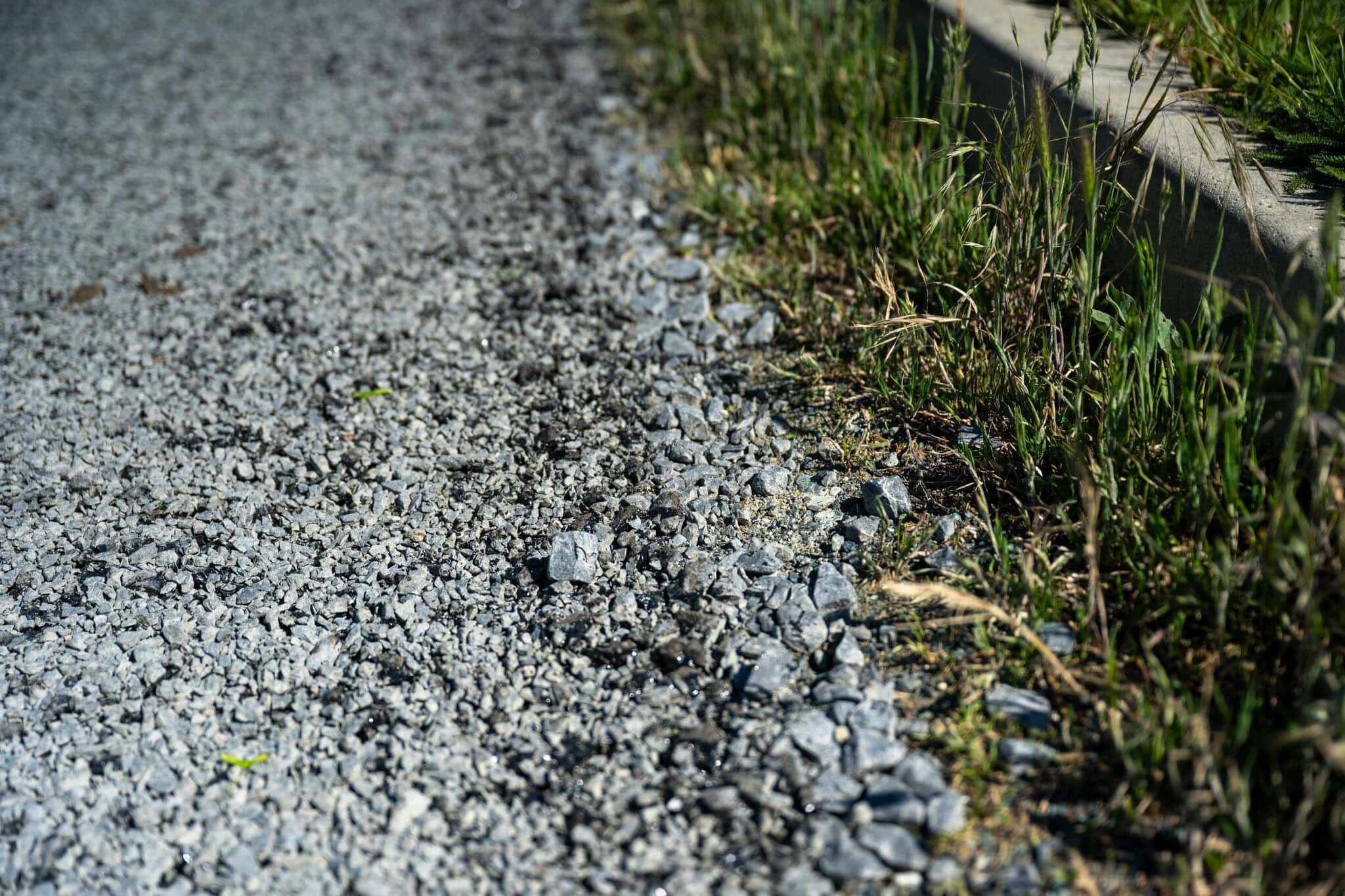
At a brisk pace
Staff at BITUNOVA Útfenntartó és Emulziógyártó Kft. became aware of the problem following a report posted on social media. They then contacted the technical department of the city of Szombathely. The Laboratory and Methodology Directorate of the National Centre for Public Health and Pharmacy endorsed the technological solution presented by the company, as it is suitable for preventing the release of asbestos fibres.
Subsequently, the technical processes prior to construction were carried out at breakneck speed, taking just 10–12 days, so that work could begin as soon as possible on sealing the 4,500-square-metre test section.

The risk of dusting was reduced through manual preparation
The BITUNOVA laid a special surface on Síp Street, one of the roads in the road network concerned. First, dry crushed stone was laid on the base course, followed by a bitumen emulsion binder and a further layer of crushed stone.
We present the technology in detail with the help of Árpád Bakó, company manager and technical team leader.
The staff of BITUNOVA attended a separate health and safety training session before work began. They worked in disposable protective clothing and masks, which were placed in collection bags at the end of the working day and treated as hazardous waste.

Árpád Bakó said that
The risk of airborne dust had to be minimised, so the surface preparation work was carried out manually, with the workers wearing protective equipment. Potholes and dips in the road surface were repaired using crushed stone and milled asphalt.
A two-layer, sprayed surface coating was applied: by spraying dry aggregate over the top, a so-called bonded surface coating was formed over the asbestos-containing rock.

They have developed an interlinked system
Speaking about the layer sequence that had been established, Árpád Bakó explained that, depending on the load, crushed basalt from Uzsa with varying grain sizes was first spread over the base course. This was followed by rolling with a rubber-tyred roller, which in this instance served not to compact the material but to align the grains. The aim was to ensure that the crushed stone particles settled properly into the base course and prepared the surface for the binder.

The bitumen emulsion sprayer was then put into operation. A further layer of crushed stone from Uzsa, with a smaller grain size than the first layer, was spread over the bitumen emulsion applied to the surface. This was again levelled by the rubber-tyred roller.
Finally, the process was completed with a third application.
The resulting surface does not behave as a homogeneous layer of asphalt, but rather seals the path of dust dispersion as a system of interlocking layers of crushed stone and binder.

Specialised machinery was used to carry out the work
The formation of the anti-dust sealing layer was facilitated by Schäfer-type machines, which are capable of simultaneously transporting and spreading both the binder and the crushed stone. The risk of dust being stirred up during the work is reduced by the fact that the automatically controlled machine carries out the spreading of the crushed stone and the spraying of the emulsion in a coordinated manner.
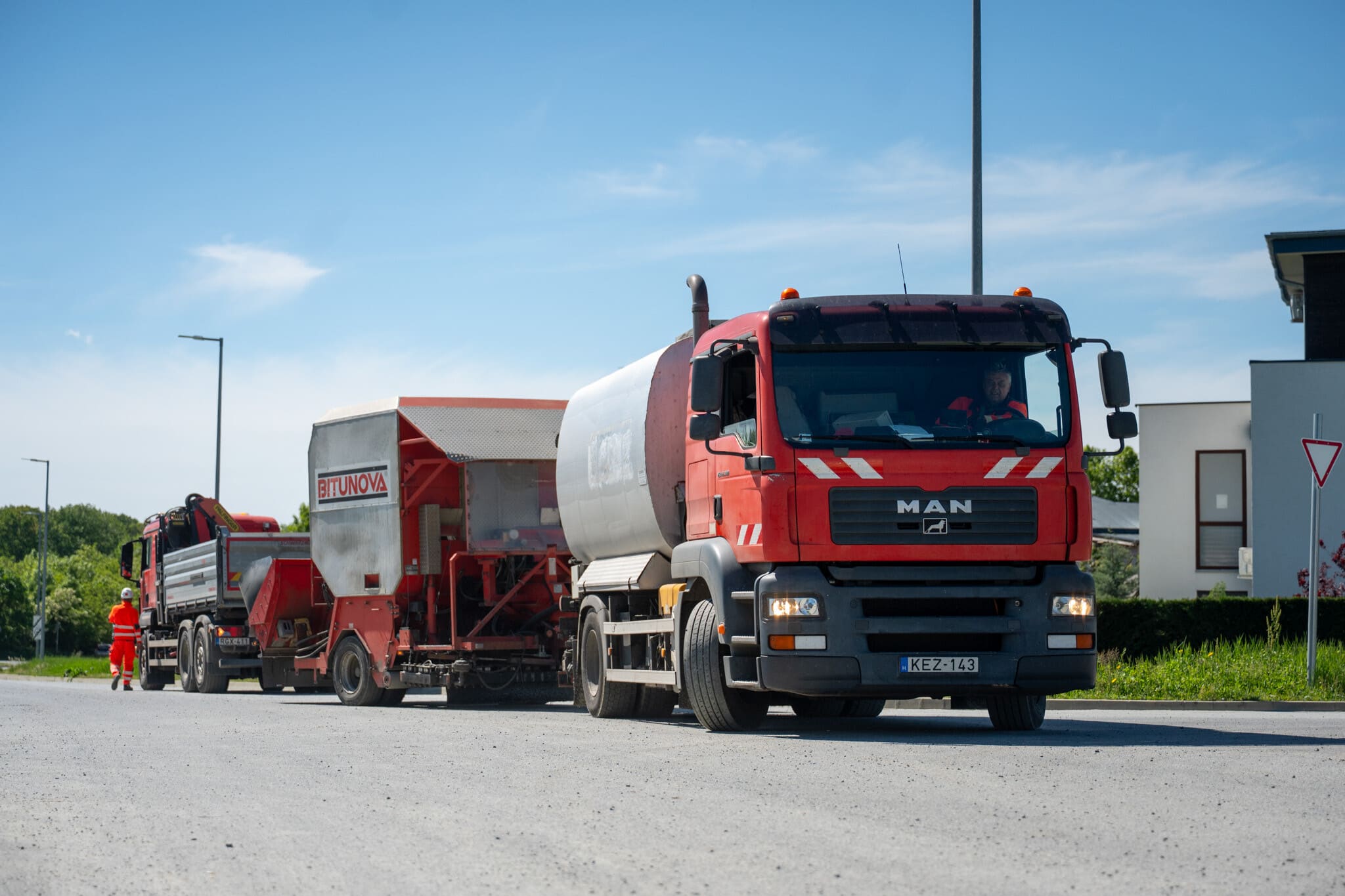
The crushed stone is distributed evenly along the entire length of the discharge drum in the crushed stone hopper, with a hydraulic distribution auger ensuring its even distribution. The insulated bitumen emulsion tank is equipped with a programmable heating system to maintain the correct temperature. The bitumen emulsion was transported to the work site in a closed tank and then transferred to the machine using a closed-system pump.

They have minimised the risk of dust being stirred up
When using specialised machinery, the spreading of the crushed stone follows the spraying of the emulsion by only about half a metre. In practice, this means that the surface treated with the binder is not left uncovered for any length of time. This is not merely a question of construction quality, but also a matter of environmental protection and occupational safety: the technology must seal the surface without increasing the risk of dust emission.
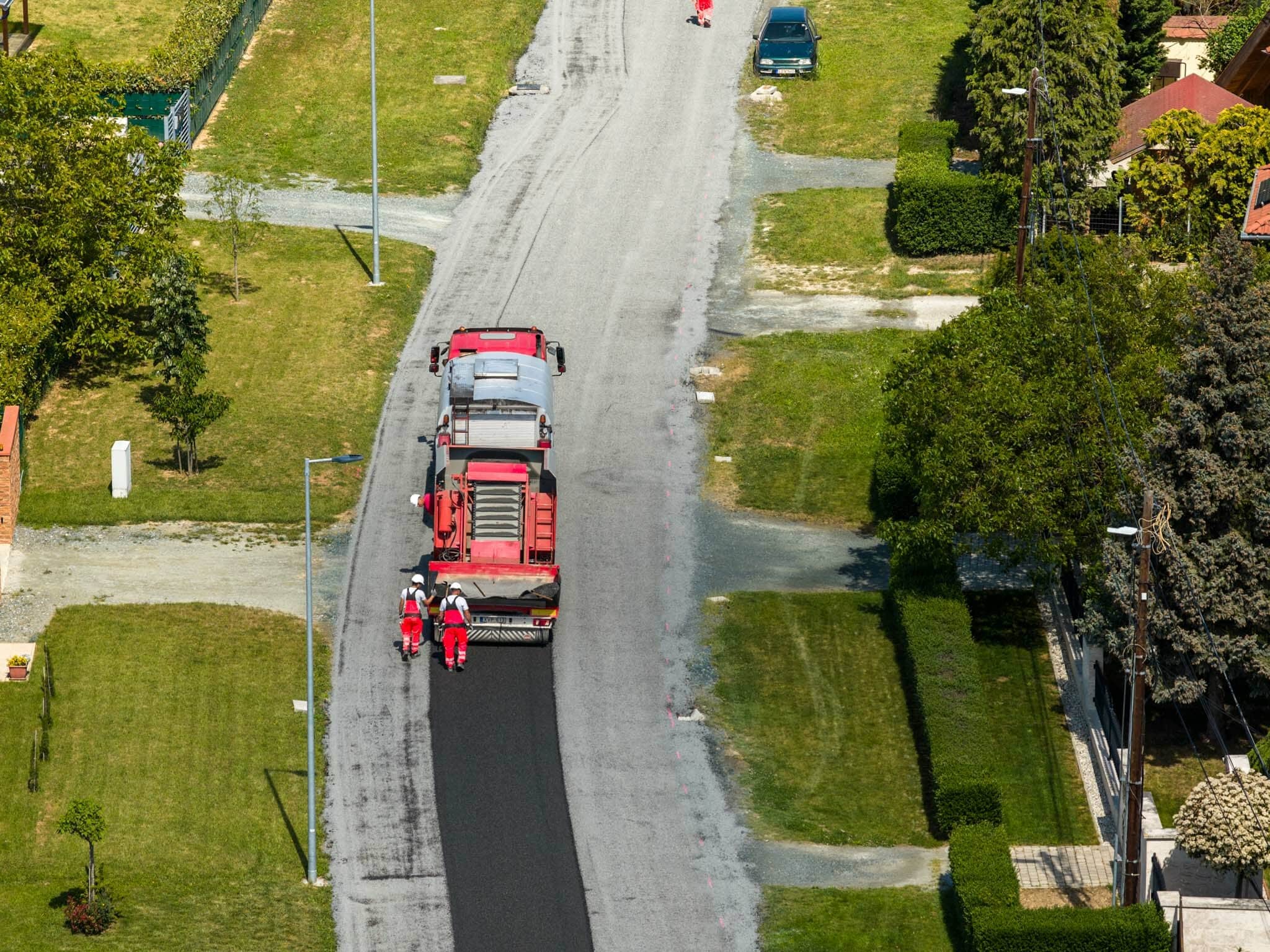
The durability of the surface coating depends on the load-bearing capacity of the existing track structure
The service life of the technology essentially depends on the load-bearing capacity and condition of the base course, i.e. the existing road structure. If these are adequate, the surface coating can have a service life of up to 15–20 years. The contractor did not carry out a complete reconstruction of the track structure, but sought a solution to prevent dusting from the asbestos-containing material, adapting to the conditions of the road network. The competent authorities may decide on the further application of the technology following further measurements.

Source: Link



The AKKO Invest may be expanded to include a designer of airport hotels

Drilling is also taking place beneath the railway: work on the Déli Körvasút project continues with the relocation of utility lines

The KBM call for entries is aimed at the cream of the crop of Hungarian architecture

Class HE-DO brought the summer to a close with a family sports day

Rain gardens are coming to Budafok, with over 3,000 square metres of green space set to be developed

Contemporary art deco in Csopakon

Four new bridges to be built in the heart of the former industrial city

Safer driving on the motorways: new digital signs for the MKIF
-

 Road building 2026. 08. 05.
The main road leading to a key tourist destination in Bihar is being upgraded using cold recycling technology
-
What is being built? 2026. 08. 06.
Paks II.: What does the new milestone for Unit 5 mean in the context of the review?
-
Climate-X 2026. 08. 05.
STRABAG is relieving the strain on the electricity system through plant shutdowns and reorganised production
-
Industry news 2026. 08. 06.
Four giant cables are linking the electricity grids of Spain and France beneath the seabed


