
Property
Where to go from here, Rákosrendező? We looked at European examples

Once again, events around Rákosrendező have accelerated. One of Budapest's most valuable brownfield sites with the highest potential is expected to be put out to tender by the Municipality of Budapest - the registration phase of the development project will start on 25 September, according to its website.
The government and the municipality have also agreed that the infrastructure development package worth around €800 million, which the UAE-based Eagle Hills Group would have received for the investment, will also be given to the capital, subject to the same conditions. The Budapest municipality would also involve international investors in the project, and preliminary discussions are underway.
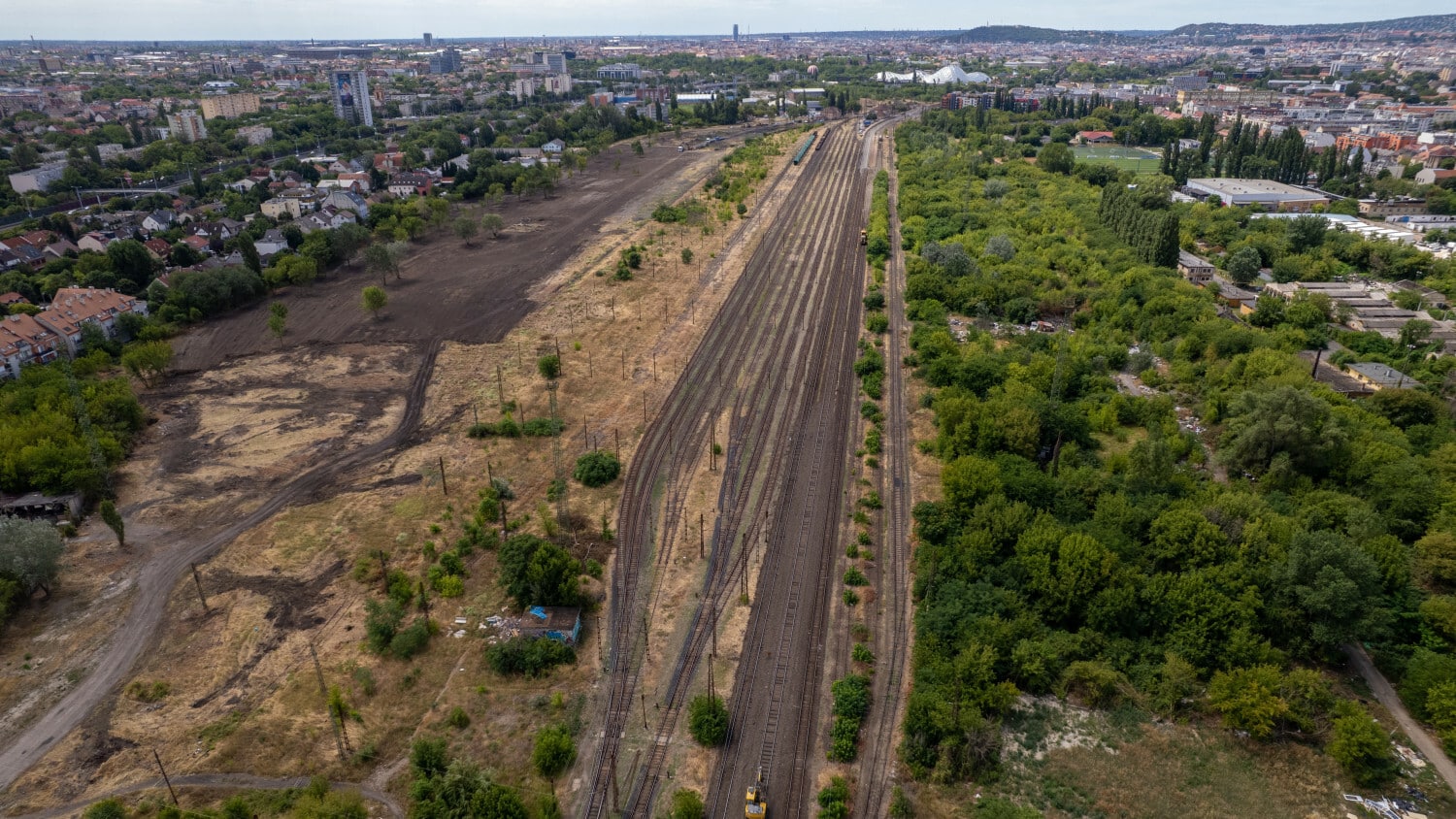
So this is the situation on paper for the 86 hectares of land in the inner part of the capital, which is in a very poor state of repair but also has huge potential. The parameters of the master plan will be the subject of a conference organised by the capital on 11 September, on which we will report.
To prepare for this, we looked around Europe and selected two developments of similar scale, which are also regenerating brownfield sites, including residential areas.
La Confluence - Lyon's industrial zone turned into a new urban district
Located at the confluence of the Rhône and Saône rivers in south-eastern France, the district now known as La Confluence was once the industrial and logistical hub of Lyon - dotted with railway sidings, warehouses, natural gas infrastructure, disused ports, abattoirs and wholesale markets.

Started in the early 2000s, the Confluence project aimed to transform this brownfield site into a mixed-use, sustainable urban neighbourhood. The development, which took place in several phases, created new housing, offices, parks, cultural institutions and community spaces. These include the Musée des Confluences at the tip of the peninsula and the Confluence Marina, which was artificially created as part of the mega-project.

Several large companies have moved here, and more than 5,000,000 homes have been built. The development is ongoing: the second phase will focus on the environment and energy efficiency, with the aim of developing buildings with positive energy efficiency only. The Confluence is now one of the most modern neighbourhoods in Lyon, with waterfront promenades and innovative architecture that is a major attraction for tourists.
Aspern Seestadt - around an artificial lake on the outskirts of Vienna
In contrast to the French example, we present a project from neighbouring Vienna, specifically located in the outskirts of the city, far from the centre. The Seestadt Aspern (or Aspern Lake Town) is being built in three phases on the site of an airport, originally a civilian airport closed in the 1980s and then mainly a military airport after the Second World War. It is named after the artificial lake that will be its centre.

In any case, whatever form it takes, Rákosrendező should take a good example in that the infrastructure for its access was built in the first phase: it is already served by two fully completed and one incomplete metro station. These were completed in 2013 with the extension of the U2 metro line, which is when the first buildings started to be occupied by residents.

The new district, which will house more than 25,000 residents, will also create 20,000 jobs; its southern side and several other areas already exist and function as a separate district, with buildings set in parks. Infrastructure development is complete: kindergartens, schools, health care facilities are all located in the area, as is a university campus. Transport has been specifically designed to cater for pedestrians, cyclists, users of electric mobility devices and public transport users.
Smíchov City - industrial zone of the freight railway station to become a new district in Prague
And last but not least, we have an example from the Czech Republic, which is smaller in size but also covers a brownfield railway development. Prague's Smíchov City is being built on almost 20 hectares of land in the south-west of the city, on the site of a former freight depot. This brownfield project is one of the largest urban developments in the Czech Republic.

After more than a decade of preparation, the project started in 2020 and is scheduled to be completed in 2032. In the first phase of the project, around 400 apartments, 8 000 m2 of offices and 6 300 m2 of commercial space will be built. By the end of the entire development, around 3 300 residents will be able to move in and around 9 000 new jobs will be created in the area.

Smíchov City will include both residential and commercial properties, green spaces and community spaces will also play a significant role in the project. More than 21,000 square metres of green space and parkland and a 28-metre-wide pedestrian-bicycle promenade, almost a kilometre long, will be part of the new district. A new school will also be built as part of the development - in addition to the modernisation of the Smíchov railway station and the expected renewal of the metro station, the site will also see a significant improvement in the neighbourhood's infrastructure.
Source : Link







The STRABAG in Szombathely prevented the release of asbestos-containing dust using a special sealing layer

Stones of the past, solutions for the future – Saving the stone walls of the Citadel

The replacement of the expansion joints on the Erzsébet Bridge is continuing with the third phase

Up to 1,500 cubic metres of concrete are being poured in each phase of the Paks expansion

Hungary's biggest motorway upgrading programme is underway

Perhaps the world's most elegant McDonald's restaurant opens in Budapest

Szeged to become one of Europe's leading industrial centres with the construction of the BYD factory, the city strengthens its position with a worthy investment package

Viablokk porous concrete masonry element from a Hungarian factory, as a Hungarian product, is set to conquer the world
-

 Bound track 2026. 04. 10.
This is how they pulled out the ‘fang’ of the derailed railway section in Transdanubia – with photos
-
Bound track 2026. 04. 10.
Planning can begin – the M2 line could be extended to Cinkota, and the HÉV lines could be upgraded
-
Bound track 2026. 04. 10.
The largest domestic railway development project to date is set to begin
-
Industry news 2026. 04. 10.
Rubbish equivalent to the weight of nearly 2,000 cars has accumulated on the country’s motorways over the course of a year


