Industry news
ÉVOSZ: a positive turnaround in the construction sector next year

The breakout point for the construction industry could be in the area of housing construction and renovation, according to Építési Vállalkozók Országos Szakszövetsége. ÉVOSZ conducted a survey of its member organisations and other major players in the construction industry, interviewing 400 companies.
The data show that nearly half of businesses will see their turnover fall in 2024 due to the Russian-Ukrainian war, a lack of public investment and public expectations. This year, less than a quarter of businesses expect an increase in turnover, and 44% of them expect a decrease in turnover.
Lack of orders and unfair competition were the main reasons cited
As in the previous survey, 82% of responding firms cited a lack of orders as the main obstacle to their activities. Subsequently, unfair competition was cited by just over half of respondents this year (52%), a significant increase compared to a third last year.
In third place was the unpredictability of economic regulation, with 48.1%. Inflation and high administrative burdens were also cited by almost one in two businesses (44.4%). Competition was a barrier for just over a third of respondents (37%).
No company expects to run out of capacity
More than half of the respondents (55.6%) have not been able to enforce the price change at all to their customers in the past year, and the rest only partially.
For this year, none of the companies surveyed said that their order books will exceed current capacity.
9 out of 10 respondents said that their business partners had paid late in the last six months. Of the surveyed companies, 81.51T$3229T were in arrears on 31 December, with an average of 111T$3229T of invoiced turnover. The firms with outstanding debts estimate that 901TTP3229T of this debt can be recovered without litigation.
45% of the respondents reported that the level of chain debt has increased among their partners, while for the others it has not changed.
Two thirds of firms retain staff in difficult times
In a context of shrinking market opportunities, 26% of responding firms expect to reduce their workforce, but 63% plan to retain staff in the next 6 months even in this situation. Only 11% of respondents expect to increase their staff.
The responding companies 60% have a sufficient number and composition of skilled workers to fulfil the orders. The greatest shortages were reported for skilled trades (carpenters, electricians, machine operators, masons, tinkers, locksmiths, pavers, road builders), but there is also a shortage of engineers (architect, civil engineer, mechanical engineer, preparatory engineer, electrical engineer, BIM designer, BIM manager).
Digitalisation continued apace last year despite serious challenges
In order to increase efficiency in a tightening market, 60% of responding businesses plan to go digital. 52% of them want to increase efficiency by reorganising and 48% by changing the product/service mix. 37% are responding to shrinking market opportunities by saving energy or investing in their own resources, a third of respondents (33.3%) would reduce staff.
In the last five years, all the businesses in the survey have made some kind of improvement to digitise their business.
During the digital transformation, 85.21.2% of the businesses surveyed faced the challenge of transformation costs. More than half of respondents (52%) were slowed down by resistance due to a risk-averse culture. Despite the difficulties, more than 85% of businesses have provided some form of digital technology or IT training to their employees in the past year. The most popular were company-organised training courses.
This year is the year of gathering strength
ÉVOSZ concludes that a meaningful positive turnaround at sector level is expected from 2026 onwards. Companies are taking efficiency measures in the face of strong competition.
The statement also concludes with a quote from László Koji, President of ÉVOSZ, who says that 2025 is the year of power gathering.
The leader sets out the challenge for the construction industry to increase efficiency across the entire construction value chain, to improve the positioning of domestic construction products, digitalisation, green building and compliance with new sector legislation. On the client side, an increase in quality orders should be demanded and expected, according to the President.
Source: Link

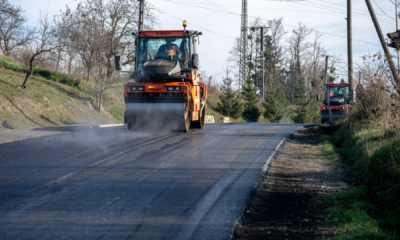




Roadworks are taking place at 15 locations in Balatonfüred

SWIETELSKY is inspecting and repairing the surface defects on Main Road 25

Pécs, Gödöllő and Budapest: four SPAR stores have been refurbished – here’s which ones

They could reshape the historic city centre, transport in the suburbs and even a unique public park in Székesfehérvár

Rain gardens are coming to Budafok, with over 3,000 square metres of green space set to be developed

Four new bridges to be built in the heart of the former industrial city

Contemporary art deco in Csopakon

Safer driving on the motorways: new digital signs for the MKIF
-

 Bound track 2026. 10. 07.
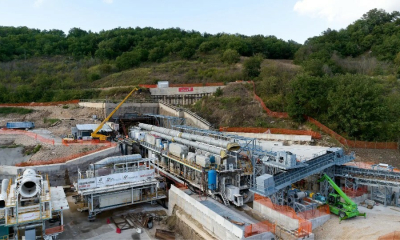
Aurora beneath the Apennines – Another tunnel is being built on the Naples–Bari railway line
-
Road building 2026. 10. 13.
A consortium comprising STRABAG and Duna Aszfalt has been awarded the contract to build the North Macedonian motorway
-
What is being built? 2026. 10. 09.
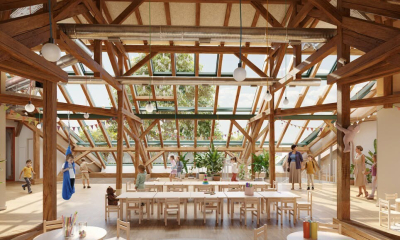
One of Budapest’s oldest nurseries is being renovated whilst preserving its timber roof structure
-
Current at 2026. 10. 10.
„The focus will not be on Lean’s equipment, but on how we operate” – the ‘Lean in the Construction Industry’ conference in November