
What is being built?
Sludge in the greenhouse - A pioneering technological solution to modernise wastewater treatment in the Lower Szigetköz

Since February, the Kunsziget wastewater treatment plant in Győr-Moson-Sopron county, which was renovated and expanded in less than a year, has been operating at full capacity.
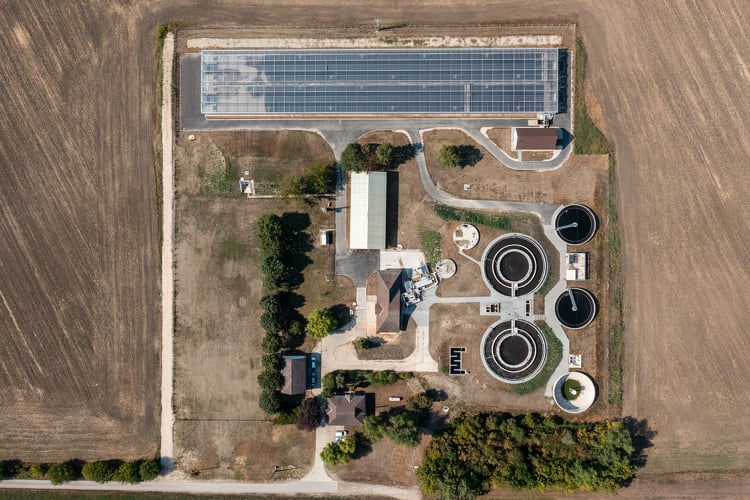
After fine-tuning, trial operation began in early March, and since then, monitoring and continuous control measurements have shown no emissions exceeding the limit values, according to the construction manager of Colas Alterra. László Maszlavér told our portal about the project,
The improvements were needed because the sludge-based wastewater treatment plant, which had been in operation since 2001, was no longer able to reliably handle the organic matter load associated with the region's population growth and was no longer fully compliant with changing regulations.
The area and capacity of the treatment plant has been significantly expanded
The land adjacent to the Kuns Island site has been purchased by the municipalities in the area for development. This has allowed the area of the purification plant, which was established more than two decades ago, to be expanded two and a half times, to 33,000 square metres.
The Colas Alterra Zrt. specialists took over the site for the construction works in the first half of February 2023. Their main task was to increase the existing biological capacity of 14600 LEÉ (LEÉ, average daily emissions of pollutants per inhabitant in various specific parameters) to 20833 LEÉ and to ensure that the plant is able to handle peak loads on the collection network.

The facility, located in the Lower Szigetköz, receives municipal wastewater from Ottevény, Mosonszentmiklós, Lébény, Kunsziget, Mecsér, Dunaszentpál, Dunaszeg, Győrladamér, Győrzámoly through pressure pipes from three directions.
The site has been rebuilt and upgraded on a continuous basis
The plant was built in five phases, some of which overlapped:
- preparatory and earthworks,
- construction and installation of new structures,
- I. conversion of a functioning biological artefact,
- II. conversion of a functioning biological artefact,
- construction of a sludge dewatering and solar drying plant.
László Maszlavér also said that these works were carried out with special attention to the continuous and safe operation of the existing technological elements.

Only two buildings and one storage facility were not affected
The scale of the project is reflected in the fact that the workshop and car storage building, as well as the temporary covered sludge storage facility, were just two of the facilities that were part of the previous technology and remained in their original form after the works were completed.
The exterior of the 143 square metre social building was renewed, with thermal insulation of the façade, new flooring in the interior, and replacement of the electrical fittings and sanitary installations. The roof has also undergone a series of works, with vapour barrier insulation installed and new tiles replacing damaged tiles and tin tiles.

Demolition, construction, change of function
With the development and expansion, the design of the site has also changed significantly. Several of the former technological elements have been demolished, such as the Parshall measuring channel, the sand and grease trap and the steel silo for storing lime.
At the disinfection plant, the existing baffles were raised to accommodate the
increase in operating water levels associated with the new technology. A functional change was also made to the 330 square metre plant building: the space previously used as the dewatering machine room was replaced with new turbo air blowers, while part of the former blower room was occupied by the plant's new electrical distribution and control cabinets.
The project elements involved in the conversion and renovation are the two biological basins, the sludge storage tank and the leachate transfer shaft.
The site, which is expanding to 33,000 square metres, has 16 new facilities built as part of the project.
Completed in just over a year:
- the 91 square metre sludge dewatering plant,
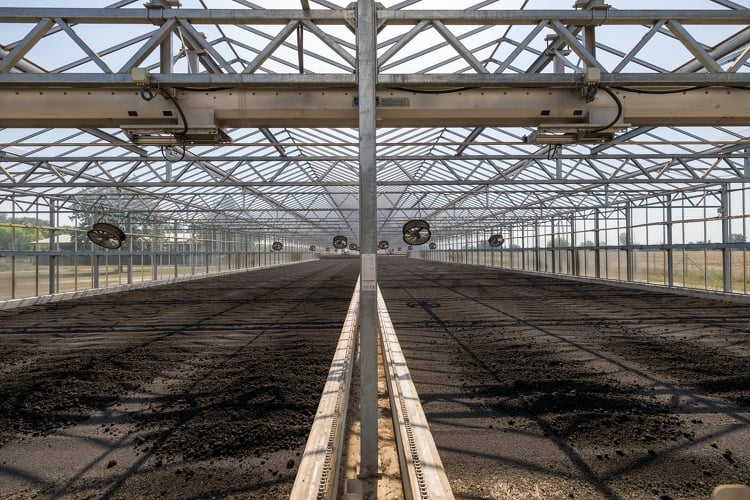
- the 3296 square metre solar sludge drying hall,
- a combined pre-mechanical plant with 2 drum grids, sand and grease separation equipment,
- the biological splitting and separation plant,
- the final sedimentation distributor,
- the two Dorr after-coolers,
- the balancing artefact
- the recirculation and sludge transfer plant,
- the sludge control shaft,
- the sludge filtration plant,
- the stormwater interceptor,
- the stormwater drainage ditch,
- the deep borehole,
- the purified water metering manhole and
- the discharge side manhole on the cleaned water main.
New technology installed as part of modernisation
László Maszlavér said that in terms of volume, the biggest part of the work was the construction of the sludge line.
The technology used here, in this form, was one of the first in Hungary to be developed at the Lower Island Intermediate Wastewater Treatment Plant. The treatment units, which perform the sludge drying task, are installed in a greenhouse with a floor area of about 3300 m2 and a length of 130 m.
The construction manager added that during the development, the continuous and safe operation of the plant had to be ensured, so the schedule and sequence of the construction was also designed accordingly.
Cleaning efficiency already significantly improved during the shanty season
László Maszlavér said that in the first phase, the new sedimentation structures were completed, together with the associated manholes and pipelines. When these were put into operation, it was then possible to remove one of the existing combined biological structures from the plant for the duration of the works. The specialist also said that in order to ensure that the other combined plant could serve the site smoothly during the rebuilding of biological plant I, the existing air blowers were relocated and a temporary air supply was set up.
Following the successful operational trials, the so-called "limping plant" was started up with one working biologist and two final settlers, after the converted biological plant was put into operation. The purification efficiency of the plant was already significantly improved compared to the previous situation.
New sludge line built
Then, before the next phase of work, the wastewater from the still-operating combined treatment plant was transferred to the new biological treatment plant in a scheduled manner, taking into account the plant's current load. After the conversion of biological plant II, the plant was able to start operating at full capacity and to meet the required limits immediately. In parallel with these developments, other waterline improvements were also carried out and the new sludge line was completed, so that these project elements were commissioned at the same time as the upgraded structures.
At times, the work area had to deal with sudden and heavy rainfall
The construction manager said that the biggest professional challenge was to ensure that the incoming wastewater was treated and drained as efficiently as possible and continuously as possible during the works. László Maszlavér added that this had caused some problems due to the large amounts of rainfall that often fell suddenly, because in wet weather the amount of water arriving at the plant could be 3-5 times the dry season load.
Special "labour inspectors"
The Colas Alterra specialist added that one of the special features of the project was that the geographical location of the plant meant that representatives of the wildlife of the Szigetköz region were regular visitors to the construction. Rabbits, deer and birds living in the area often stayed for long periods of time very close to the works.
Source : Link



The AKKO Invest may be expanded to include a designer of airport hotels

Drilling is also taking place beneath the railway: work on the Déli Körvasút project continues with the relocation of utility lines

The KBM call for entries is aimed at the cream of the crop of Hungarian architecture

Class HE-DO brought the summer to a close with a family sports day

Rain gardens are coming to Budafok, with over 3,000 square metres of green space set to be developed

Contemporary art deco in Csopakon

Four new bridges to be built in the heart of the former industrial city

Safer driving on the motorways: new digital signs for the MKIF
-

 Road building 2026. 08. 05.
The main road leading to a key tourist destination in Bihar is being upgraded using cold recycling technology
-
What is being built? 2026. 08. 06.
Paks II.: What does the new milestone for Unit 5 mean in the context of the review?
-
Climate-X 2026. 08. 05.
STRABAG is relieving the strain on the electricity system through plant shutdowns and reorganised production
-
Bound track 2026. 08. 03.
Work on the extension of Metro Line 3 is set to begin


