Climate-X
It is not an empty building that is energy-efficient, but one that is managed intelligently

Summer heatwaves, rising energy prices and the increasing strain on the electricity grid have once again drawn attention to buildings’ energy consumption and energy-efficient operation. As a result of the energy crisis, a number of short-term measures have recently emerged on the market in Hungary, ranging from the expansion of home working to the partial closure of office spaces. However, these are only temporary solutions.

Buildings account for nearly 40 per cent of total energy consumption; within this, building services systems account for a significant proportion of a building’s energy requirements – nearly half.
„We often tend to think of energy efficiency in terms of the cost of a building services investment, when in fact we are also talking about a long-term operational decision. The question is not how much we can save in a single season, but how much less energy the building will consume over the next twenty years, whilst ensuring that the comfort of the occupants and the indoor air quality are not compromised” – emphasised Zoltán Csipszer, managing director of Lindab Kft..

Prompt action is important, but it is no substitute for a systemic approach
During periods of peak energy demand in the summer, reducing the number of staff in the office seems an obvious step. Shifting working hours to earlier in the day, coordinating hybrid working arrangements, closing off rarely used office spaces, and switching off decorative lighting or digital displays are all measures that can be implemented quickly and can yield noticeable results even in the short term.
However, a significant proportion of an office building’s energy consumption is not directly linked to the equipment used by those working there, but rather to the operation of the building itself. Cooling, ventilation, air conditioning and the associated control systems can still consume energy even when a meeting room is empty, a floor is only partially in use, or the majority of staff are working from home on a given working day.
In many cases, conventional systems still treat the building as if every zone were constantly subjected to the same load.

The key to saving energy: operation tailored to actual usage
Conventional systems often ventilate and cool a building at the same rate even when, for example, a meeting room is empty or an entire office floor is being used by only a few staff members. With hybrid working arrangements, this can result in significant energy wastage. Demand-Controlled Ventilation (DCV) offers a solution to this problem by using sensors to continuously monitor room occupancy and air quality, and then adjusting the air flow rate accordingly. It only supplies as much fresh air to the room as is actually needed at any given moment. This simultaneously reduces energy consumption and ensures a healthy indoor environment.

An office building tailored to your needs – it could result in energy savings of up to 70 per cent!
During the refurbishment of Lindab office building in Germany office building in Germany, demand-controlled ventilation using CO₂ sensors was installed. The system continuously adjusted the volume of supply air to match actual occupancy levels.
The result: energy savings of nearly 70 per cent compared with the previous constant-airflow operation, whilst the consistently high quality of the indoor air improved comfort. According to staff reports, the number of sick days has fallen and their performance has improved.
The payback period for the project was calculated at 4.5 years. The actual savings, of course, depend on the existing system, operation and utilisation rates for each individual building.

Comfortable cooling with a lower airflow
From an energy efficiency perspective, another good solution could be the active air conditioning beam.
This ceiling-integrated system is suitable for cooling as well as ventilation, and can also provide heating as required, whilst its aesthetic design blends seamlessly into the interiors of modern buildings.
The principle behind its operation is that a significant proportion of the cooling energy is transferred not by air but by water, which is a considerably more efficient heat transfer medium. This can be beneficial not only in terms of energy efficiency but also in terms of comfort, as a properly designed system can ensure quiet, draught-free operation and a controlled indoor climate.
According to an international comparative study shows that air-conditioning beam technology can offer significant, 17–22 per cent energy-saving potential compared with other ventilation systems. However, the exact result always depends on the building’s characteristics, the condition of the existing system, the quality of the control system and, last but not least, operational practices.

There is also great potential in residential buildings
The issue of energy efficiency does not only concern office blocks and industrial buildings. There is also great potential in detached houses and blocks of flats for the heat recovery ventilation. In Hungary, mechanical ventilation and heat recovery are still rarely included as essential building services elements in residential projects. Yet, in the long term, these systems represent an investment that not only enhances comfort but also pays for itself financially.
Heat-recovery ventilation recovers the thermal energy from the extracted, stale air and transfers this cooling/heating energy to the fresh air being supplied. This minimises heat loss, reduces the amount of energy required to maintain indoor comfort, and improves indoor air quality.
Retrofitting will be one of the most important tasks in the coming years
It is not always necessary to replace the entire building services system in order to improve energy efficiency. In a significant proportion of existing buildings, substantial results can be achieved through gradual modernisation. The installation of sensors, zone control, variable air volume control, modern fans, improvements to automation systems, or even improving the airtightness of air ducts can all contribute to reducing energy consumption.

The condition of the ductwork network is particularly important because leaks can cause the system to move more air than necessary, which directly increases the energy consumption of the fans and the air-handling units. An airtight system is therefore not merely a matter of construction detail, but also a long-term operational consideration. The quality of the ductwork system also plays a key role in this. The Lindab Safe system has been proving for fifty years now that high airtightness not only means lower energy loss, but also more predictable operation, simpler adjustment and more stable performance in the long term.
The energy-efficient buildings of the future will therefore be more sustainable not because we use them less, but because energy is used only where and when it is actually needed.
Source: Link




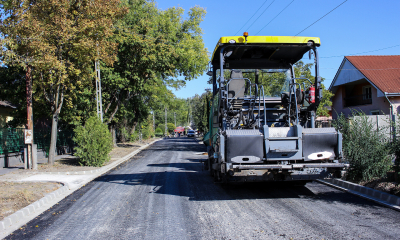


Reconstruction of the M1 motorway’s carriageway towards Győr can begin under the new traffic arrangements

Alpine engineering techniques are also being used to protect the railway in the Danube Bend

Instead of patchwork repairs – large-scale refurbishment work is under way on the dilapidated main roads in the Transdanubia region

The expansion joints on the Buda side of the Erzsébet Bridge were installed overnight

Four new bridges to be built in the heart of the former industrial city

Rain gardens are coming to Budafok, with over 3,000 square metres of green space set to be developed

Contemporary art deco in Csopakon

Safer driving on the motorways: new digital signs for the MKIF
-

 Current at 2026. 09. 09.
A first-hand look at a career in engineering – Duna Group Szabadegyetem is back
-
Bound track 2026. 09. 15.
Nearly 50,000 people travel on it every day – the refurbishment of the Cegléd main line continues
-
Climate-X 2026. 09. 09.
Nyíregyháza Spartacus FC goes green – four hundred solar panels to be installed on the stadium roof
-
Current at 2026. 09. 09.
Rental flats, Rákosrendező, decentralisation – important ideas were put forward on the Real Estate Beach Conference stage