What is being built?
Historic moment - glass wool production restarted in Hungary

Sixteen years after the disappearance of the domestic glass wool production, the industry is now restarting in Hungary: the first test products have been rolled out in the Serence thermal insulation materials factory built in strategic cooperation between the Masterplast Group and the Polish Selena FM, according to a press release sent to our newspaper.
According to the companies
Commercial production of glass wool is scheduled to start in the third quarter of 2025. The investment, worth more than €47.5 million (HUF 18.95 billion at current mid-market exchange rates), is a technological milestone: Hungary will once again have its own production capacity for one of the most important thermal insulation materials.
The project is also significant from an economic development point of view, the statement stresses, adding that it is the first large-scale industrial investment in Serenc in a long time, creating jobs and giving a new impetus to the region. An investor-friendly environment, a committed local government and a skilled and motivated local workforce have all played a key role in the success of the development.

The end of the import era
Hungary's last glass wool factory closed its doors in Salgótarján in March 2009, ending a decades-old domestic industry. Since then, the country has been entirely reliant on imports for this strategic product category - at a time when building energy efficiency and sustainable construction have become more of an issue than ever before.
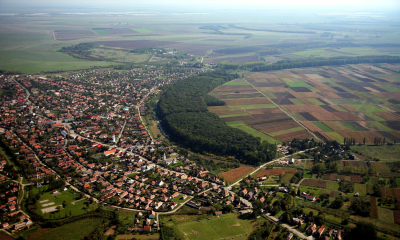
The Masterplast and Selena are now filling this gap of more than a decade and a half. The Hungarian company purchased the development project, which was still in its infancy at the time, in early 2023, with Selena of Poland joining as a co-owner with a 50% share. Today, the business partners have created a functioning manufacturing capacity, not only in terms of technology but also in terms of structure (our newspaper has reported on the project several times reported on the project several times), and have established operational manufacturing capacity under the umbrella of their joint subsidiary, Pimco Kft., in the city of Szerencs.
The Szerence factory in numbers
- Location: Szerencs, 4.3 hectare site
- Building: 11 500 m² plant
- Production: Évi 19 000 tonnes of glass wool
- Employment: More than 100 persons
- Investment: EUR 47.5 million, of which HUF 5.645 billion in state aid (HIPA)
- Owners: Masterplast Nyrt. and Selena FM S.A., with 50-50% share
- Technology: Recycled glass base, BioBinder binder, electric furnace with future solar power
Why is energy efficiency in buildings a key issue?
The challenge of energy efficiency in buildings is a key economic and climate policy issue for the present and the next decade. The volatility of energy prices, the achievement of energy independence targets, the growing environmental concerns and the sustainable reduction of household energy bills all converge in a common intersection: a modernised, well-insulated European building stock.

Both Hungary and Europe are facing the fact that increasing energy efficiency is not only an environmental, but also an economic and social necessity. Building-related energy use now accounts for nearly 401T3465T of total EU energy consumption, and the European Union has set ambitious targets. Under the 'Renewal Wave' programme up to 2030, 35 million buildings are expected to undergo a deep renovation, which will require a doubling of the current rate of modernisation. The new EPBD (Energy Performance of Buildings Directive) now sets not only expectations but also binding minimum standards:
- Achieving energy savings of 60% will be the expectation for deep renovations;
- Primary energy use in residential buildings should be reduced by 161 TP3465T by 2030 and 221 TP3465T by 2035;
- The 26% of non-residential buildings with the worst energy performance will be required to be retrofitted by 2033.
This means that demand for insulation materials will grow strongly and sustainably, and at an accelerating rate, Masterplast predicts.
Explosive demand could result from tightening of the ERA law
In addition, the new Energy Efficiency Obligation Scheme (EES) regulation adopted in June 2025 could be a powerful catalyst for the revival of the domestic construction industry and the demand for glass wool. According to ÉVOSZ (Építési Vállalkozók Országos Szakszövetsége) , the regulation could generate up to HUF 1,500 billion in orders for building material manufacturers and contractors, and as a result of the regulation, approximately 150,000 residential properties could be upgraded to meet modern energy standards between 2025 and 2027.
Glass wool, especially in the context of the free slab insulation solution that is so popular with the public, will play a major role in the programme. The regulation requires the required energy savings to be met from residential buildings in 75%, which will provide a stable demand for glass wool production and a predictable revenue path for investing companies in the medium term.
Masterplast-Selena: strategic response to challenges
The facility has an annual production capacity of 19 000 tonnes and employs more than 100 people. The total value of the investment is €47.5 million, which was supported by the Hungarian state through a HUF 5.645 billion grant through the HIPA - Nemzeti Befektetési Ügynökség Nonprofit Zrt. programme. In addition to serving the Hungarian market, the products will also be sold in the Central and Eastern European region - so in addition to serving domestic needs, the plant will also have export potential.
What is glass wool and why is it important?

Glass wool is a lightweight, mineral-based, fibrous insulating material used primarily for thermal and acoustic insulation in buildings. Its main raw materials are recycled glass wastequartz sand and soda ash. In the production process, these are melted and then stretched into fibres and reinforced with a binder to form a cotton-like material. Glass wool is a typical thermal insulation product for roof structures, attic slabs and drywall partitions and suspended ceilings.
Benefits:
- excellent thermal and sound insulation properties,
- non-combustible (fire protection class A1),
- vapour permeable, but not absorbent,
- easy to install, even in a "do-it-yourself" design
Source : Link









The town centre on the banks of the Tisza is being regenerated

The Market has fulfilled its promise: it has delivered the 10,000 tonnes of natural stone offered for the raising of the bottom sill at Paks

The construction industry is both vast and marvellous – the Duna Group Szabadegyetem has been launched

ESG is now a business issue for suppliers in the construction industry too

Rain gardens are coming to Budafok, with over 3,000 square metres of green space set to be developed

Contemporary art deco in Csopakon

Four new bridges to be built in the heart of the former industrial city

Safer driving on the motorways: new digital signs for the MKIF
-

 Industry news 2026. 08. 18.
Students were introduced to the high-tech construction industry at BME’s field camp in Göd
-
Bound track 2026. 08. 17.
New pedestrian crossings and a junction with traffic lights are being built in Angyalföld
-
What is being built? 2026. 08. 18.
Hungary’s new McDonald’s restaurant has moved into a modernist listed building in the centre of Budapest
-
What is being built? 2026. 08. 18.
New paving, a playground and visitor facilities are being planned for the Várkör area in Pannonhalma