Road building
Technological innovation will also be used to upgrade the busiest sections of the M6

Work is currently underway on a 32-kilometre section of the M6 motorway in Pest and Fejér counties, between the 22+150 and 54+150 km sections. Commissioned by M6 Duna Autópálya Koncessziós Zrt., the renovation will take place on both the right and left lanes, meaning that 64 kilometres of motorway surface will receive a new layer of asphalt as part of the Colas Út Zrt. .
Imre Ádám Kiss, construction manager of Colas, told our portal what major maintenance means in the case of motorways and how the timing of the works and diversions were planned.

Last year, 24 kilometres of the southern section were renewed
The M6 reconstruction works started on 2 May 2023. Last year, the reconstruction was carried out between sections 42+150 - 54+150 km.
During the major maintenance, 12 kilometres of the right and left carriageways, as well as the Besnyő junction on the affected route, were resurfaced, making a total of 24 kilometres of road sections.
In 2024, work continued on the northern section, where we report on the ongoing works.
Work under way on the busiest motorway sections
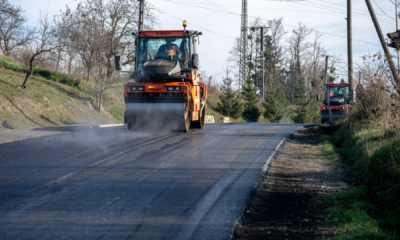
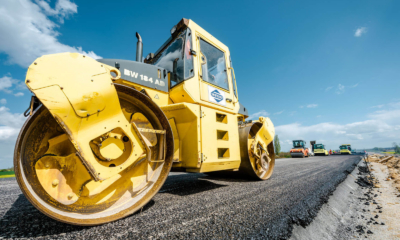
The parade of construction machinery in mid-April was preceded by the construction of the traffic diversion. This includes the planning and permitting of the traffic diversion, which is done in cooperation with the road operator and the local authorities - Imre Ádám Kiss, the construction manager of Colas, told us.
During this stage of the work, the diversion routes will be marked out and information materials will be prepared for road users and the public so that they can be informed in good time about the works on the section of road.
None of these tasks is easy, as the renovation work is taking place in the busiest parts of the motorway, in the areas of Érd and Iváncsa. According to the 2022 traffic census, the average daily traffic volume on the former section is 35 648 vehicles, while on the latter 25 699 vehicles pass through. During the spring and summer peak periods, this figure will rise to over 46 000.
The expert told our portal,
Every day, except Sundays and public holidays, will be used to keep the work on schedule. The schedule takes into account public holidays and increased traffic during the summer.

The project will see nearly 90 thousand tonnes of asphalt paved into the binding and wearing course
Scheduling the phases of the work is also part of the preparation phase, as is planning when and how much asphalt will be delivered to the job site from the Colas Zrt.'s own mixer in Dunaharaszti. Subcontractors are used to ensure a continuous supply of materials.
The entire project will involve the delivery and placement of more than 87,300 tonnes of asphalt to the sections to be resurfaced.
Rest areas and junctions will also be renewed
The focus of the major maintenance works on the mentioned sections - we learned from Imre Adam Kiss - is the replacement of the wearing course on the entire road surface. In addition, where preliminary surveys have shown that the surface is no longer suitable, the rehabilitation work will also affect the binder course.
The project will also include the renewal of the rest areas and junction branches, as well as the resurfacing of the motorway engineering and crossing roads. During the construction, Colas will also be responsible for traffic engineering and the control of
rail barriers at necessary locations.
The main objective of asphalt pavement replacement is to ensure that the newly installed pavement layers have the longest service life and provide the highest level of safety for road users.
Strictly controlled road sections
Because of the high speeds allowed on motorways, the condition of the road surface is also a safety issue. The indicators obtained from the road surface quality assessment - roughness, rutting, load bearing capacity, surface texture - indicate the condition of the road and when maintenance is due.
Imre Ádám Kiss said that, of course, the parameters determining the quality of the road will be measured after the new asphalt has been laid. One of these is the IRI (International Road Unevenness Index), which indicates the longitudinal unevenness of the road, the optimum value being less than 1.2 mm/m per unit road section.
Another indicator is, for example, the skid resistance required for safe traffic, which is determined by the coefficient of friction in the oblique direction, which is also fixed by limits and must be met by the contractor during the reconstruction.
The asphalt layer of the sections of motorway undergoing maintenance shall, in addition to the quality requirements, meet the increased needs of the Client. The necessary sampling and testing of the samples will be carried out by Colas at its laboratory unit in Dunaharast. In addition, Magyar Közút will also carry out regular control tests on behalf of M6 Duna Zrt. by taking its own samples and from available reserve drilled samples.
Innovative technologies help construction
The special feature of the project is the use of innovative technologies for road surveying and milling, which greatly facilitate the precise execution of the renovation works and increase the efficiency of the solutions.
Imre Adam Kiss said,
A 3D laser scan is used to determine the position of points on the road surface as a spatial object before the reconstruction of a new section begins. The process is used to determine the current state of the longitudinal and transverse sections of the road from the point cloud generated by the survey.
This allows the BIM specialists to prepare milling plans as accurately as possible. This is no small task either, given that the surface area to be milled covers 901 686 m2. Several aspects play an important role in the design of the milling plane: the track structure must not be weakened; efforts must be made to ensure level joints with solid pavements not affected by the renovation (paved separation strip, external and internal drainage curbs, etc.); the number of longitudinal rounding curves must be minimised in order to obtain the best possible IRI RST values on the finished track.
Milling machine driven by 3D survey
Among the special features of the project, Imre Ádám Kiss said.
automation has also been applied to milling, which is the cardinal task of construction. In addition to manually programmable milling machines, they also use 3D survey-based controlled milling technology. For this, the control is provided by BIM specialists based on the milling plans.
In addition to the recent major overhaul, nine other types are undergoing refurbishment. Water sweepers and vacuum trucks prepare the receiving surface, and tankers provide the water supply to the work area. The asphalt paving work is preceded by emulsion spreading, and then two finisers are used simultaneously in the passing and stopping lanes, and one finiser in the preceding lane. The required compaction is ensured by 3 rollers per paving machine track. For a project of this size, the use of these alternative/innovative technologies will help to maximise scheduling, time and cost
efficiencies.
Construction is on schedule and work will be completed by October.
Source : Link




Roadworks are taking place at 15 locations in Balatonfüred

SWIETELSKY is inspecting and repairing the surface defects on Main Road 25

Pécs, Gödöllő and Budapest: four SPAR stores have been refurbished – here’s which ones

They could reshape the historic city centre, transport in the suburbs and even a unique public park in Székesfehérvár

Rain gardens are coming to Budafok, with over 3,000 square metres of green space set to be developed

Four new bridges to be built in the heart of the former industrial city

Contemporary art deco in Csopakon

Safer driving on the motorways: new digital signs for the MKIF
-

 Bound track 2026. 10. 07.
Aurora beneath the Apennines – Another tunnel is being built on the Naples–Bari railway line
-
Road building 2026. 10. 13.
A consortium comprising STRABAG and Duna Aszfalt has been awarded the contract to build the North Macedonian motorway
-
What is being built? 2026. 10. 09.
One of Budapest’s oldest nurseries is being renovated whilst preserving its timber roof structure
-
Current at 2026. 10. 10.
„The focus will not be on Lean’s equipment, but on how we operate” – the ‘Lean in the Construction Industry’ conference in November