Industry news
Good standing in the construction industry - Precise work reduced the number of error reports on WHB

„A construction company gains credibility by delivering first-class quality work, thereby taking pride in the projects it undertakes and, at the same time, having the courage to take responsibility for any mistakes made. Of course, everyone strives to work without making mistakes, but as Theodore Roosevelt so aptly put it, »The only person who never makes mistakes is the person who does nothing.« As a result, a few mistakes may arise after handover that need to be corrected, and that's when we come in and start our work, thereby reinforcing the company's good reputation,” summarised Péter Borsodi, Borsodi Péter, the WEST HUNGÁRIA BAU Kft. warranty and guarantee department on the WHB Group website.
At the beginning of the interview, the professional recalled: "I was the first employee of WEST HUNGÁRIA BAU Ltd, I have been working here for more than 25 years. At the beginning I worked in the construction department: we prepared quotations, then we carried out the awarded works and accounted to the client and subcontractors. This gave me the opportunity to see a project through from start to finish.
During this period, everyone did their own warranty work on their own projects. The organisation of the warranty and guarantee department evolved with the development of the company about 10 years ago, as more and more projects were won by WHB. Consequently, colleagues had to start another project almost immediately after the completion of one, leaving them with no capacity to organise the repairs that needed to be done. It was a great honour when the management thought of me to start the new department. Thanks to my experience in construction, I am aware of the mistakes that can happen during a construction project - but of course this cannot be generalized - which I can use to my advantage when performing warranty work."

The warranty is a guarantee for the customer
He went on to point out that the term 'guarantee' does not exist in law in the construction industry or in any other area of life, but that the colloquial use of the term is commonplace and always implies a warranty or guarantee. The purpose of a warranty is to give the buyer a guarantee - laid down in law and in the contract - that the product/service he has purchased, in this case a building or a dwelling, will remain fit for purpose and in working order until the end of the warranty period.
Within the construction industry - within contractual and legal frameworks - the warranty period means that the client is assured that if any defects within the scope of the warranty obligation arise, the contractor will repair them within a specified period.
From the contractor's point of view, the warranty and guarantee obligation is an extra task. For the client, however, it is a serious assurance that if the project they have ordered is completed in perfect condition, if a failure should occur - which could of course be a defective pipe, pipeline, etc. - they have a legal means of obliging the contractor to repair the defect.
Sometimes, in view of the good relationship with the customer, WHB may voluntarily undertake to carry out a repair free of charge after the expiry of the warranty period, in addition to its contractual obligations.
The warranty process is complex and requires thorough documentation
A warranty fault investigation and repair process is carried out as follows:
- The fault report from the customer is received.
- An investigation of the problem will be launched within the time limit set in the contract and/or the legislation, which may involve several visits to the site to assess the problem and its extent.
- If the problem is clear, the subcontractor who built the structure should be notified and asked to correct the defect. If it is not clear, then it is necessary to find out what is causing the problem, which is usually not easy, because most of the time it is a covered structure in a finished, functioning, operating building.
- You should correct the problem as soon as possible.
- After the repair is completed, a record must be made documenting the fact that the defect has been corrected.
In the case of competitively tendered projects, the warranty period is usually 2-3 years, but it is increasingly common for contracts to stipulate a period of 5 years.
There are also cases where a warranty claim is not justified, as it is easiest for the customer to report all defects as warranty defects. In such cases, the contractor has to prove that the defect was not caused by the construction activity, but by damage, improper operation, failure to perform mandatory maintenance tasks, failure to fulfil obligations, the failure of the work process or the fact that the structure was not built by WHB but by another contractor of the customer.
"The trend at WEST HUNGÁRIA BAU Ltd has been that the colleagues involved in the construction are trying to work better and learn from their mistakes on previous construction sites, so we are receiving far fewer error reports, which is a very good trend. The satisfaction of our customers is the most important thing for our company, and our first priority is always to meet our customers' expectations to the maximum", concluded the head of the company's warranty and guarantee department.
Source : Link

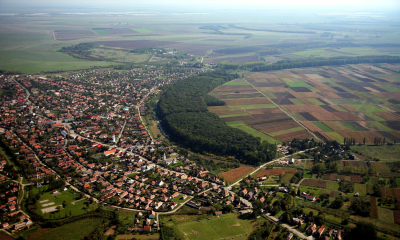










The town centre on the banks of the Tisza is being regenerated

The Market has fulfilled its promise: it has delivered the 10,000 tonnes of natural stone offered for the raising of the bottom sill at Paks

The construction industry is both vast and marvellous – the Duna Group Szabadegyetem has been launched

ESG is now a business issue for suppliers in the construction industry too

Rain gardens are coming to Budafok, with over 3,000 square metres of green space set to be developed

Contemporary art deco in Csopakon

Four new bridges to be built in the heart of the former industrial city

Safer driving on the motorways: new digital signs for the MKIF
-

 Industry news 2026. 08. 18.
Students were introduced to the high-tech construction industry at BME’s field camp in Göd
-
Bound track 2026. 08. 17.
New pedestrian crossings and a junction with traffic lights are being built in Angyalföld
-
What is being built? 2026. 08. 18.
Hungary’s new McDonald’s restaurant has moved into a modernist listed building in the centre of Budapest
-
What is being built? 2026. 08. 18.
New paving, a playground and visitor facilities are being planned for the Várkör area in Pannonhalma