Bound track
Another big step forward in Transylvania's transport: railway will bring the Hungarian-inhabited areas closer

The electrification and renewal works on the Cluj-Nagyvárad-Biharpüspöki railway line will start on 10 December. CFR SA, the Romanian rail infrastructure operator, which is managing the project, has announced that from that day onwards, rail services between Cluj-Napoca and Oradea will be suspended for an extended period, with international trains being diverted to alternative routes.
In November 2022, the Romanian Ministry of Transport signed a financing contract with CFR SA for the modernisation of the Cluj-Nagyvárad-Bihar-Pyrghian railway line. Under the contract, the investment of 9.36 billion lei (712 billion forints) will be financed from the European Union's recovery fund.

CFR SA has divided the work into four phases and has put out a call for tenders for the electrification and renewal of 166.2 km of railway line, which the winning groups must complete in 42 months.
Recently, the Hungarian side has also taken a big step forward
On the Cluj Napoca-Nagyvárad-Biharpüspöki railway line, passenger trains will be able to travel at 160 km/h and freight trains at 120 km/h after the electrification and track renewal. The works will include the renovation of 33 bridges, five tunnels and the modernisation of stations.
One of the significant aspects of the project is that its implementation will significantly reduce travel time on the Budapest-Brașov railway line, which provides access to Székely Land and other Hungarian-populated regions of Transylvania. This is reinforced by the fact that in September this year, the Hungarian side handed over the electrification of the Püspökladány-Biharkeresztes section was handed over on the Hungarian side of the same line, implemented by Strabag Rail Kft. (consortium leader) and R-Kord Kft..
As can be seen from the above, most international trains connecting Transylvanian and Parthian cities with Budapest usually run on the railway line between Cluj-Napoca and Oradea. After the start of the renovation on 10 December, they will continue to run on alternative routes: direct rail connections between Brasov and Budapest, Cluj-Napoca and Oradea and Vienna will be maintained.
Source : Link







Major Hungarian construction project in the Serbian capital – a specialised world exhibition is on the way

Roadworks are taking place at 15 locations in Balatonfüred

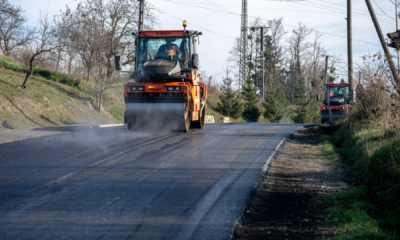
SWIETELSKY is inspecting and repairing the surface defects on Main Road 25

Pécs, Gödöllő and Budapest: four SPAR stores have been refurbished – here’s which ones

Rain gardens are coming to Budafok, with over 3,000 square metres of green space set to be developed

Four new bridges to be built in the heart of the former industrial city

Contemporary art deco in Csopakon

Safer driving on the motorways: new digital signs for the MKIF
-

 Bound track 2026. 10. 07.
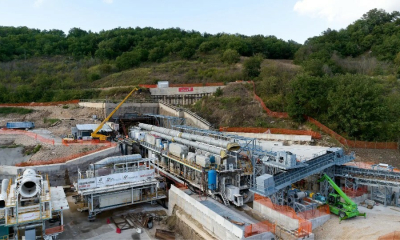
Aurora beneath the Apennines – Another tunnel is being built on the Naples–Bari railway line
-
Road building 2026. 10. 13.
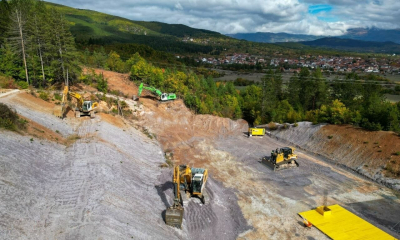
A consortium comprising STRABAG and Duna Aszfalt has been awarded the contract to build the North Macedonian motorway
-
What is being built? 2026. 10. 09.
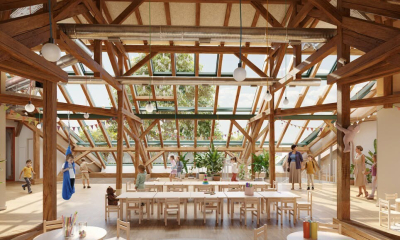
One of Budapest’s oldest nurseries is being renovated whilst preserving its timber roof structure
-
Current at 2026. 10. 10.
„The focus will not be on Lean’s equipment, but on how we operate” – the ‘Lean in the Construction Industry’ conference in November