What is being built?
Airport development - Huge earthworks underway at Ferihegy

The experts at STRABAG began implementing preparatory projects for the construction of the new terminal last spring with the coordinated work of four excavators, one bulldozer, one grader (earthmover) and 15 lorries. As part of this, 86,000 cubic metres of earth will be moved for the development of the technical forecourt.
The STRABAG prepares the extension of the traffic lobby
The preparation for the construction of Terminal 3 also includes the extension of the airside apron, for which STRABAG's specialists are now carrying out the first phase of the groundworks, which involves filling in the ground and constructing a specific section of the associated retaining wall.
The area affected by the works will be used for the Terminal 3 lobby. The apron will be used for aircraft handling, passenger embarkation and disembarkation, cargo loading and unloading, fuel pick-up and parking.

The work is taking place on the so-called airside, which is a non-public area of the airport where only authorised and properly licensed persons and vehicles are allowed to enter. So construction workers had to undergo training to work safely. They were then allowed to take over the work area, where the project began with the removal of the ammunition.
The STRABAG is responsible for excavation, bulk earthworks, and utility relocations, replacements and alterations within the designated development area. The contract also includes the complete construction of a reinforced concrete structure to provide mechanical support for the backfill.
Work areas prepared according to strict rules
The preparation for the start of construction works also concealed a number of interesting facts, due to the fact that the project is being carried out at the Liszt Ferenc International Airport, which is in normal operation.

In parallel with the de-armouring, the demarcation of the staging and work areas had to be built according to the Airside Contractor's Manual and the requirements of the airport security service. This meant the erection of fencing to prevent ingress and egress, with the required wind resistance. A further task for the contractors at this stage was to make the internal road network of the airport suitable for the transport of more than 80 000 cubic metres of earth.
The implementation involves two major tasks:
- large-scale excavation work, involving the construction of 36,000 square metres of embankment and
- involves the construction of a retaining wall 360 metres long.

86 thousand cubic metres of soil are handled at the operational airport
The project involves levelling out existing differences in level on an area of 7,000 and 29,000 square metres, with a total of 86,000 cubic metres of earth. The quantity of material required for the filling will be provided by the investor from an area of around 30,000 square metres within the airport.
Swallows and swallows in the work area
In both the material recovery and restocking areas, ürgementesítés preceded the start of work to ensure that the population balance is maintained.
For traffic safety, the Airport Manual also strictly regulates the way in which the contractor must store spillage and how the gaps created by the cuts must be designed to avoid the entry of coastal swallows.
A mobile crane weighing one hundred and thirty tonnes is helping to build the retaining wall
In addition to the construction of the 360-metre angle retaining wall, the contractors will also replace 105 metres of the existing storm sewer that crosses the Apron (lobby).
The reinforced concrete retaining walls are made at STRABAG's prefabrication plant in Gyal and are lifted into place on site by crane. This makes the works more predictable, reduces the material requirements and minimises the environmental impact.
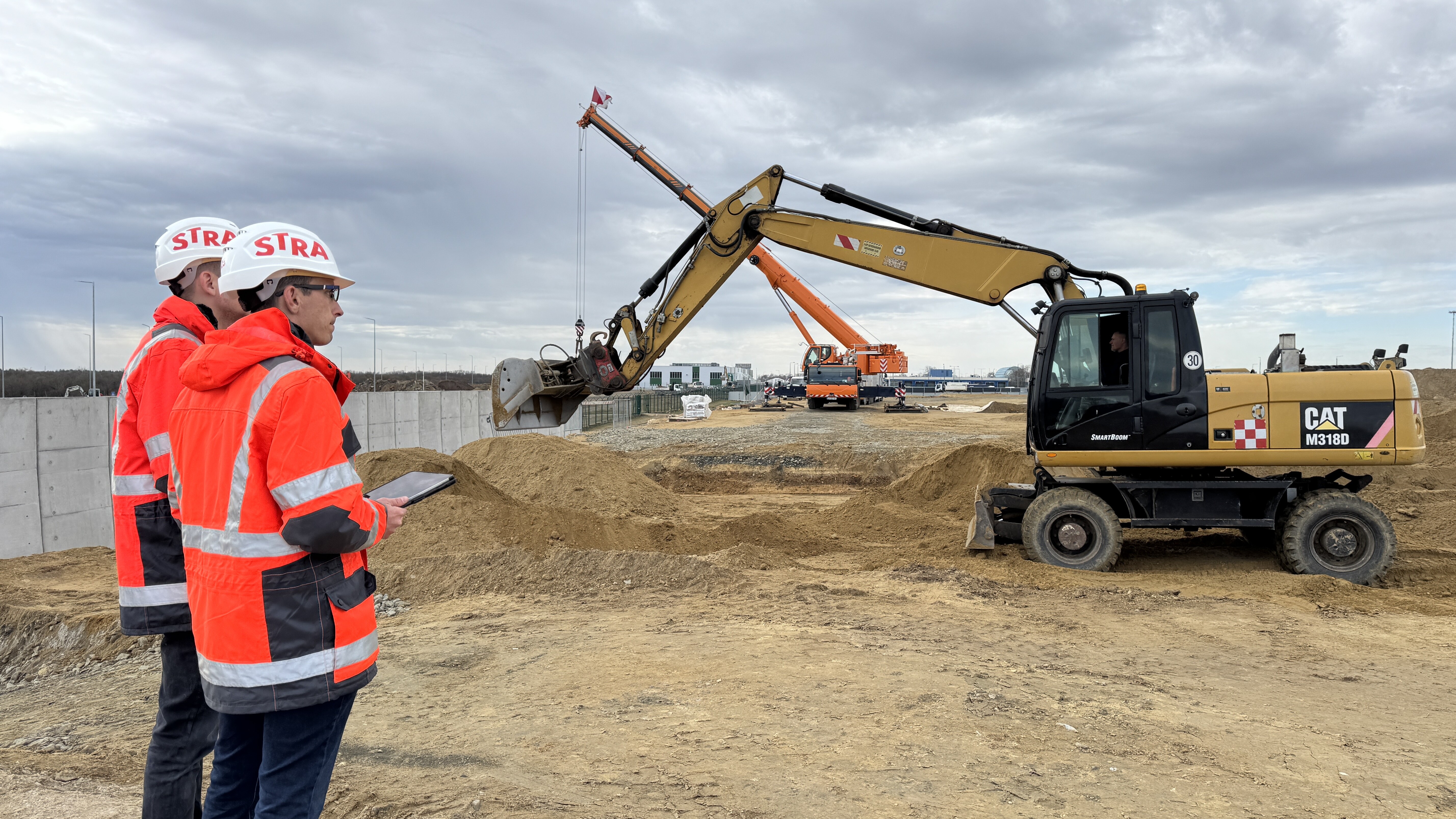
15 people are working on the implementation of the project. 4 rotary excavators, 1 dozer, 1 grader and 15 trucks helped to carry out the massive excavation work. A 130-tonne mobile crane was used to build the retaining walls, 2 tractor-trailers to transport the elements, a pump and a mixer truck depending on the quantity of concrete.
Source : Link








The town centre on the banks of the Tisza is being regenerated

The Market has fulfilled its promise: it has delivered the 10,000 tonnes of natural stone offered for the raising of the bottom sill at Paks

The construction industry is both vast and marvellous – the Duna Group Szabadegyetem has been launched

ESG is now a business issue for suppliers in the construction industry too

Rain gardens are coming to Budafok, with over 3,000 square metres of green space set to be developed

Contemporary art deco in Csopakon

Four new bridges to be built in the heart of the former industrial city

Safer driving on the motorways: new digital signs for the MKIF
-

 Industry news 2026. 08. 18.
Students were introduced to the high-tech construction industry at BME’s field camp in Göd
-
Bound track 2026. 08. 17.
New pedestrian crossings and a junction with traffic lights are being built in Angyalföld
-
What is being built? 2026. 08. 18.
Hungary’s new McDonald’s restaurant has moved into a modernist listed building in the centre of Budapest
-
What is being built? 2026. 08. 18.
New paving, a playground and visitor facilities are being planned for the Várkör area in Pannonhalma