Road building
Nagyszombati Street in Székesfehérvár is being renovated

Nagyszombati Street is one of the main arterial roads in the Öreghegy district of Székesfehérvár, handling significant volumes of traffic during the morning and afternoon rush hours and providing an important route not only for local traffic but also for through traffic. The road, which is now in a very poor condition, is to be renovated by STRABAG.
The actual construction work began on 10 July with the replacement of the drinking water main. The project has been divided into two phases: first, the section between Zsolnai Street and the Aranybulla Promenade will be completed, followed by the section between the Aranybulla Promenade and Budai Road. The aim of this phased approach is to ensure that the surrounding streets, the Aranybulla monument and the Csúcsoshegy mine remain accessible throughout the works.
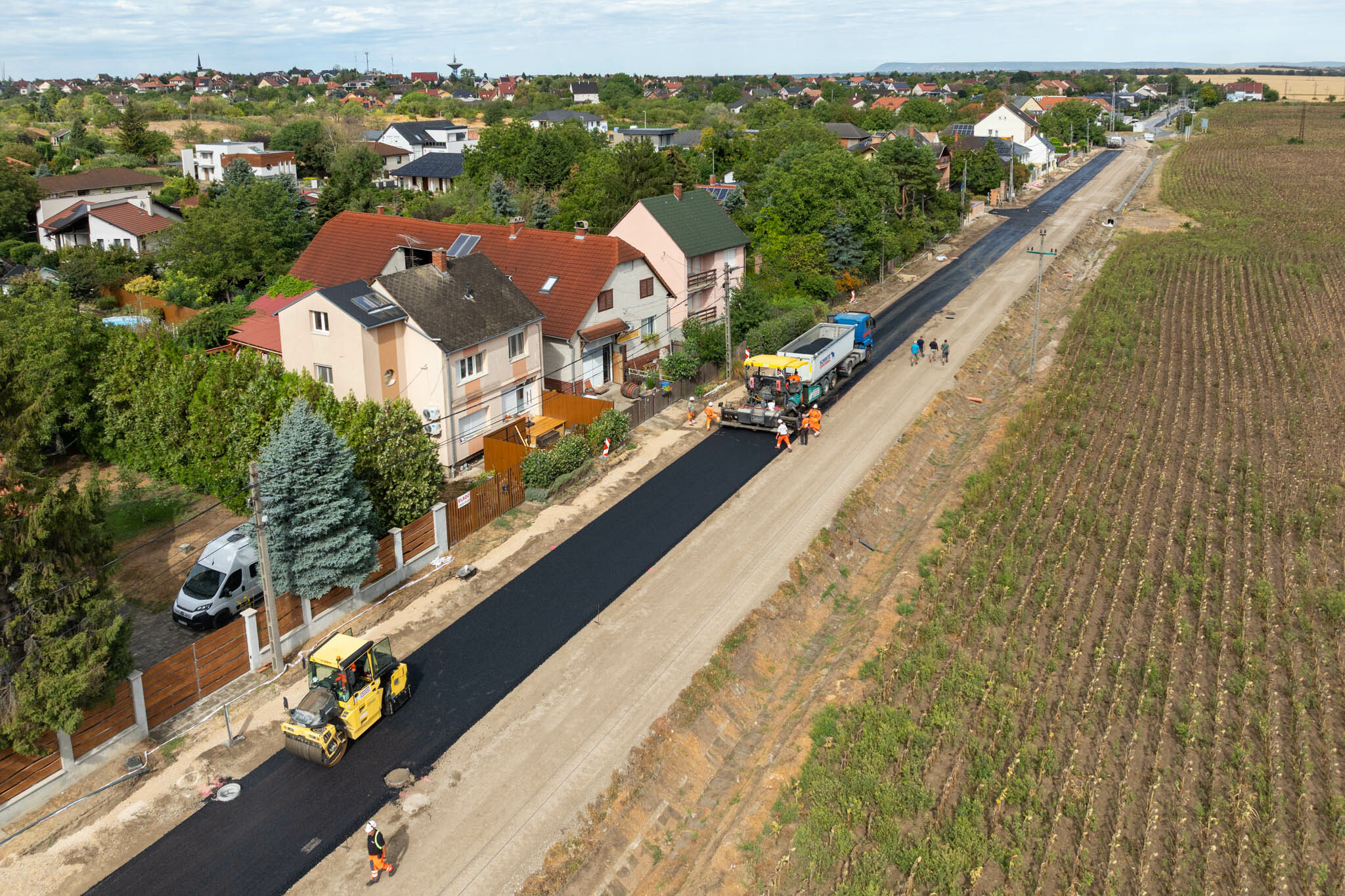
The refurbishment began deep within the track structure
On handover of the worksite, the road surface was in an extremely poor condition: the tarmac was cracked in a grid pattern and potholed in several places, and had subsided along the route of the sewer pipe. The rainwater drainage system was inadequately constructed, and the condition of the pavement in several sections was already hindering safe pedestrian traffic. After the existing road structure had been demolished, a further problem came to light. The load-bearing capacity of the sub-base fell short of the prescribed requirements along the entire affected section.
To create a suitable foundation, therefore, a more complex intervention than originally planned was required: the subsoil was stabilised by adding lime and cement.
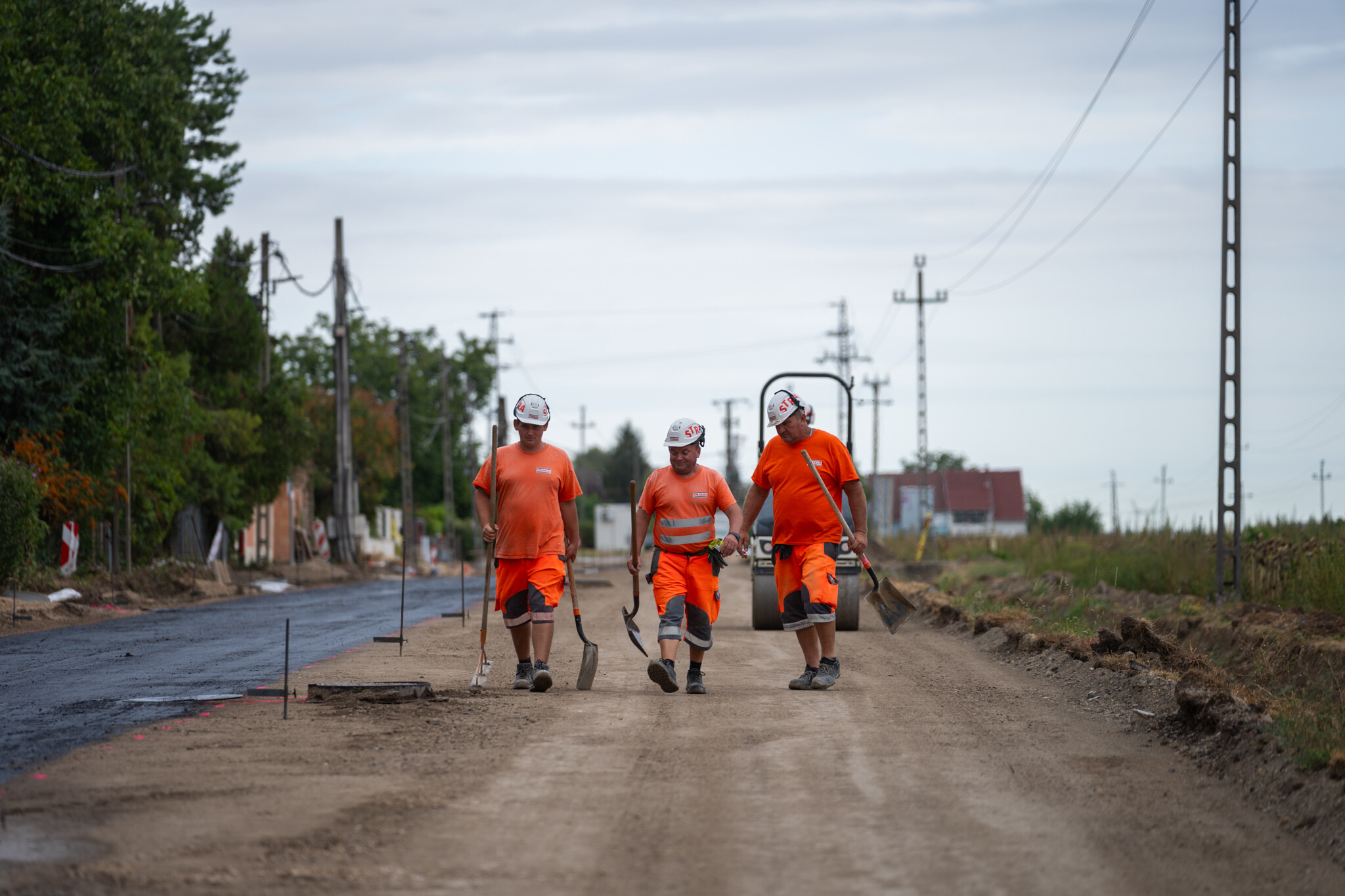
New track structure, upgraded utilities
A new road structure is being built on the reinforced sub-base, designed to cope with heavy traffic loads. The refurbishment also involves the underground infrastructure. The ageing asbestos-cement drinking water main will be replaced along the entire section and replaced with modern, 280-millimetre-diameter KPE plastic pipes. The service connections to properties, minor branches and fittings in the valve chambers will also be renewed. As part of the project, four new above-ground fire hydrants will be installed.
New solutions are also being developed for the management of rainwater. The existing ditch, lined with channel slabs, will be replaced by concrete drainage elements, whilst a closed rainwater drainage system will be constructed in certain sections. In line with the design of the carriageway, drainage inlets will collect water running off the road surface, which will then be channelled away via closed transverse and longitudinal drains.
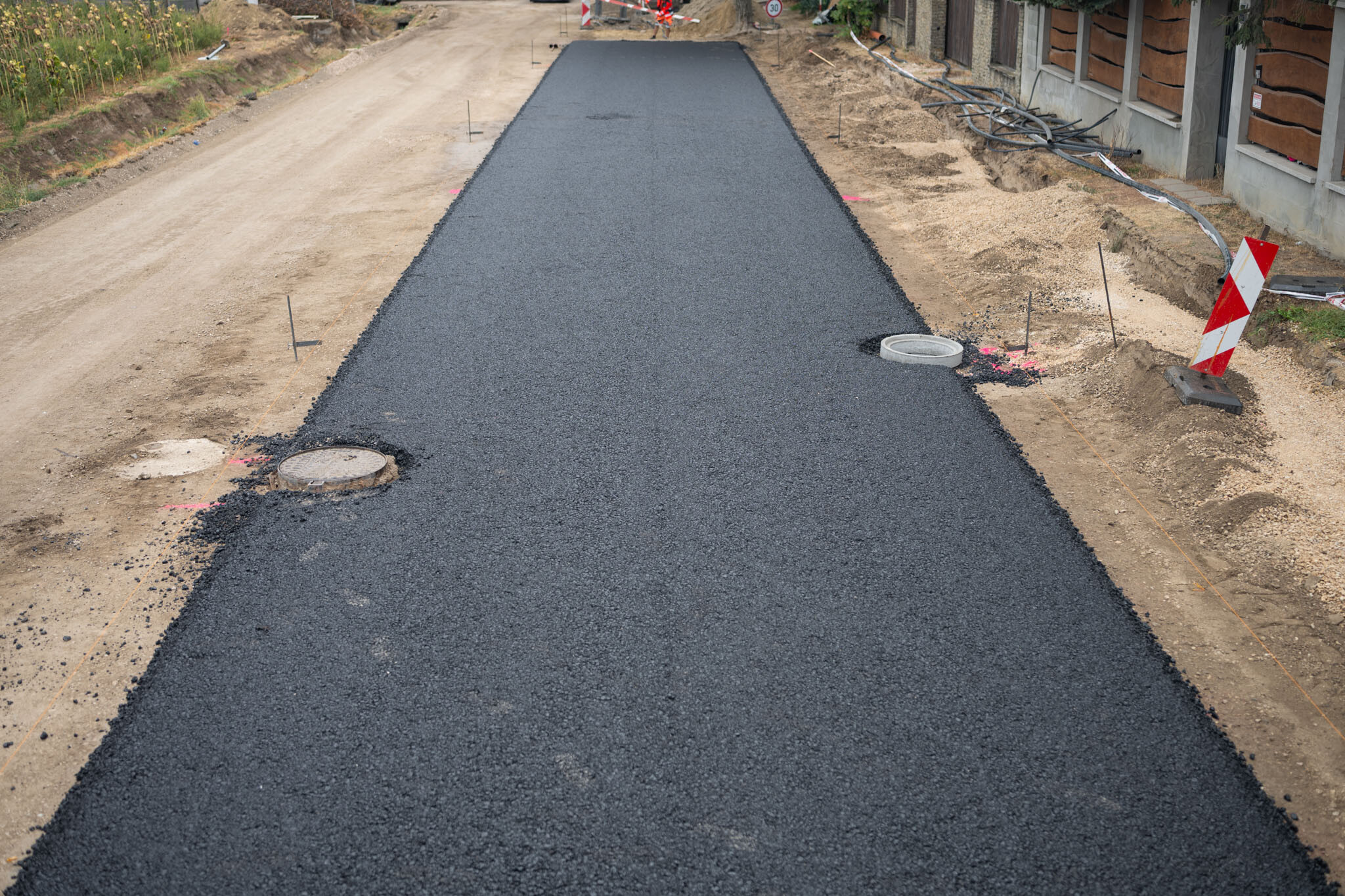
More space for pedestrians and cyclists
One of the most significant changes resulting from the project is the redesign of the street’s cross-section.
The new layout will feature two traffic lanes, each 3.25 metres wide, flanked by dedicated cycle lanes: 1.25 metres wide on one side and 1.5 metres wide on the other. The cycle lanes will be marked with yellow road markings and cycle pictograms, whilst at junctions with connecting streets, red road markings will draw attention to cycle traffic.
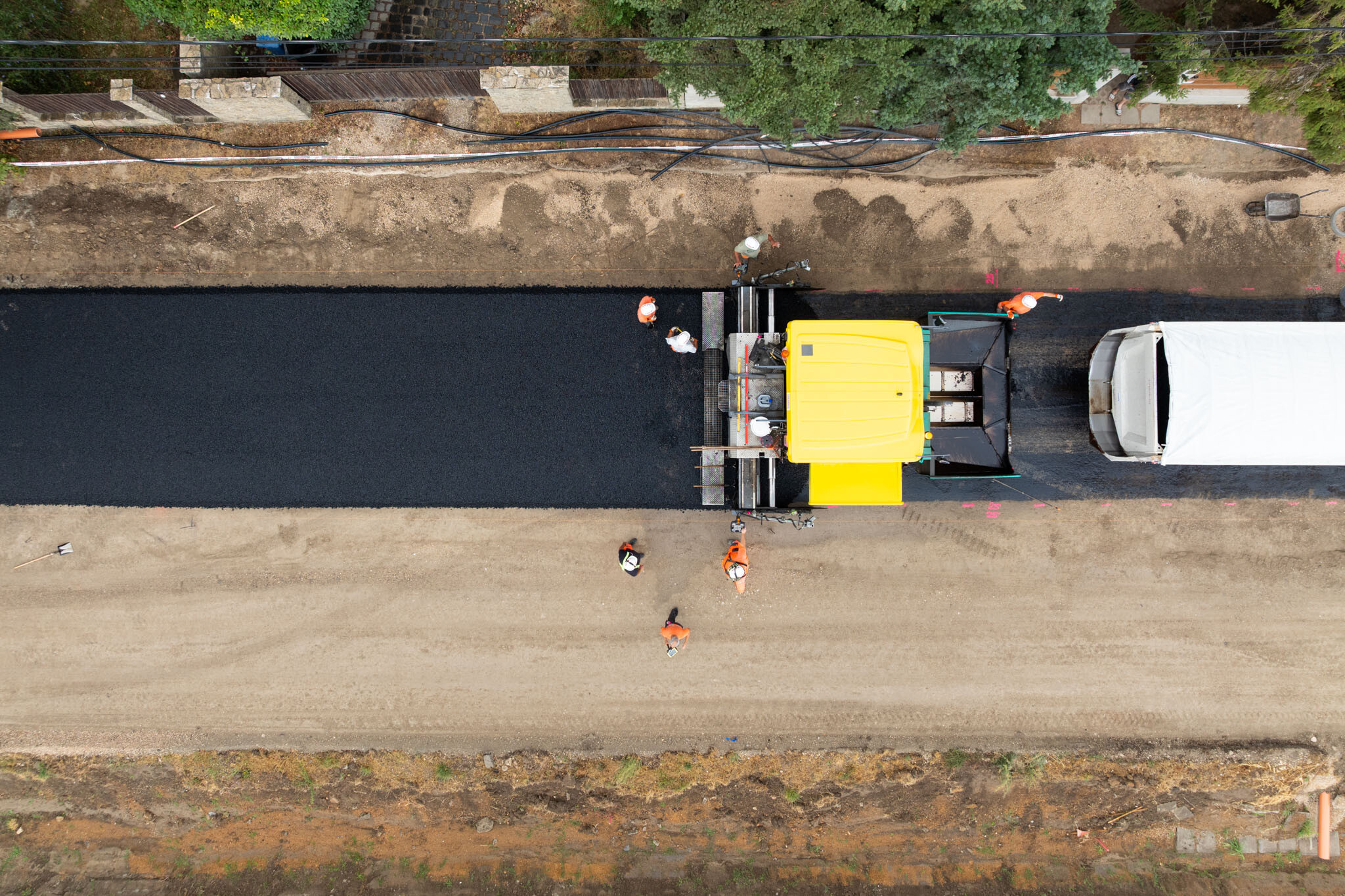
On the side facing the properties, a 2-metre-wide, paving-stone-paved footpath will be constructed, to which the properties’ pedestrian and vehicle access points will also have paved connections. Near the Aranybulla promenade, a paving-stone-paved pavement will also be built to provide access to the bus stop, whilst on the section between Sárosi Street and Budai Road, a combined footpath and cycle path without any separation will facilitate traffic flow.
The development also affects four bus stops. A new pedestrian crossing is being built at the stop on Aranybulla Promenade, and improvements to the street lighting network will help ensure it can be used safely. Pavements protected by raised kerbs, cycle lanes marked out with road markings, and attention-grabbing road markings at junctions all work together to improve road safety.
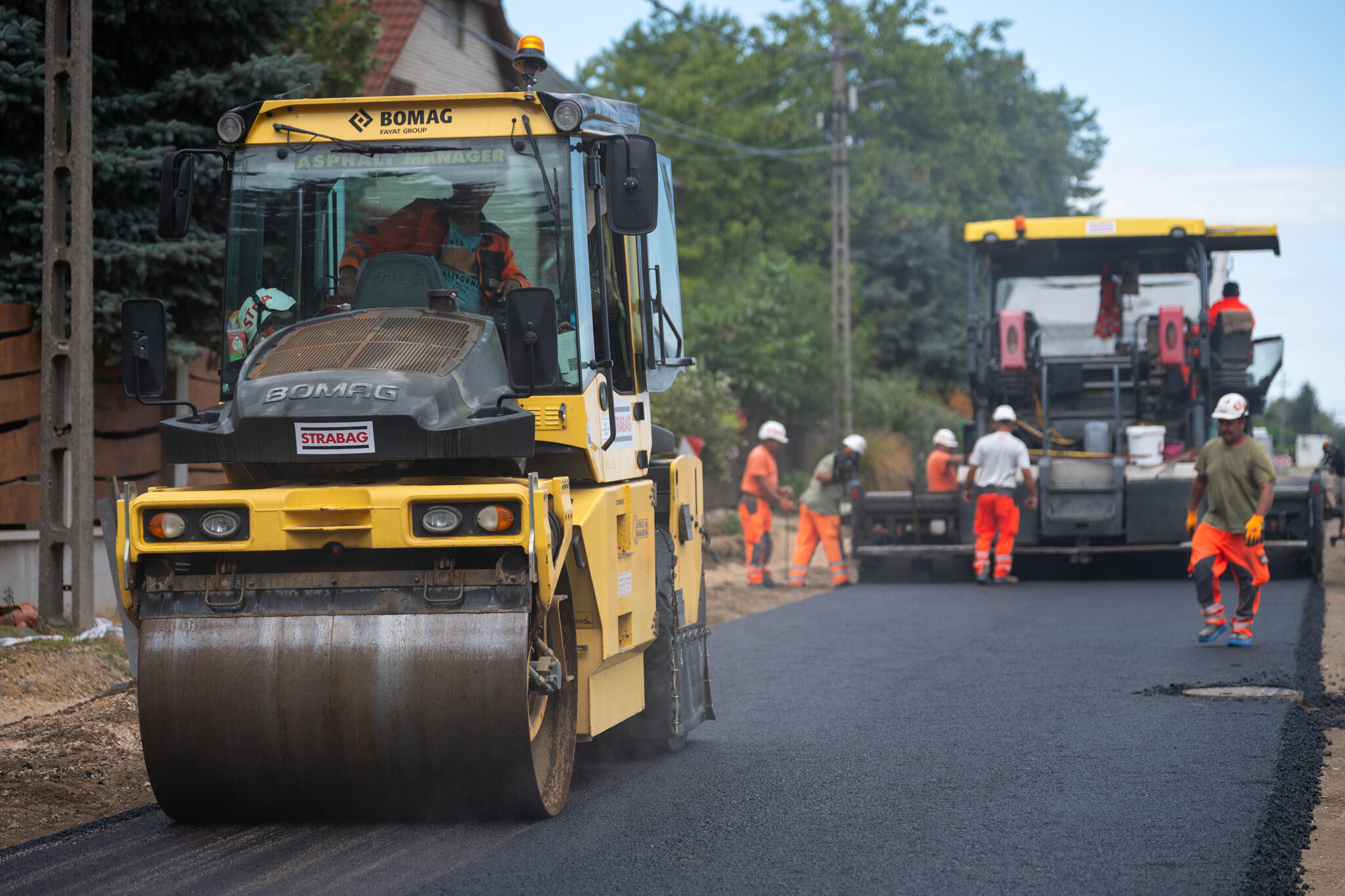
State-of-the-art technology and recycling in construction
State-of-the-art construction technologies also play an important role in keeping to a tight schedule. GPS-guided machinery enables more precise levelling, reduces the need for manual labour, and helps to speed up work processes.
Monolithic technology is used in kerb construction: kerbs made from C30-grade concrete and designed with appropriate expansion joints form a load-bearing structure that is resistant to mechanical stresses, whilst the time required for their construction can also be reduced.
Sustainability considerations are also taken into account during demolition work. Materials of suitable quality recovered from the existing surfacing are reused in the construction of the crushed stone base course, thereby reducing the volume of waste generated and the demand for new raw materials.
STRABAG Magyarország aims to complete the resurfacing of the relevant section of Nagyszombati Street and the modernisation of the drinking water network by the end of 2026, weather permitting.
Source: Link



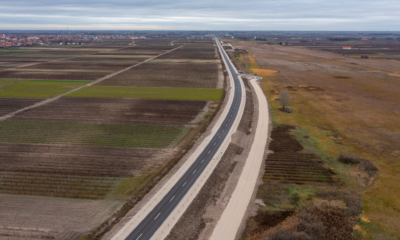


Demolition work is in full swing on the side of the M1 motorway heading towards Győr

A college of circus arts is being built in Pesterzsébet

A new public procurement process is being prepared to continue the second phase of the Déli körvasút

Major roadworks are set to begin in Pest County – here are the roads affected

Rain gardens are coming to Budafok, with over 3,000 square metres of green space set to be developed

Four new bridges to be built in the heart of the former industrial city

Contemporary art deco in Csopakon

Safer driving on the motorways: new digital signs for the MKIF
-

 Bound track 2026. 10. 07.
Aurora beneath the Apennines – Another tunnel is being built on the Naples–Bari railway line
-
Industry news 2026. 10. 02.
Hungary has joined the single electricity market
-
What is being built? 2026. 10. 03.
Four blocks, 254 flats: structural work on the Csepel apartment block is progressing using PERI systems
-
Road building 2026. 10. 13.
A consortium comprising STRABAG and Duna Aszfalt has been awarded the contract to build the North Macedonian motorway