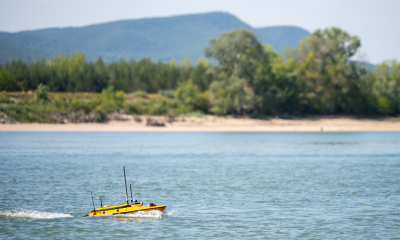
Water management
Complex water replenishment and habitat development programme may be launched in the Tápió–Hajta water system

The Danube-Ipoly National Park Directorate has published a conditional call for tenders on the public procurement portal published a conditional call for tenders for the complex development of the small watercourses of Tápió-Hajta. The task covers three areas.
Zagyva–Hajta connection: water replenishment with renewable energy
The central element of the first area unit is the replenishment of the Hajta stream from the Zagyva river, which will be achieved by a water extraction pumping station to be built on the outskirts of Szentlőrinckáta and a new irrigation water supply pipeline. The aim of the development is to ensure a more predictable water supply in the Hajta water system, especially during periods of drought.
The heart of the system will be a submerged pump station on the right bank of the Zagyva River, connected to a 1.7-kilometre-long pressure pipe. This pipe will be capable of transporting 52 litres of water per second and will deliver the water directly to the Hajta Stream via a filter basin.
A unique feature of the facility is that its energy supply is provided by a hybrid, off-grid solar park, meaning that its operation is partly based on renewable energy, reducing the environmental impact of its operation.
Renewal of lakes and tributaries along the Hajta River
The second area focuses on regulating the water management of the lakes and tributaries along the Hajta. The aim here is to retain water, regulate water levels and maintain natural habitats in the long term with the help of various structures and riverbed restoration.
New pipe sections are being built at both Fehér-tó and Fekete-tó, which will enable precise water level control and safe passage for operating personnel. At Lake Gyulai, the wetland habitat is being reconstructed: dredging is improving water transport, restoring the lake's circular embankment and replenishing the water supply to the surrounding marshlands.
Several interventions in the vicinity of Lake Nagy serve to stabilise the water balance. Fixed bottom sills, pipe sections with barriers and related landscaping work help to prevent water from flowing away too quickly, allowing it to remain in the landscape and support natural ecosystems.
Restoration of the water supply to Öreg-Hajta
The third area aims to improve the water supply in Öreg-Hajta, primarily by restoring former riverbeds and constructing new water level control structures. The interventions will be carried out in the Jászberény area, where the coordinated regulation of water retention, irrigation and drainage is of paramount importance.
Part of the planned works involves dredging and correcting the riverbed in places over a length of almost two kilometres, with a gently sloping, wide-sloped weir. In addition, four culverts will be built, which will not only regulate water levels but also control road crossings and flooding in the surrounding areas. The excavated soil will be spread nearby so that it can be used in the area.
The purpose of the investment, which is subject to a water rights establishment permit, is to improve water management in the region, preserve wetlands and strengthen water retention. The selection of the contractor is in progress, with a deadline for applications of 2 February 2026.
Source: Link








The town centre on the banks of the Tisza is being regenerated

The Market has fulfilled its promise: it has delivered the 10,000 tonnes of natural stone offered for the raising of the bottom sill at Paks

The construction industry is both vast and marvellous – the Duna Group Szabadegyetem has been launched

ESG is now a business issue for suppliers in the construction industry too

Rain gardens are coming to Budafok, with over 3,000 square metres of green space set to be developed

Contemporary art deco in Csopakon

Four new bridges to be built in the heart of the former industrial city

Safer driving on the motorways: new digital signs for the MKIF
-

 Industry news 2026. 08. 18.
Students were introduced to the high-tech construction industry at BME’s field camp in Göd
-
Bound track 2026. 08. 17.
New pedestrian crossings and a junction with traffic lights are being built in Angyalföld
-
What is being built? 2026. 08. 18.
Hungary’s new McDonald’s restaurant has moved into a modernist listed building in the centre of Budapest
-
What is being built? 2026. 08. 18.
New paving, a playground and visitor facilities are being planned for the Várkör area in Pannonhalma