Climate-X
Who is taking the lead in the construction industry’s green transition?

The construction sector – comprising building operation, construction works and the manufacture of building materials – accounts for nearly 40 per cent of global energy consumption. As Hungary moves closer to the EU once again, sustainability and climate protection may also come into focus here.

Shortly after it was formed, the new government established a separate ministry to coordinate climate protection, sustainability and environmental management: the transformation of the sector has become not only a technical priority but also a political one.
The question, however, is not whether change is needed, but who will take the first steps, when and how.
Without a systemic approach, there can be no progress
The Építési Vállalkozók Országos Szakszövetsége (ÉVOSZ) established the Sustainability Division and shortly afterwards drew up the „Zöld minimum”. The aim of the initiative is to ensure that sustainability is not an optional extra but a basic requirement for public construction projects, starting with those investments that reach the EU public procurement threshold.
The position of ÉVOSZ is clear: coordinated action is needed across the entire value chain. It is not enough for individual buildings or businesses to try to operate sustainably; the industry as a whole must adopt a life-cycle approach. This means:
From design and manufacturing through to construction and operation, every party involved shares responsibility.
This last point is particularly important. Involving operators in the design phase is not yet standard practice in all cases, yet sustainability goals can only be fully realised if the building’s actual operating conditions – including energy consumption, emissions, a healthy indoor climate, and even the embodied carbon in the building materials used – are taken into account during the design phase.
EU requirements, national preparedness
The EU’s green building policy, the revision of the Energy Performance of Buildings Directive (EPBD) and mandatory sustainability reporting (CSRD) are imposing increasingly specific requirements on domestic stakeholders as well. This requires measurement, data collection and data processing methodologies that are not yet standardised and whose implementation demands significant professional capacity.
Last year, ÉVOSZ conducted its first sustainability survey among its member companies. The results paint a mixed picture: three-quarters of large companies operate some form of environmental management system, but among small and micro-enterprises, preparedness is a fraction of that. Strengthening circular economy practices, adopting a life-cycle approach and the regular use of measurable emissions data remain goals rather than everyday reality for the time being.

Manufacturers are ready
In line with its Swedish parent company’s long-term climate strategy, Lindab Kft. also provides concrete solutions for the domestic construction industry to reduce its carbon footprint.
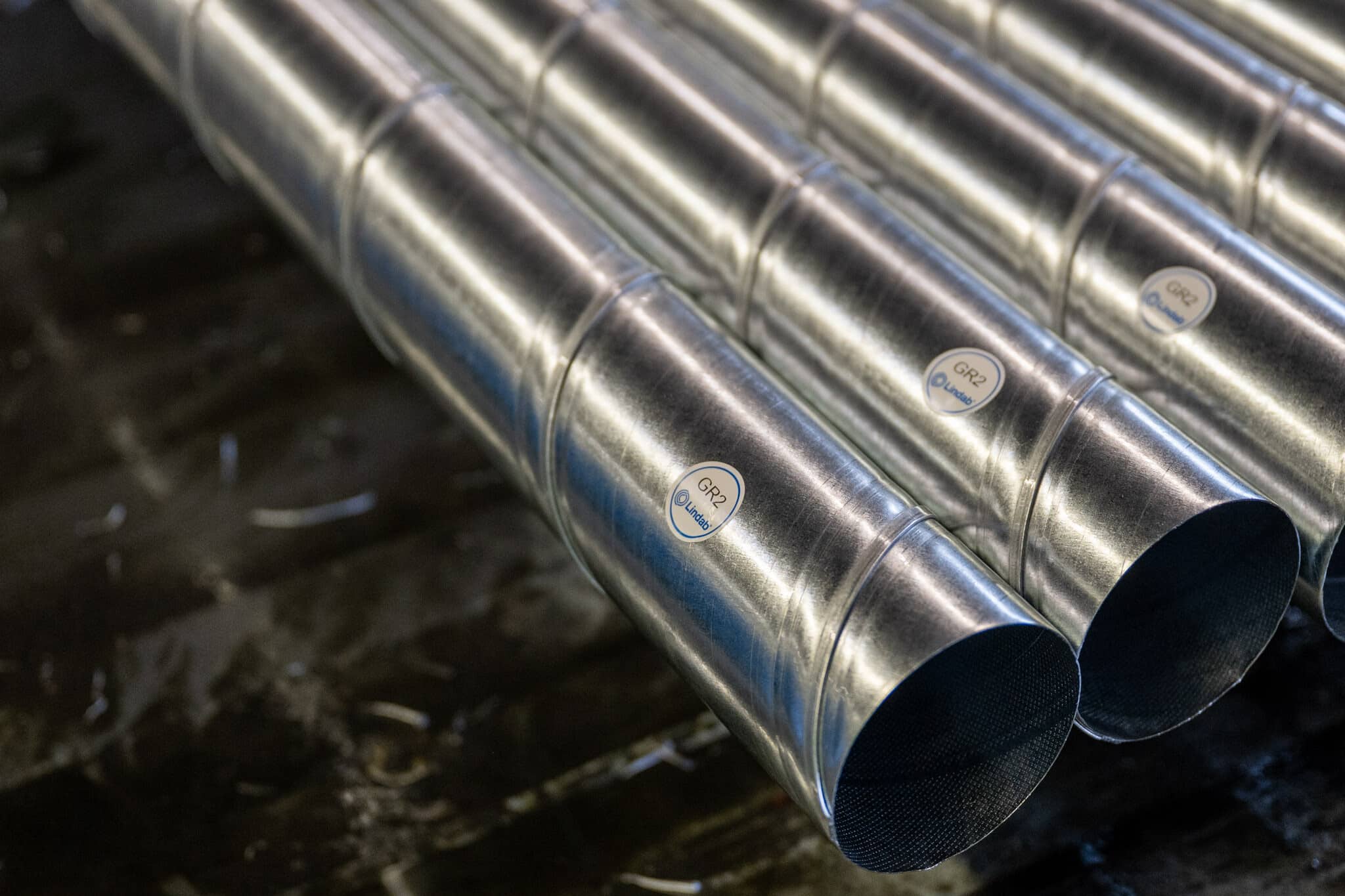
In terms of the product portfolio, this is primarily reflected in the expanding availability of EPDs (Environmental Product Declaration, i.e. Environmental Product Declarations).
The EPD is not a marketing tool, but a third-party verified document based on the ISO standard, which provides accurate data on the emissions associated with a product’s entire life cycle.
EPD documents are available for numerous items in the Lindab product range, and the company is one of the first domestic manufacturers in Hungary to have issued an EPD for locally manufactured air ducts. This range is constantly being expanded across the product portfolio.
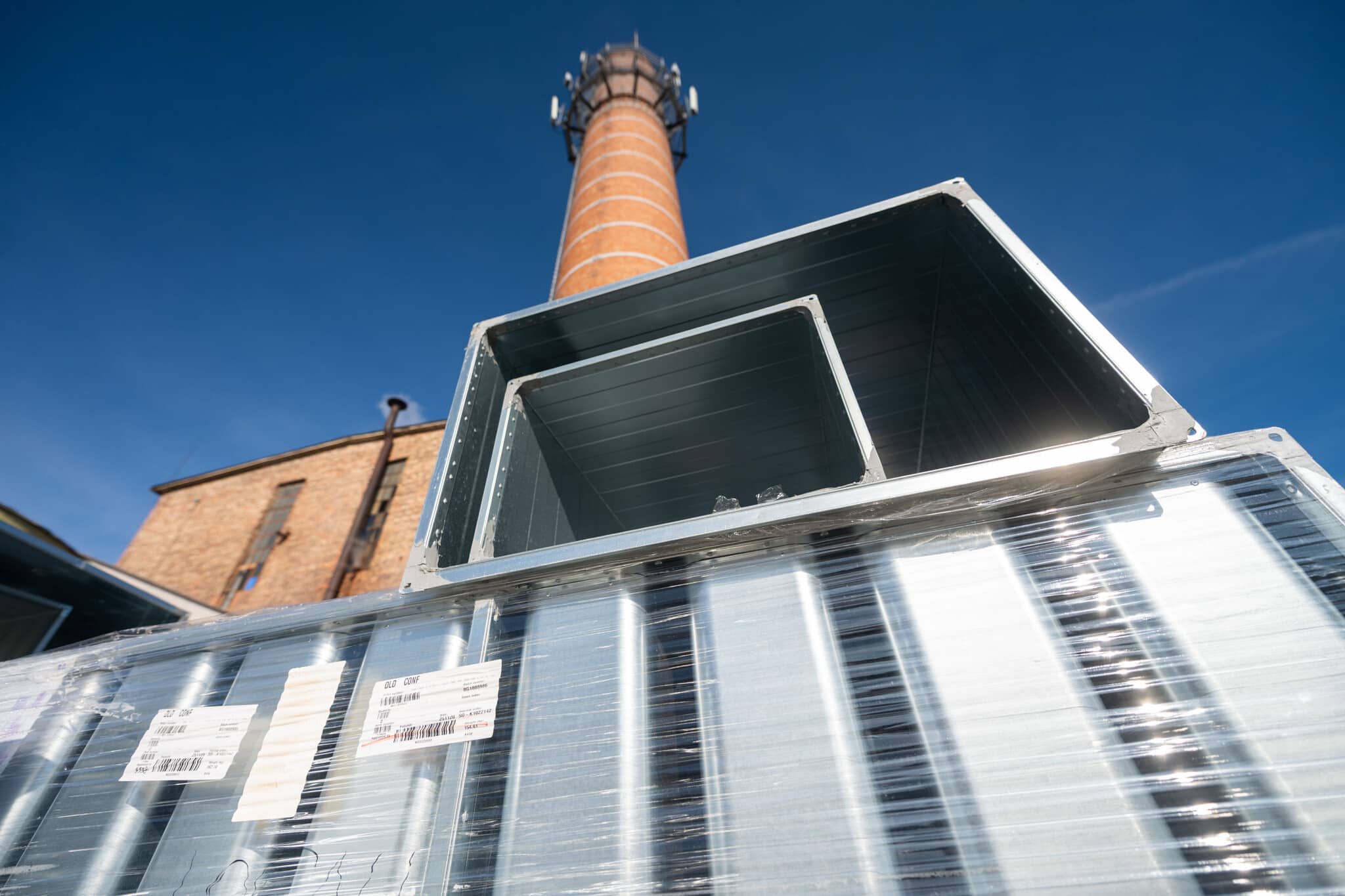
One of the most tangible achievements in the field of circular economy has been realised this year: For the first time in Hungary, air duct made from recycled steel has been installed in a real domestic construction project, at Univer’s factory in Kecskemét. The project yielded measurable results: 2 tonnes of CO2e emissions were saved compared to if the products in question had been manufactured using conventional steel. Further similar projects are expected this year, indicating that the recycled steel-based air duct is not a one-off experiment, but a scalable solution.

Demand-controlled ventilation: only as much air as is needed
Ventilation systems play a vital role in the operational sustainability of buildings. The Lindab demand-controlled ventilation solutions are based on the simple principle that a room should always be supplied with only as much fresh air as is actually required based on current demand, no more and no less. This is made possible by sensors and intelligent control systems that continuously monitor CO2 levels, temperature and other factors.
The extent of energy savings varies depending on the type of building, but the principle applies across all sectors: office blocks, gyms, retail premises, and educational and healthcare facilities alike. Where the load fluctuates, fixed-capacity systems usually consume energy unnecessarily, leading to waste. Demand-driven solutions eliminate this waste, whilst indoor air quality and, consequently, comfort levels are improved. In Hungary, there is still plenty of untapped potential in this area.
Professional cooperation: the only viable option
The closer cooperation between HuGBC (Magyar Környezettudatos Építés Egyesülete) and ÉVOSZ clearly demonstrates that the sector’s key organisations have recognised that industrial transformation cannot be achieved without a collective effort.
The HuGBC ’Zero Carbon Roadmap’ programme provides a framework to which manufacturers, contractors, operators and designers can all subscribe, with shared objectives and measurable milestones.
The Lindab is an active participant in this process, not a mere observer. It has contributed to the development of the Zero Carbon Roadmap and aims to support the transition that the industry must inevitably undertake over the coming decade through continuous product innovation, EPD-based data reporting, specific reference projects and participation in professional dialogue.
The question is no longer whether change is needed. The question is who will take it seriously and act soon enough.
Source: Link






Reconstruction of the M1 motorway’s carriageway towards Győr can begin under the new traffic arrangements

Alpine engineering techniques are also being used to protect the railway in the Danube Bend

Instead of patchwork repairs – large-scale refurbishment work is under way on the dilapidated main roads in the Transdanubia region

The expansion joints on the Buda side of the Erzsébet Bridge were installed overnight

Four new bridges to be built in the heart of the former industrial city

Rain gardens are coming to Budafok, with over 3,000 square metres of green space set to be developed

Contemporary art deco in Csopakon

Safer driving on the motorways: new digital signs for the MKIF
-

 Current at 2026. 09. 09.
A first-hand look at a career in engineering – Duna Group Szabadegyetem is back
-
Climate-X 2026. 09. 09.
Nyíregyháza Spartacus FC goes green – four hundred solar panels to be installed on the stadium roof
-
Bound track 2026. 09. 15.
Nearly 50,000 people travel on it every day – the refurbishment of the Cegléd main line continues
-
Current at 2026. 09. 09.
Rental flats, Rákosrendező, decentralisation – important ideas were put forward on the Real Estate Beach Conference stage