Current at
Marketing, Trust and Talent in the Construction Industry – Key Takeaways from the Construction Industry Marketing Communications Conference

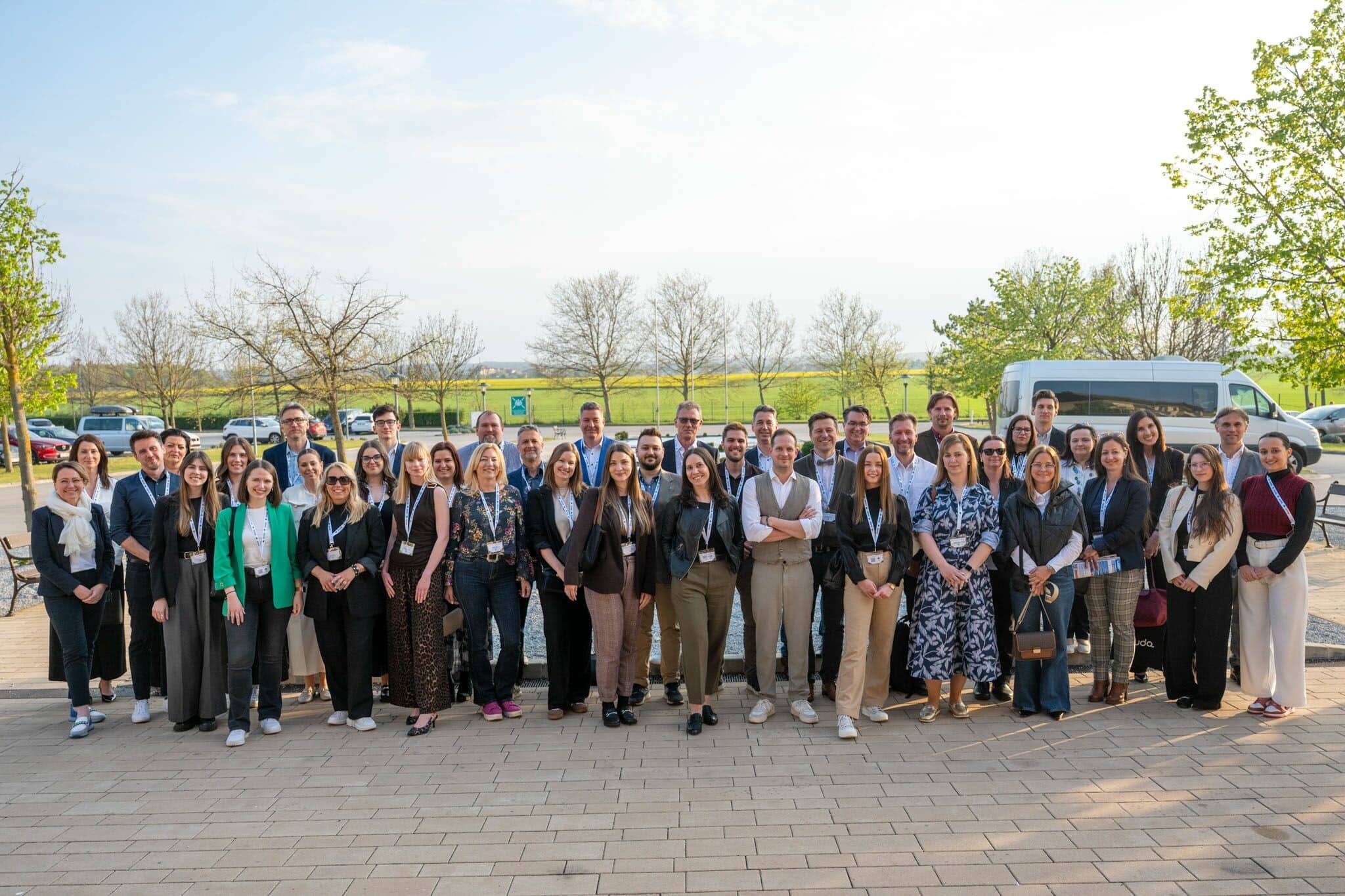
The ÉVOSZ Media Division held its third construction industry marketing communications conference in Bükfürdő on 16 April. The event, which creates a common platform for industry leaders and marketing and communications professionals, took place again this year with the media support of Magyar Építők. Following the opening of the event, we are now back with another article – this time summarising the key takeaways from the presentations.
Communication is no longer an option, but a fundamental business requirement
One of the strongest common themes emerging from the professional presentations is that the role of communication and marketing in the construction industry has fundamentally changed. Today, it is no longer what a company says that matters, but how it says it, and how effectively it can do so in an authentic, consistent and people-centred manner.
Dániel Fodor, managing director of the Agency of the Year Kft., believes that in a media environment characterised by a lack of trust, what is needed is authentic storytelling, proprietary platforms and the personal involvement of staff and managers, rather than formulaic messages.

Péter Kálmán, CEO of Óbuda Group, added to this by emphasising that marketing is no longer a technical issue, but rather a trust-based, strategic function that must be closely linked to business operations and long-term brand building. Using Óbuda Group as an example, the executive demonstrated that a rebranding and organisational integration are successful if they involve employees internally, provide them with standardised tools, and are consistently applied across all platforms.
Without visibility, there is no competitiveness
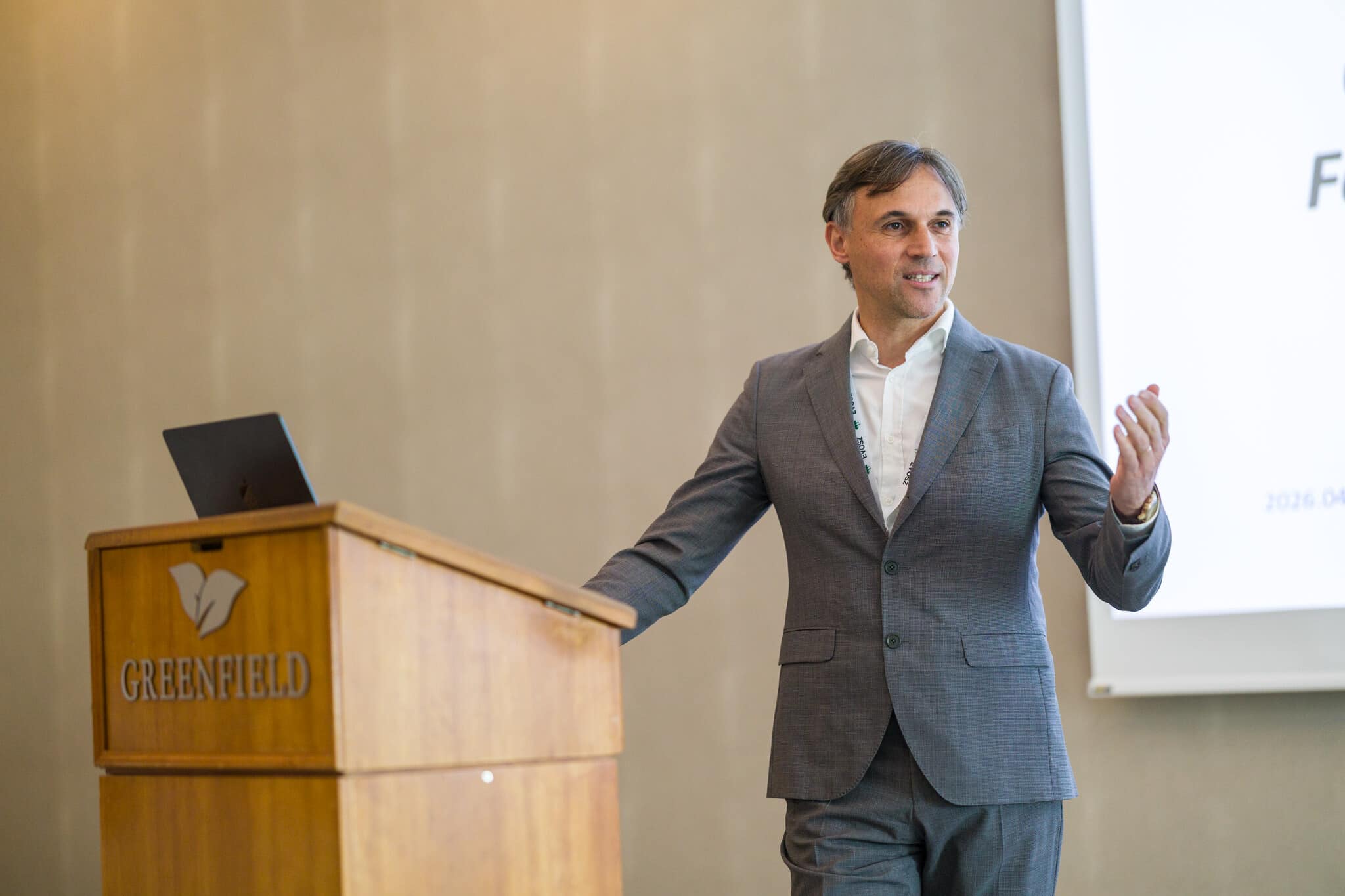
Several speakers emphasised that professional performance alone is not enough. According to Csaba Livják, founder and managing director of BuildEXT, communication becomes a matter of survival, particularly in a crisis, as credible professional work only becomes commercially meaningful if it is visible.

Balázs Lengyel, co-owner and project manager of Spányi Partners Zrt. He is also a co-owner and project manager, who illustrated through his own career that the principle „it’s not enough to be good, you also have to be visible” is the foundation of modern professional success, even if self-promotion can feel uncomfortable at first. Both emphasised the importance of continuous learning, experimentation and a conscious presence.

The brand is built from within
On behalf of KÉSZ Csoport, Károly Benedikt pointed out that the employer brand branding is no longer primarily a recruitment tool, but rather a retention and engagement strategy. A genuine employer brand stems from the internal experience:
What the employee experiences becomes part of the company’s external brand image.
KÉSZ has therefore launched lifestyle and health-focused programmes aimed at building community and improving well-being, even if these cannot replace basic necessities such as wages or respect.

Strategic partnerships and creative thinking
According to Anita Kocsik-Bogár, Managing Director of BRAND BAND Kft., the foundation of successful collaborations lies in mutual value creation and strategic thinking. Many projects fail because it is not made clear why they are beneficial to both parties. The key to success lies in creative repositioning and connecting different fields – whether in cultural or business collaborations.

The transformation of media and communication
Péter Kincses, Head of Sales and Business Development at the Magyar Építők news portal and Chair of the ÉVOSZ Media Division, explained how our specialist news portal has evolved into a comprehensive, 360-degree communications platform.
Visibility is no longer a matter of chance, but the result of a carefully constructed system in which content creation, strategy and distribution work in tandem. Video and documentary content plays a particularly important role in the construction industry, serving not only as a means of communication but also as a tool for gaining professional recognition.
For more details about the presentation, please visit our website.

CSR – not charity, but value creation
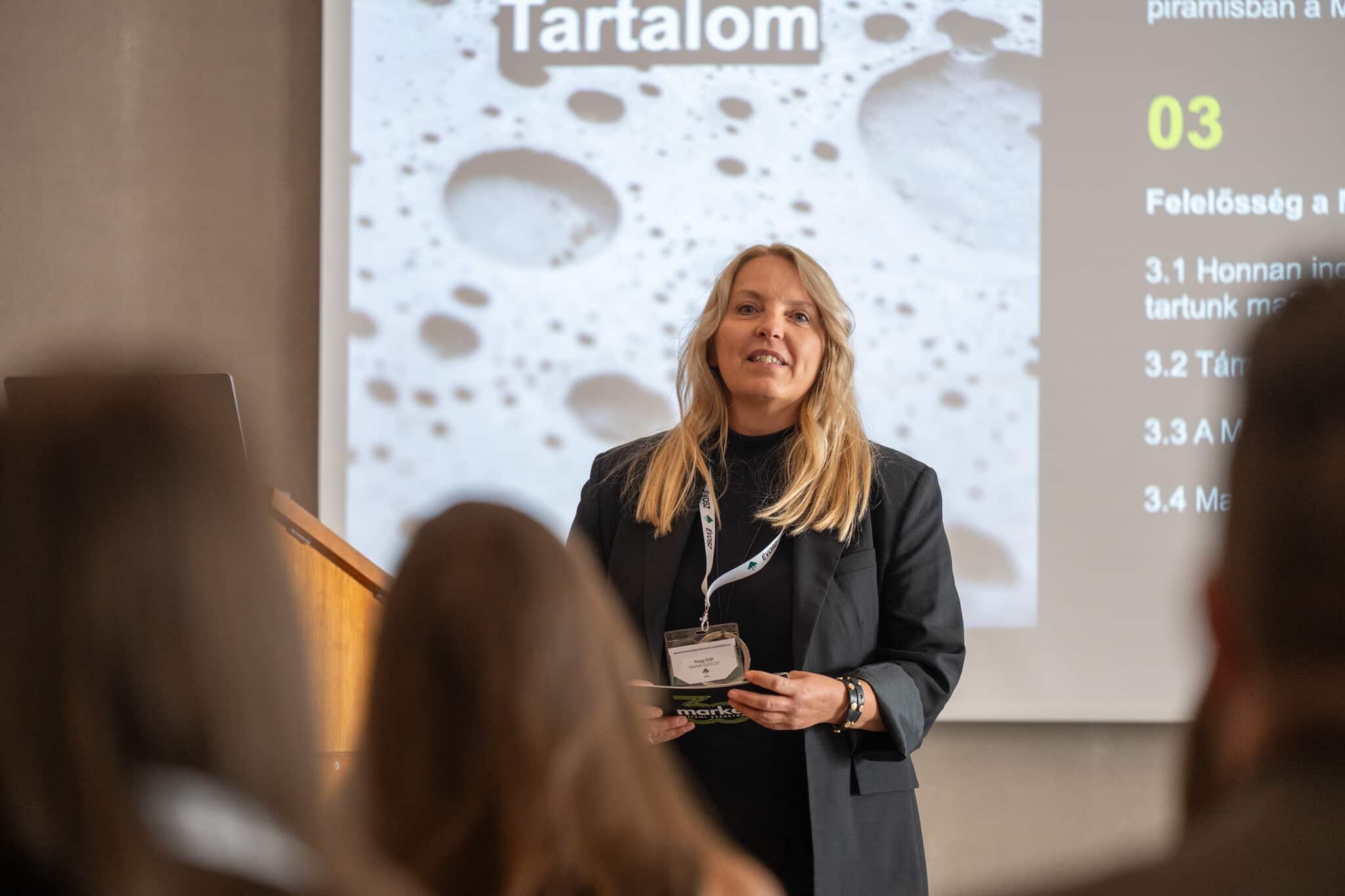
According to Edit Nagy, Head of Sponsorship and CSR at Market Építő Zrt, the essence of CSR is not the subsequent „redistribution” of profit, but its responsible and ethical generation. The example of Market shows that genuine social responsibility is a long-term strategic system built on in-house projects, employee engagement, local communities and measurable social impact. The highest level is no longer about support, but about creating value at a systemic level.
What do young people say?
To round off the conference, members of Generation Z took part in a round-table discussion. Johanna Szekeres, President of the Student Council at the Faculty of Civil Engineering, Budapest University of Technology and Economics (BME); Izabella Varga, Szabadics Építőipari Zrt. and Dr Péter Szász, HR Manager at Market Építő Zrt., spoke about what Generation Z expects from the industry.
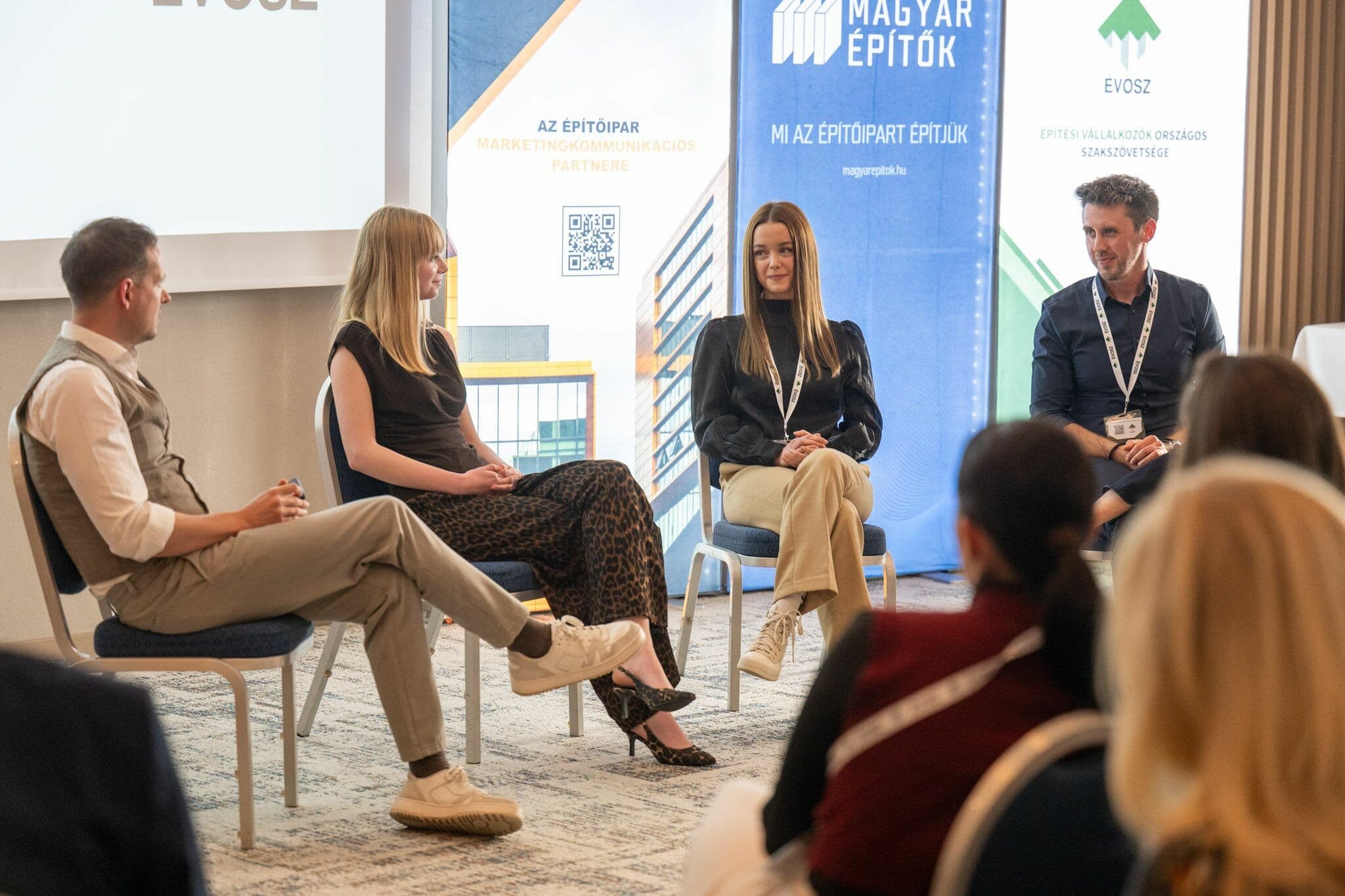
Young people are looking for rapid development, a clear career path, flexibility and honest communication, whilst placing a strong emphasis on feedback and practical experience. The biggest challenge is the gap between theory and practice, as well as a lack of soft skills. Successful programmes – such as mentoring or camps – work best when they are personalised, interactive and involve managers too.
Our newspaper will soon publish a separate article on the key takeaways from the roundtable discussion.
Source: Link








Reconstruction of the M1 motorway’s carriageway towards Győr can begin under the new traffic arrangements

Alpine engineering techniques are also being used to protect the railway in the Danube Bend

Instead of patchwork repairs – large-scale refurbishment work is under way on the dilapidated main roads in the Transdanubia region

The expansion joints on the Buda side of the Erzsébet Bridge were installed overnight

Four new bridges to be built in the heart of the former industrial city

Rain gardens are coming to Budafok, with over 3,000 square metres of green space set to be developed

Contemporary art deco in Csopakon

Safer driving on the motorways: new digital signs for the MKIF
-

 Current at 2026. 09. 09.
A first-hand look at a career in engineering – Duna Group Szabadegyetem is back
-
Climate-X 2026. 09. 09.
Nyíregyháza Spartacus FC goes green – four hundred solar panels to be installed on the stadium roof
-
Bound track 2026. 09. 15.
Nearly 50,000 people travel on it every day – the refurbishment of the Cegléd main line continues
-
Current at 2026. 09. 09.
Rental flats, Rákosrendező, decentralisation – important ideas were put forward on the Real Estate Beach Conference stage