
What is being built?
From granary to kitchen: a listed building takes on a new role in Nógrád

The results of the tender for the construction of the Nézsai Granary Restaurant have been published on the public procurement portal. The building, which is a listed monument in this village of 1,200 inhabitants in Nógrád County, is to be converted into a kitchen capable of serving 500 meals and a restaurant that will also cater for the local community. The project consists of two parts: the first involves the conversion of the granary, and the second the conversion of the boiler house; both are to be carried out by Salgó Ház Kft..
A development project worth over half a billion forints is set to begin
The local council of Nézsa has secured a non-repayable European Union grant of 596 million forints under the Regional and Local Development Operational Programme Plus (TOP Plusz) to implement the „Magtár Restaurant” project. During the project, the listed building will undergo a complete renovation and conversion, creating one of the region’s most modern and largest commercial kitchens.
At the project launch event held in March 2026, it was stated that: the town’s current central kitchen provides meals for around 350 people daily, including catering for local nurseries, kindergartens and schools, as well as social care services in Alsópetény and Legénd. The new facility will be capable of preparing 500 meals and, in future, will not only fulfil public catering duties but also provide opportunities to host guests, organise events and showcase local produce.
It was announced that construction is expected to be completed by April 2027.
Well-thought-out features at every level
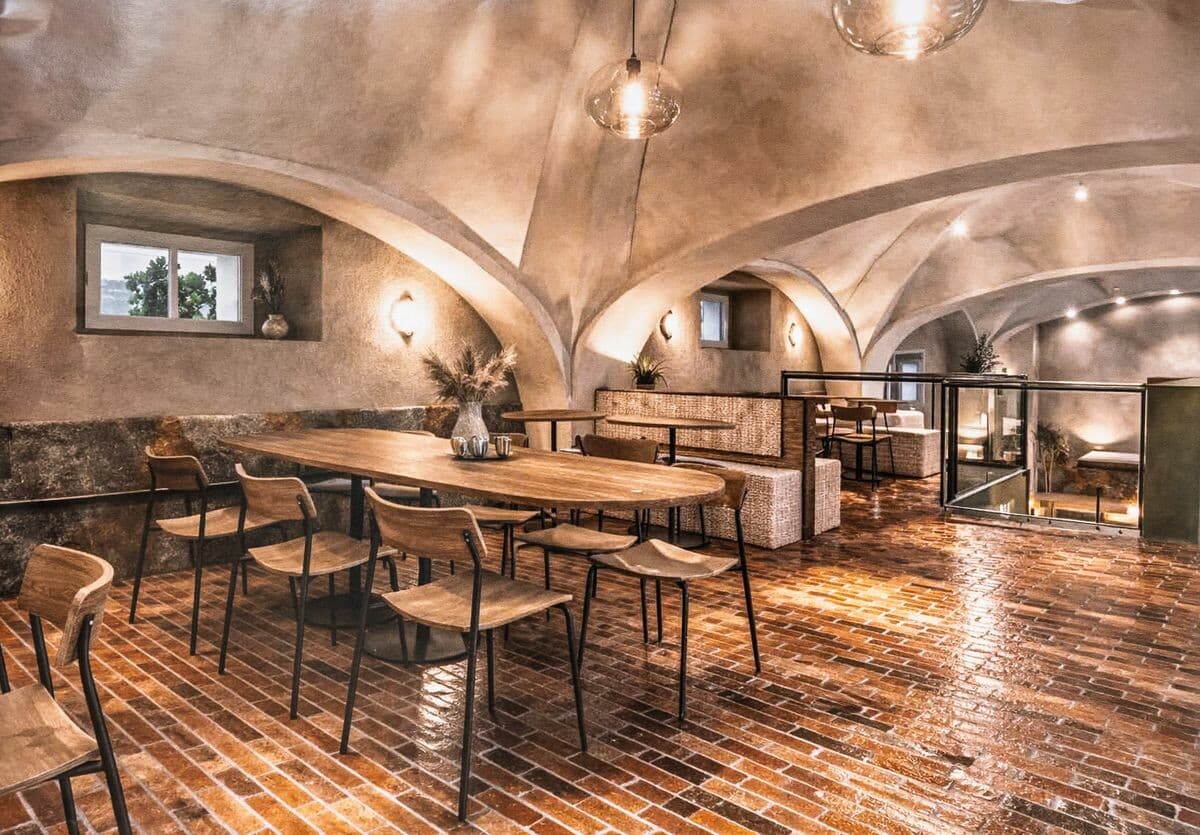
During the refurbishment, every floor of the building will be given a new function. The ground floor will house the central kitchen, capable of preparing 500 meals, the vegetable and meat preparation areas, cold storage rooms and lobbies, as well as a dining area with seating for 80–100 people. This will house the dining area, the serving area and the service area, and accessible toilet facilities will also be built.
A separate dining area and serving area will be created on the basement level for guests and staff, whilst the attic will house an administration office, changing rooms, toilet facilities and plant rooms.
The development extends beyond the granary: the old boiler house is also being modernised, where facilities such as a vegetable preparation area, storage rooms and refrigeration units will be installed. A solar panel system will be installed on the roof, whilst the restaurant will utilise state-of-the-art „smart” kitchen technology solutions designed to support energy-efficient and sustainable operations. The project also includes the procurement of all equipment and the creation of accessible parking spaces.
Where history meets the future
Nézsa lies some 50 kilometres from Budapest, on the south-western edge of Nógrád County, bordering Pest County. The village’s history dates back as far as the time of the Hungarian conquest. The area surrounding the village boasts beautiful natural features and popular local destinations, which could prove to be key factors in the development of rural tourism currently taking shape.
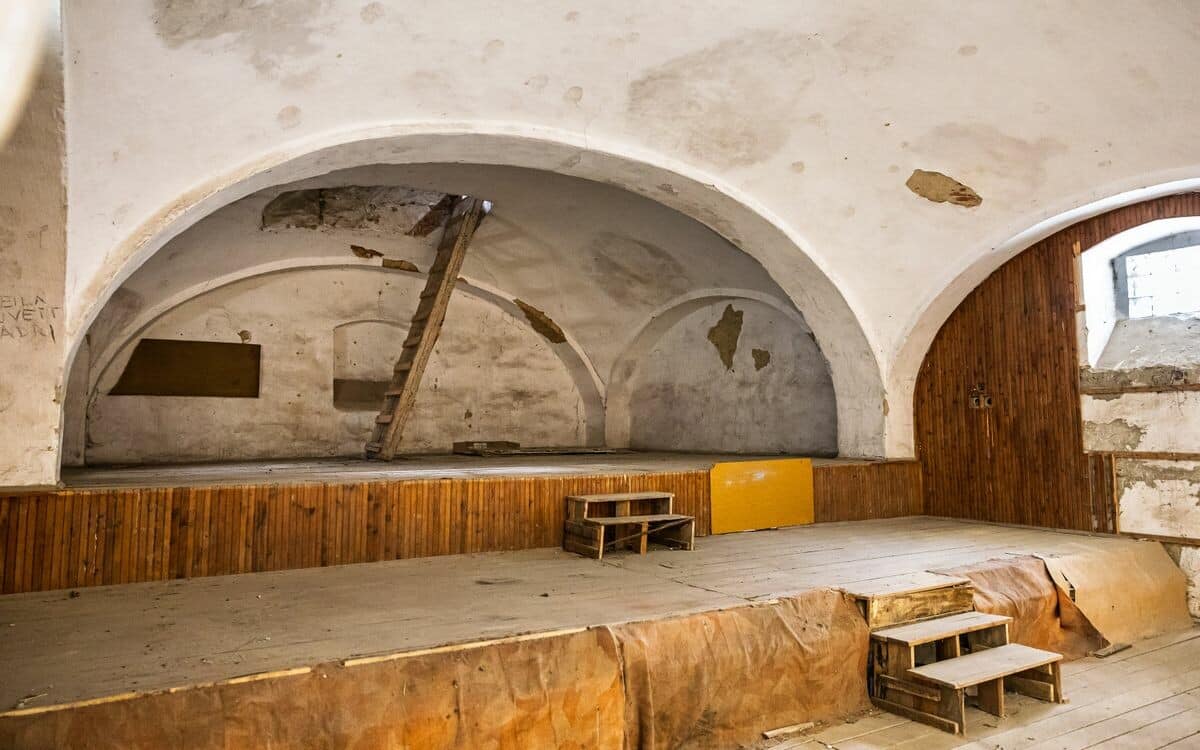
The granary currently undergoing renovation was once a farm building belonging to Reviczky Castle. Construction of the castle began in the mid-18th century, and it was further extended in the year 2000. The associated farmsteads and farm buildings – including the granary – were an important part of life on the estate at that time.
During the Second World War, the castle served as a Russian hospital; it was subsequently left to fall into disrepair for many years, but was later converted into a school. The park surrounding it still retains its former beauty.
The Baroque-style granary was built in the first half of the 19th century and remains a defining feature of the townscape today. It is connected by a wing to the new community centre, which opened in 1987. It has six axes, with windows spaced at equal intervals, though openings bricked up beneath the crumbling plaster are also visible. It is covered by a tiled roof renovated a few years ago and adorned with a richly detailed cornice. The interior is open-plan, with a two-storey section at the eastern end.
This latest investment will not only create a state-of-the-art kitchen and restaurant, but will also breathe new life into an old building – whilst preserving its historical heritage.
Source: Link



The AKKO Invest may be expanded to include a designer of airport hotels

Drilling is also taking place beneath the railway: work on the Déli Körvasút project continues with the relocation of utility lines

The KBM call for entries is aimed at the cream of the crop of Hungarian architecture

Class HE-DO brought the summer to a close with a family sports day

Rain gardens are coming to Budafok, with over 3,000 square metres of green space set to be developed

Contemporary art deco in Csopakon

Four new bridges to be built in the heart of the former industrial city

Safer driving on the motorways: new digital signs for the MKIF
-

 Road building 2026. 08. 05.
The main road leading to a key tourist destination in Bihar is being upgraded using cold recycling technology
-
What is being built? 2026. 08. 06.
Paks II.: What does the new milestone for Unit 5 mean in the context of the review?
-
Climate-X 2026. 08. 05.
STRABAG is relieving the strain on the electricity system through plant shutdowns and reorganised production
-
Industry news 2026. 08. 06.
Four giant cables are linking the electricity grids of Spain and France beneath the seabed


