What is being built?
The earth is moving – Szeged's new landfill site is being built on seven hectares

Szegedi Hulladékgazdálkodási Nonprofit Kft. is increasing its capacity by constructing two new landfills at the Regional Waste Management Centre on Sándorfalvi Road.

The company collects and transports municipal solid waste in Szeged and 18 other nearby towns. At the centre, incoming shipments are sorted, prepared for recycling, processed, and any non-recyclable parts are disposed of in accordance with regulations. Green waste and construction and demolition waste are recycled.

Ensuring sustainable waste management in the long term
The general contractor for the project is STRABAG. The aim of the second phase of the expansion of the regional non-hazardous waste landfill is to increase environmental safety and ensure long-term sustainable waste management for Szeged and its region.

The work is taking place on an area of seven hectares, equivalent to nearly ten football pitches.
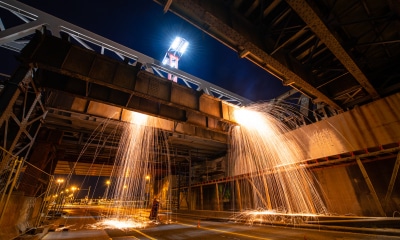
After taking over the work site, construction began in September, which is divided into three major phases from a technical perspective: developing the area between the existing landfill and Cell I, and constructing Cells II and III. The area affected by the investment is approximately 70,000 square metres.

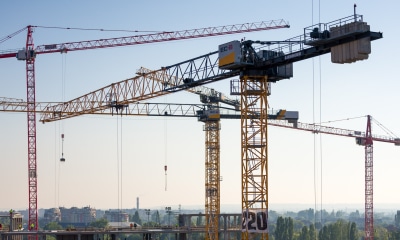
A significant number of machines are working on the construction
The work began with the preparation of the site, during which approximately 20,000 cubic metres of topsoil was removed from an area of around 50,000 square metres. This soil will be deposited on site and then used as a covering layer once the earthworks have been completed. During the preparatory phase, the abandoned public utilities were also demolished under archaeological supervision.

The entire project involves more than 100,000 cubic metres of earthworks, including cutting, embankment construction and backfilling. Under the supervision of two engineers, two rotating excavators, one bulldozer and five four-axle lorries are currently working continuously on the site, with three to four articulated lorries delivering granular materials on a scheduled basis.
Monitoring system also supports insulation system control
The landfill's insulation and drainage system is multi-layered and made using state-of-the-art technology, with the aim of protecting the soil and water resources. Watertightness is ensured by a 50-centimetre-thick layer of clay, a bentonite mat and a 2.5-millimetre-thick HDPE insulation sheet, supplemented by non-woven geotextiles of various thicknesses and granular drainage layers. The stability of the layer system is reinforced by several types of geogrids. The insulation work also involves the installation of a geo-electrical monitoring system, which serves to continuously monitor the entire insulating surface and detect any leaks at an early stage.

They reduce their environmental impact in numerous ways
The hydraulic engineering tasks include the construction of a fire water network and the drainage of rainwater and runoff water. For the latter, a sewer, drainage pipe system and pressure pipe will be built for collection and transport.

Modern waste management in the Southern Great Plain
The greatest professional challenges during construction are ensuring precise connection to existing structures, meeting tight deadlines, and ensuring continuous operation of the plant. The investment will provide the Southern Great Plain region with a modern, environmentally friendly and energy-efficient waste management centre that will meet the region's waste management needs in the long term, comply with EU environmental regulations and contribute to the sustainable development of Szeged.

Source: Link



A Hungarian specialist in railway turnouts has won the MÁV billion-forint contract

The new water treatment system at Koppánymonostor will improve the water supply to Ács and the surrounding area

Debrecen could get a southern city centre

The ground beneath the M1 motorway is being reinforced using piles of varying diameters depending on the soil layer

Hungary's biggest motorway upgrading programme is underway

Perhaps the world's most elegant McDonald's restaurant opens in Budapest

Szeged to become one of Europe's leading industrial centres with the construction of the BYD factory, the city strengthens its position with a worthy investment package

Viablokk porous concrete masonry element from a Hungarian factory, as a Hungarian product, is set to conquer the world
-

 Current at 2026. 06. 01.
The M5 motorway is in tatters – can the M6 save the day?
-
Industry news 2026. 06. 02.
The domestic construction industry could see a boost – there is potential to unlock €16.4 billion in EU funding
-
Current at 2026. 06. 01.
Project KÉSZ Csoport has refurbished six treatment rooms at Bethesda Children’s Hospital
-
Climate-X 2026. 06. 02.
Who is taking the lead in the construction industry’s green transition?