Road building
The ground beneath the M1 motorway is being reinforced using piles of varying diameters depending on the soil layer
In a recent post on his social media page post on his social media page, he presented the MKIF introduced Keller piling, which is also being used in the M1 motorway extension.
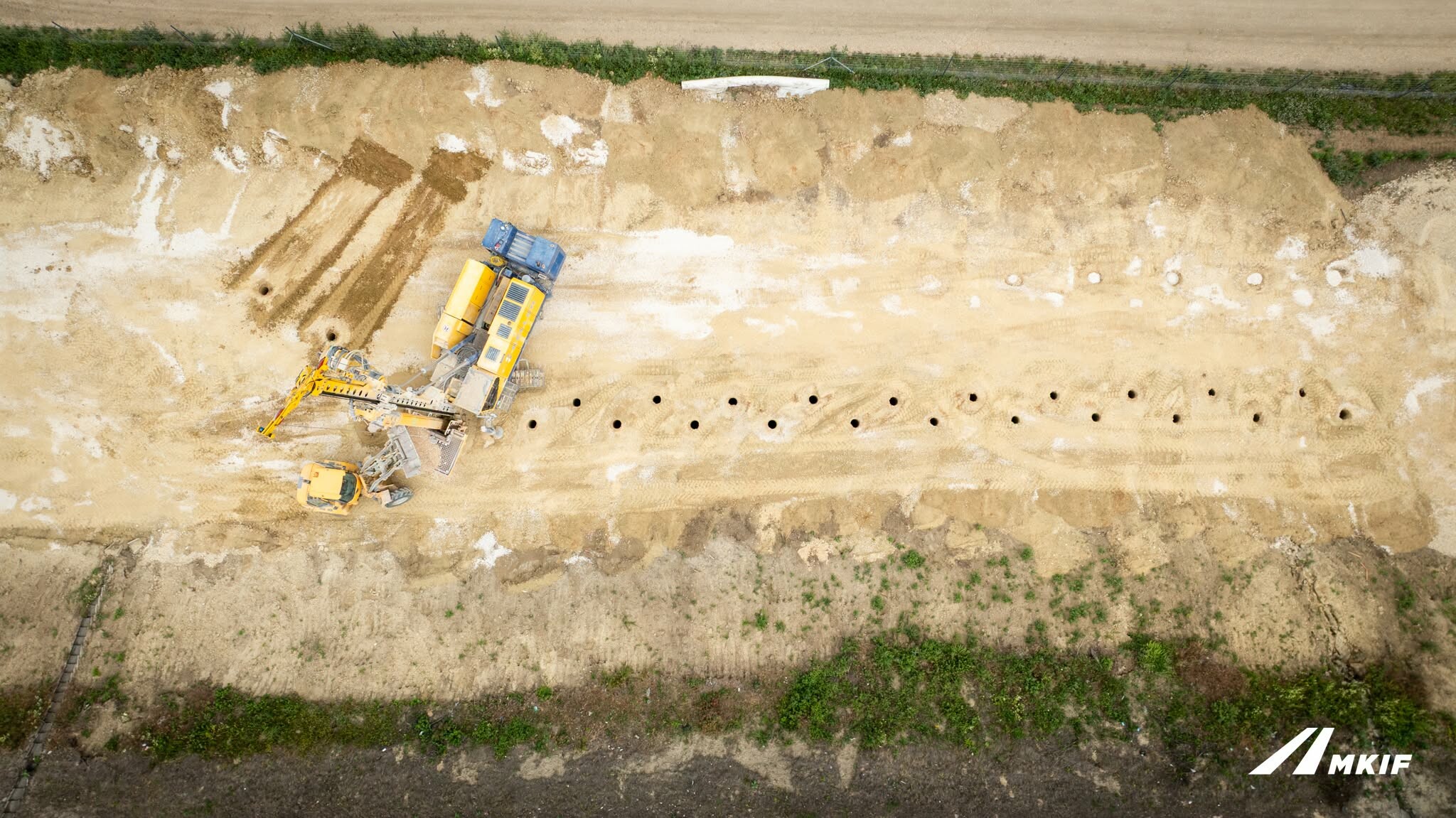
Photographs were used to illustrate the piling work, which serves as a preparatory phase prior to embankment construction to reinforce the subsoil where measurements indicate this is necessary. The photographs taken at kilometre 57 clearly illustrate how the technology works:
The aim of „deep compaction with gravel addition” – as it is officially known – is to improve the parameters of non-load-bearing subsoil to the required extent during soil improvement: gravelly, loose soils are compacted, whilst in water-saturated cohesive soils, gravel is pressed in to accelerate their dewatering and consolidation – they write.
The size of the piles is adjusted according to requirements and soil conditions
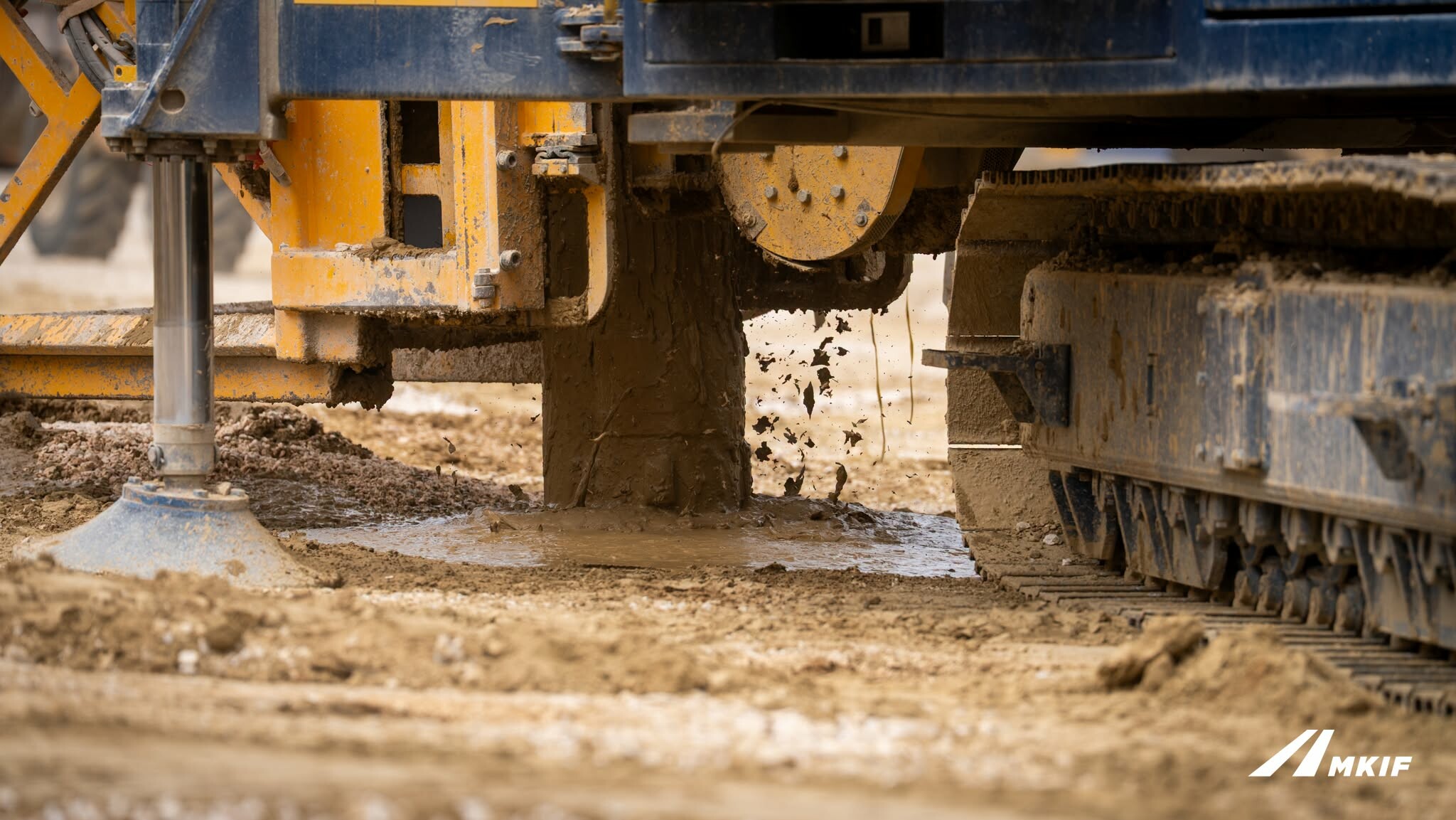
Although the average diameter of the gravel piles is 50–60 cm and their depth is 5–8 metres, these figures are not fixed: they are adjusted according to the soil conditions.
This is because the horizontal „vibration force” drives different quantities of stone into the ground depending on the compactness of each soil layer; consequently, the pile diameters vary from one soil layer to the next. It drives fewer stones into denser soil and more into looser, softer soil. This is how a homogeneous bearing capacity is achieved in the improved subsoil.
Without any environmental impact
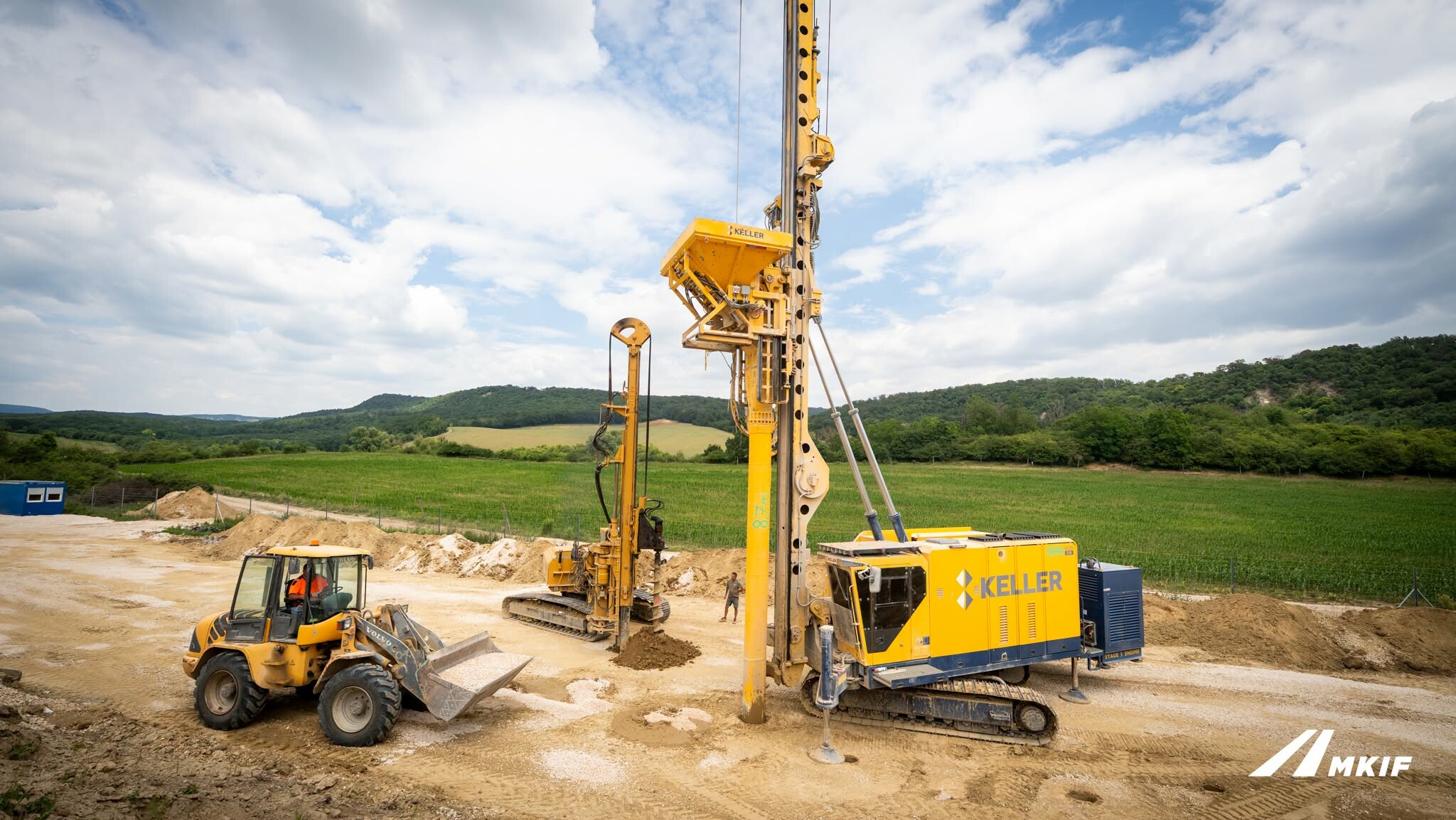
We lower the so-called vibrator into the pre-drilled holes, then pull it up a few decimetres whilst feeding the additive into the soil through the chute, right up to the tip of the vibrator. When it is lowered again, the vibrator presses the additive sideways into the soil and compacts it.
To achieve the correct compaction, the vibrator’s current consumption must be within the range of 80–100 amperes.
It is particularly important to note that the Keller gravel piling method has no harmful environmental impact whatsoever. It involves introducing naturally occurring gravel into the ground, which, when compacted, makes the substructure load-bearing without altering the original environmental conditions in any way.

Source: Link









The Buda interchange could also be extended northwards

A railway bridge will link the sections of the Tokaj-kör route: cycling infrastructure development in the wine region continues

Many people from the capital are also choosing it as their new home: four buildings are being constructed in Gárdony using a special foundation system

One of Abony’s most important transport routes is to be redesigned

Four new bridges to be built in the heart of the former industrial city

Rain gardens are coming to Budafok, with over 3,000 square metres of green space set to be developed

Contemporary art deco in Csopakon

Safer driving on the motorways: new digital signs for the MKIF
-

 Current at 2026. 09. 09.
A first-hand look at a career in engineering – Duna Group Szabadegyetem is back
-
Climate-X 2026. 09. 09.
Nyíregyháza Spartacus FC goes green – four hundred solar panels to be installed on the stadium roof
-
Bound track 2026. 09. 15.
Nearly 50,000 people travel on it every day – the refurbishment of the Cegléd main line continues
-
Current at 2026. 09. 09.
Rental flats, Rákosrendező, decentralisation – important ideas were put forward on the Real Estate Beach Conference stage