Water management
A new chance for Lake Balaton - major water quality improvement project completed

Lake Balaton is set to be reinvigorated following the completion of a major water quality improvement project, the results of which were presented at a closing ceremony.
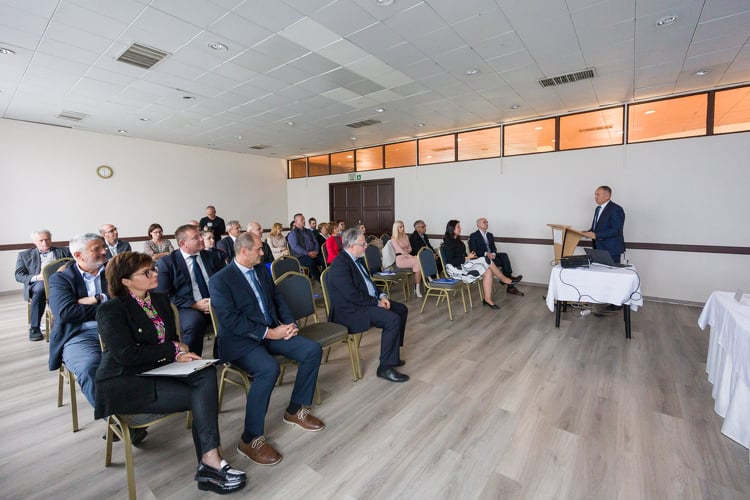
The investment was implemented by a consortium of the National Water Authority and the Central Transdanubian Water Authority with a budget of HUF 5.139 billion, provided by the European Union and the Hungarian Government as non-repayable grants. The project was carried out by SZABADICS Construction Industry Zrt.
Work started in spring 2021.
The project will involve various interventions on 11 watercourses in Lake Balaton and the reactivation of reed bed filter fields, which will restore their water quality protection function. The aim was to tackle the water quality problems affecting the lake in the long term, while protecting the economic potential of Lake Balaton.
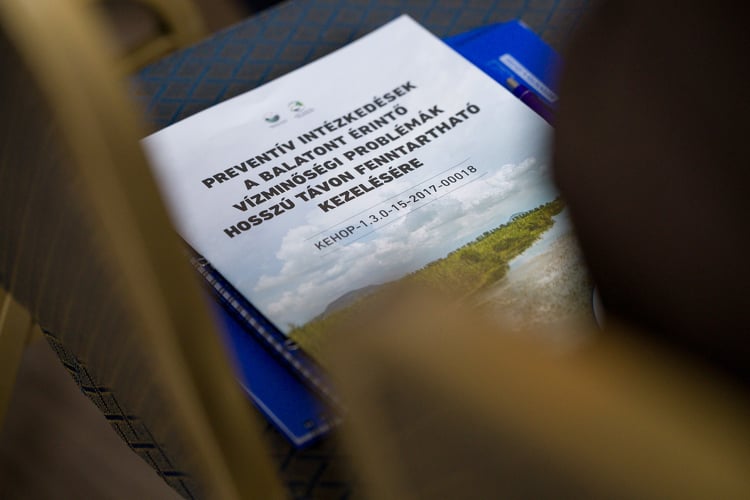
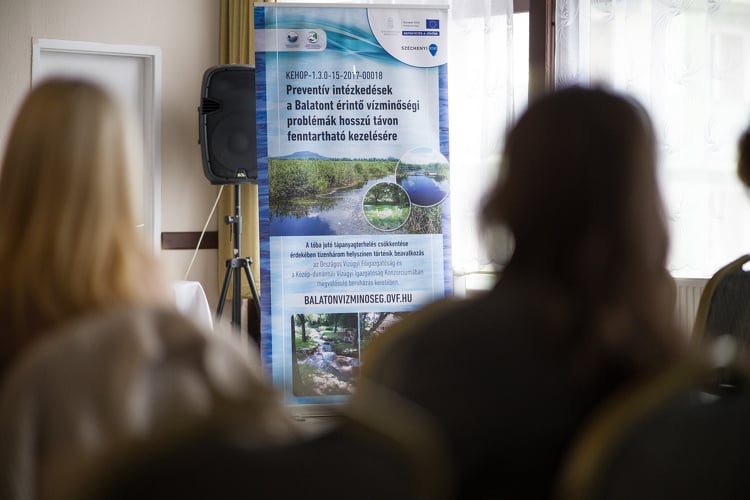
All three parts of the project KEHOP-1.3.0-15-2017-00018 "Preventive measures for the long-term sustainable management of water quality problems affecting Lake Balaton" - LOT1, LOT2 and LOT3 - have been completed.
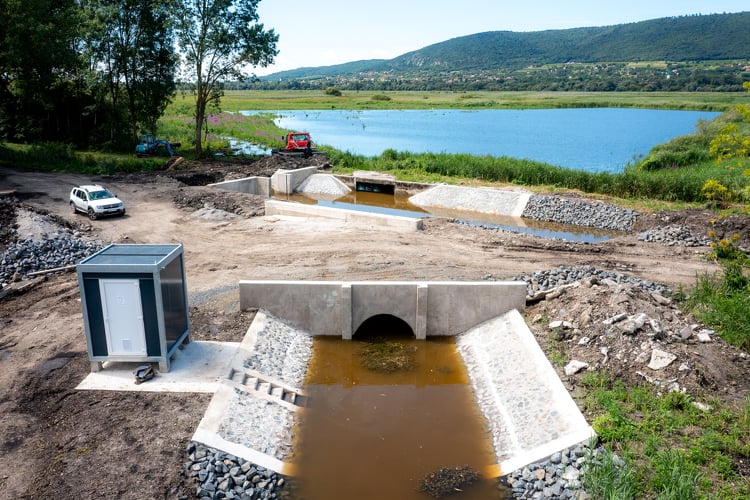
More details:
- The development of the Lesence system will affect the settlements of Szigliget, Raposka, Hegymagas, Balatonederics and Nemesvita in the western part of the Balaton Highlands (LOT1)
- Reconstruction of the structures of the Kis-Balaton Water Protection System (LOT2)
- Reconstruction of small watercourse structures (LOT3)
In the LOT1 project section – starting in March 2021 – completed subtasks:
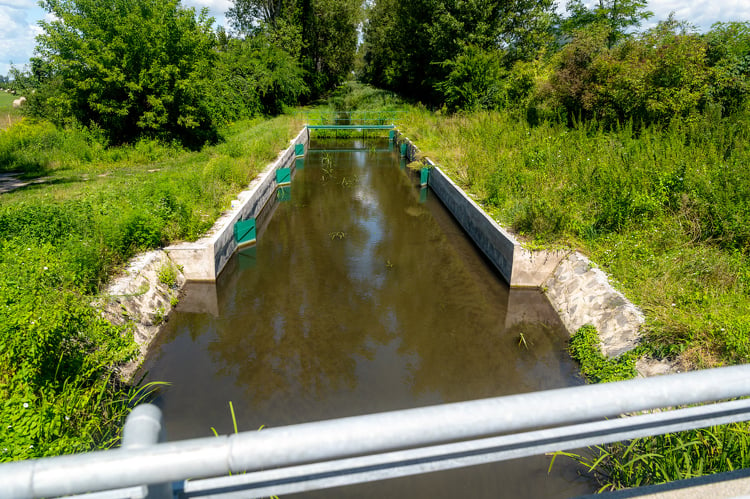
- KÖV canal: bank stabilisation, sedimentation, culverts, substructure works for monitoring stations.
- Lesence stream: sedimentation, culvert, bottom weir, new channel linking the Világos stream and substructure works for monitoring stations.
- Tapolca creek: renovation of the oil catchment structure, installation of a floating grating.
- Two Gorges Creek: renovation of the oil interceptor, substructure works at the monitoring station.
- Nemesvitai ditch: construction of a sinking area, substructure works for monitoring stations.
In March 2023, our newspaper wrote in detail about the work on the LOT2 and LOT3 project sections.
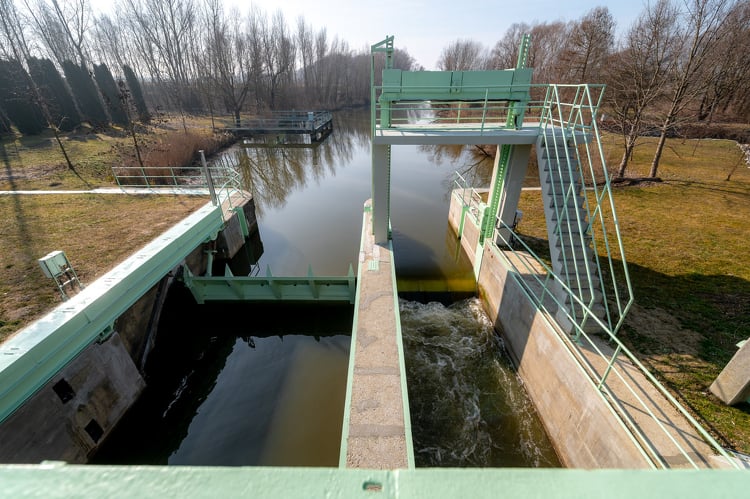
Reconstruction of the structures of the Small Lake Balaton Water Protection System (LOT2):
- the complete architectural, mechanical and electrical refurbishment of the water level control structures 4T and 21T, creating state-of-the-art conditions for safe and long-term sustainable operation.
Reconstruction of small watercourse structures (LOT3) subtasks were:
- Eger water: bank stabilisation, culvert, stone dam, monitoring stations and access road.
- Lovasi-sed: dredging of the river bed, creation of a breeding island, reed slab beating, reconstruction of the embankment. Construction of a dike and access road. Reconstruction of concrete surface of the outlet structures and steel structures.
- Cinege creek: reconstruction of the embankment, construction of a new sediment trap, installation of a new sediment trap grid.
- Kéki creek: reconstruction of the embankment, construction of a new sediment trap, installation of steps, installation of a new sediment trap grid.
- Burnó stream: construction of a new sediment trap.
- Örvényesi-séd: reconstruction of the embankment, construction of a new sediment trap, renovation of old sediment traps, reconstruction dredging of the sedimentation basin, renovation of gas locks and concrete pavements.
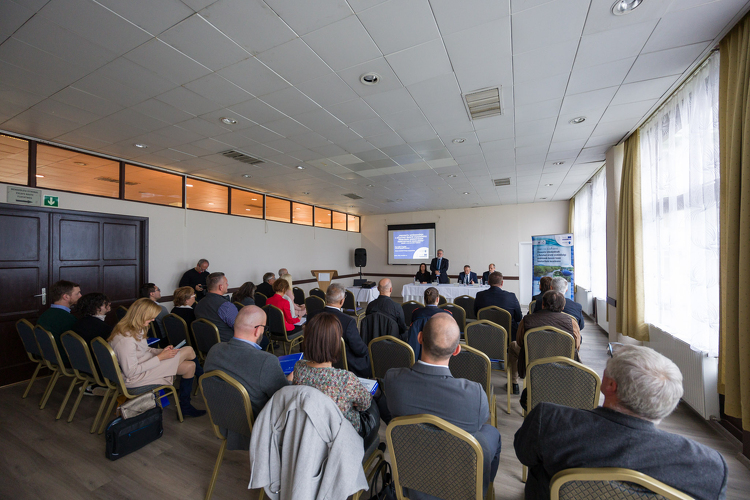
At the event, Jenő Lábdy, Deputy Director General of the National Water Directorate General for Technology, drew attention to the fact that in the EU budget period just ended, the water sector has completed more than 80 projects worth some HUF 418 billion. Several of these projects concerned Lake Balaton, in particular the present water quality improvement project, which is also very significant because it did not deal with the riverbed but with the water flowing into it. Improving these will also reduce problems in the riverbed.
Even with the best of intentions, the public demand for the exploitation of Lake Balaton is a significant burden for the lake, which is why your proposal for further water management of the lake stands on two legs: research must be conducted and action must be taken on the basis of this research. He stressed:
"in the future, we would like Lake Balaton to have its own funding framework to 'run' it"
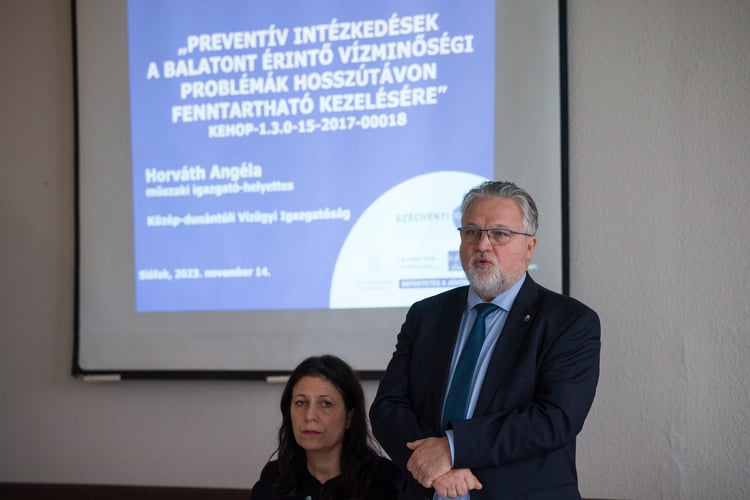
Angéla Horváth, Deputy Technical Director of the Central Transdanubian Water Directorate, presented the project and noted that the main objective of the project was to put the preservation of the water quality of Lake Balaton on a new basis. The investment was necessary because the watercourses on the northern shore of Lake Balaton transport a lot of sediment to the lake, and the spaces for its retention have now been filled up. It was therefore necessary to reactivate them and carry out a comprehensive reconstruction.
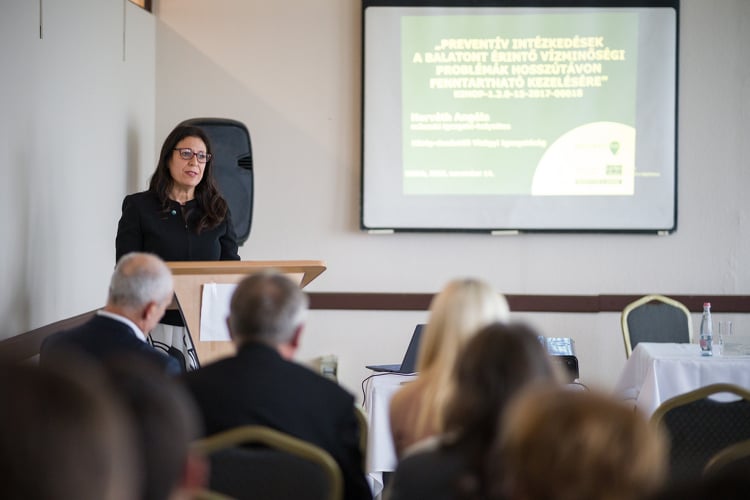
The Lesence system is a very important part of the Lake Balaton basin that has not been developed in the last four decades, so it was a key element of the project, the Lesence reedbeds, over 200 hectares of which it was very important to preserve the natural values. A water quality monitoring network was also installed in small watercourses, whose condition has been greatly improved; and a third large-scale development was the construction of two structures in the Kis-Balaton catchment: the 4T, or Laki Sluice, and the 21T structures, which are important tools for improving water quality. As the Deputy Director pointed out:
"the renewed water systems will make a significant contribution to the long-term conservation of Lake Balaton"
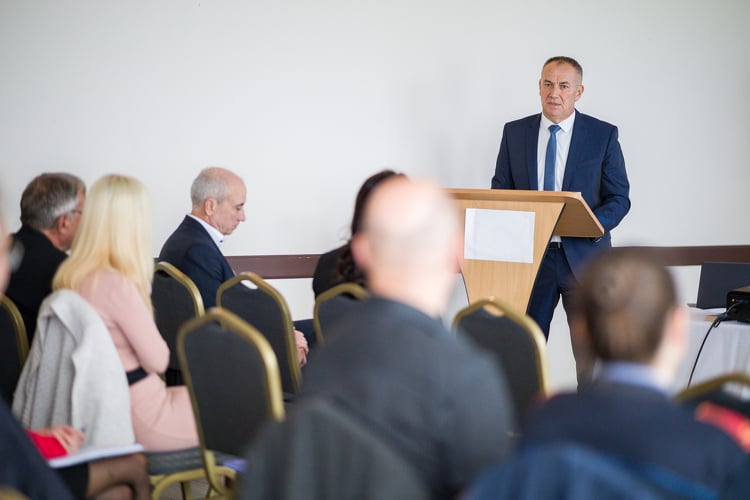
Tamás Kovács, president of Szabadics Zrt., evaluated the development from the contractor's point of view. He stressed that it was a very complex and multi-site project, with more than a thousand trees planted in the work areas. He stressed:
"As a construction company, we know that touching nature is an immense responsibility, so we have tried to carry out the interventions with the least possible impact."
Lake Kis-Balaton has always been of great importance to Szabadics Zrt.: the company is based in Zalakaros, so this nature reserve is very close to them both geographically and emotionally. On the other hand, the Szabadics Ride has been organised on several occasions, where athletes compete by circumnavigating Lake Kis-Balaton. Finally, about 6-7 years ago, they built the second phase of the water protection system development, which was a major project in the life of the company. It is a great pleasure that the water quality of Lake Balaton has improved spectacularly since then.
Source: Link








The town centre on the banks of the Tisza is being regenerated

The Market has fulfilled its promise: it has delivered the 10,000 tonnes of natural stone offered for the raising of the bottom sill at Paks

The construction industry is both vast and marvellous – the Duna Group Szabadegyetem has been launched

ESG is now a business issue for suppliers in the construction industry too

Rain gardens are coming to Budafok, with over 3,000 square metres of green space set to be developed

Contemporary art deco in Csopakon

Four new bridges to be built in the heart of the former industrial city

Safer driving on the motorways: new digital signs for the MKIF
-

 Industry news 2026. 08. 18.
Students were introduced to the high-tech construction industry at BME’s field camp in Göd
-
Bound track 2026. 08. 17.
New pedestrian crossings and a junction with traffic lights are being built in Angyalföld
-
What is being built? 2026. 08. 18.
Hungary’s new McDonald’s restaurant has moved into a modernist listed building in the centre of Budapest
-
What is being built? 2026. 08. 18.
New paving, a playground and visitor facilities are being planned for the Várkör area in Pannonhalma