
Current at
Baranya fought for the Danube bridge in Mohács for more than a hundred years

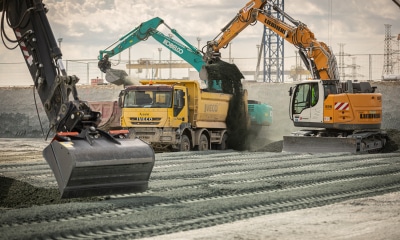
An unprecedented long lobbying process reached its culmination at the end of 2024, when the Építési és Közlekedési Minisztérium investment, the Duna Aszfalt Zrt. generic construction of the Mohács Danube Bridge project, was launched. The region's struggle for the Mohács bridge has accompanied the Hungarian bridge-building process practically throughout the different periods of Hungarian history, while also providing fascinating impressions of the last two centuries. Nevertheless, the crossing linking the settlement on the right bank of the Danube with the Great Plain has a much earlier tradition!
The first Mohács crossing laid the foundations for a historic triumph
According to the historical data available, the first bridge-builders appeared in Mohács with the intention of defending - or rather liberating - the homeland. In 1687, the army of Charles of Lotharingia, marching against the Turks, built a bridge here to cross the Danube to the Transdanubian region from the Danube-Tisza. Joining the imperial armies already in the Transdanubian region, they first attempted to besiege Osijek, but were later forced to retreat. At the same time, the bridge at Mohács was defended with cannons and soldiers left behind.
From the retreat, the imperial forces, numbering 60,000, counterattacked again and finally won a historic victory over the 80,000-strong Turkish army on 12 August 1687. The Battle of Grossharsányi, fought on the slopes of the Villányi Hills, is also known as the Second Battle of Mohács: this time, however, the catastrophic defeat fell to the Turks.
The Ottoman Empire, which had suffered significant losses of life, trembled, and eventually the then Sultan fell to the defeat.
The dandelion busos went too far with the Turkish guns defending the bridge
The successful campaign also had another benefit for the region, as the National Newspaper reported in 1944: "Immediately after the Turkish conquest, Mohács was connected with the areas on the other side of the Danube, partly by a bridge, partly by a pile bridge." However, the strategic importance of Mohács is also shown by the fact that later, during the reign of Joseph II (1780-1790), there was a bridge on the Danube at Mohács, providing a military parade ground.
It is interesting to note that the two imperial cannons defending the Mohács bridge in 1687 remained on the Danube bank for centuries, increasingly buried in the ground. Later, they were revived by the busó marches in Mohács: the busó fired them to scare the 'Turks'. On one occasion, the dandelion busos smashed every window in the main square's public buildings by cannonading them with a double dose of gunpowder.
At the same time as the ferry became operational, the construction of bridges was also promoted
The desire of the people of Mohács to cross over to the Great Plain was evident even in the 19th century: indeed, we find historical evidence of this very early on, at the dawn of Hungarian bridge building. Just one year after the opening of the Chain Bridge – the history of which our newspaper has also explained in detail – in 1850, it was granted ferry rights and, at the same time, began to promote the construction of a bridge with the support of the county.
Browsing the contemporary newspapers, we can already find the idea of the Mohács gateway in this period - i.e. in the second half of the 19th century. At the same time, it is indicated in several places that, due to the nature of the flooded marshy area on the other side of the Danube, this option would not be realistic, or at least much more expensive, than in the region of Baja to the north or Osijek to the south.

However, the region received a significant boost when the country's first industrial railway was built in 1857 between Pécs and Mohács, transporting coal mined in Pécs to the Danube, from where it was shipped further afield. However, even more important for the economic development of the region and the possible bridge at Mohács was,
that in the second half of the 19th century, the drainage of the large (25 km long and 16 km wide) Mohácsi Island, opposite Mohács, was started by the dismemberment of the Baracskai-Duna branch, as shown on the map above (although after the regulation only the main branch of the Danube in Mohács remained, so it is no longer an island, this small area is still called Mohácsi Island - editor's note).
Even though the ferry was running, it could not always handle so much freight
As later reported in several contemporary newspapers, the latter move created some 5,000 acres of high-quality farmland on the other side of the Danube. It is no wonder that in the first half of the 20th century, the developing areas on the other side of the Danube were already home to thousands of people, and the agricultural trade on the ferry was pushing the limits of capacity. "During the harvest, the city-owned steamship ferry runs from 4am to 10pm. Even so, it may not be able to complete the crossing," the Pécs Napló quoted István Fehérváry, technical advisor of Mohács, as saying in 1942. In addition, it was argued that in winter the ferry would not run for three months because of ice.

His words were confirmed three years later, after the wartime blowing up of the bridges at Baja and Dunaföldvár, by a news report of the Hungarian Telegraphic Office, which supported the need for the Mohács bridge with data from the Ministry of Industry. According to this, from spring to autumn, the Mohács ferry crossing carries half a million people a year, 100,000 horse-drawn carriages, 15,000 cars, 30,000 small animals and 5,000 large animals from one bank to the other.
If not for the World War, a railway and road bridge would have been built
The Mohács bridge lobby, however, had been in high gear for decades before the councillor's statement, and had been keeping the crossing on the agenda virtually non-stop. This article would not even be enough to describe all the twists and turns, but it is worth taking a look at this historic process by picking out the most important details and linking them to the twists and turns in domestic bridge building.
The closest the settlement of 14,000 had come to building a bridge by the turn of the century was probably in the closing years of dualism. In the early 1900s, several newspapers of the time reported widespread rallies and petitions for the bridge.
As a result, in September 1906, Count Móricz Benyovszky, the chief bailiff of Baranya County, presented a memorandum on the bridge to the Minister of Trade, Ferenc Kossuth of Mohács. The lobby was successful, and the minister backed the cause.
According to an article in the National Newspaper in 1942, 1909, the first plans for the Mohács Bridge were drawn up with the support of the Minister of Trade, but the realisation of these plans could not start due to the outbreak of the World War in 1914.
Hungary's bridge building has taken off: four new Danube bridges in four years!
As a background to the lobbying efforts, it is worth looking at the contemporary developments in domestic bridge building. From the perspective of Mohács, an important step south of Budapest was the opening of the first Hungarian Danube bridge in 1883 in Novi Sad, where an iron railway bridge was built. In the 19th century, after the Chain Bridge, opened in 1849, the Margit Bridge (1876), the Southern Link Railway Bridge (1877), the Komárom Bridge (1892) and the Esztergom Bridge (1895) were built over the Danube.

The momentum of the projects was enhanced by the fact that the latter, which provided a link with the Highlands, were our first Danube bridges built by Hungarian contractors with state funding, based on Hungarian plans - as the book Duna-hídjaink (Our Danube Bridges) edited by Dr. Ernő Tóth describes. It was also a sign of the strength of the Hungarian economy at the turn of the century that three more bridges were built in Budapest at the turn of the century: the Liberty Bridge (then known as the Ferenc József Bridge) and the Northern Railway Bridge were opened in 1896, followed by the Elizabeth Bridge in 1903.
Including the two bridges in the Highlands, this meant that four Danube bridges were opened in Hungary between 1892 and 1896, and a slightly longer distance between 1893 and 1903, a total of five bridges were opened.
After the Great Depression, the bridge was swept away by the Great Depression
In the light of the above, the newspapers of Mohács and Baranya understandably wrote more and more about the future Mohács bridge. This mood was further heightened by the fact that the railway bridge over the Danube to the south of Baja was opened 1908, also before the war, and was later made suitable for road traffic in 1935. In addition, in 1910, in the southern part of the region of Osijek - not far from the then southern border of Baranya - Gombos was given a Danube railway bridge for wagons and freight traffic.
The shock of the World War and the loss of the country at Trianon understandably put a damper on domestic bridge building. Mohács suffered a double loss: with the Trianon borders, it became a border settlement, losing many important inland connections, while the Danube was not even crossable, and the Baranja region was threatened with isolation. At the same time, in 1926, new plans were drawn up for the Mohács bridge. According to press reports at the time, the development would have cost 40 billion paper crowns;
A Mohács newspaper also reported that it will rest on three piers and two coastal bridge piers, with 100-metre bridge spans.
The economic crisis of 1929, however, swept the project away again, and in vain attempts to revive the fire, the Mohács bridge was cancelled from the 1938 investment programme, as it did not fit into the budget of the time. Meanwhile, the construction of bridges in Hungary did not stand still during the Horthy era: a Danube bridge was opened at Dunaföldvár in the northern tip of Tolna in 1930, while the Danube bridge connecting the returned Highland areas to Győr was built at Vámosszabadin in 1942. The former project brought another region south of Budapest to the finishing line.
In winter, the island population reached Mohács via Baja by a 65 km detour
However, more recent historical storms seem to have brought the Mohács bridge closer to becoming a reality: after the return of the Southern Triangle in 1941, Mohács found itself in a new strategic position. On 15 March 1942, the National Newspaper summarized the argumentation thus: "The Mohács bridge will connect the returned South Hungary with the Lower Danube region, which remained Hungarian even during the Trianon years."
It is also worth looking at what the mayor of Mohács said in an interview with the Esti Újság in August 1944. In the article entitled "Mohács's fight for the Danube bridge", Alajos Szőnyi stresses,
5 km of quayside, the second largest harbour in the country, the city has several schools and a modern public hospital; the coal mines of Pécs store their coal stock of 10 thousand wagons here.

Turning to the geographical arguments, he explained that Mohács Island is one of the most abundantly productive areas in the country, but the island's population reaches Mohács in winter only 65 km bypassing Baja. In addition, the Baja bridge is essentially a railway bridge, which is only temporarily opened to road traffic. At the same time, transport from Mohács to Bácska is also blocked in winter: the flow of coal, cement and quarry products from Baranya is also blocked by ice.
The bells of Mohács controlled the traffic on the military bridge
The new lightning-fast turn of history finally swept this lobby era off the table, but nevertheless the town did have a bridge towards the end of the Second World War, which was commemorated in a lengthy article in the Mohács Journal in 1971.
The Soviet army, which was advancing in 1944, built a pontoon bridge on the Danube after the capture of Mohács to provide supplies. The various troops and vehicles crossed the bridge on horseback, according to the author, who recalled the situation as an eyewitness, but there was also traffic in the opposite direction.
If they wanted to cross the island from the town, they would ring the bell of the church in the centre of Mohács, and traffic from the east would stop.
More than a million people crossed the bridges of Mohács, which influenced the course of the war
A few days later, the crossing was marred by tragedy: an armoured team crossing the Danube was cut in two by a pontoon bridge, and a tank was lost forever in the Danube. Rescue was out of the question due to a lack of equipment and divers," the article said.

The bridge was finally ripped apart by the ice at Christmas, and in January, after the Danube had completely frozen over, iron-hooked decks were laid on the ice and reinforced with ice frozen on top. The crossing was carried out day and night, with more than 1 million people crossing the two bridges, which played a major role in the Soviet advance across the Danube.
Another heroic era in bridge building
After the terrible devastation of the Second World War, the bridge profession devoted all its attention and capacity to reconstruction: the rebuilt bridge was opened in Baja in 1950 and in Dunaföldvár in 1951. Without going into further details, Hungarian bridge-building lived through another heroic period: of the 11 Danube bridges destroyed in the war, nine were back in operation by 1955 (the Erzsébet Bridge in Budapest and the bridge at Esztergom were still waiting to be rebuilt for various reasons), and the newly built Árpád Bridge was opened in 1950.

Subsequently, no new Danube bridge was built until the change of regime, with the exception of the rebuilt Elizabeth Bridge, which was opened in 1964. But it was also a busy period for the profession, with many achievements. The expansion, renovation - sometimes final post-war reconstruction - and strengthening of earlier bridges marked this era. Among the tasks, it is enough to point out that adapting to the increased traffic loads on the Danube bridges presented many challenges.
Lobbying flares up again, Baja bridge a half-solution
The above period was completed in 1990 with the opening of the Hárosi bridge on the M0 motorway, the first domestic motorway bridge. At the same time, the political turnaround that brought about the change of regime also brought the issue of the Mohács bridge back to the surface: one of the main steps was the creation of the Mohács Danube Bridge Foundation (MDHA) in 1992, which claimed that the bridge would make Mohács the southern gateway to the EU and would create a commercial hub with relatively little investment. Among their arguments was the long-standing desire of people living in the area to replace the ferry, which is 28 kilometres away as the crow flies, and the Baja bridge, which is therefore a significant detour.

However, it also includes,
for decades, the Baja bridge was not a real solution for the region: by 1950, it was built as a single-track railway bridge to replace the blown-up crossing, and it was also used to carry road traffic - but this was only possible intermittently.
In addition, heavy road traffic was causing the reinforced concrete trackbed to deteriorate, and to solve this problem, by 1999 the cantilevers were reinforced, thus allowing road traffic to pass separately on both sides of the railway.
The cities along the Danube started at the same time
In the 1990s, however, not only the Mohács area was launched, but the regions south of Budapest - which at that time had only two (!) bridges - along the Danube began to work towards similar goals: in Szekszárd, Dunaújváros and Dombóvár, work was also being done in this direction.
The Mohács people, who by then had a century-long history of lobbying, were not bothered by the competition: the MDHA's consistent work is shown by the fact that, among other things, in 1993 it prepared an impact study on the bridge and then organised several national conferences on the construction of the bridge.
At the fifth such conference in 1999, an agreement was signed for the construction of the new Danube bridges in Dunaújváros and Mohács.
In addition, the organisation prepared the plans for the planning permission in principle for the Mohács bridge, and in 1999 the study plan was prepared, which analysed in detail the economic development impacts of the planned M6 and M56 motorways and the three new Danube bridges connecting them - Mohács, Szekszárd and Dunaújváros.
New Danube bridge opened in the region after more than seven decades
Szekszárd was the first of the above-mentioned settlements to reach the finish line: the inauguration of the Szent László Bridge in 2003 was a national milestone, as it was the first new bridge on the Danube south of Budapest in 73 years. But the next such crossing was not a fraction of that: the Pentele Bridge in Dunaújváros was opened in 2007. The balance sheet of the 2000s is also enriched by the inauguration of the reconstructed Mária Valéria bridge in Esztergom in 2001.

However, the efforts of the people of Mohács were not without results: in 2008, the parliament passed a new spatial planning law, which included the Mohács bridge, but it was not implemented.
The Mohács bridge could be a key element of the motorway between Pécs and Szeged
Before the subsequent elections in 2010, several politicians included the construction of the Mohács bridge in their campaigns, for which a new feasibility study (2014) followed by an environmental impact study (2016), before the government ordered the preparation of plans for the Mohács Danube bridge in a resolution in 2017. This was echoed in Viktor Orbán's speech at the 2017 opening of the Mohács slaughterhouse – which our newspaper also reported on – as the Prime Minister has set the four-lane road between Pécs and Szeged as a definite goal, as well as the necessary bridge in Mohács.

It is worth mentioning that Hungarian bridge construction reached another milestone in 2020: a new road bridge over the Danube was opened in Komárom, next to the railway bridge, which is the highest bridge over the river in Hungary. The cream of the bridge-building profession did not remain idle for long, as the construction of another Danube bridge began in Paks in 2021 with the general construction of Duna Aszfalt Zrt., resulting in the Tomori Pál Bridge was inaugurated in 2024.
For a while, history seemed to repeat itself, then...
At the same time, the people of Mohács have now reached the threshold of fulfilling their centuries-old plan for the umpteenth time: By the end of 2022, the SPECIÁLTERV Kft. will be completed with the implementation plans – the major subcontractors involved in the project were FŐMTERV Zrt. (river bridge) and UVATERV Zrt. (independent statics). For a while, it seemed that history was repeating itself yet again: the government's 2022 investment freeze put the construction of the Mohács bridge on hold.

However, the cabinet later announced in a resolution that the project would be exempt from the investment freeze, thus maintaining continuity after the construction of the Komárom and Paks bridges over the Danube: At the end of 2024, Duna Aszfalt Zrt. was able to begin preparing the work site.
An era comes to an end at Mohács
To sum up the historical overview, the Mohács project also marks the end of a long era: the last settlement or region south of Budapest on the Danube has reached the finishing line, which has consistently worked for the construction of the Danube bridge.

At the same time, if we look at the rural bridges spanning the main branch of the river (not counting the cancelled Moson-Danube Bridge in Győr, the plans for the Danube Bridge in Vác and the Galvan Bridge in Budapest), the same can be said for the country: from a historical, geographical, bridge engineering and economic point of view, the Mohács Bridge is expected to be the last rural Danube bridge in Hungary for a long time.
Source: Link







The STRABAG in Szombathely prevented the release of asbestos-containing dust using a special sealing layer

Stones of the past, solutions for the future – Saving the stone walls of the Citadel

The replacement of the expansion joints on the Erzsébet Bridge is continuing with the third phase

Up to 1,500 cubic metres of concrete are being poured in each phase of the Paks expansion

Hungary's biggest motorway upgrading programme is underway

Perhaps the world's most elegant McDonald's restaurant opens in Budapest

Szeged to become one of Europe's leading industrial centres with the construction of the BYD factory, the city strengthens its position with a worthy investment package

Viablokk porous concrete masonry element from a Hungarian factory, as a Hungarian product, is set to conquer the world
-

 Bound track 2026. 04. 10.
This is how they pulled out the ‘fang’ of the derailed railway section in Transdanubia – with photos
-
Bound track 2026. 04. 10.
Planning can begin – the M2 line could be extended to Cinkota, and the HÉV lines could be upgraded
-
Bound track 2026. 04. 10.
The largest domestic railway development project to date is set to begin
-
Industry news 2026. 04. 10.
Rubbish equivalent to the weight of nearly 2,000 cars has accumulated on the country’s motorways over the course of a year


