
Engineer of the month
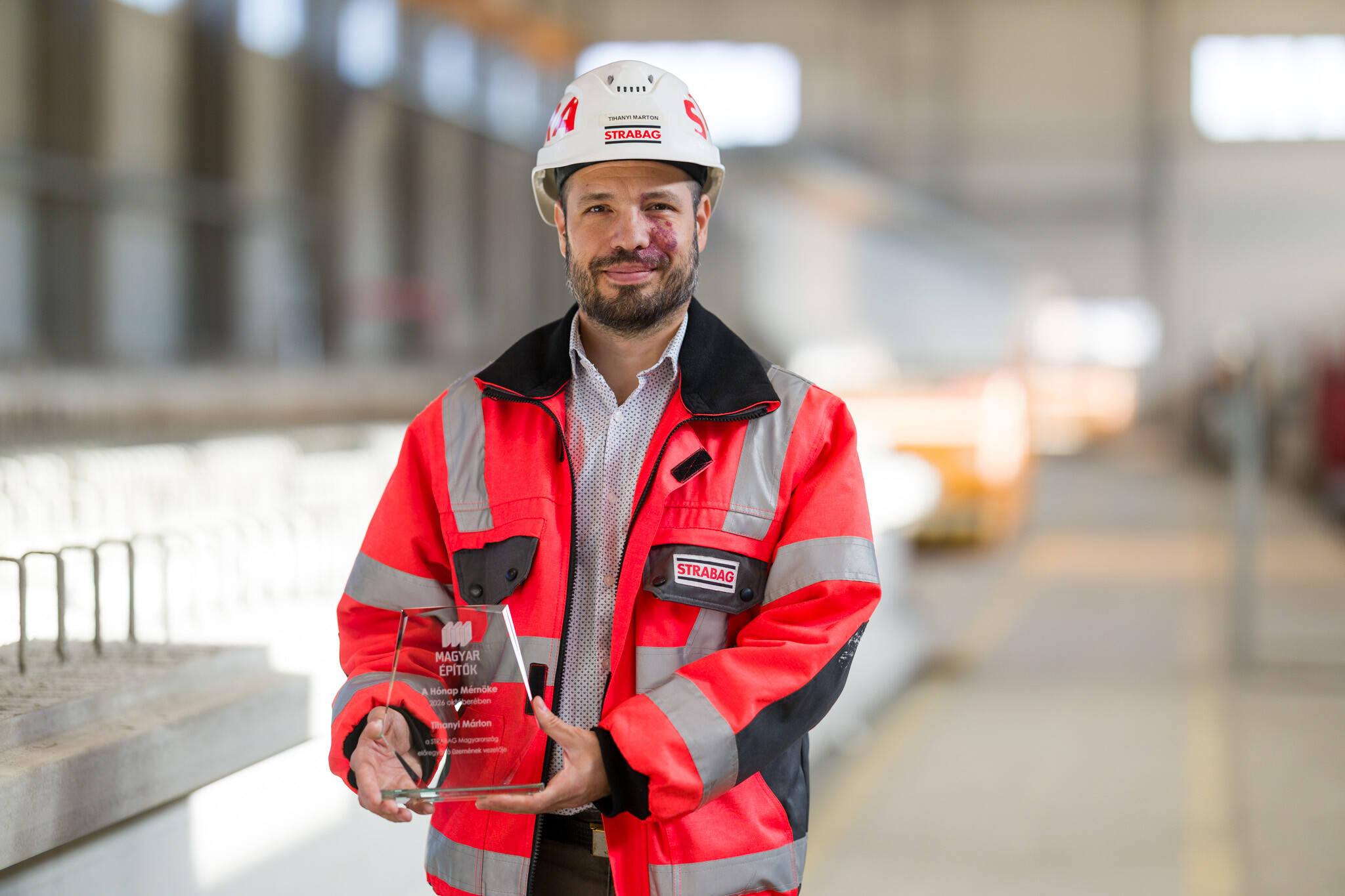
From a summer work placement to plant management – Márton Tihanyi has been finding new challenges at the same company for two decades, 1 October TP2349T

„As a child, on the way home from nursery, there was a hotel under construction, and we always had to stop there. I insisted that my mum take me there…” – says Márton Tihanyi with a smile, recounting his earliest memory of the construction industry. Keeping track of the progress of the Aquincum Hotel project in Óbuda regularly disrupted the family’s daily routine. As a child, he was captivated by the world of construction: the fact that something was being built through hard work. His mother often mentioned that sometimes she couldn’t tear her little boy away from the building site for an hour and a half. This was accompanied by other family experiences: his father was involved in flat renovations, and from time to time he was able to help him.
He made his first conscious decision when choosing his further education, opting for the civil engineering course, then known as Ybl Miklós Műszaki Főiskola.
„My original aim was to become a railway engineer. At college, I took a practical course in structural analysis and really enjoyed it; reinforced concrete really captivated me, so I went on to specialise in structural engineering.”
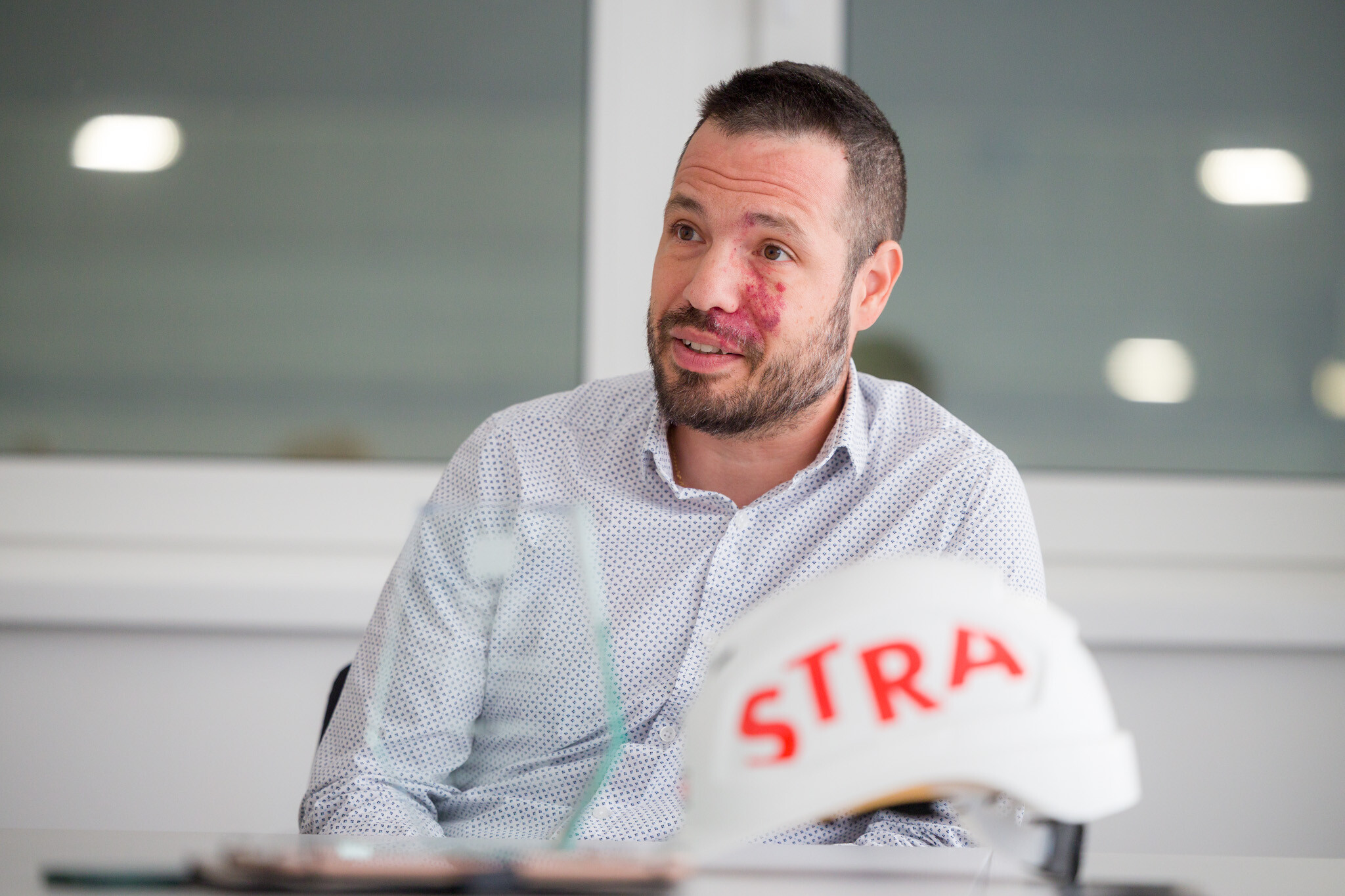
A summer work placement that led to a professional relationship spanning two decades
He ended up at STRABAG quite by chance, through a fellow student at college who had a contact at the company and suggested they go there together for a summer placement. They were welcomed into a positive, inclusive and supportive environment. During his final semester at college, when all that remained was his dissertation and his final defence, he returned to STRABAG, and has been working at the company ever since. From time to time, his colleagues ask him why he hasn’t changed jobs. He feels that he gets the variety he needs right there within the company.
„Over the past few decades, every two or three years a new project, team, role or opportunity would come along that gave me fresh impetus. I’ve gained experience in a wide variety of professional environments without having to change companies.”
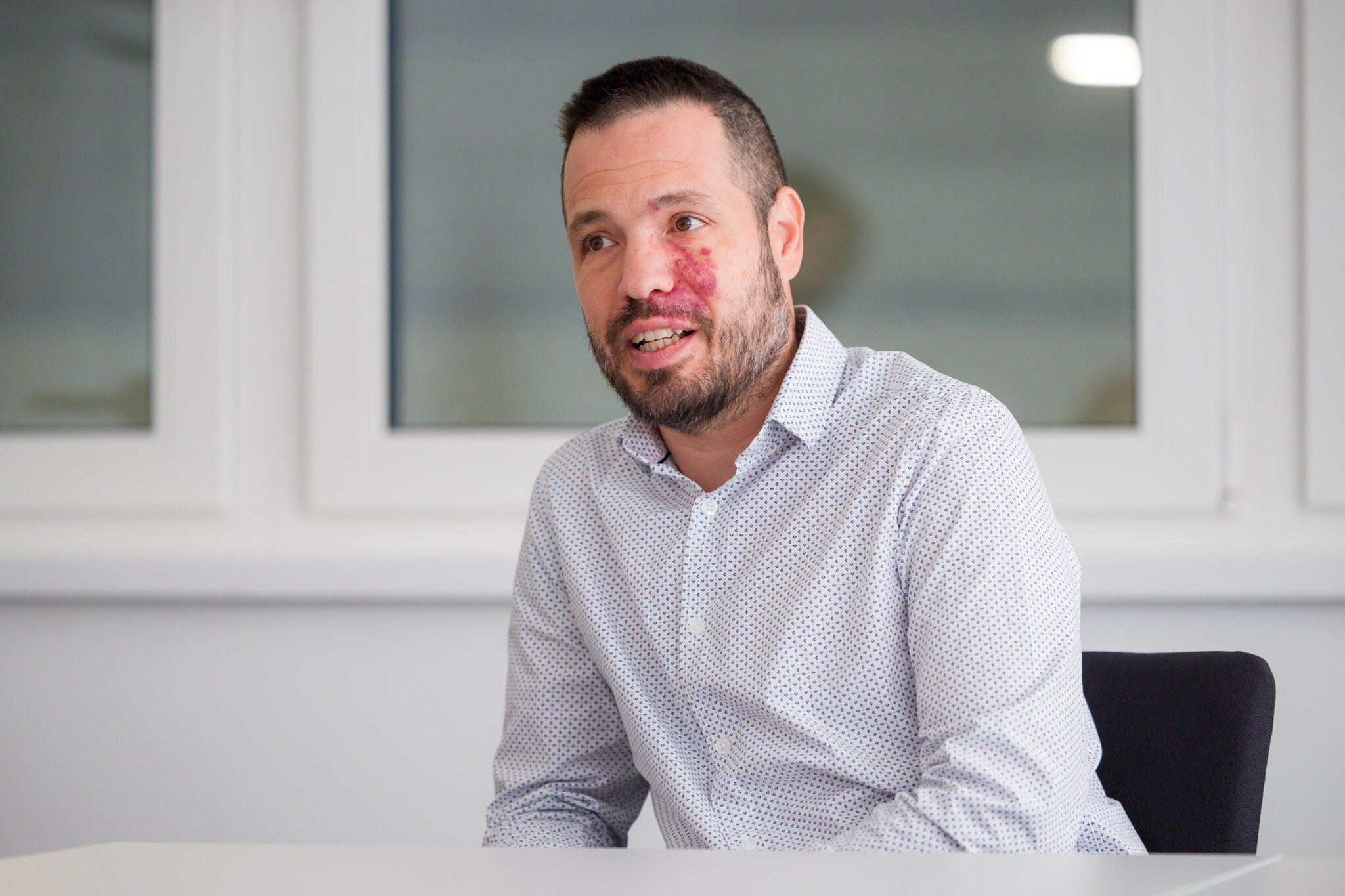
Construction of a helipad on the roof of a functioning hospital
Just as with his internship, he looks back on his first days at work with fond memories. Initially, he carried out the duties of the engineers at the workplace: he assisted the site managers and construction managers with drawing management, administration, requests for quotations and inspections. Later, he was also given responsibility for coordinating smaller teams and specific tasks. As his experience grew, he was entrusted with more and more responsibilities.
Among his first truly major and independent tasks, he mentions the construction of the Petz Aladár Kórház helicopter landing pad in Győr. He worked on the project as a site foreman, and although he had a site manager colleague, he was able to coordinate around eighty per cent of the tasks independently.
„We had to build a new helipad on the roof of one of the hospital’s buildings. The work began with demolition, whilst patient care continued uninterrupted inside the building, so we had to take particular care to protect the existing structure. From obtaining planning permission through to design consultations and construction, we had to adapt everything to the conditions of a functioning hospital.”
During the handover ceremony, he was particularly pleased by the pilots’ appreciation, as the new facility was designed to support their day-to-day work. Shortly afterwards, the helicopter landed on the roof with a patient on board in response to its first live emergency call.
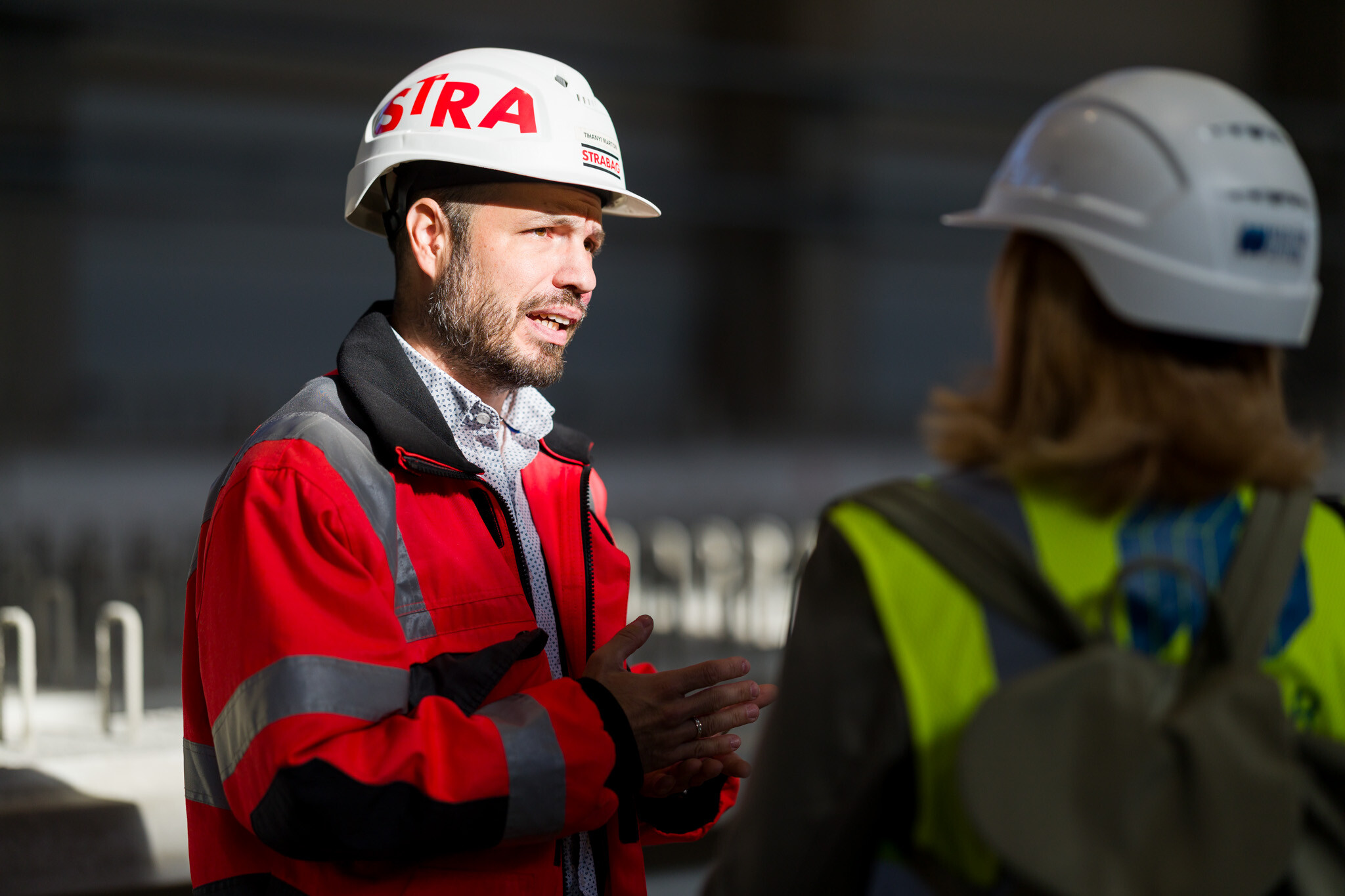
Metro construction in Budapest – problem-solving as part of an international team
He worked as a technical draughtsman on the Metro Line 4 tunnel-building team.
„As an engineer, it was a special experience to be involved in the construction of the shield-driven tunnel beneath the city. It was great to see that the drawings I had produced were being used and that the tunnelling was being carried out based on them.”
He had the opportunity to work alongside colleagues from Canada, Ireland, the UK, Germany, France and Austria on the designs for the sections of track between Kelenföld and Keleti railway stations. It was a wonderful experience to be part of solving problems together with the international team. He was also struck by the approach that characterised the project: it was here that he first encountered the principle that the project came first, not the budget. When faced with an engineering problem, the first step was to find a workable technical solution; only then were the time required, the cost and other possible alternatives considered.
Among the most memorable challenges of the metro construction, he highlighted the resolution of problems caused by design changes. During the construction of the tunnel, the tunnel boring machine passed through stations that had already been built. However, the design of one of the stations was modified in the meantime, resulting in a reduction in the headroom and the size of the loading bays. When commencing work on successive tunnel sections, the tunnel boring machine relied on a steel frame weighing several tonnes; however, the station’s new specifications meant that assembling this frame according to the original plans was no longer possible. A method of installation had to be found that would allow the frame to be fitted, provide adequate load-bearing capacity, and ensure the machine could continue tunnelling. Eventually, a solution was found which even the colleagues working on site said was feasible in practice.
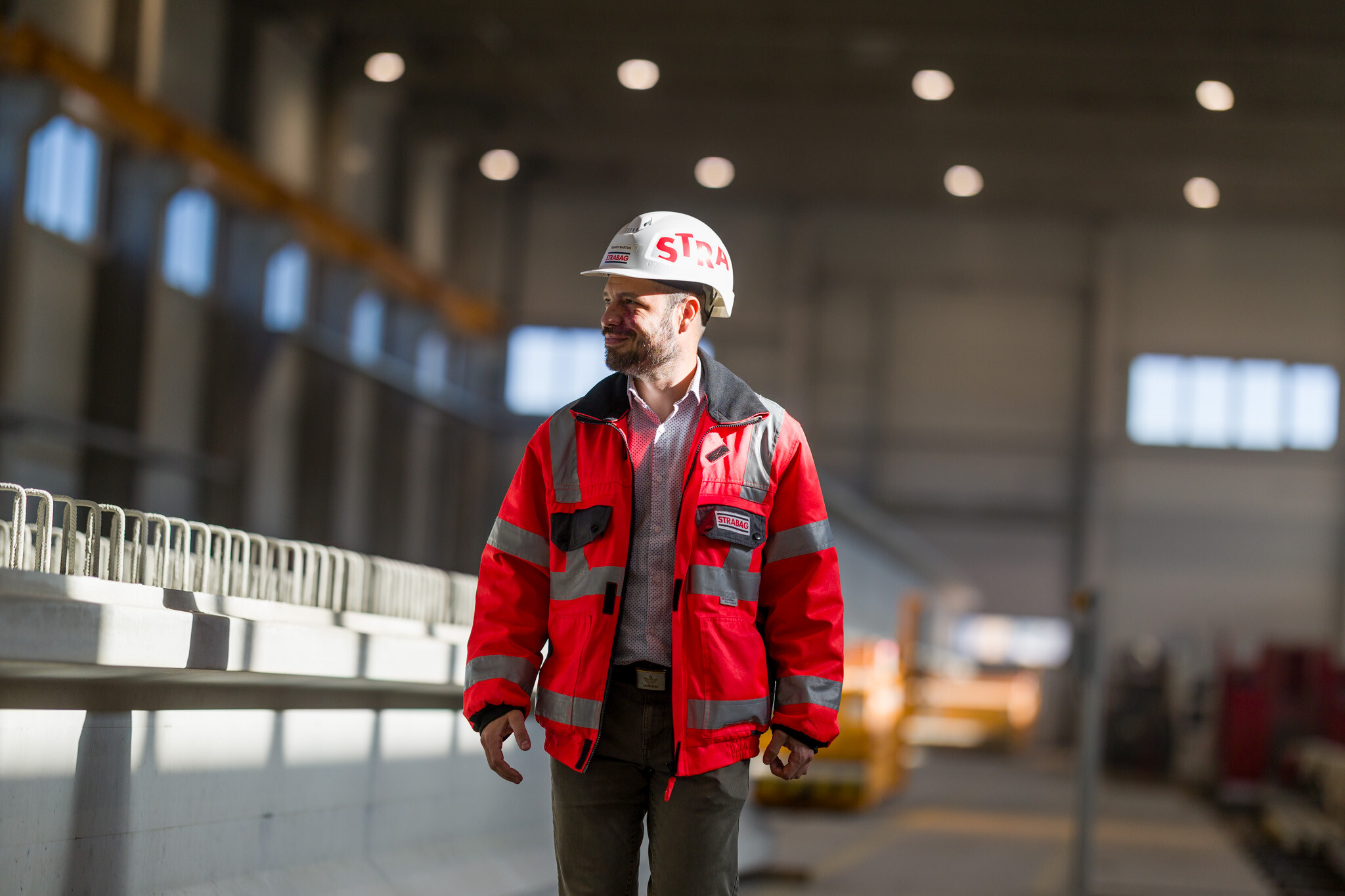
„Marci, go for it!”
His first project management assignment involved the extension of a warehouse in Csömör. They were in the design phase when the company was awarded another, larger project with a tighter deadline, and the project manager was reassigned to that. He was given the task: „Marci, get on with it!” He had to rethink the entire investment from a new perspective and in a new role. The construction work had to be carried out whilst complying with the American client’s strict health and safety requirements and technical and operational specifications, and whilst adhering to the stipulated deadline and budget. The extension of the existing warehouse was carried out whilst ensuring that operations continued uninterrupted.
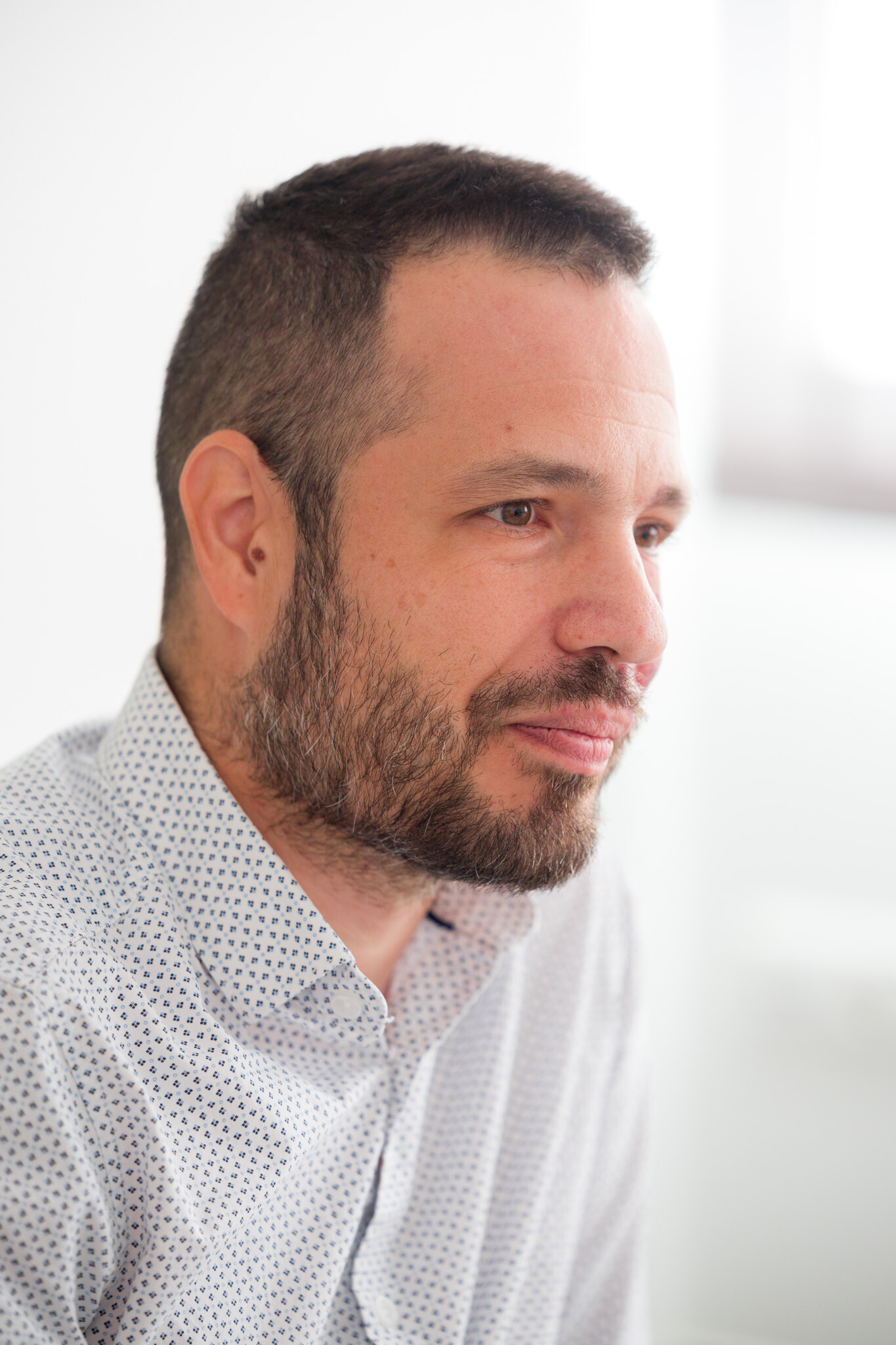
Following further projects involving similar levels of responsibility, around 2019 he was invited to join the STRABAG building construction team, where he was responsible for preparing tenders for building construction works across the country. This area presented new professional challenges, partly because a new team had to be built up, and partly because he had to learn the technical approach required for compiling a tender proposal. He was subsequently entrusted with property development tasks and the management of smaller teams, and then last year, when the former manager of the prefabrication plant in Gyál retired, he was asked to take over the management of the plant.
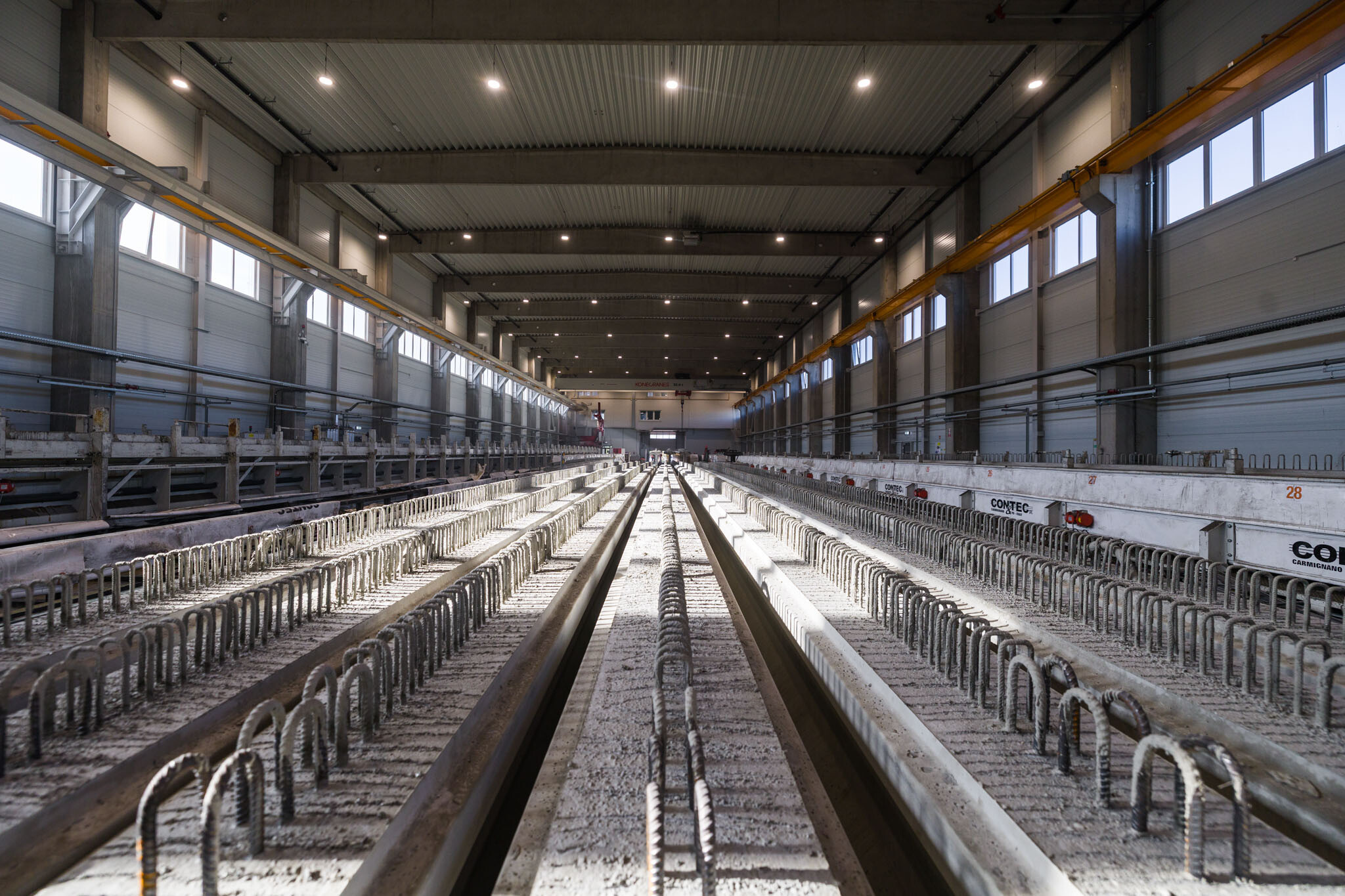
Even a permanent venue presents new challenges
„The factory is a completely different world from on-site construction. It is the individual orders and development projects that bring variety.”
Products used in building construction and transport infrastructure are manufactured to specific project requirements, which is why the existing machinery and template stock must be adapted time and again to suit the task at hand. The production of each new product is also treated as a new project: alongside the development of the bridge girder product range, work is also underway on the development of road electrical panels. In addition, the day-to-day running of the factory must also be organised.
Whilst his desire for variety in professional challenges has remained, his personal priorities have also evolved over the years. As a young man, he enjoyed travelling to various construction sites across the country; as a family man, however, he now also values the predictability of a fixed location.

„There are changes in a person’s life, and there are times when their preferences shift, but there always needs to be something new.”
Bridge girders – design decisions that facilitate both manufacture and installation
The Gyál plant’s production hall, which was completed in 2021, also manufactures bridge girders, as well as customised structural elements. Márton Tihanyi highlights the development of the bridge girder product range as one of the key milestones in the plant’s history. He emphasises the role of his predecessors: they initiated the work, whilst he, whilst still working at head office, became involved in certain tasks relating to the construction of the hall and the development of the technology. As plant manager, he is working on continuing this development, making production more efficient and meeting customer requirements.
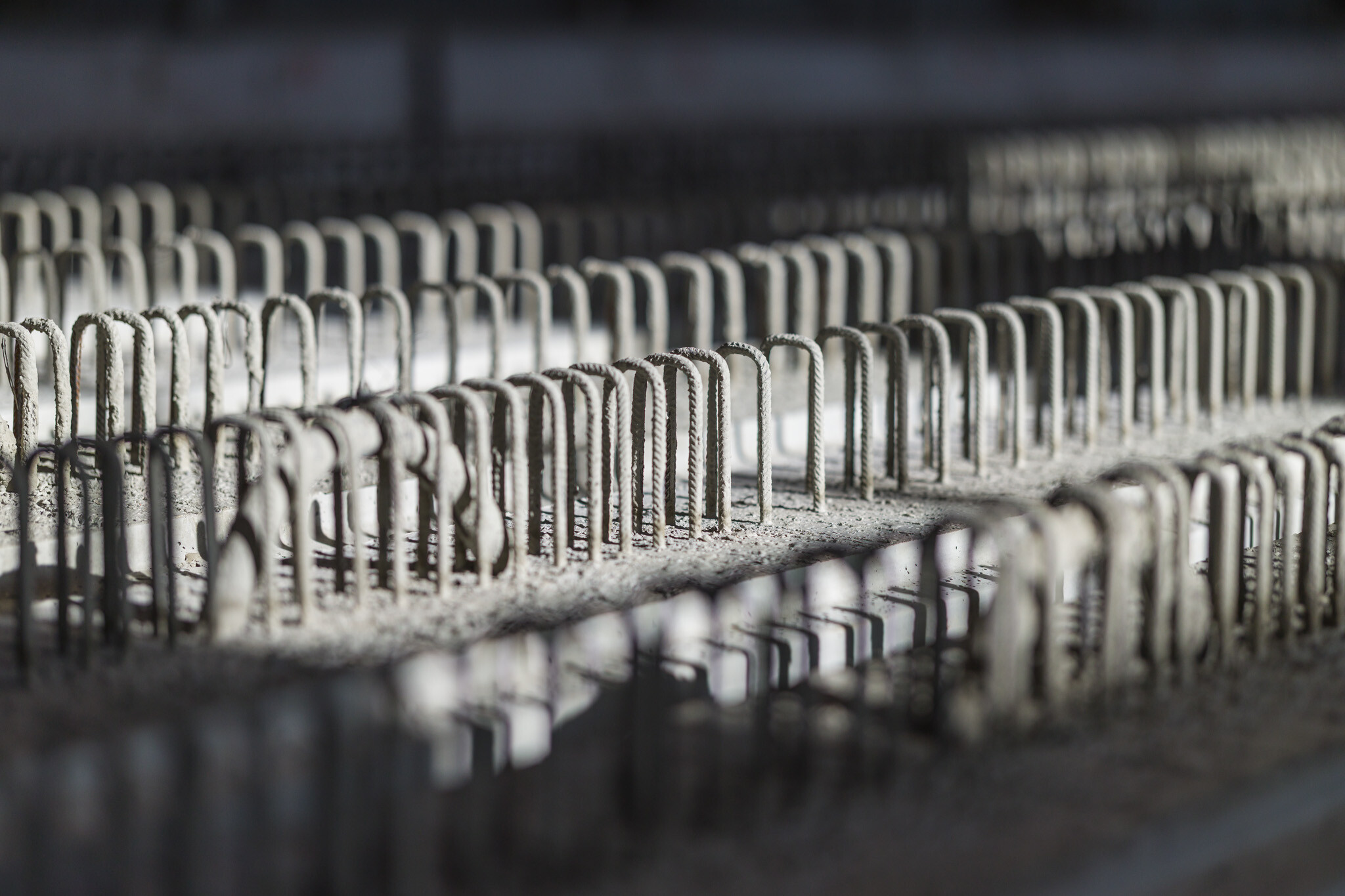
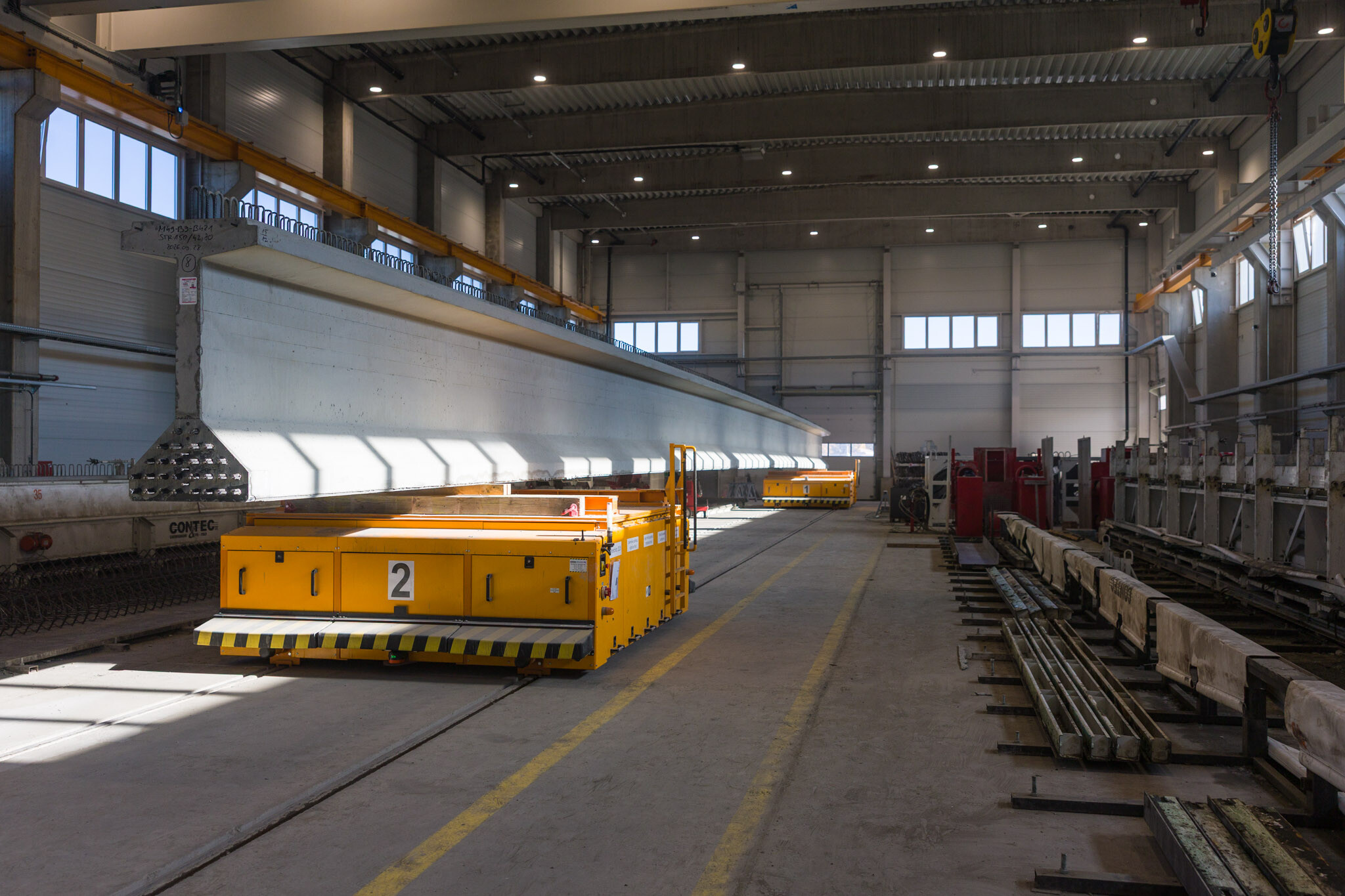
In the case of the bridge girders being manufactured in Gyál, the STRABAG design team took into account both manufacturing and on-site installation requirements. The hydraulically adjustable jigs enable rapid set-up changes during the production of girders manufactured in nine different heights ranging from 20 to 150 centimetres. The design of the beams also facilitates on-site work: the plates that seal the gaps between adjacent elements rest on the shoulders on the sides of the beams, so no separate formwork is required in these areas. The meshes made from pre-bent reinforcing steel speed up the assembly of the reinforcement – the site manager compares this to the assembly of a LEGO structure. The first test lift of the STR hídgerendák took place on the Látrány bypass section of Road 67.
A breakage test also confirms the results of the professional work
The pace of production is also aided by the mix developed in collaboration with the concrete plant and the hot-water heating system for the formwork: a support concreted in the evening can reach the strength required for extraction by the following morning. The concrete arrives in two-cubic-metre batches; each batch is checked, and further deliveries are adjusted to match the rate of placement. Two workers inspect the reinforcement before concreting, and the results of the tension and strength tests are recorded in digital reports.
A particularly memorable stage of the project was the fracture test of a bridge girder. In the specially designed test rig, the girder was subjected to hydraulic compression.
„It was a spectacular sight; the beam snapped with a tremendous crash and a series of sound effects.”
The tests and measurements were carried out by staff from Budapesti Műszaki és Gazdaságtudományi Egyetem. According to Márton Tihanyi’s report, the beam withstood a load approximately ten per cent greater than the previously calculated load-bearing capacity. This provided important validation for those involved in the development. He also finds the day-to-day feedback equally encouraging: a successful technical handover and the client’s recognition give the whole team a boost.
You have to work to create a good working atmosphere
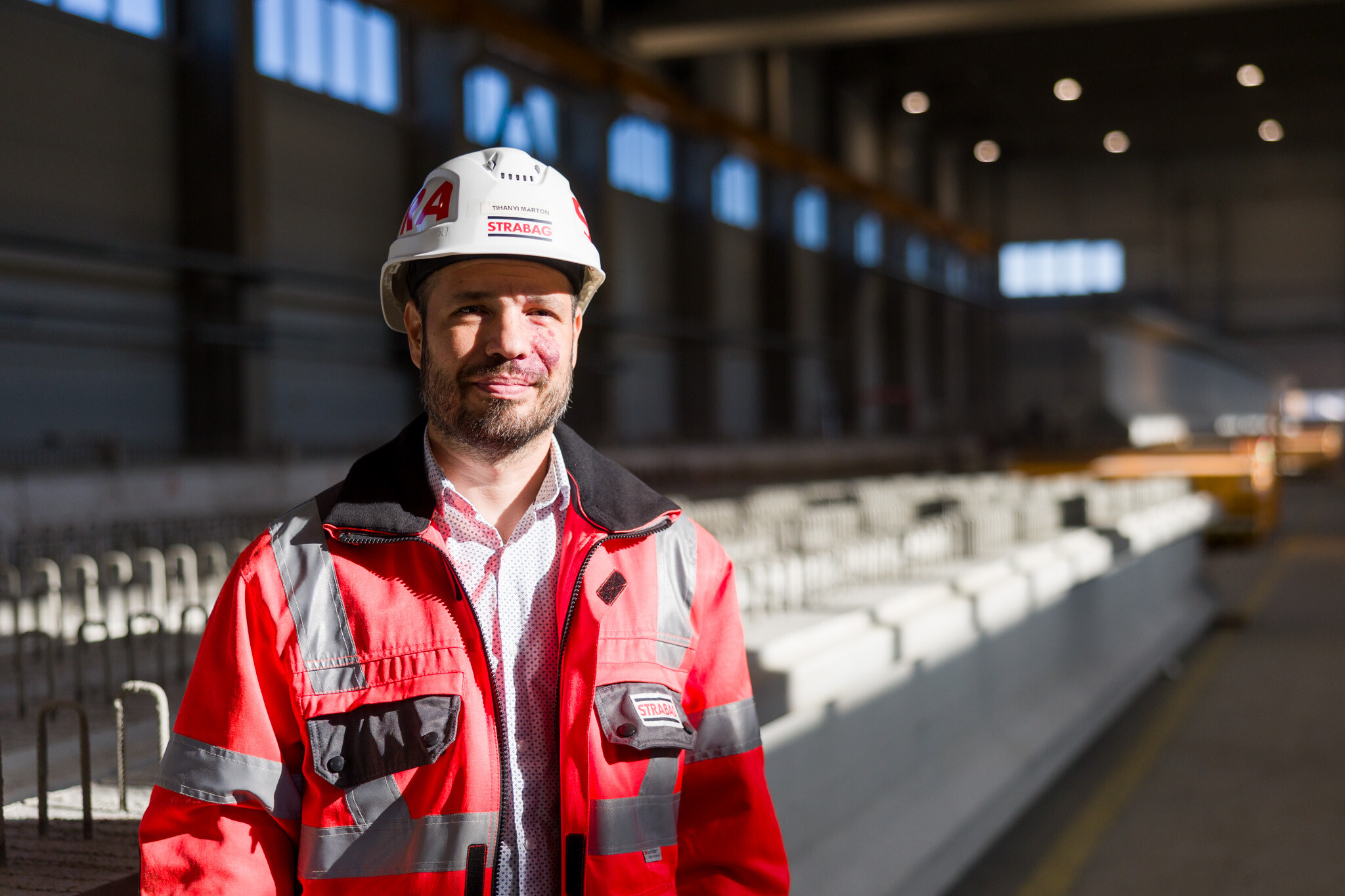
As a manager, he relies heavily on the expertise of his experienced colleagues: several people at the plant have been working in prefabrication for over twenty years. They work together to identify opportunities for improvement, test out suggestions, and incorporate tried-and-tested solutions into their day-to-day work. He considers a good working atmosphere to be just as important, and believes that the way people communicate contributes to this. He has had to learn that what he takes for granted may be seen differently by others.
„The way we convey information to one another, and the way we ask someone to do something, is very important; it affects our daily lives, our moods and our relationships with one another.”
Bringing together staff from different backgrounds into a single team is an exciting managerial challenge. There are also eight Indian staff members working at the plant. Around five or six years ago, they were recruited through an agency specifically for the Gyál plant. They learnt English, were prepared for the job, and were able to draw on their previous experience in the construction industry to familiarise themselves with the processes here. The Indian staff work in mixed teams with their Hungarian colleagues, and their communication is aided not only by English but also by a few Hungarian words they have learnt.
After work, it’s time for family and the mountains
At the end of the working day, he tries to put his daily tasks out of his mind. In an emergency, of course, his colleagues can get hold of him, but he feels that most matters can wait until the following morning. He needs to recharge his batteries during the week as well.
„Family comes first for me; my partner, my little boy and I spend a lot of time together – we go places and go for walks together.”
As well as longer hikes, going for a walk with his two dogs also helps him recharge his batteries. When it comes to the great outdoors, he particularly loves the mountains and the peace and quiet. He also seeks out the joy of discovery in his spare time.
„We don’t have a favourite place that we go back to every year; it’s the variety that inspires us to explore everything.”

Source: Link


From a summer work placement to plant management – Márton Tihanyi has been finding new challenges at the same company for two decades, 1 October TP2349T

The first phase of the M49 has been completed; the national border is getting closer

The apartment block in Érd is being built using the Leier prefabricated lift shaft: it will also feature two-storey flats

A 55-metre-wide bridge has become Ghent’s northern gateway

Four new bridges to be built in the heart of the former industrial city

Rain gardens are coming to Budafok, with over 3,000 square metres of green space set to be developed

Contemporary art deco in Csopakon

Safer driving on the motorways: new digital signs for the MKIF
-
 Bound track 2026. 09. 15.
Nearly 50,000 people travel on it every day – the refurbishment of the Cegléd main line continues
-
 Bound track 2026. 09. 18.
Work has begun: the spur line will provide a direct rail link between Szombathely and Zalaegerszeg
-
 Current at 2026. 09. 15.
An exemplary model from Borsod – the synergy between father and son is driving Mento Csoportot forward
-
 Current at 2026. 09. 17.
The contractors for the Szolnok spa have brought a lawsuit against the city to secure payment of their final invoice


