Industry news
Self-criticism? Collaboration? Knowledge? What is missing from the Hungarian construction industry? Powerful insights from the head of Weinberg at the Portfolio conference

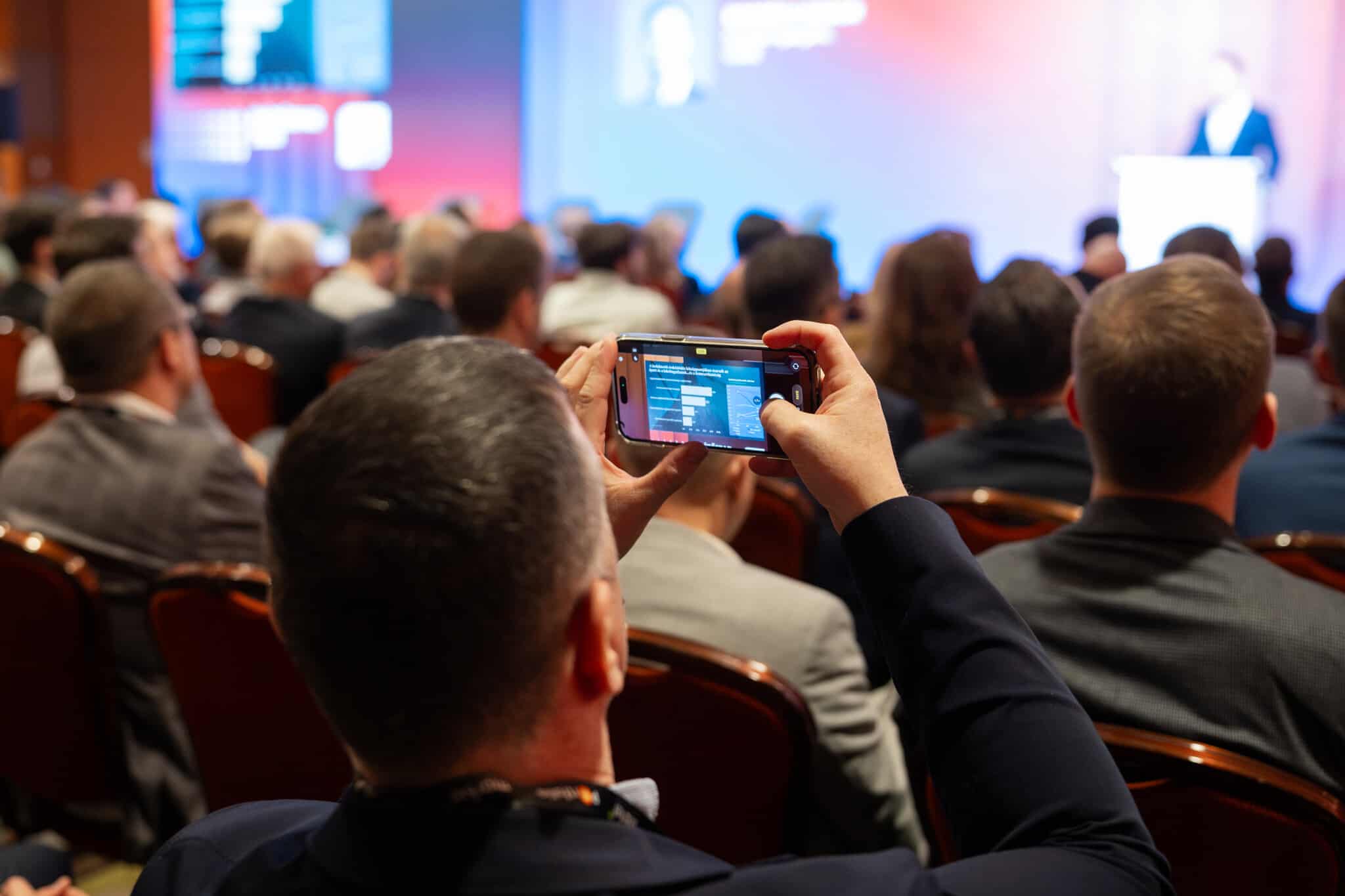
Market players and industry experts did not mince their words at this year’s Portfolio Construction Industry Conference. Held on 19 March for the eighth time, the professional forum attracted more than 500 participants to the Hotel InterContinental in Budapest to hear what people think about the sector’s most important issues today.

At this professional event, which featured numerous presentations and panel discussions, the speakers outlined not only the main challenges facing the construction industry but also positive scenarios. Weinberg ’93 Építő Kft. was represented at both management and project manager level.

István Derczó, founder and managing director, had the opportunity to express his views on what is perhaps one of the most exciting topics. In the panel discussion entitled „Every breath counts here! The domestic construction industry must be prepared for this!” sought to answer the question of what the sector’s most educated, professional and ambitious players can and must do to successfully navigate the tougher years and stand stronger at the starting line for the next phase of growth.
„We should adjust our face size”
The managing director of Weinberg, who also has a deep understanding of the sector, occasionally struck a more critical note in his comments. „We are in a state of constant change – in times like these, the importance of cooperation, efficiency, learning and self-improvement becomes even more apparent” – began István Derczó. He cited the Czech Republic, Slovakia, Poland and Austria as positive examples, as they are ahead of Hungary in terms of performance in the construction industry. „In Austria, for example, there are ten times fewer companies than here” – he pointed out, referring to the fact that there are too many market players relative to the opportunities in the domestic construction industry.
He also emphasised:
„Making more efficient use of working hours could also boost output in the Hungarian construction industry. An eight-hour day should really mean eight hours of work”
– In his view, Hungarian companies are at a significant disadvantage compared to foreign firms in this regard. He also listed education, adult learning and professional development as areas in need of improvement, in which, he believes, we are also lagging behind the V4 countries.

We need to work together, not pull apart
Regarding the fierce competition that has emerged among players in the construction industry due to dwindling opportunities, he believed that the situation may have improved slightly in recent months. As he said, there were times in the past when certain competitors quoted unrealistically low prices for projects simply to stay in the market. This trend appears to be improving.
„We should respect one another, keep our feet on the ground, and report the actual figures. We need to understand that by supporting one another and seeking synergies, the sector can weather this situation successfully.”
As a board member of ÉVOSZ and a committee chair at the MKIK, the managing director plays a key role in shaping the sector:
„I have recently been appointed to a leading role on the Economic Development Committee of the Hungarian Chamber of Commerce and Industry. Within the committee, we are working to ensure that Hungarian entrepreneurs receive targeted support rather than having to apply for general grants. The aim is not to have to adapt to calls for proposals determined by certain Western European countries, but rather to ensure that these are genuine opportunities tailored to the Hungarian economic environment, customs and sector-specific characteristics.”
Finally, he also raised the issue of social housing, regarding which he considers government incentives to be necessary. As he told our newspaper after the presentation: there are many families and young people whose budgets simply cannot stretch to flats offered at a price of one million forints per square metre or more. He sees a well-designed rental housing scheme as a good opportunity for young people looking for a home, particularly if the tenant were able to purchase the property even a decade later.
Overcome, surpass, get to the bottom of it! – engineers speak their minds
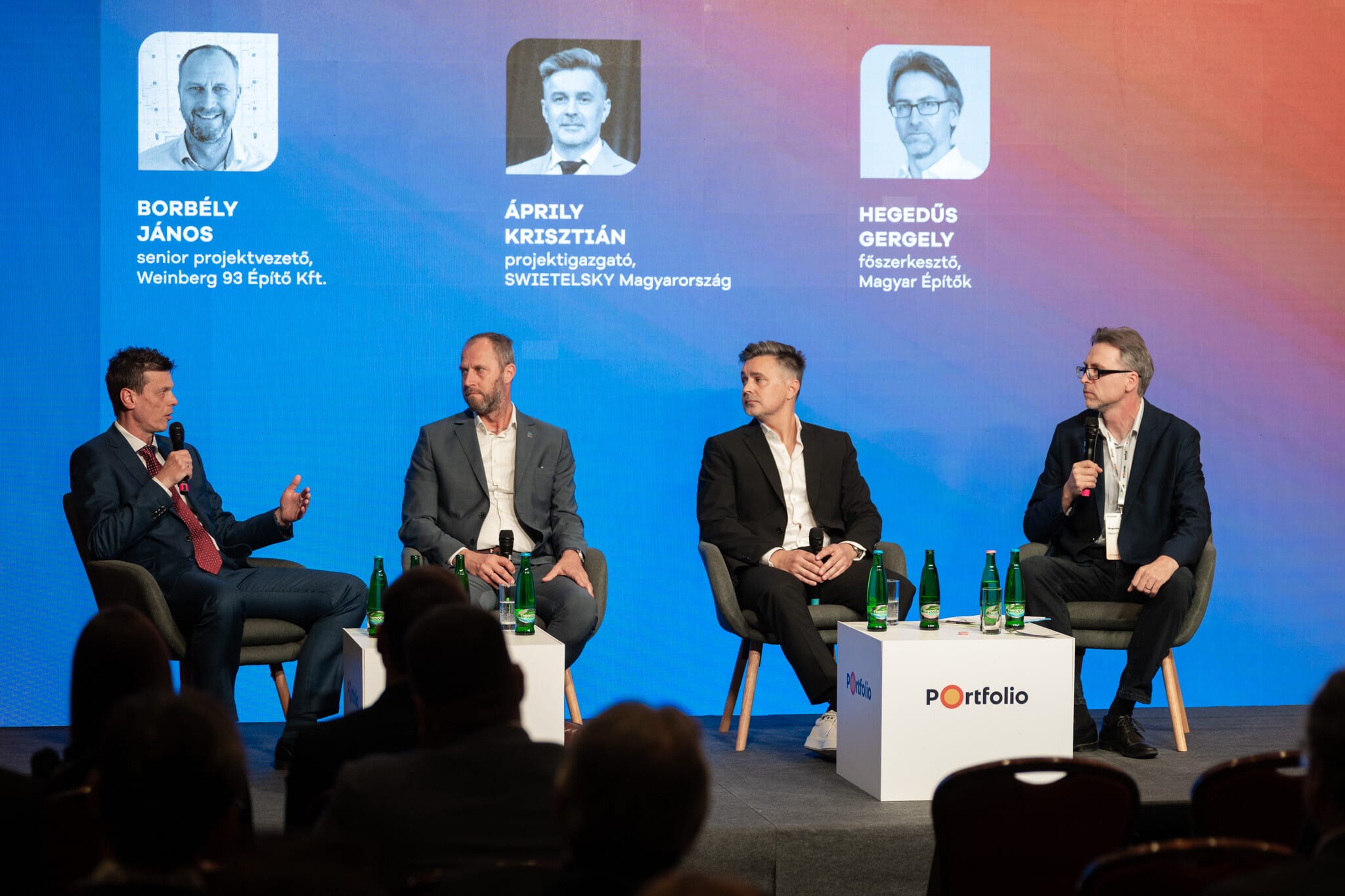
From the perspective of process implementation, the Weinberg project was represented at the conference by János Borbély, project manager, who has been contributing his expertise to the company’s projects for over twenty years. The discussion organised by magyarepitok.hu featured three professionals who had previously been awarded the title of Engineer of the Month by our publication.
„It’s like a drug to me” – János Borbély cut straight to the chase when Gergely Hegedűs, coordinator and editor-in-chief of Magyar Építők, asked the participants about inspiration.

„It fills me with satisfaction when I hand over a project and see that the client is happy. But it’s also a great feeling when I start a project and know that the client will be happy with the result! That’s what keeps me motivated throughout projects: meeting the client’s needs to the fullest.”
Thorough planning and preparation are half the battle
He manages to maintain his enthusiasm even when faced with constant challenges during a project. As he said, the main stumbling blocks are usually a lack of preparation and poorly thought-out planning. He agreed with the other participants in the discussion that if a project is properly thought through, it benefits everyone: it is more efficient in terms of both time and cost. Weinberg ’93 Építő Kft. also works for several international clients as a returning contractor. For the project manager, these are positive examples without exception, as international clients place greater emphasis on preparation and planning.

János Borbély, who, based on the plans of, amongst others, Óbuda Group and also led the Volvo Hungária Kft. climate-neutral Truck Center replacement project, and highlighted that new digital tools and electronic data management systems now make a project team’s work exceptionally easier.
Source: Link






Reconstruction of the M1 motorway’s carriageway towards Győr can begin under the new traffic arrangements

Alpine engineering techniques are also being used to protect the railway in the Danube Bend

Instead of patchwork repairs – large-scale refurbishment work is under way on the dilapidated main roads in the Transdanubia region

The expansion joints on the Buda side of the Erzsébet Bridge were installed overnight

Four new bridges to be built in the heart of the former industrial city

Rain gardens are coming to Budafok, with over 3,000 square metres of green space set to be developed

Contemporary art deco in Csopakon

Safer driving on the motorways: new digital signs for the MKIF
-

 Current at 2026. 09. 09.
A first-hand look at a career in engineering – Duna Group Szabadegyetem is back
-
Bound track 2026. 09. 15.
Nearly 50,000 people travel on it every day – the refurbishment of the Cegléd main line continues
-
Climate-X 2026. 09. 09.
Nyíregyháza Spartacus FC goes green – four hundred solar panels to be installed on the stadium roof
-
Current at 2026. 09. 09.
Rental flats, Rákosrendező, decentralisation – important ideas were put forward on the Real Estate Beach Conference stage