Climate-X
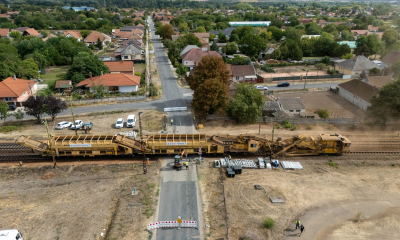
A hydrogen pipeline over 4.5 kilometres long is being built between Kardoskút and Pusztaszőlős.

VABEKO Műszaki Kereskedelmi és Szolgáltató Kft. won the contract for the second phase of the construction work related to the installation of underground cables for EUH2STARS – underground pipeline construction tasks related to the second phase, according to the announcement published in the EU public procurement notice.
As part of the project, hydrogen produced and stored by the existing hydrogen technology in Kardoskút will be injected into the Komlós B-2 site through the PSZ-36 gas well. The aim is to gain as much practical experience as possible of the process of underground hydrogen storage and production, as well as the operation of the well structure and surface technology.

Depleted natural gas storage facilities in a new role
The EUH2STARS is a special project that builds on the experience gained from the RAG Austria hydrogen storage developments. The company was one of the first in the world to demonstrate that hydrogen can be stored seasonally and in large quantities in depleted natural gas storage facilities. In Austria, several storage facilities have already been converted for green hydrogen storage, and hydrogen is transported in part through existing natural gas pipelines that have been adapted for this purpose.
The entire value chain is undergoing development.
In Hungary, as part of the EU reference project called „European Underground H2 STorAge Reference System”, the consortium leader RAG Austria AG and its partners, including Magyar Földgáztároló Zrt., are investigating solutions necessary for the development of the entire value chain of the hydrogen economy.

The technology is being tested in two storage cycles.
As part of the development, a total of 2×100,000 standard cubic metres of hydrogen will be stored in Kardoskút in two cycles, and then 100,000 standard cubic metres of natural gas-hydrogen mixture will be produced per cycle. The project will also examine the operation of the well structure and surface technology.

As part of the implementation, the structure of the PSZ-36 gas well will be modified and the infrastructure of the well area will be modernised, and surface technology and control technology enabling hydrogen injection and recovery will be installed at the Kardoskút Underground Gas Storage Facility and the Pusztaszőlős collection station.
A hydrogen pipeline over four kilometres long is being built
One of the most significant elements of the project is the construction of a 4.5-kilometre-long DN80 PN160 hydrogen pipeline between Kardoskút and Pusztaszőlős, which will follow the route of the existing pipeline. Under normal operating conditions, pure hydrogen will flow through the pipeline from Kardoskút towards Pusztaszőlős.
As part of the investment, the existing connection pipeline of the PSZ-36 well will also be dismantled, and a new, hydrogen-resistant, seamless carbon steel pipeline with modern corrosion protection will be constructed. During the construction, controlled drilling and structure crossing will be carried out at several locations.

State-of-the-art corrosion protection and testing
A comprehensive cathodic protection system will be installed for the new pipelines, and the construction will be completed with strength and tightness pressure tests. As part of the project, an optical cable route will also be connected to the development, which will support measurement and control tasks. The development could be an important milestone in the practical application of domestic hydrogen technology and could contribute to the wider adoption of underground energy storage solutions in the future.
Source: Link









One of Abony’s most important transport routes is to be redesigned

This is how flash floods on the vineyard-covered hills in the Pécs conurbation are being prevented

Order has been restored: production of the new Közlekedési Múzeum can now go ahead as originally planned

We took a look at how the refurbished Igazságügyi palota building turned out

Four new bridges to be built in the heart of the former industrial city

Rain gardens are coming to Budafok, with over 3,000 square metres of green space set to be developed

Contemporary art deco in Csopakon

Safer driving on the motorways: new digital signs for the MKIF
-

 Current at 2026. 09. 09.
A first-hand look at a career in engineering – Duna Group Szabadegyetem is back
-
Climate-X 2026. 09. 09.
Nyíregyháza Spartacus FC goes green – four hundred solar panels to be installed on the stadium roof
-
Bound track 2026. 09. 15.
Nearly 50,000 people travel on it every day – the refurbishment of the Cegléd main line continues
-
Current at 2026. 09. 09.
Rental flats, Rákosrendező, decentralisation – important ideas were put forward on the Real Estate Beach Conference stage