Road building
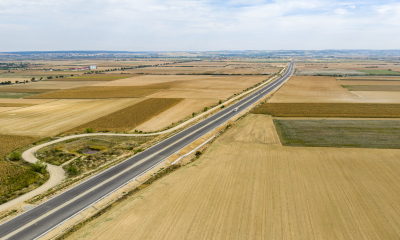
An intelligent traffic management system has been introduced to manage traffic on the M1 motorway, which is being expanded to four lanes

A new, intelligent signage system, the Magyar Koncessziós Infrastruktúra Fejlesztő Zrt., has been installed on the M1 motorway to provide faster information. According to the latest post by MKIF, these new German-made devices, when integrated into the system, assist motorists by providing real-time information tailored to the current traffic situation via digital signs.
„This allows drivers to react in good time to traffic jams and slowdowns. The aim is to maintain a smooth flow of traffic,” the post states.

The new system consists of a total of 20 variable-message signs and eight radar sensors. The signs have been installed at junctions and at junctions with turning lanes, as well as on the sections leading up to the diversion. The displays help drivers heading towards Budapest to choose between the diverted lane and the lanes adjacent to the worksite on sections currently undergoing expansion.
It provides valuable information for operations in the longer term as well
The MKIF also explained how the system works: the radars monitor traffic in real time and automatically adjust the traffic signals if there is a risk of congestion. The system operates completely autonomously, as it is based on a control matrix which, based on incoming data, always selects the most appropriate combination of traffic signals. The matrix currently contains around 300 variations.

The radars are capable of monitoring vehicle speeds and traffic density on a lane-by-lane basis. The system not only analyses the current situation but also takes into account data from the preceding period, enabling it to filter out short-term fluctuations and ensure stable, reliable operation.
In addition to its core functions, the system also allows for manual intervention, as well as the collection and analysis of detailed traffic data. This not only aids in real-time traffic management but also provides valuable information for operations and future developments in the longer term.
Source: Link










The town centre on the banks of the Tisza is being regenerated

The Market has fulfilled its promise: it has delivered the 10,000 tonnes of natural stone offered for the raising of the bottom sill at Paks

The construction industry is both vast and marvellous – the Duna Group Szabadegyetem has been launched

ESG is now a business issue for suppliers in the construction industry too

Rain gardens are coming to Budafok, with over 3,000 square metres of green space set to be developed

Contemporary art deco in Csopakon

Four new bridges to be built in the heart of the former industrial city

Safer driving on the motorways: new digital signs for the MKIF
-

 Industry news 2026. 08. 18.
Students were introduced to the high-tech construction industry at BME’s field camp in Göd
-
Bound track 2026. 08. 17.
New pedestrian crossings and a junction with traffic lights are being built in Angyalföld
-
What is being built? 2026. 08. 18.
Hungary’s new McDonald’s restaurant has moved into a modernist listed building in the centre of Budapest
-
What is being built? 2026. 08. 18.
New paving, a playground and visitor facilities are being planned for the Várkör area in Pannonhalma