Water management
New sewage capacity to be built in Szeged

We have previously written about the development of the Szeged Industrial Park. In addition to the transport infrastructure development is being carried out alongside the drinking water supply system is also being developed. The Építési és Közlekedési Minisztérium has now published the results of the public procurement procedure for the design and implementation of the industrial park's sewage system in the EU Public Procurement Bulletin. The work, worth nearly HUF 2.9 billion, will be carried out by Dél-Konstruktív Kft..
The BYD electric car factory, the ELI-ALPS laser research centre and the Rheinmetall factory enable the world's leading large companies to work at the research facilities here.
New transfer and pressure pipes to be built
During the investment, a new system will be established to drain part of the wastewater generated. As part of this, a wastewater pumping station will be built in the south-western corner of the investment area, which will be capable of transferring 3,200 cubic metres of wastewater per day.
A pair of parallel pressure pipes will run from the pumping station, bypassing the town and connecting to the existing Rókus–Móravárosi main collector sewer via Tompai kapu út. The task also includes preparing the permit and implementation plans.
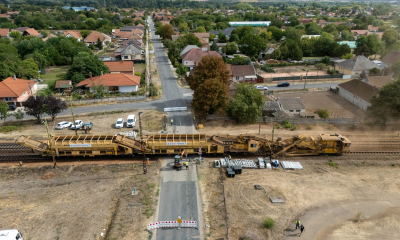
The main elements of the public procurement include the construction of more than 16.5 kilometres of open trenches and 660 metres of uncovered pipelines, as well as the installation of a sewage pumping station. The works also involve the construction of road, railway and waterway crossings.
Based on current data, the long-term maximum wastewater disposal requirement of the industrial park is 5,700 cubic metres per day.

The system connects to the city network.
The wastewater generated can be directed to the existing sewage treatment plant in Szeged, but this requires the design and construction of new connections.
Part of the wastewater, approximately 2,500 cubic metres per day, flows by gravity into the municipal sewer system through a new pipeline, which is not part of this project.
The remaining 3,200 cubic metres per day will be transported by the new pumping station and the associated pair of pressure pipes bypassing the city centre. This will involve the construction of an 8.6-kilometre-long parallel pressure sewer.
Mechanical, electrical and automation tasks are also part of the job.
Numerous mechanical devices will be installed in the sewage pumping station to be built during the project, including pumps, gate valves, non-return valves and a sewage grinder. The exact technical details must be agreed between the successful contractor and the operator. It may also be necessary to equip the pumping station with active or passive biofilters and pneumatically operated fittings.
The power supply for the pumping station will be connected to the local grid. Upon completion of the project, a touch protection report will be prepared, and the successful bidder will also be responsible for obtaining water rights permits and preparing implementation plans.
Source: Link







One of Abony’s most important transport routes is to be redesigned

This is how flash floods on the vineyard-covered hills in the Pécs conurbation are being prevented

Order has been restored: production of the new Közlekedési Múzeum can now go ahead as originally planned

We took a look at how the refurbished Igazságügyi palota building turned out

Four new bridges to be built in the heart of the former industrial city

Rain gardens are coming to Budafok, with over 3,000 square metres of green space set to be developed

Contemporary art deco in Csopakon

Safer driving on the motorways: new digital signs for the MKIF
-

 Current at 2026. 09. 09.
A first-hand look at a career in engineering – Duna Group Szabadegyetem is back
-
Climate-X 2026. 09. 09.
Nyíregyháza Spartacus FC goes green – four hundred solar panels to be installed on the stadium roof
-
Bound track 2026. 09. 15.
Nearly 50,000 people travel on it every day – the refurbishment of the Cegléd main line continues
-
Current at 2026. 09. 09.
Rental flats, Rákosrendező, decentralisation – important ideas were put forward on the Real Estate Beach Conference stage