What is being built?
The BKK trolleybus depot is being adapted to meet the needs of the 2030s

A call for tenders has been issued by BKK has launched a call for tenders for the modernisation of the Pongrácz út trolleybus depot. Tenders for the refurbishment of one of Budapest’s most important public transport depots may be submitted until 5 October.
By the end of the project, which is expected to last two and a half years, an electricity network capable of serving the next decade may be established.
It has been serving the electric transport sector for 84 years
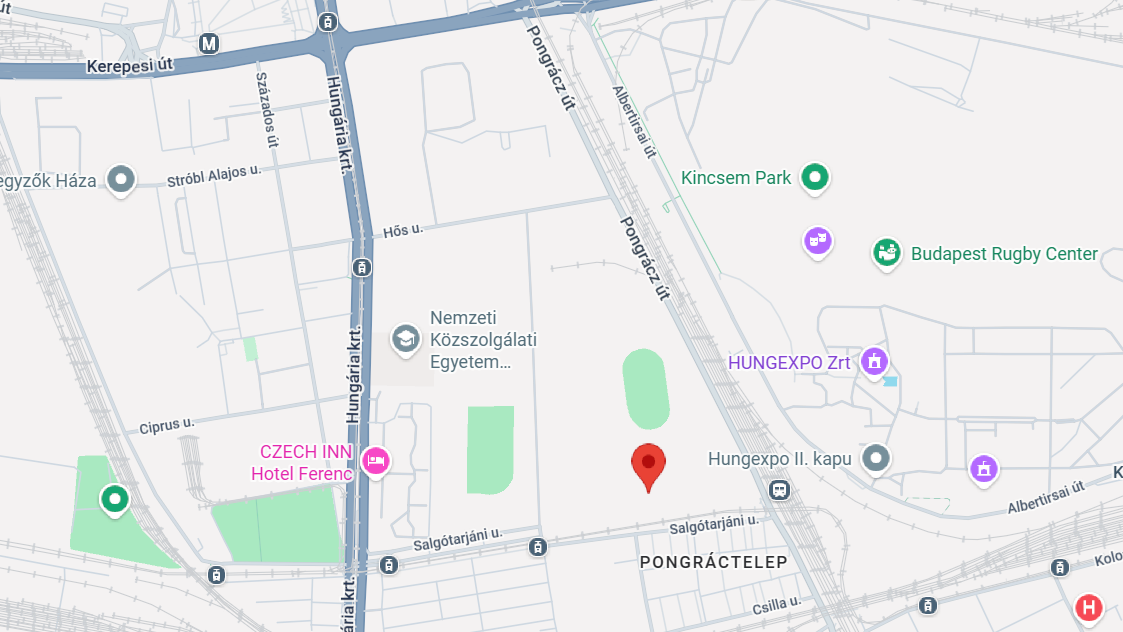
The first trolleybus service began operating in Budapest in 1933, but its technical equipment was destroyed during the siege of 1944. The vehicles of the trolleybus network, which resumed operations in 1949, were initially stored at the Damjanich Street tram depot, but due to the rapid expansion of the network and the fleet, a separate section of the Baross depot had to be brought into operation as early as 1955. Owing to the need for a dedicated base, a new combined bus and trolleybus depot was built in District X – on the former site of the demolished Auguszta barracks, in the block bounded by Salgótarjáni Road, Zách Street and Pongrác Road – and was handed over at the end of 1962.
The Budapest trolleybus fleet’s 26,000-square-metre central maintenance and repair depot exemplifies the design language of modernist industrial architecture: the main inspection and repair halls were built with a monolithic reinforced concrete frame, featuring flat roofs and strip windows, whilst their interiors feature parallel, through-type service bays with maintenance pits and crane runways.
The building complex includes a large, asphalt-surfaced outdoor storage yard, which is covered by a network of overhead cables on tensioned wire supports. The winner of the BKK construction tender is also set to undertake the reconstruction of this yard.

The site is set to be expanded with a new building
As part of the project, a new, two-storey power conversion building will be constructed, and the electrical network at the Pongrácz utca site will also be modernised. A reliable power supply will be ensured by 100 mm2 power cables. During the design phase, power will be supplied from overhead feeders to the trolleybuses; from these, branches will lead to overhead cables, from which the power cables will be supplied via suspended feeders.
The underground cables for the newly constructed power supply sections will need to be routed to the depot site via a cable duct; in the new power converter, 12 power supply zones will also need to be set up alongside the cells for the external trolleybus power supply sections; and charging facilities for battery-powered trolleybuses will need to be installed.
Key information figures:
- Construction of a power conversion building at the site of the works (1214 m2(construction of a two-storey building)
- construction of a new cable tunnel
- Dismantling and installation of overhead line networks, construction of new lines: 2,530 metres
- commissioning the relevant public utilities and structures at the site of performance, and carrying out the associated procedures;
- measuring noise levels, preparing expert reports on noise and vibration control;
- Reconstruction of the overhead line network (dismantling and erection of overhead line support poles, including foundations; erection of 82 new poles)
- installation of an underground cable network
- Dismantling and refitting of the trolley gear mechanism, with 26 new gears
- to ensure the site operates continuously.
Source: Link








One of Abony’s most important transport routes is to be redesigned

This is how flash floods on the vineyard-covered hills in the Pécs conurbation are being prevented

Order has been restored: production of the new Közlekedési Múzeum can now go ahead as originally planned

We took a look at how the refurbished Igazságügyi palota building turned out

Four new bridges to be built in the heart of the former industrial city

Rain gardens are coming to Budafok, with over 3,000 square metres of green space set to be developed

Contemporary art deco in Csopakon

Safer driving on the motorways: new digital signs for the MKIF
-

 Current at 2026. 09. 09.
A first-hand look at a career in engineering – Duna Group Szabadegyetem is back
-
Climate-X 2026. 09. 09.
Nyíregyháza Spartacus FC goes green – four hundred solar panels to be installed on the stadium roof
-
Bound track 2026. 09. 15.
Nearly 50,000 people travel on it every day – the refurbishment of the Cegléd main line continues
-
Current at 2026. 09. 09.
Rental flats, Rákosrendező, decentralisation – important ideas were put forward on the Real Estate Beach Conference stage