Current at
Decisive moments at Mohács: how a dry working area is built in the middle of a rushing stream

The construction of the Mohács Danube Bridge has reached a key milestone: after a year of preparatory work, the first crust element of pier 3 was lifted into the Danube riverbed on 1 October. The project, which also includes nearly 30 kilometres of road development, is being implemented as part of the Építési és Közlekedési Minisztérium investment, under the general contract of Duna Aszfalt Zrt..
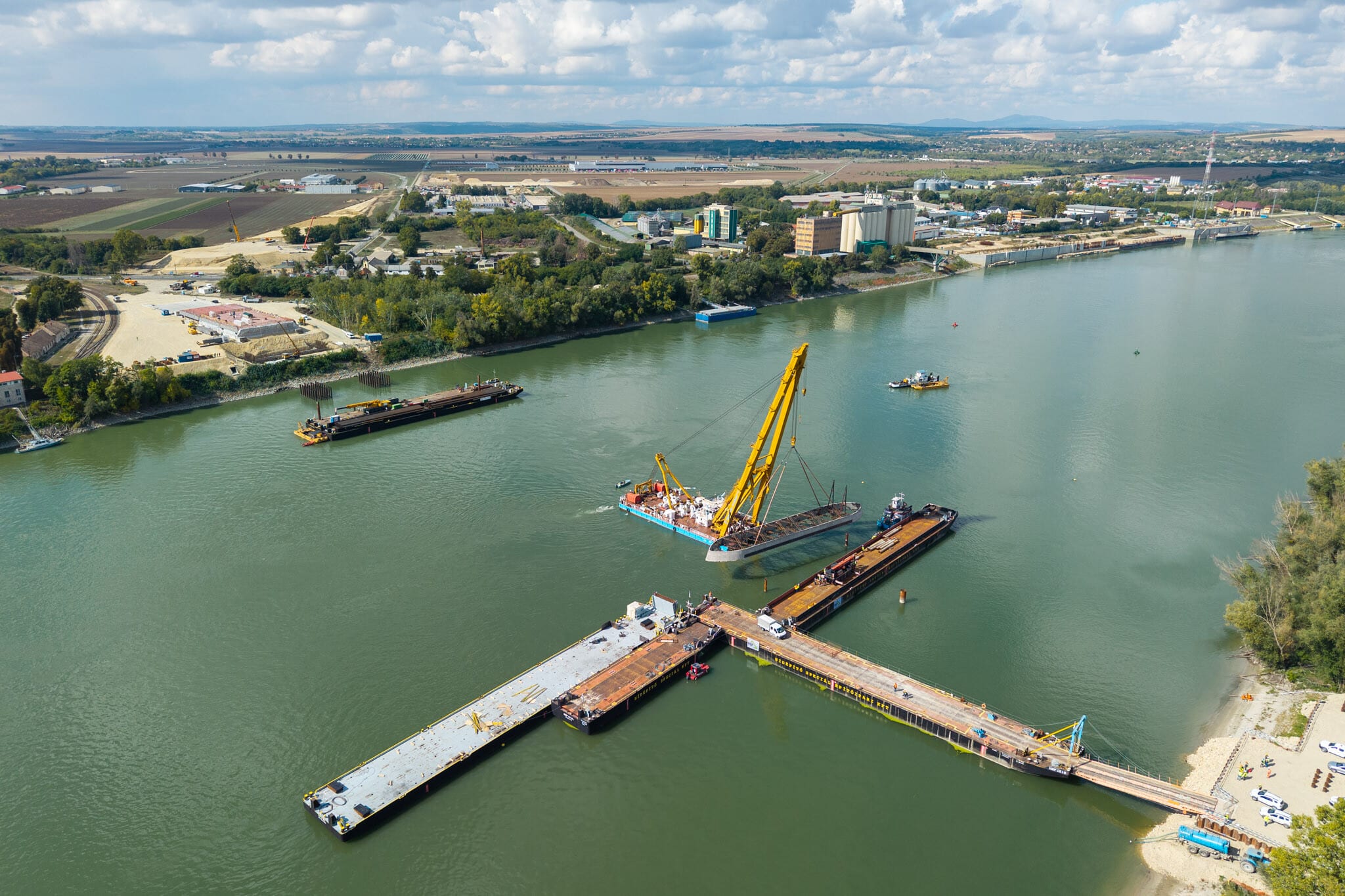
Thursday's landmark event was prepared by a highly complex operation, which was followed closely by this newspaper on the ground. With the help of the experts who managed the project, we bring the details to our readers.
In the photo gallery of this article in order
- the lifting of bark B onto the barge on 23 September,
- the launching of the A bark was completed on 1 October,
- and finally, the rounding up of the bark eye on 2 October with the help of the buvars
followed through in great detail (the first two events are shown first in close-up and then in aerial footage).
How to create a dry working area in the river
According to the plan, the 756-metre-long bridge over the Danube at Mohács will rest on four pillars, of which pillar 3 will be built in the riverbed (which is almost 10 metres deep in the area of the future bridge - editor's note), by the so-called bark elements.
The technology consists of stacking the bark grains in the riverbed, thus creating a dry working area in the middle of the stream.
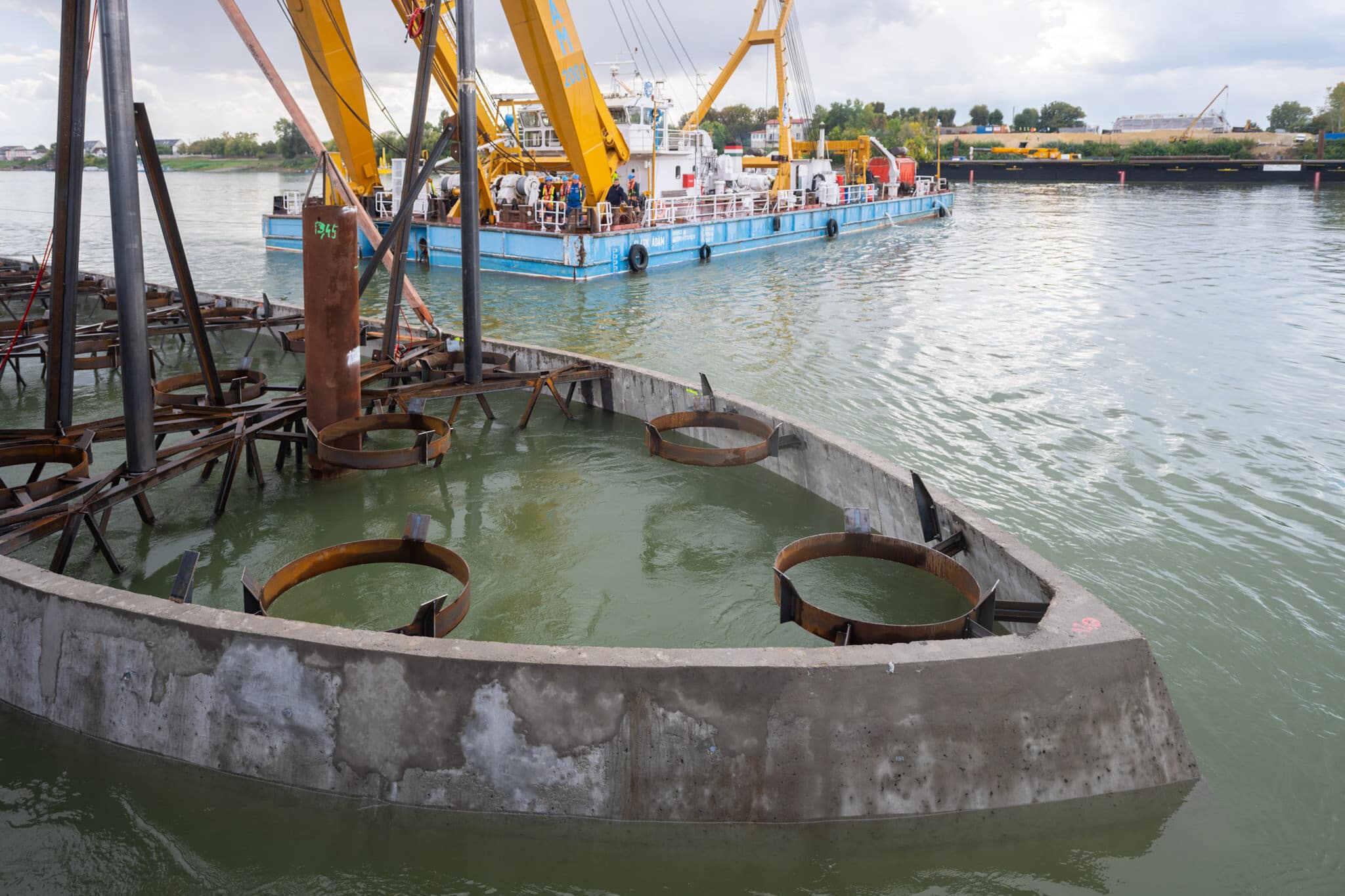
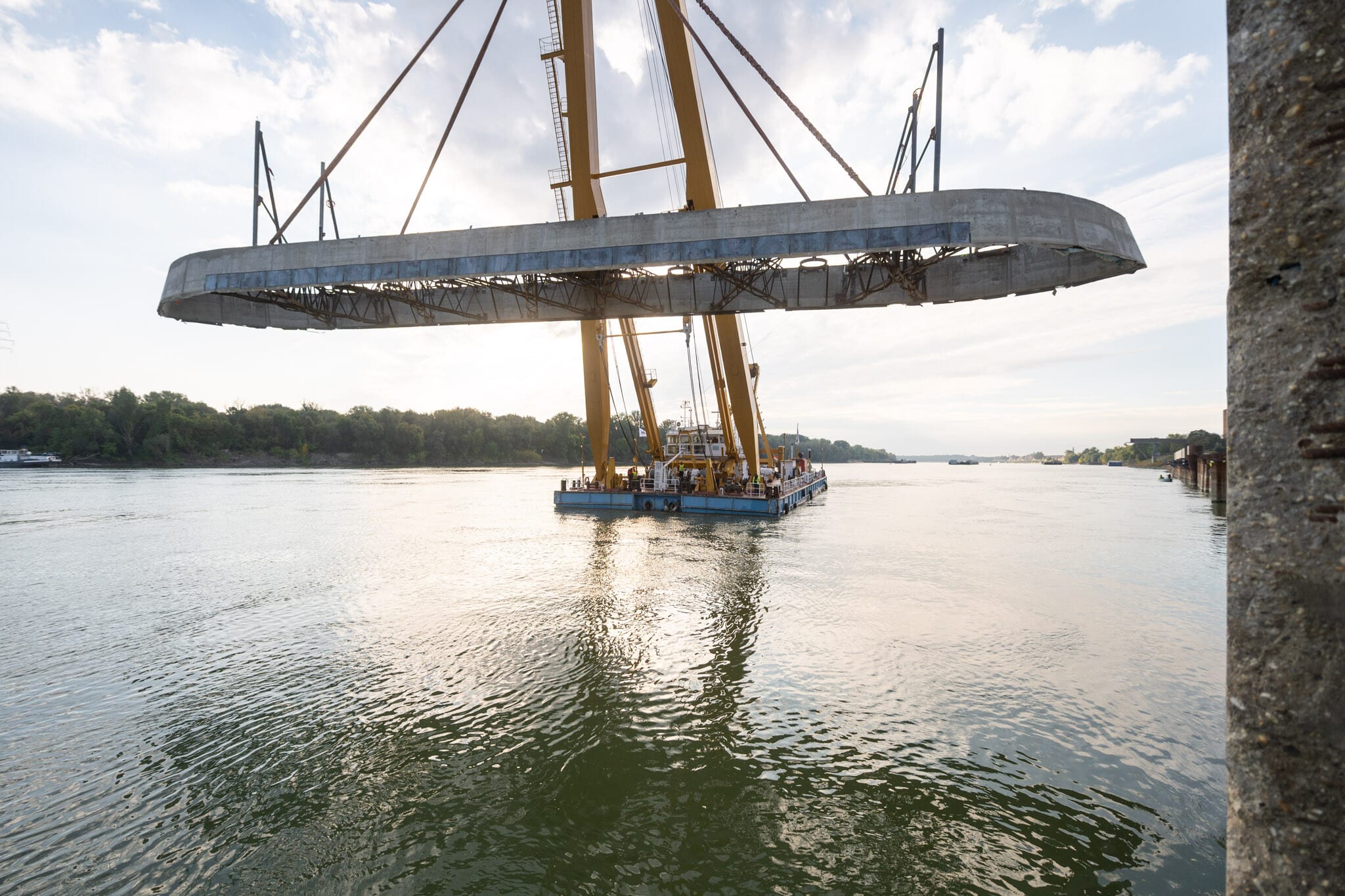
Due to their size and weight, the reinforced concrete bark elements will be constructed on the right bank, in the prefabrication area of the Mohács Free Port. The six bark piles required for the construction of Pillar 3 are each 2.2 metres high, around 52 metres long and 8 metres wide, and weigh almost 160 tonnes each.
After the fourth bark is placed, the building rises above the water
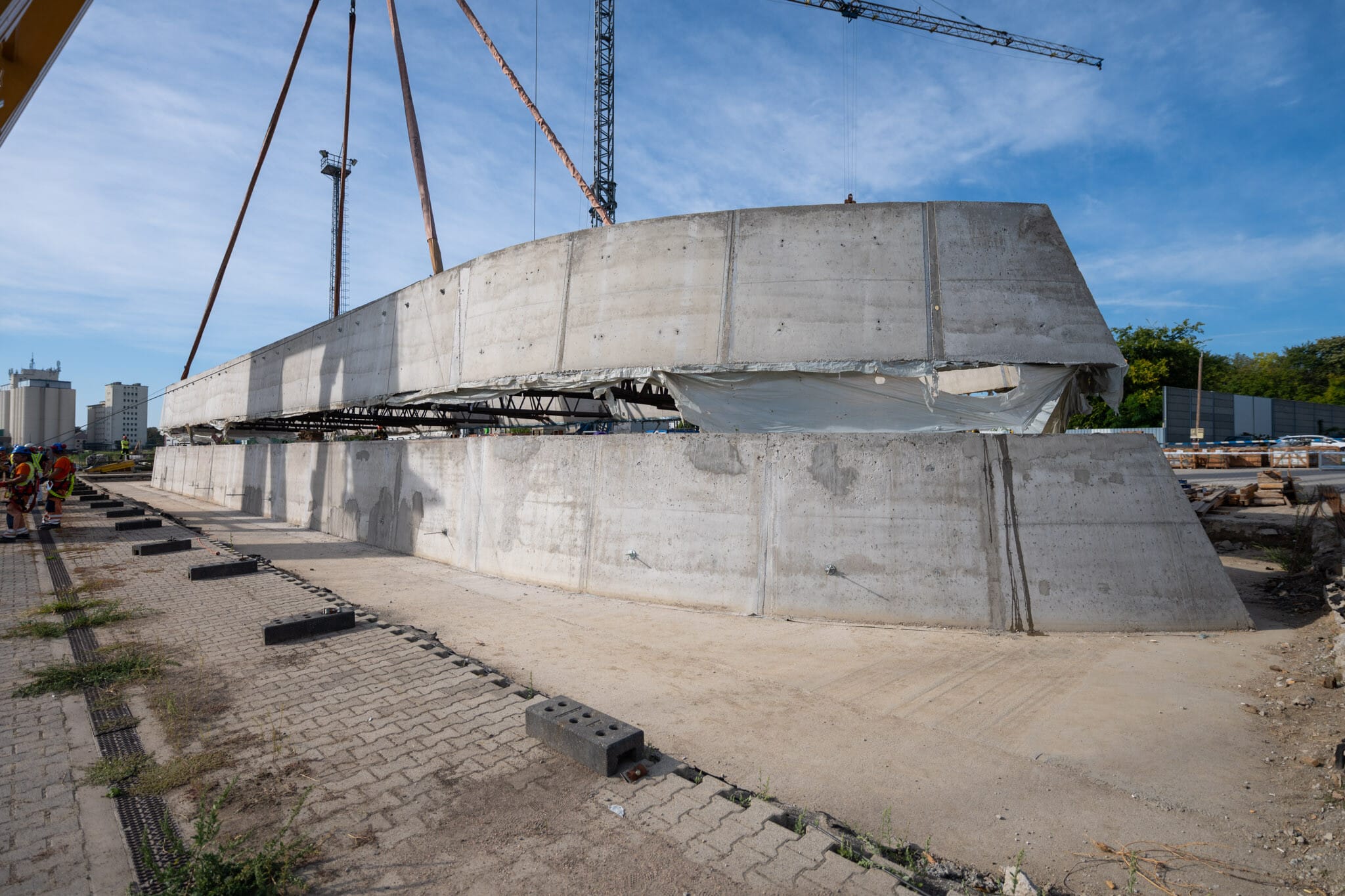
A special feature of the project is that the six bark elements are installed in pairs in the port to ensure a perfect fit.
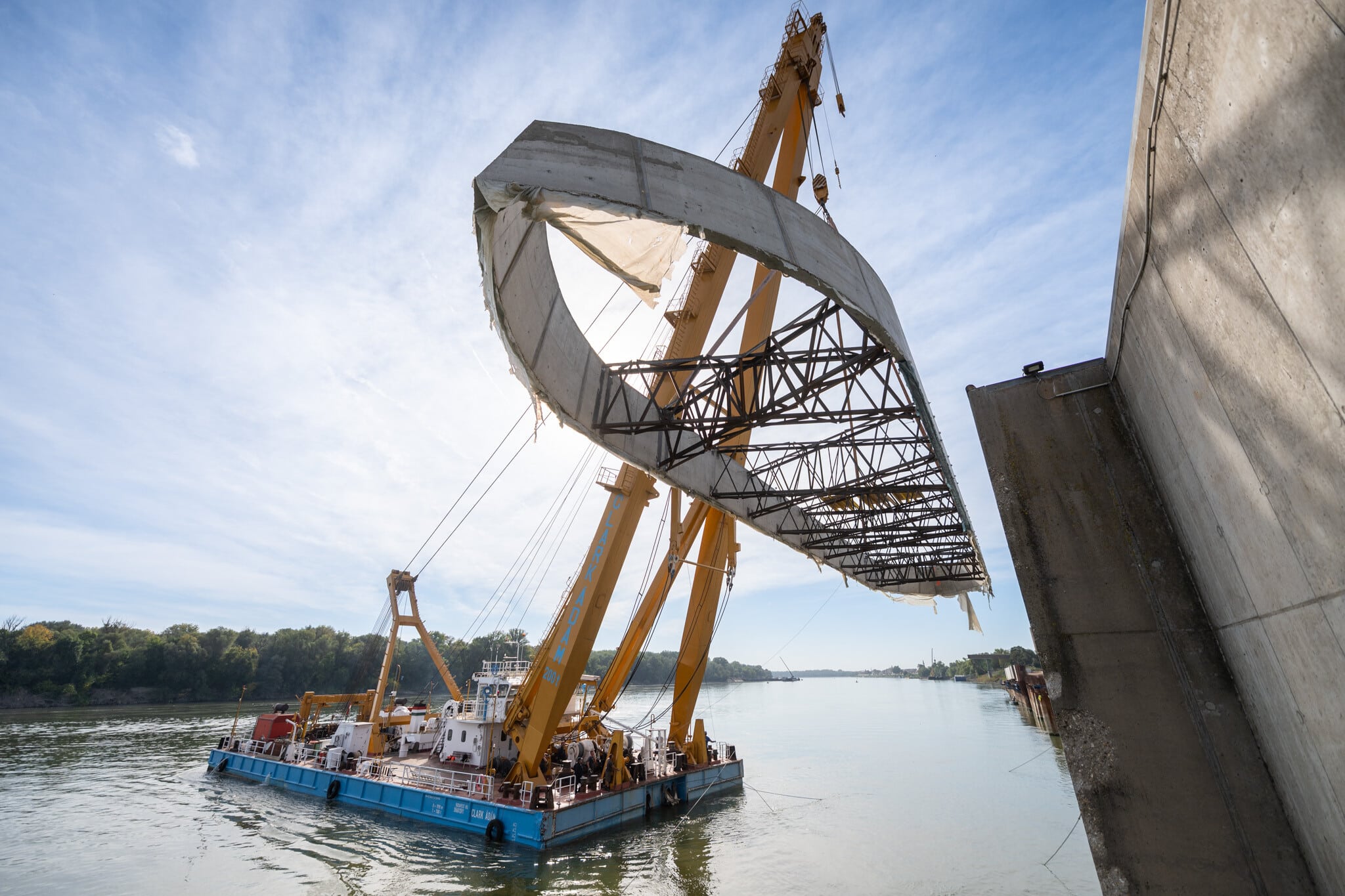
The elements will be lifted into place one by one: on 1 October, the bark element A was placed in the Danube bed, and the other elements will be placed on top of it.
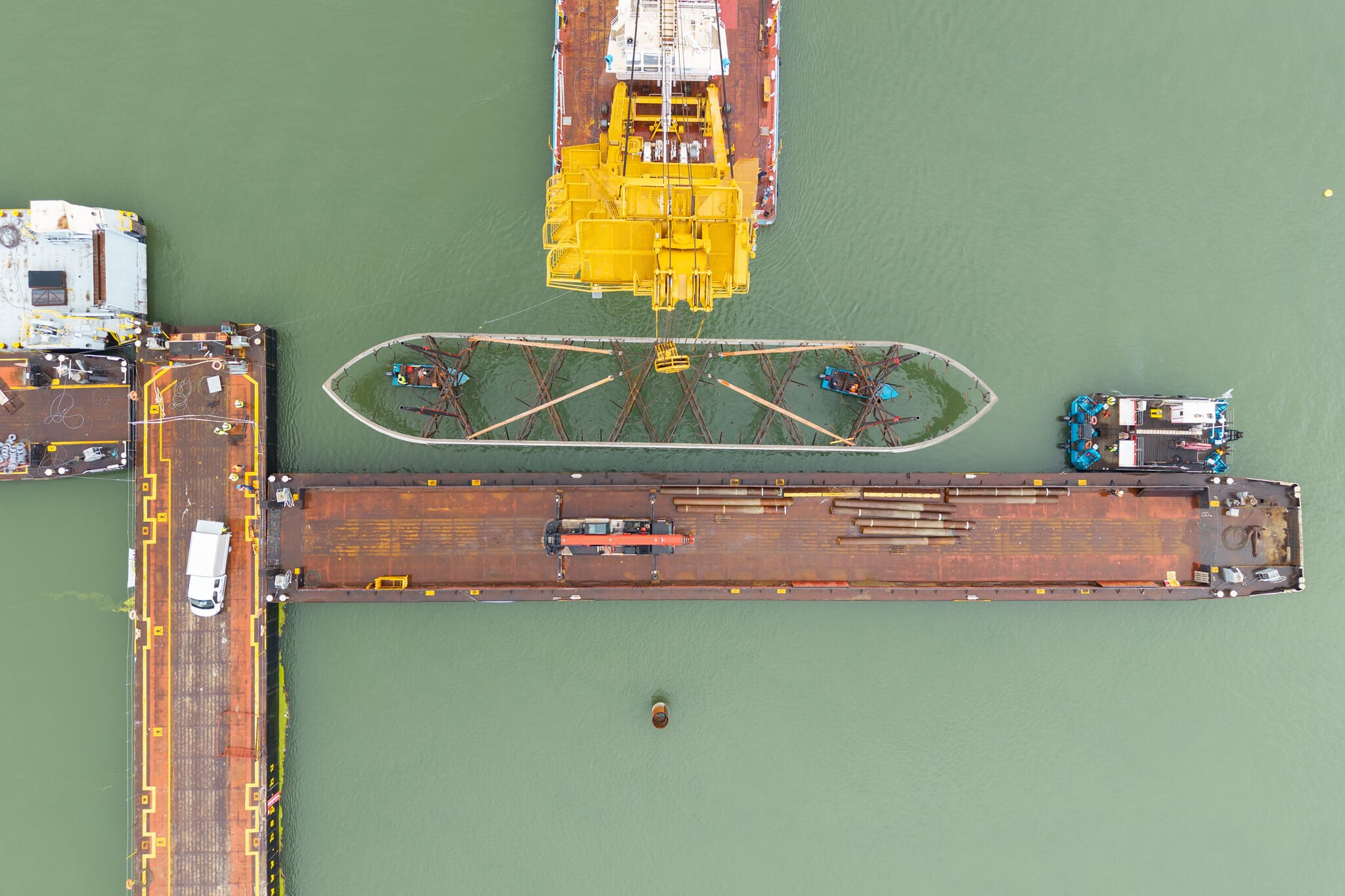
One of the key stages of the process will be when the fourth bark element is inserted: the four stacked elements will raise the structure above the average water level of the Danube. Two more bark elements will then be put in place. From this construction phase, the installation of the 10-metre-high structure of the embankment pier can begin with the individual formwork.
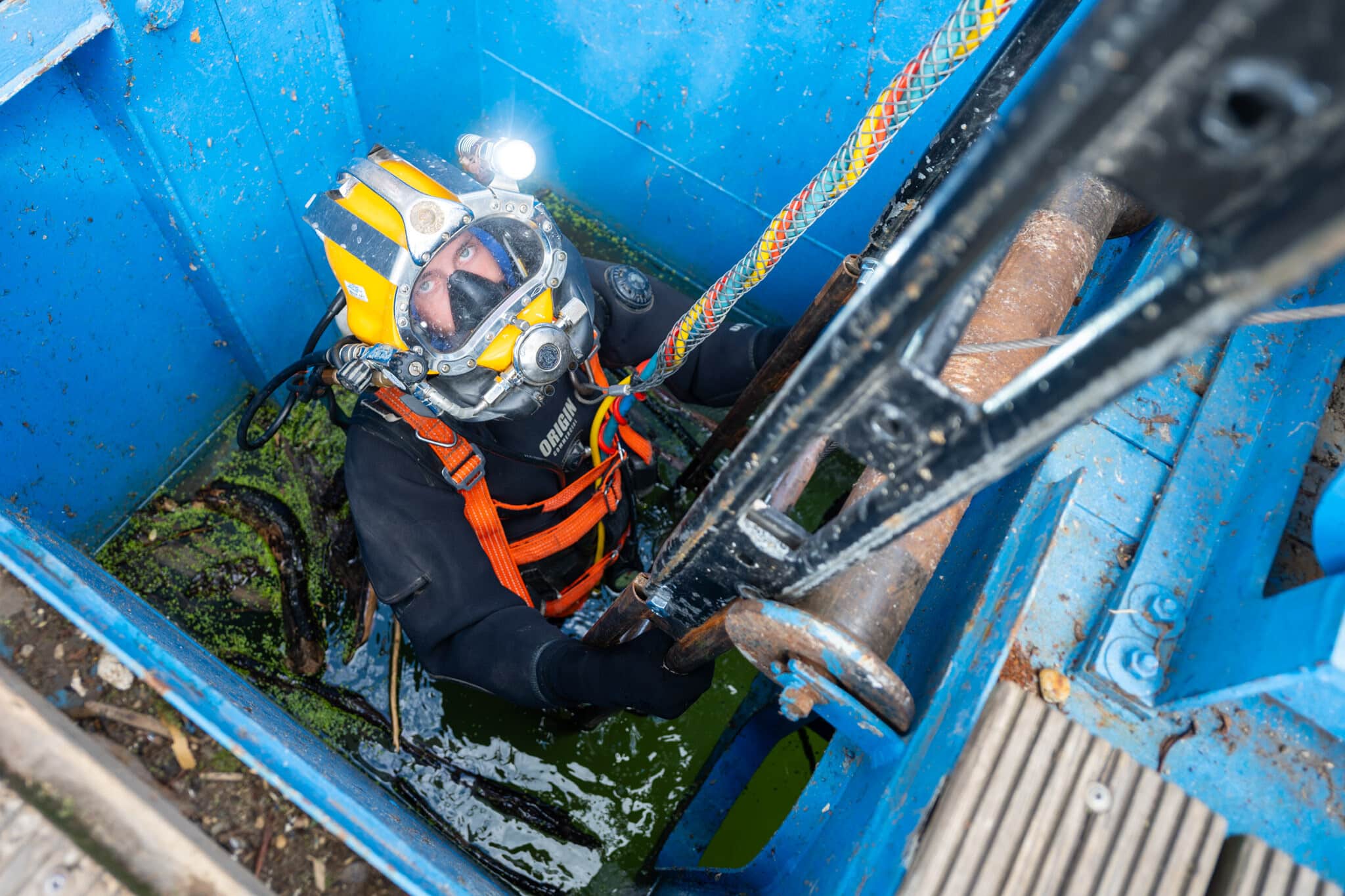
Divers were also deployed to prepare the piles
Installing the bark elements that form the base of the berm requires an unparalleled level of preparation.
"10 steel support piles and 2 directional piles were previously driven into the Danube dredged bed"
- István Wunderlich, project leader, told us. "The divers then cut the piles back underwater at the planned uplift level and inserted a steel reinforced cap into the piles."
At the same time, important work was also underway in the right bank free port:
On 23 September, the B bark above the A bark was raised onto a barge with the Clark Adam floating dock. This was necessary because of the aforementioned double construction: this allowed access to the A battery, which had been stored under the B battery.
Technology used for the first time in Hungary to help millimetre-accurate adjustment
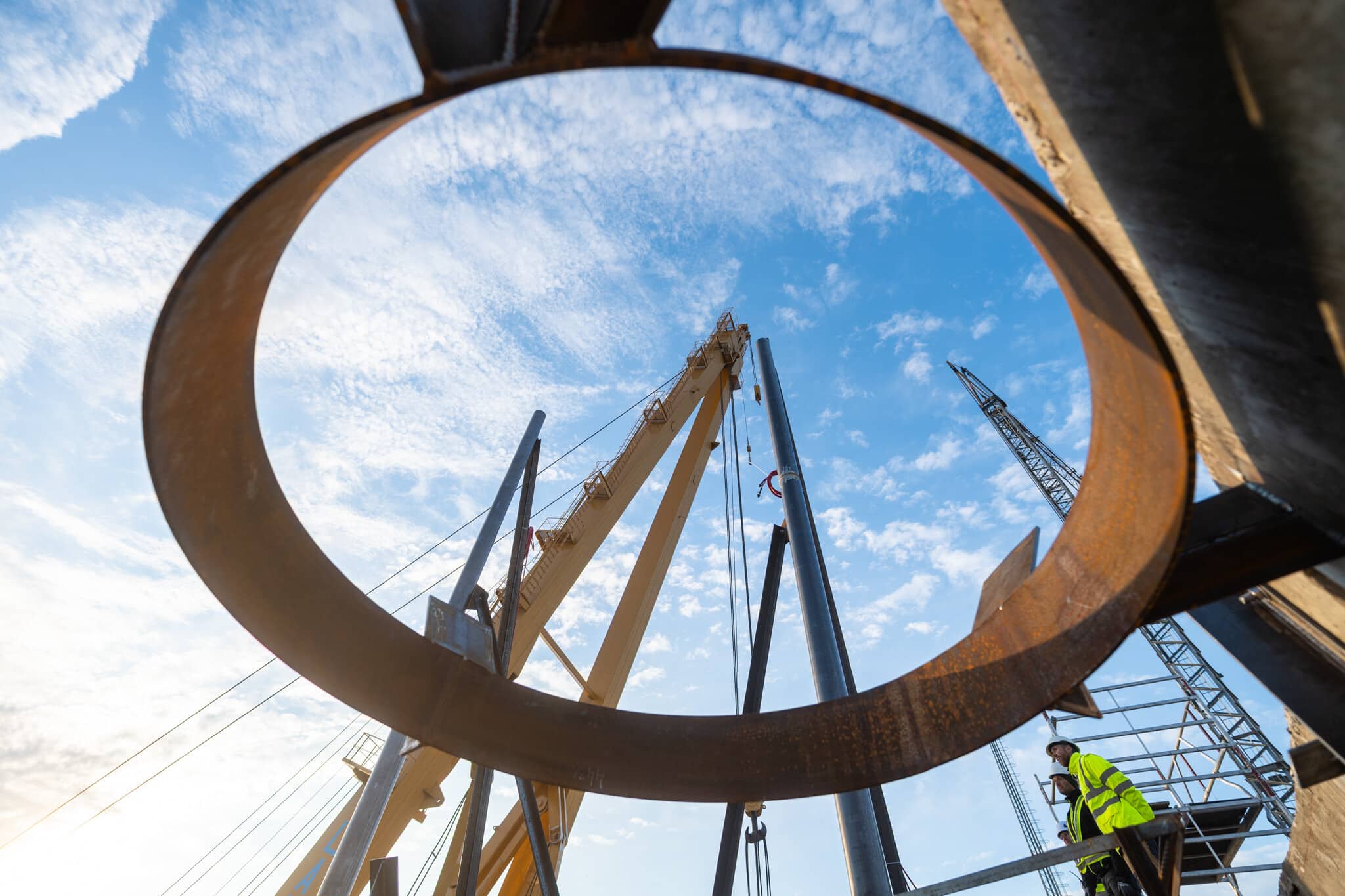
Subsequently, the additional steel bracing required and the mast and prism to support the placement were installed in the A bark pit. The installation of the pile driving rings was carried out, the significance of which is described later in this article.
In addition to this, they also used a technical solution that is a real engineering first: it has never been done before in Hungary.
This is when the 4 hydraulic cylinders, each weighing 100 tonnes, were installed, allowing fine height adjustment: they can be used to level the bark A placed in the bed to within millimetres.
As we indicated earlier, the reinforced concrete bark mesh technology itself is not uncommon, as it was last used in Hungary on the Pentele Bridge, which was completed in 2007.
Reinforcing stone spraying and piles extending down to a depth of 43 metres help stabilise the pillar
On 1 October, the bark A, prepared as described above, was hoisted onto the barge with the Clark Adam floating dhow. "Then, due to favourable weather conditions, we placed the 155-tonne element A in its planned location in the Danube bed on the same day," the project manager added.
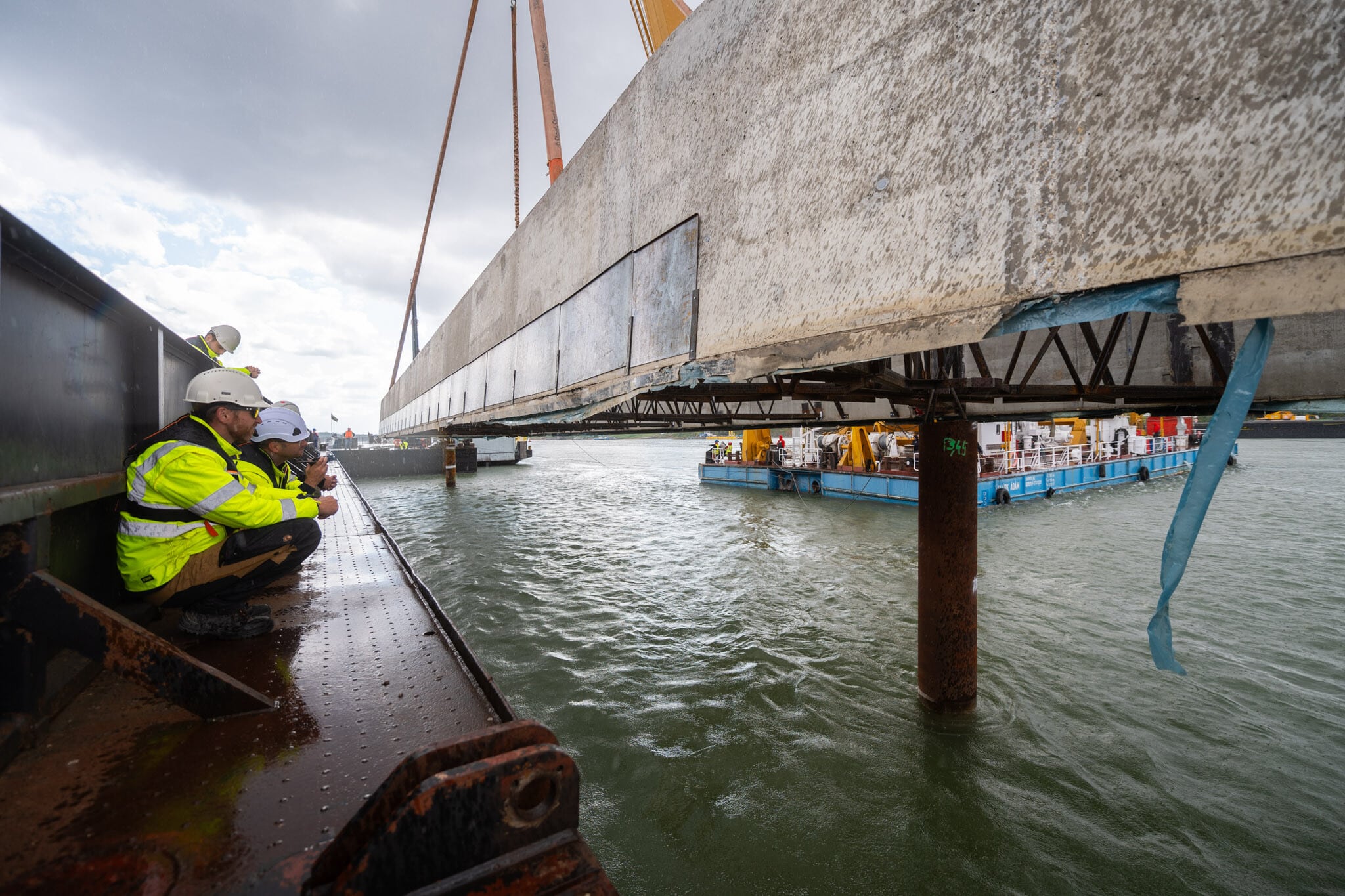
"The bark was successfully placed the first time, and this was checked by divers after the placement. By locating the prisms on the masts overhanging the water, the success of the insertion was confirmed geodetically."
After the excavation, a retaining wall will be built around the A bark in the Danube. Then the piling of the embankment pillar will begin, during which 37 piles will be drilled into the river bed through the above-mentioned guide rings pre-placed in the bark pit. Interestingly, these piles, with a diameter of 1200 mm, are supported by slurry piles and extend down to a depth of 43 m from the dredged bottom.
After the piles are laid, the new bark beans can arrive
In accordance with the logistics of the parcels described above
In the next few days, the B bark will be re-installed in the free port with the Clark Adam floating dock, and then the installation of the C bark, aligned with the B element, will begin, which will be installed on the B element.
In parallel with the piling, the preparation of the additional bark elements will take place, which will be placed in the Danube riverbed after the piles have been laid, probably in the first quarter of next year.
Source : Link








The town centre on the banks of the Tisza is being regenerated

The Market has fulfilled its promise: it has delivered the 10,000 tonnes of natural stone offered for the raising of the bottom sill at Paks

The construction industry is both vast and marvellous – the Duna Group Szabadegyetem has been launched

ESG is now a business issue for suppliers in the construction industry too

Rain gardens are coming to Budafok, with over 3,000 square metres of green space set to be developed

Contemporary art deco in Csopakon

Four new bridges to be built in the heart of the former industrial city

Safer driving on the motorways: new digital signs for the MKIF
-

 Industry news 2026. 08. 18.
Students were introduced to the high-tech construction industry at BME’s field camp in Göd
-
Bound track 2026. 08. 17.
New pedestrian crossings and a junction with traffic lights are being built in Angyalföld
-
What is being built? 2026. 08. 18.
Hungary’s new McDonald’s restaurant has moved into a modernist listed building in the centre of Budapest
-
What is being built? 2026. 08. 18.
New paving, a playground and visitor facilities are being planned for the Várkör area in Pannonhalma