What is being built?
One of Gyula’s oldest listed bridges could be restored
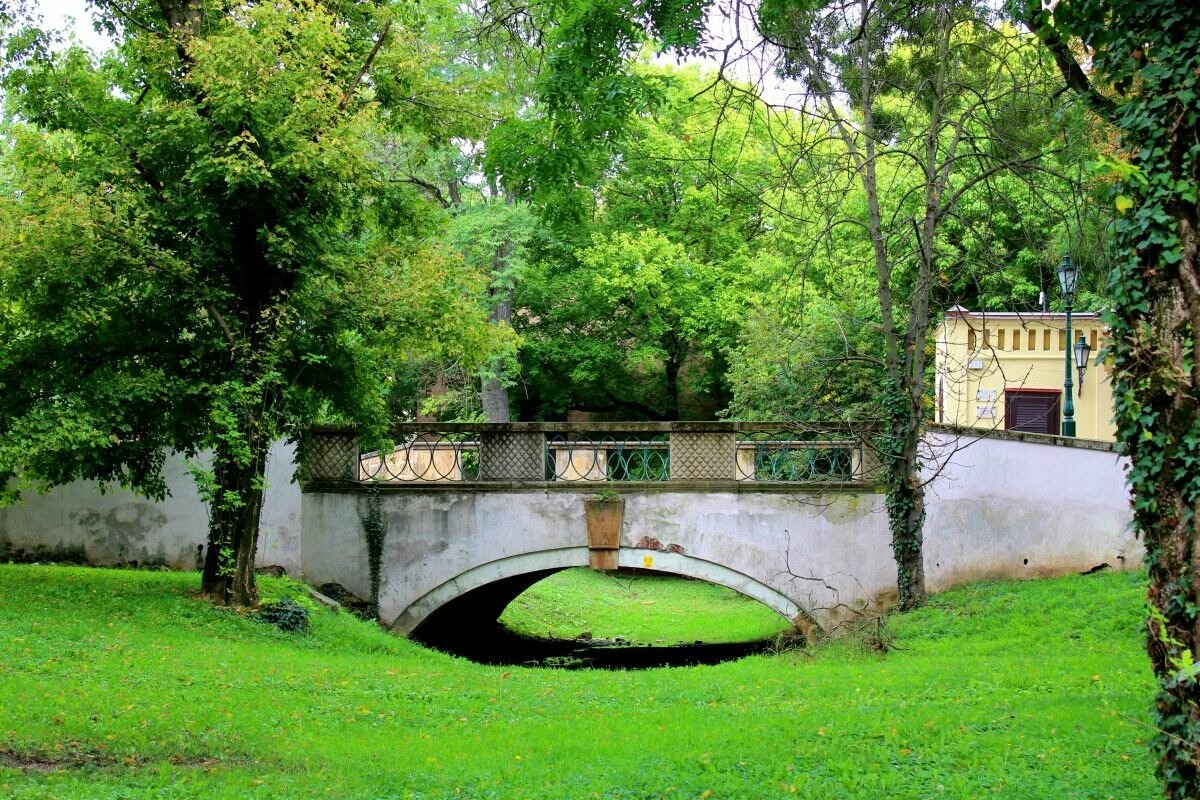
The city has launched a public procurement procedure for the renovation of the listed Kishíd bridge and the gatehouse on Maróthy Square. The Baroque, single-span bridge was built in 1802 over the dried-up old moat. The bridge span measures 6.64 metres, the bridge is 9.50 metres wide, and its total length is 21 metres. Its facing walls and vaults are made of brick, whilst the keystone is a single large piece of stone, on which the year MDCCCII is inscribed on both facing walls. The history of the bridge’s construction is linked to the great fire of 1801, in which the castle, along with all its furnishings, was burnt to the ground. Count Ferenc Wenckheim commissioned the architect Antal Czigler the Elder to restore the castle. It was he who built the new stone bridge. The single-room gatehouse was built to check those passing over the bridge. The parapet wall above the bridge span is made of carved stone, 1.50 metres high, with an openwork design. A wrought-iron grille consisting of rings is fitted to the surface between the stones. The capstones forming the parapet are fitted with dovetail joints. The planned works will affect the brick walls and arch of the Kishíd: during the works, the element replacements and reinforcements specified in the plans will be carried out, as well as the retrofitting of wall insulation against ground moisture using grouting. The existing bituminous waterproofing beneath the bridge deck will be extended along the parapets; in addition, the deck structure and the associated rainwater drainage system will be refurbished. Following the replacement of the render, the rendered surfaces of the bridge will be repainted in white to match the existing colour. The successful tenderer’s tasks will include, as part of the restoration of the listed building, cleaning the stone elements, removing previous unprofessional artificial stone additions and iron rivets, followed by desalination, consolidation, material replacement, patination, jointing, water-repellent treatment and biocidal treatment. According to the tender specifications, the metal elements will be dismantled, cleaned, repaired, rebuilt and then painted to match the original colour by specialists from the company awarded the contract. The project also includes the creation of a 60-centimetre-deep and wide ventilated gravel bed along the bridge’s arch shoulders and parapet walls. Extensive renovation work had already been carried out on the bridge in 1997–1998. At that time, the structure of the listed building was reinforced, waterproofing was installed to protect against ground damp, the road and pavements were resurfaced, the parapets and cornices were rebuilt, and period-style electric lampposts were installed at the four corners of the bridge. Source: LinkA tragedy preceded the construction of the bridge

Insulation work will need to be carried out

The restoration of the stone and metal elements is also part of the project

Nearly three decades have passed since the last major refurbishment








The town centre on the banks of the Tisza is being regenerated

The Market has fulfilled its promise: it has delivered the 10,000 tonnes of natural stone offered for the raising of the bottom sill at Paks

The construction industry is both vast and marvellous – the Duna Group Szabadegyetem has been launched

ESG is now a business issue for suppliers in the construction industry too

Rain gardens are coming to Budafok, with over 3,000 square metres of green space set to be developed

Contemporary art deco in Csopakon

Four new bridges to be built in the heart of the former industrial city

Safer driving on the motorways: new digital signs for the MKIF
-

 Industry news 2026. 08. 18.
Students were introduced to the high-tech construction industry at BME’s field camp in Göd
-
Bound track 2026. 08. 17.
New pedestrian crossings and a junction with traffic lights are being built in Angyalföld
-
What is being built? 2026. 08. 18.
Hungary’s new McDonald’s restaurant has moved into a modernist listed building in the centre of Budapest
-
What is being built? 2026. 08. 18.
New paving, a playground and visitor facilities are being planned for the Várkör area in Pannonhalma